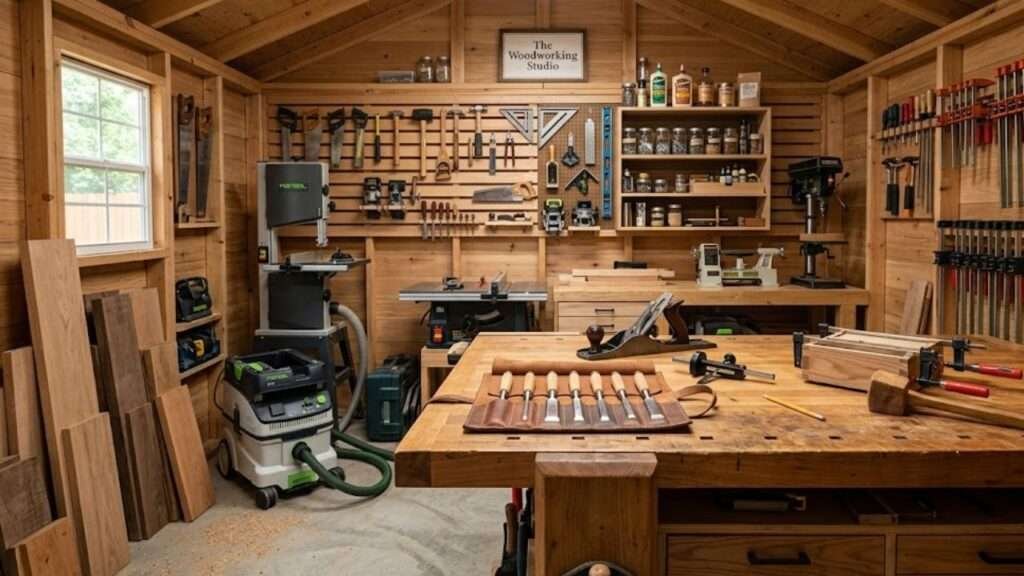
Transforming A Shed Into A Woodshop
Your Backyard Shed A backyard shed often begins as a simple shelter for tools and seasonal items. Over time it
Transforming A Shed Into A Woodshop Read More »
Woodshop Floor, Woodshop Safety, Your Woodshop
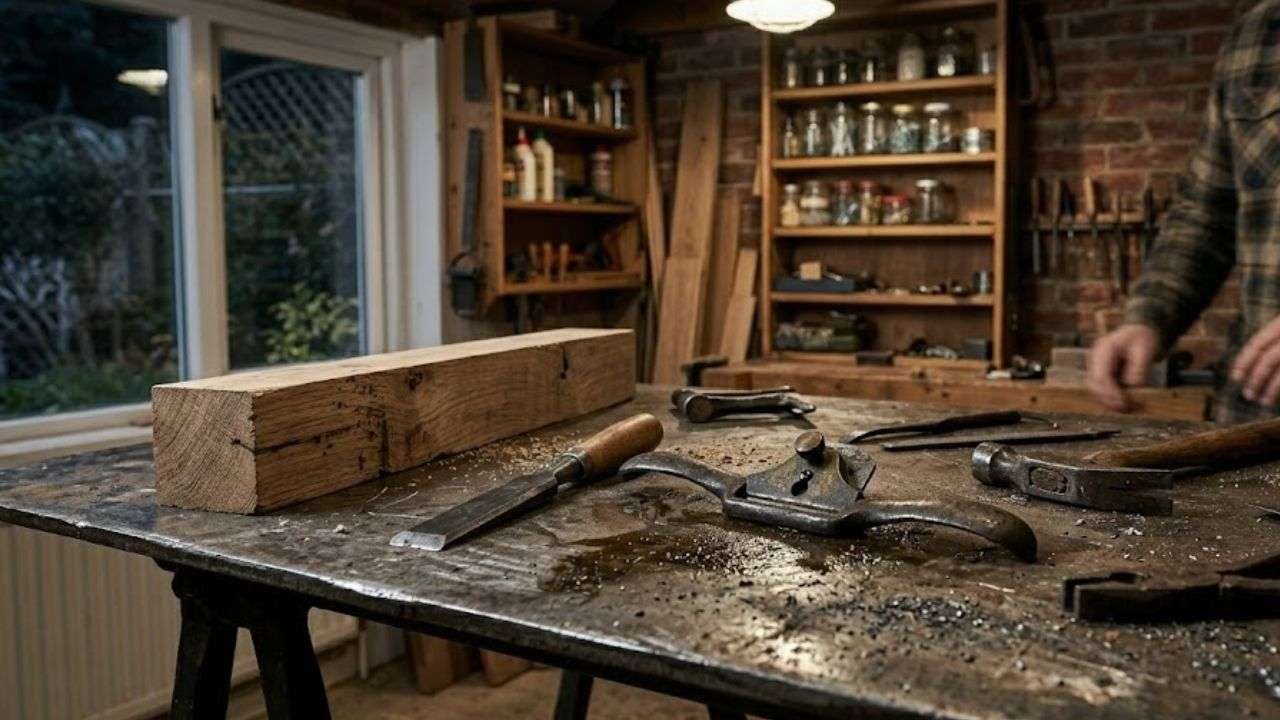
A woodshop feels most inviting when the work flows without tension.
The scent of freshly planed timber, the soft scrape of a chisel through straight grain, and the quiet order of a well arranged bench all contribute to a space where projects unfold with clarity.
A safe environment supports that atmosphere. It allows attention to settle on the material rather than on uncertainty about the tools that shape it.
Understanding the Role of the Workspace.
A woodshop reveals its condition through small details.
Dust gathers in corners, offcuts lean against walls, and a bench can shift from purposeful to cluttered in a single afternoon.
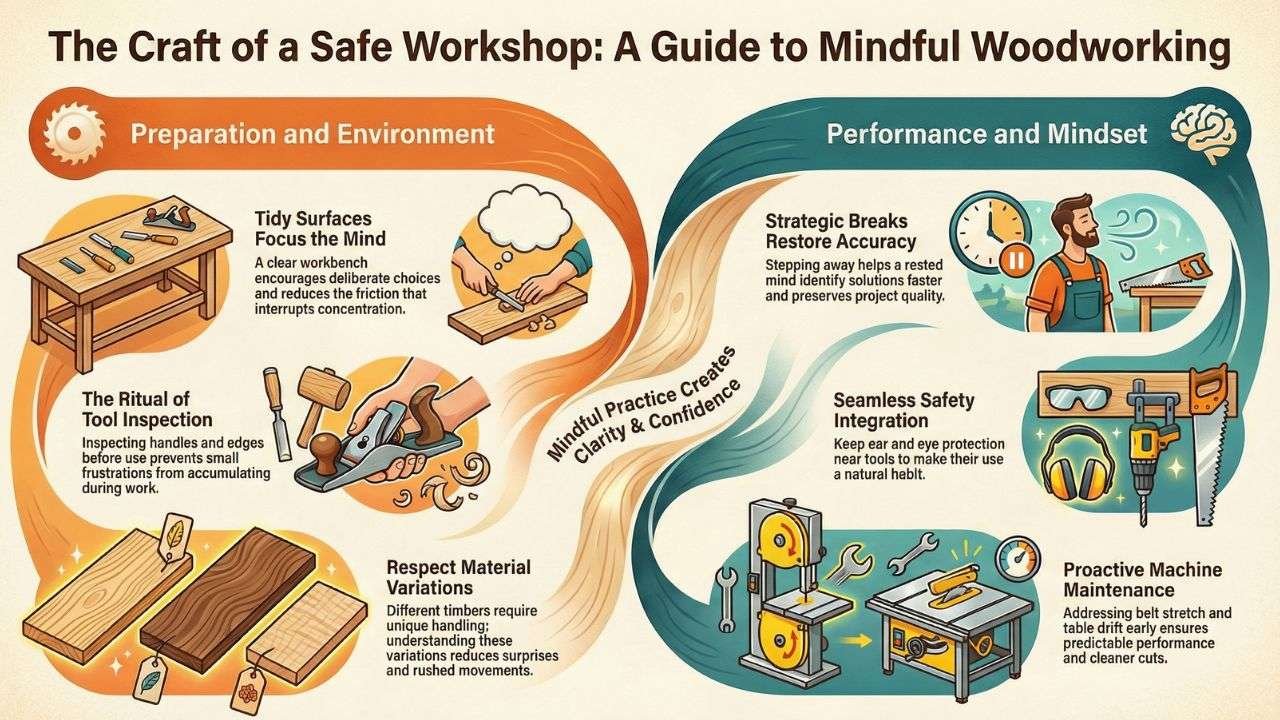
A clear surface changes the rhythm of work. It encourages slower first steps and more deliberate choices.
The sound of a plane gliding across a clean bench feels different from the same motion performed in a crowded space. The difference is subtle but noticeable.
A tidy shop does not guarantee perfect outcomes but it reduces the friction that interrupts concentration.
Tool Readiness as a Daily Habit.
Tools communicate through their feel. A hand saw that binds slightly in the cut or a marking knife that drags across the grain signals the need for attention. Inspecting tools before use becomes a quiet ritual.
It takes little time yet influences the entire session. A counter intuitive detail emerges here. A tool that appears sharp can still perform poorly if its handle is loose or if resin has built up along the teeth.
The trade off is that regular checks slow the start of a project but they prevent the small frustrations that accumulate when tools resist the work. A lived in example is the simple act of wiping a plane sole before touching it to a board. The difference in glide is immediate.
Material Awareness and Its Influence on Safety.
Timber behaves in ways that reward close observation. A board of air dried ash may feel cool and slightly rough along the face grain while the end grain absorbs oil more quickly. These characteristics affect how tools respond.
A chisel entering dense hardwood requires a steadier hand than one used on soft pine. Understanding these variations reduces surprises. It also shapes decisions about tool selection.
A nuanced point often overlooked is that softer timbers can encourage overconfidence. Their ease of cutting can lead to rushed movements that disrupt the controlled pace needed for accuracy.
Maintaining Machinery for Consistent Performance.
Machines introduce a different rhythm to the shop. The hum of a well tuned thicknesser or the steady rotation of a drill press creates a predictable pattern. Routine maintenance supports that consistency.
Belts stretch, bearings dry, and tables drift out of alignment over time. Addressing these changes early prevents uneven cuts and reduces strain on the material. The limitation is that maintenance requires planning. It interrupts creative flow.
Yet the benefit becomes clear when a machine performs smoothly during a long session. A practical example is checking the fence alignment on a benchtop jointer before flattening a board.
The resulting edge fits more cleanly and reduces the need for correction later.
Balancing Pace and Precision.
Woodworking encourages immersion. Hours can pass unnoticed when shaping a project that feels rewarding.
Fatigue enters quietly. It shows in the way a pencil line is marked slightly off centre or in the way a plane stroke becomes heavier than intended. Taking breaks restores accuracy.
The grain of a board looks different after stepping away for a moment. Colours appear warmer and textures more defined.
The counter intuitive insight here is that stopping work can accelerate progress. A rested mind identifies solutions more quickly than a tired one.
The trade off is that breaks extend the timeline of a project but they preserve the quality of the final piece.
Integrating Personal Protective Measures Naturally.
Protective measures become most effective when they feel like part of the workflow rather than an interruption.
Ear protection resting on a hook beside the bench or goggles placed near the sharpening stones encourage consistent use.
The tactile sensation of well fitted gloves or the clarity of clean lenses supports focus. High quality equipment lasts longer and maintains comfort during extended sessions.
A lived in example is the way a pair of familiar earmuffs settles around the head with predictable pressure. Their presence becomes a signal that the next stage of work requires attention.
Learning Through Community and Experience.
Woodworking grows through shared knowledge. Observing how an experienced craftsperson handles a block plane or arranges tools on a bench reveals subtle habits that improve safety and efficiency.
These insights often come from years of practice. A nuanced observation is that experienced woodworkers rarely rush.
Their movements appear unhurried even when completing complex tasks. This pace reduces errors and supports a calm environment.
The limitation is that learning from others requires time and openness.
It invites questions and reflection. Yet the benefits extend far beyond technique. They shape the culture of the workshop itself.
Closing Perspective.
A safe woodshop is not defined by strict rules alone. It is shaped by attention to detail, respect for materials, and an appreciation for the quiet routines that support craftsmanship.
When tools are inspected, spaces are organised, and the pace of work is steady, woodworking becomes more enjoyable.
The atmosphere shifts toward clarity and confidence. That environment allows projects to develop with care and supports a long lasting connection to the craft.
Your Backyard Shed A backyard shed often begins as a simple shelter for tools and seasonal items. Over time it
Transforming A Shed Into A Woodshop Read More »
Woodshop Floor, Woodshop Safety, Your Woodshop
A Practical Guide For Cutting Wood Wood is not passive, it’s got structure, direction and memory encoded in every fibre
Cutting Wood Methods And The Tools Involved Read More »
Woodshop Safety, Woodwork Abilities, Woodwork Tools
Woodwork Clothing – Function And Business Clothing in a woodworking environment is not a uniform choice or a branding exercise.
Woodwork Clothing Discussion Read More »
Build An Online Presence, Outdoor Woodwork, Woodshop Safety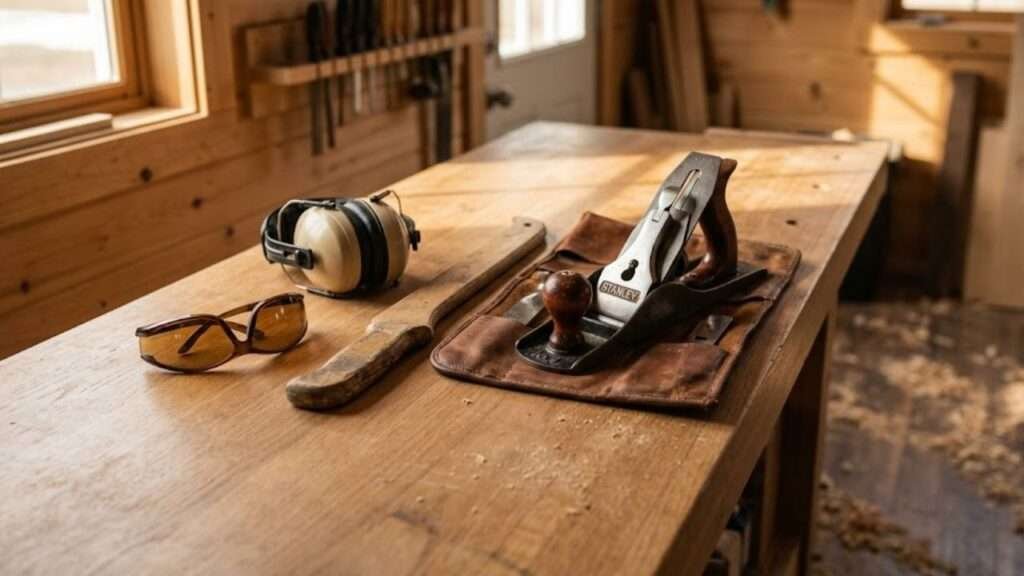
Woodwork Safety Is The Priority Woodworking is a discipline built on patience and skill. The sawdust, the grain, the smell

Learning Woodwork Via YouTube Channels. Nowadays, you can learn just about anything via YouTube and a quality woodworking YouTube channel
Learn Woodwork from YouTube Read More »
Traditional Craft, Woodshop Safety, Woodwork Abilities, Woodwork Types, Your Woodshop
Training Your Dog To Protect Your Woodwork Shed Security in a woodworking shop is a critical concern for craftsmen and
Train Your Dog To Protect Your Woodshop Read More »
Woodshop Safety
We Learn And Improve From Our Woodwork Mistakes. Woodworking, like any other skill intensive craft, is fraught with its unique
Learning From Our Woodworking Mistakes Read More »
Project Failures, Traditional Craft, Woodshop Safety, Woodwork Abilities