Some Good Reasons For Embracing Power Tools.
Woodworking has long been associated with slow and deliberate craftsmanship shaped by hand tools and patient refinement.
This image still holds value for many people who enjoy the quiet rhythm of working wood by hand. Yet the modern woodworking landscape offers a broader and more flexible path.
Power tools expand what is possible in a home workshop and support a creative lifestyle that fits within the realities of contemporary life.
They provide speed accuracy and consistency while preserving the satisfaction of shaping natural materials. They open the door to projects that match your imagination rather than your available time.
Power tools are not a departure from craftsmanship. They are a gateway to a more capable and confident creative practice.
The Role of Power Tools in Modern Woodworking.
Power tools have become central to many woodworking spaces because they support efficient and reliable work.
They allow people to move from raw material to refined form with a level of control that is difficult to achieve by hand alone.
This shift does not diminish the value of traditional methods.
Instead it broadens the range of techniques available and supports a balanced approach that blends precision with personal expression.
Power tools help woodworkers of all skill levels complete projects that reflect their design intent and their appreciation for natural materials.
Speed and Efficiency in Everyday Projects.
Time is one of the most significant constraints for people who enjoy woodworking as part of a balanced lifestyle.
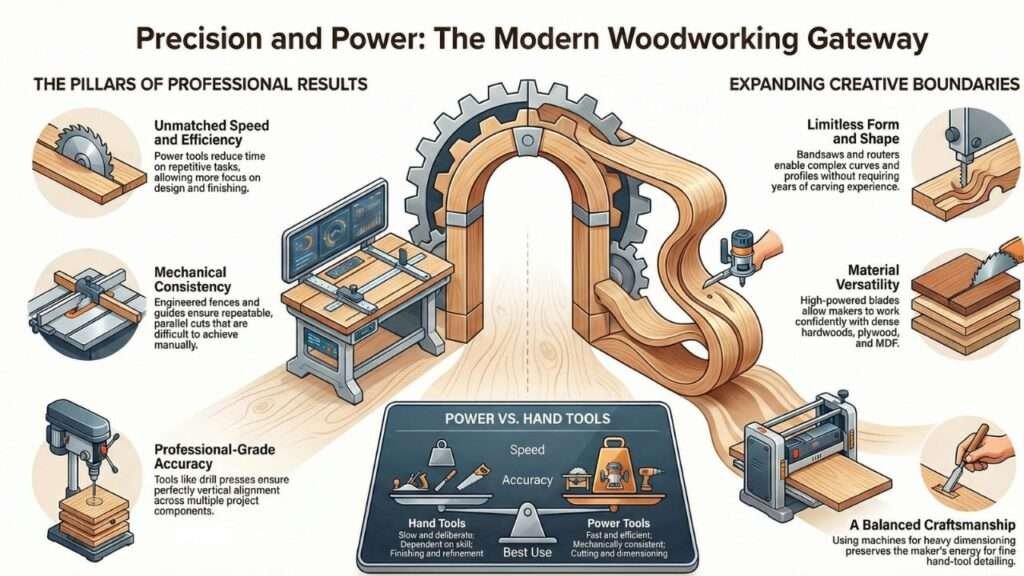
Power tools reduce the time required for essential tasks and make it possible to complete projects within limited windows of availability.
This efficiency supports momentum and helps maintain enthusiasm throughout the building process.
Dimensioning lumber is a clear example. Preparing rough boards by hand requires sustained effort and careful technique.
A thickness planer or jointer completes the same task in minutes and produces a consistent surface ready for layout and joinery.
Cutting accurate lines with a hand saw requires practice and patience.
A table saw or track saw delivers straight repeatable cuts that support clean assembly.
Power tools also support people who are considering woodworking as a small business. The ability to complete work efficiently is essential for meeting deadlines and maintaining a sustainable workflow.
Speed does not replace skill. It enhances it by allowing more time for design decisions and fine detail work.
Accuracy and Consistency for Professional Results.
Accuracy is a defining feature of well made furniture and home projects.
Power tools are engineered to deliver repeatable results that support strong joinery and clean visual lines.
This consistency is difficult to achieve with hand tools alone especially for beginners.
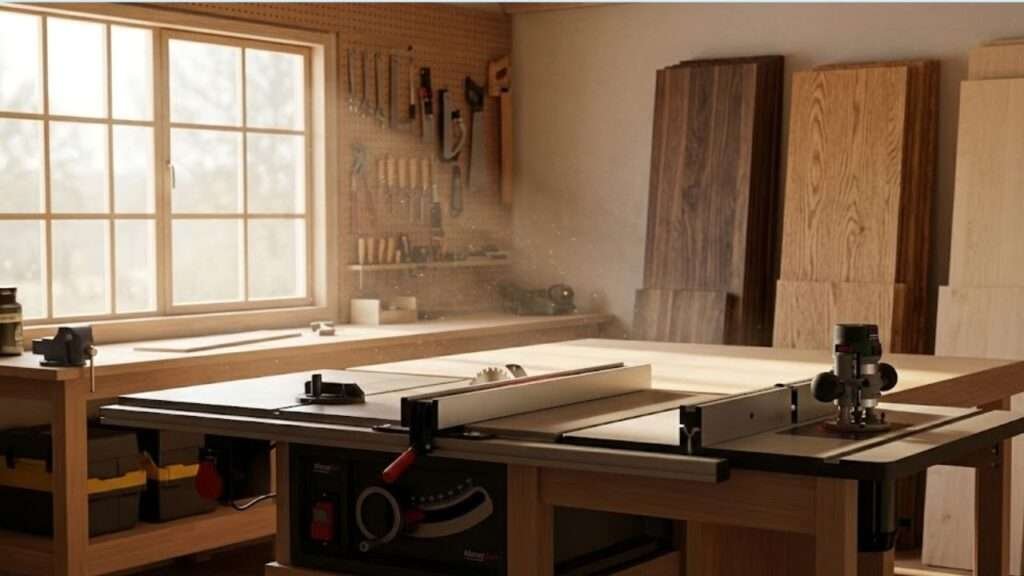
A table saw fence maintains a fixed distance from the blade which ensures parallel cuts across multiple pieces.
A router guided by a bearing or template produces identical edges that align perfectly during assembly.
A drill press maintains a straight vertical path for holes that must align across several components.
These capabilities support a professional appearance in finished work. Clean edges flat surfaces and precise joinery contribute to a refined aesthetic that highlights the natural beauty of the wood.
Power tools help woodworkers achieve this standard even when working with challenging materials or complex designs.
Creative Freedom Through Expanded Capabilities.
Power tools remove many of the limitations that can restrict creative exploration. They allow woodworkers to pursue ideas that would otherwise require advanced hand tool skills or extended periods of time.
This freedom encourages experimentation and supports a more ambitious approach to design.
Curved forms are a clear example. A bandsaw or jigsaw allows smooth sweeping cuts that follow a pencil line with ease. A router table shapes profiles that add character to edges and frames.
These tools support projects that incorporate movement and detail without requiring specialised carving skills.
Power tools also make it possible to work confidently with a wide range of materials. Dense hardwoods respond well to sharp blades and steady power. Plywood and MDF cut cleanly with the right setup.
This versatility expands the range of projects that can be completed in a home workshop and supports custom solutions that match the style and layout of a home.
Customisation and Personal Expression.
One of the most rewarding aspects of woodworking is the ability to create pieces that reflect personal taste and fit specific spaces.
Power tools support this level of customisation by making it easier to shape materials precisely and explore new forms.
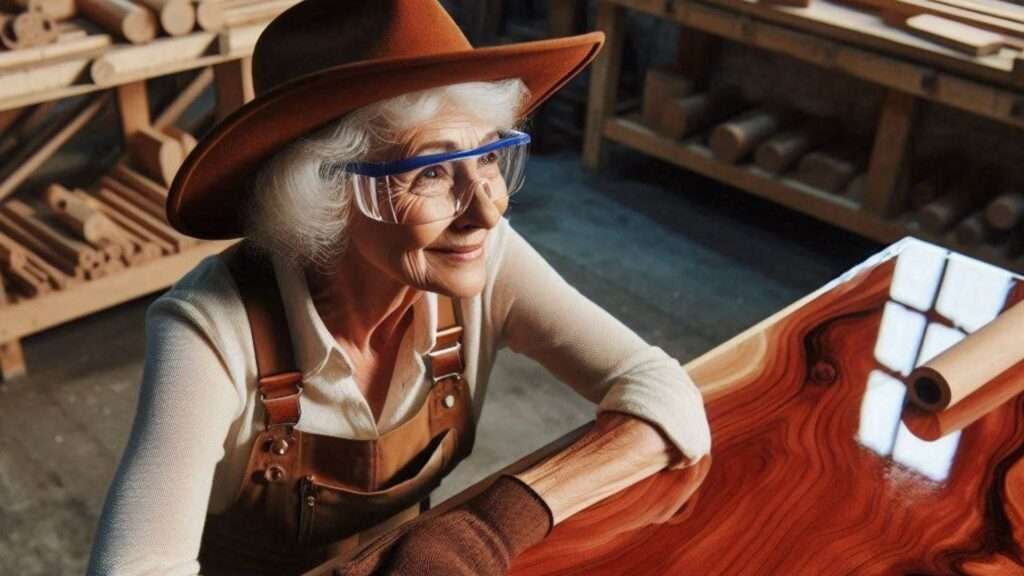
A live edge slab can be prepared with a chainsaw or bandsaw to preserve its natural character. A sculptural bowl or decorative object can be shaped with a power carver or angle grinder fitted with a carving disc.
These tools remove material quickly and allow the maker to refine the form with hand tools as desired.
This combination of speed and control encourages experimentation. It allows woodworkers to blend machine made precision with hand finished detail.
The result is a piece that reflects both technical skill and personal style.
Developing Skill and Confidence.
Mastery of power tools is a meaningful part of modern woodworking. Each tool has its own characteristics and requires practice to use effectively.
Learning to guide a tool with confidence builds a sense of capability that supports more ambitious projects.
Using a router to cut a clean mortise or shape a decorative edge demonstrates the value of controlled power.
Feeding a board through a planer and watching it emerge smooth and flat reinforces the connection between technique and result.
These experiences build confidence and encourage continued learning.
Mastery also involves understanding the strengths and limitations of each tool. This knowledge supports better design decisions and helps woodworkers choose the right approach for each task.
The process of learning contributes to a deeper appreciation of the craft and the materials involved.
A Balanced Approach to Craftsmanship.
Many woodworkers find that the most satisfying approach blends the strengths of power tools with the tactile qualities of hand tools.
Power tools handle the heavy work of cutting shaping and dimensioning. Hand tools refine surfaces and add subtle detail.
This balance supports efficiency without sacrificing the quiet satisfaction of working wood by hand. A smoothing plane can bring a surface to a gentle sheen. A chisel can clean the corners of a joint.
A card scraper can remove small imperfections and reveal the grain beneath.
This approach respects tradition while embracing modern capability.
It allows woodworkers to enjoy the full range of techniques available and to choose the method that best suits each stage of the project.
Comparing Hand Tools and Power Tools.
The following table highlights the complementary strengths of each approach.
Aspect | Hand Tools | Power Tools |
Speed | Slow and deliberate | Fast and efficient |
Accuracy | Dependent on skill | Mechanically consistent |
Effort | Physically demanding | Reduced physical strain |
Creative range | Suited to fine detail | Supports complex forms |
Learning curve | Technique focused | Tool operation focused |
Best use | Finishing and refinement | Cutting shaping and dimensioning |
Both approaches contribute to a complete woodworking practice.
The choice depends on the project the available time and the desired experience.
Strengthening the Connection to Natural Materials.
Power tools do not diminish the connection to wood as a natural material. They support the process of revealing grain colour and texture.
They help prepare surfaces that highlight the character of each board. They allow woodworkers to work confidently with species that offer unique visual qualities.
The ability to shape and refine wood efficiently encourages more frequent engagement with the material.
It supports a creative lifestyle that values natural beauty and thoughtful design. Power tools make it easier to bring these qualities into the home through furniture decor and functional objects.
Closing Thoughts.
Power tools expand the possibilities of woodworking and support a creative practice that fits within modern life.
They provide speed accuracy and consistency while preserving the satisfaction of shaping natural materials.
They encourage exploration and support projects that reflect personal style.
When combined with hand tools they create a balanced approach that honours tradition and embraces capability.
Power tools are a gateway to creation because they make it possible to build with confidence imagination and purpose.