
Getting Started Without Breaking the Bank
Beginning a woodworking journey becomes more enjoyable when the tools feel solid in the hand and perform consistently.
Quality tools support accuracy and confidence which helps new woodworkers develop skills at a steady pace. Selecting affordable tools that still offer durability creates a practical foundation for long term progress.
A thoughtful approach to early purchases allows beginners to work with natural materials in a calm home environment without unnecessary expense.
Why Quality Tools Matter When Starting Woodworking.
Quality tools influence the overall woodworking experience. They support clean cuts smooth surfaces and reliable results which encourages continued learning.
Beginners often discover that well made tools reduce frustration because they perform predictably across a range of tasks.
This consistency helps new woodworkers understand how timber behaves and how different tools interact with the grain.
Affordable tools that still offer dependable performance provide a strong starting point. They allow beginners to focus on technique rather than compensating for tool limitations.
This creates a more enjoyable introduction to woodworking and builds confidence as skills develop.
High quality tools also contribute to long term value. They last longer require fewer replacements and maintain performance over time. This reduces overall costs and supports a more sustainable approach to woodworking.
The Must Have Tools to Begin Your Woodworking Adventure.
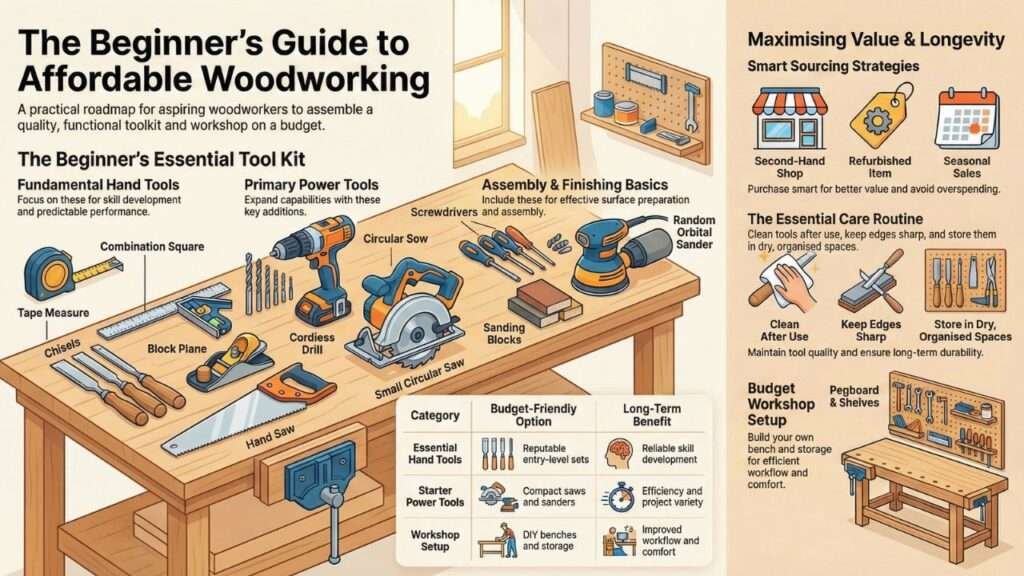
A beginner does not need a large collection of tools to start working with timber. A small selection of essential items can support a wide range of early projects. These tools help new woodworkers learn fundamental techniques while keeping the initial investment manageable.
1. A reliable tape measure for accurate layout.
2. A combination square for marking straight lines and checking corners.
3. A set of chisels for shaping and refining joints.
4. A block plane for smoothing edges and adjusting fits.
5. A hand saw for basic cutting tasks.
6. A cordless drill for drilling holes and driving screws.
7. A set of screwdrivers for assembly work.
8. Sanding blocks for surface preparation.
Starter power tools can expand capability without overwhelming the workspace. A small circular saw or jigsaw can handle most early cutting tasks.
A random orbital sander can improve surface preparation and finishing.
These tools offer flexibility and support a wide range of beginner projects.
A simple woodworking kit that includes these essentials allows beginners to explore different techniques and build foundational skills.
Each tool contributes to a calm and creative woodworking environment where natural materials take centre stage.
How to Find Affordable Yet Reliable Woodworking Tools.
Finding affordable tools that still offer dependable performance requires a combination of research and patience.
Many brands offer entry level ranges that maintain quality while keeping prices accessible. These tools often provide excellent value for beginners who want durability without unnecessary features.
Shopping online can reveal competitive pricing across a wide range of tools. Many retailers offer seasonal discounts and bundle deals that reduce overall costs. Comparing product descriptions and customer feedback helps identify tools that perform well in real workshop settings.
Secondhand tools can also provide excellent value. Many older hand tools were built to last and only require basic cleaning or sharpening to return to full function. Local markets community groups and online classifieds often list tools at reasonable prices.
Some woodworkers also explore refurbished tools from reputable sellers.
These tools are inspected and restored which provides confidence in their condition while keeping costs lower than new items.
1. Look for reputable budget friendly brands.
2. Compare prices across multiple retailers.
3. Consider secondhand or refurbished tools.
4. Watch for seasonal sales and bundle offers.
5. Read product descriptions carefully to understand features.
This approach allows beginners to assemble a capable tool collection without exceeding their budget.
Setting Up Your First Workshop Without Breaking the Bank.
A functional workshop does not require a large space or expensive equipment. Many beginners start in a spare room garage corner or outdoor shed.
A small and well organised workspace supports creativity and encourages regular practice.
A simple workbench is the centrepiece of any woodworking area.
Beginners can build their own bench using affordable materials which provides both a workspace and an early project. A sturdy surface improves accuracy and comfort during woodworking tasks.
Storage solutions help maintain order in a small workshop. Wall mounted shelves pegboards and simple tool racks keep essential items within reach.
Clear organisation reduces clutter and supports a calm working environment.
Lighting also plays an important role. Natural light is ideal for woodworking because it reveals grain patterns and surface details.
Supplementing natural light with affordable LED fixtures ensures consistent visibility throughout the workspace.
Space saving ideas can make a small workshop feel more efficient. Foldable benches mobile tool carts and compact storage units allow beginners to adapt their workspace to different tasks.
Caring For and Maintaining Your Tools for Long Term Use.
Proper maintenance extends the lifespan of woodworking tools and preserves their performance. Simple routines keep tools in good condition and reduce the need for replacements.
Cleaning tools after each use prevents dust and debris from building up. Wiping metal surfaces with a dry cloth helps prevent corrosion.
Wooden handles benefit from occasional conditioning with natural oils to maintain comfort and durability.
Sharpening is an essential skill for any woodworker. Sharp tools produce cleaner cuts and require less effort.
Beginners can start with basic sharpening stones or affordable sharpening systems. Regular sharpening ensures consistent performance and supports safe and accurate woodworking.
Storing tools properly protects them from damage.
Hand tools should be kept in drawers racks or tool rolls to prevent unnecessary wear. Power tools should be stored in dry areas with cords neatly coiled.
1. Clean tools after each use.
2. Keep cutting edges sharp.
3. Store tools in dry organised spaces.
4. Condition wooden handles when needed.
5. Inspect tools regularly for signs of wear.
These habits support long term tool performance and contribute to a more enjoyable woodworking experience.
Tool Selection and Workshop Planning Overview.
A simple table can help beginners understand how different choices influence their woodworking setup.
Category | Purpose | Budget Friendly Options | Long Term Benefits |
Essential hand tools | Basic shaping and measuring | Entry level sets from reputable brands | Reliable performance and skill development |
Starter power tools | Cutting and sanding tasks | Compact saws and sanders | Increased efficiency and project variety |
Workshop setup | Workspace organisation | DIY benches and simple storage | Improved workflow and comfort |
Maintenance tools | Sharpening and cleaning | Basic stones and brushes | Extended tool lifespan and consistent results |
This overview highlights how thoughtful planning supports both affordability and quality.
What’s The Next Steps?
Beginning a woodworking journey with affordable quality tools creates a strong foundation for long term enjoyment.
A small collection of essential tools supports early projects and encourages steady skill development.
Careful research and thoughtful purchasing decisions help beginners find reliable tools that fit their budget.
A simple and organised workshop enhances creativity and makes woodworking a rewarding part of home life.
A calm and consistent approach to tool care ensures that each item remains dependable for many years.
With these elements in place beginners can start creating wooden pieces that bring warmth and character to their homes.