Bathroom Renovation And Design
A bathroom changes character when its surfaces, light and proportions are reconsidered with care. The process is not only about replacing fixtures.
It is about shaping a room that supports daily routines with clarity and calm.
The choices made at each stage influence how the space feels when warm water hits the basin or when morning light lands on a tiled wall.
Budget Foundations.
A renovation begins with a financial structure that guides every later decision.
The cost of tile, joinery and fixtures becomes clearer when the budget is divided into defined categories.
The texture of porcelain, the weight of a solid brass tap and the density of engineered stone all sit within these allocations.
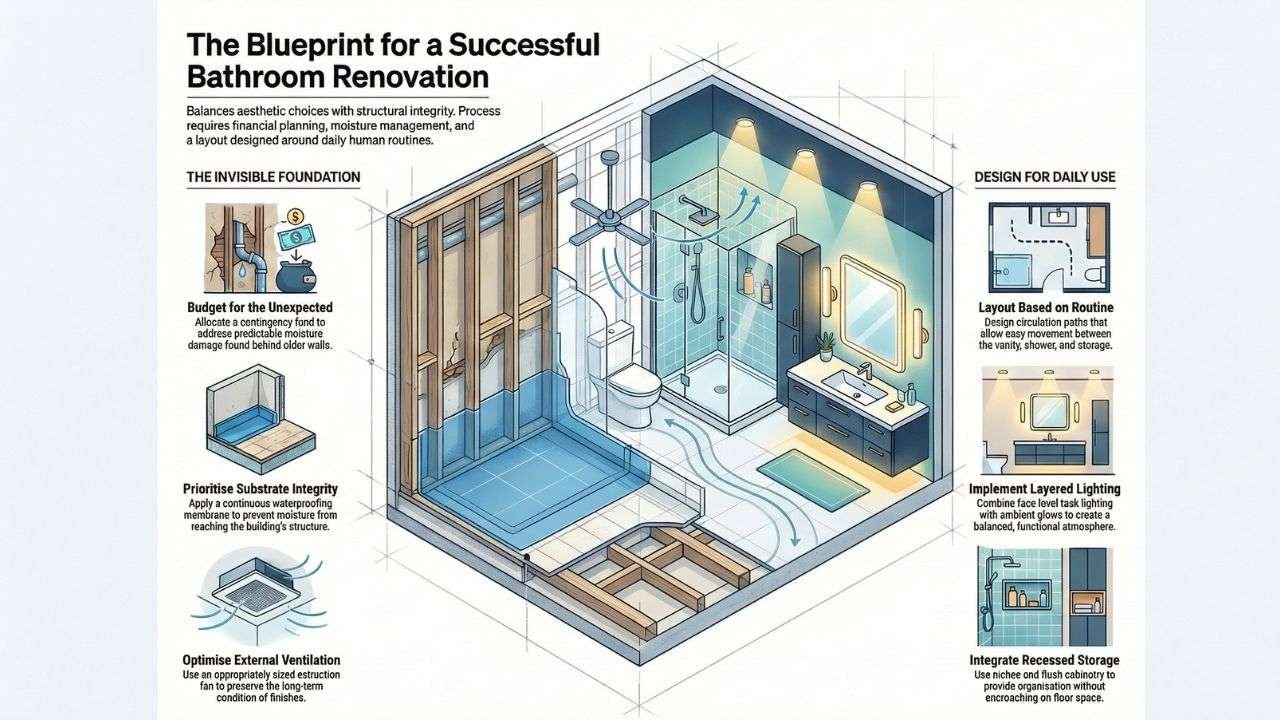
A contingency allowance is essential because older bathrooms often reveal saturated subfloors or aging plumbing once the walls are opened.
This is not a theoretical concern. It is a predictable outcome of moisture and time. The trade off is simple.
A well planned contingency protects the design intent while avoiding rushed compromises.
- Allocate funds to labour, materials and fixtures in clear proportions.
- Set aside a contingency allowance that remains untouched until required.
- Review the cost impact of premium finishes compared to standard options.
Function And Daily Use.
A bathroom succeeds when it supports the habits of the people who use it.
The pattern of movement from shower to vanity or from storage to mirror shapes the layout more than any aesthetic preference.
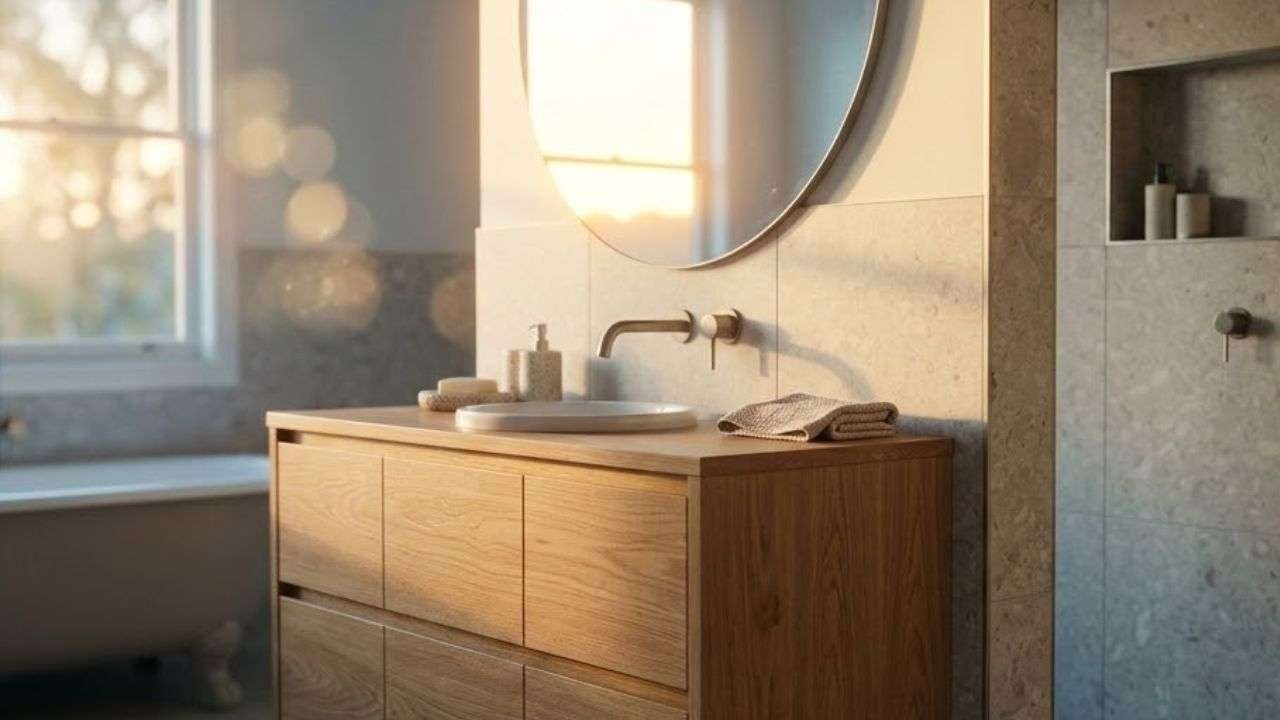
A family bathroom with towels stacked in a warm timber cabinet has different requirements from a compact ensuite where a single user needs efficient access to grooming items.
The feel of the room changes when the basin height matches the user or when the shower controls are placed within easy reach.
A small tangential observation often emerges during planning.
People tend to underestimate just how much space a simple laundry basket occupies and how often it becomes part of the bathroom landscape.
- Identify who uses the bathroom and how often.
- Define essential functions before considering aspirational features.
- Align storage and circulation with real daily routines.
Layout And Spatial Logic.
The arrangement of fixtures determines how the room breathes.
A well considered layout allows a person to move from the door to the vanity without navigating around obstacles.
The grain of timber cabinetry, the cool surface of stone and the reflective quality of glass all interact differently depending on their placement.
Retaining existing plumbing locations can preserve budget but may limit design freedom. Moving a toilet or shower drain requires more extensive work beneath the floor. The counter intuitive insight here is that a small bathroom can feel larger when one element is made visually dominant rather than trying to distribute attention evenly across the space.
- Maintain clear circulation paths between fixtures.
- Assess the cost implications of relocating plumbing.
- Consider visual hierarchy to enhance perceived space.
Ventilation And Moisture Management.
Moisture control determines the long term condition of the bathroom. Steam rising from a hot shower settles on tile, grout and timber trim.
Without adequate ventilation these surfaces remain damp for extended periods. A properly sized extraction fan that vents to the exterior prevents this accumulation.
Operable windows add natural airflow and allow morning air to clear residual humidity. The quiet hum of a well installed fan becomes part of the room’s rhythm. It is a subtle presence but it preserves the integrity of the finishes.
- Select a fan with capacity suited to the room size.
- Ensure ducting directs moisture outdoors.
- Combine mechanical and natural ventilation where possible.
Plumbing And Mechanical Systems.
Behind the tiled surfaces lies the network that determines water flow and temperature stability.
The diameter of pipes, the age of valves and the capacity of the hot water system all influence performance. A rainfall showerhead requires adequate pressure to deliver a consistent sheet of water.
Older homes may need upgraded supply lines to support modern fixtures. The sound of water moving through new copper or PEX lines is noticeably smoother than through aging pipes.
This mechanical foundation is rarely visible yet it shapes the experience of every shower and every turn of the tap.
- Review existing supply and drainage conditions.
- Confirm compatibility between fixtures and water pressure.
- Assess whether the hot water system meets new demand.
Lighting And Atmosphere.
Light defines the bathroom’s mood. A pair of sconces beside the mirror creates even illumination across the face.
Overhead lighting provides general brightness while a concealed LED strip beneath a floating vanity adds a soft glow that reflects off the floor tiles.
The colour temperature of the bulbs influences how natural the skin appears in the mirror. Warm light softens the room while cooler light sharpens detail.
The interplay between light and surface texture becomes most noticeable when it strikes matte tile or brushed metal.
- Use layered lighting for balanced illumination.
- Position task lighting at face level.
- Select colour temperatures that suit the room’s palette.
Materials And Finishes.
Material selection determines both appearance and maintenance. Large format porcelain tiles reduce grout lines and create a calm visual field.
Natural stone offers variation in veining and tone but requires sealing to maintain its surface. Timber vanities introduce warmth and pair well with soft grey or white tile. The tactile quality of each material matters.
Running a hand across honed stone or smooth timber reveals differences that influence the room’s character.
A practical limitation arises with highly textured tile. It provides visual interest but requires more effort to keep clean.
- Compare maintenance requirements of each material.
- Balance natural variation with durability.
- Select finishes that support the intended atmosphere.
Storage And Organisation.
Storage shapes how tidy the bathroom feels day to day.
Deep drawers beneath the vanity hold bulkier items while a recessed niche in the shower keeps bottles off the floor.
The grain of timber shelves or the cool surface of glass cabinets adds subtle texture to the room.
A well placed medicine cabinet can sit flush with the wall and maintain a clean profile. The most effective storage solutions are those that disappear into the design rather than draw attention.
- Create zones for daily and occasional items.
- Integrate recessed storage where possible.
- Use cabinetry proportions that suit the room’s scale.
Timeline And Workflow.
A renovation progresses through defined stages. Demolition reveals the structure beneath the existing finishes.
Plumbing and electrical work follow. Waterproofing is applied before tile is set. Each stage requires drying or curing time.
The sound of tools, the presence of dust and the temporary loss of bathroom access all affect daily routines.
A clear timeline helps manage expectations. The process cannot be rushed because each layer supports the next.
- Outline each phase before work begins.
- Allow adequate time for curing and installation.
- Plan for temporary adjustments to household routines.
Waterproofing And Substrate Integrity.
The unseen layers beneath the tile determine the bathroom’s durability.
A waterproof membrane applied to the walls and floor prevents moisture from reaching the structure.
The membrane must be continuous and correctly lapped at junctions. Tile is a decorative surface. The real protection lies beneath.
The feel of a properly prepared substrate is solid underfoot with no flex or hollow sound. This foundation ensures the finishes remain stable over time.
- Apply a continuous waterproofing membrane.
- Confirm correct installation sequence.
- Ensure substrates are rigid and properly prepared.
Closing Perspective.
A bathroom renovation becomes successful when the room feels coherent from the moment the door opens.
The grain of timber, the clarity of light and the balance of materials all contribute to a space that supports daily routines with quiet efficiency.
When each decision is grounded in function and craftsmanship the room gains a sense of calm that endures.