Exterior And Interior Woodwork
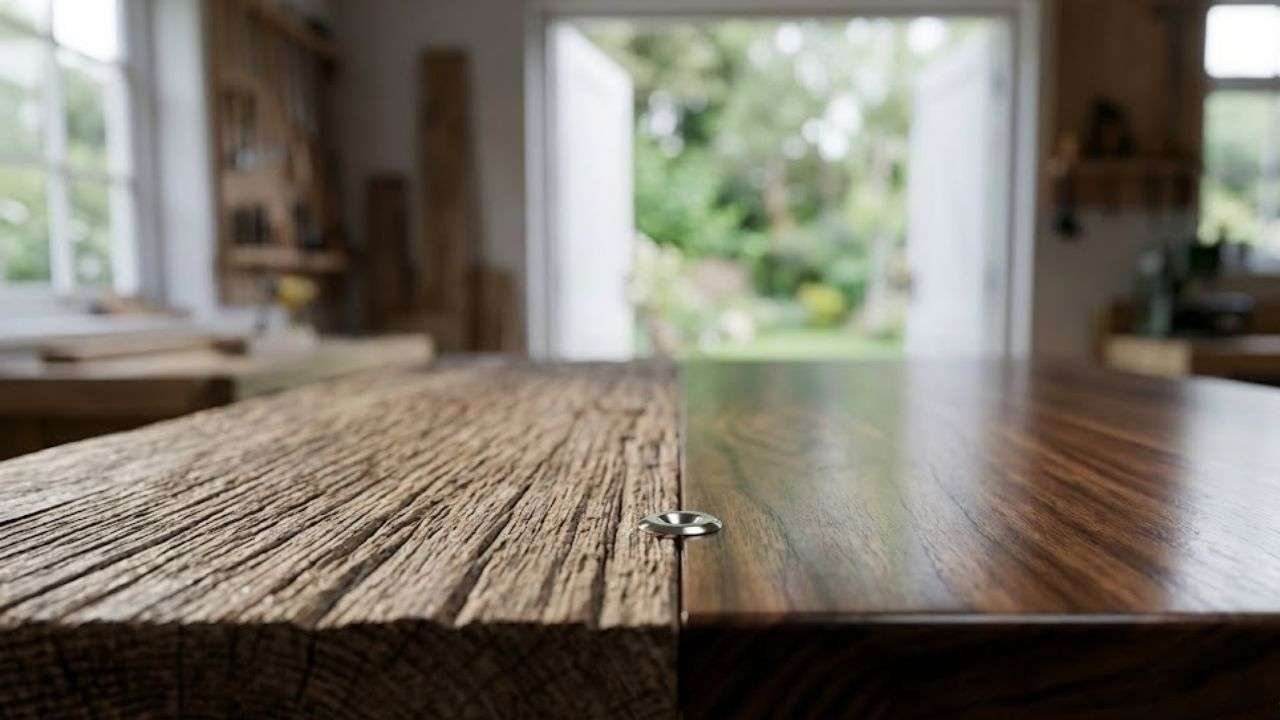
Wood sits on both sides of the building envelope yet behaves as if it belongs to two different worlds.
The contrast is immediate when you run your hand across a sun‑warmed deck rail then step inside and touch a polished tabletop.
The material is the same but the expectations placed upon it are not.
This distinction shapes every decision from species selection to joinery to long term care.
The Environment Shapes Every Outcome.
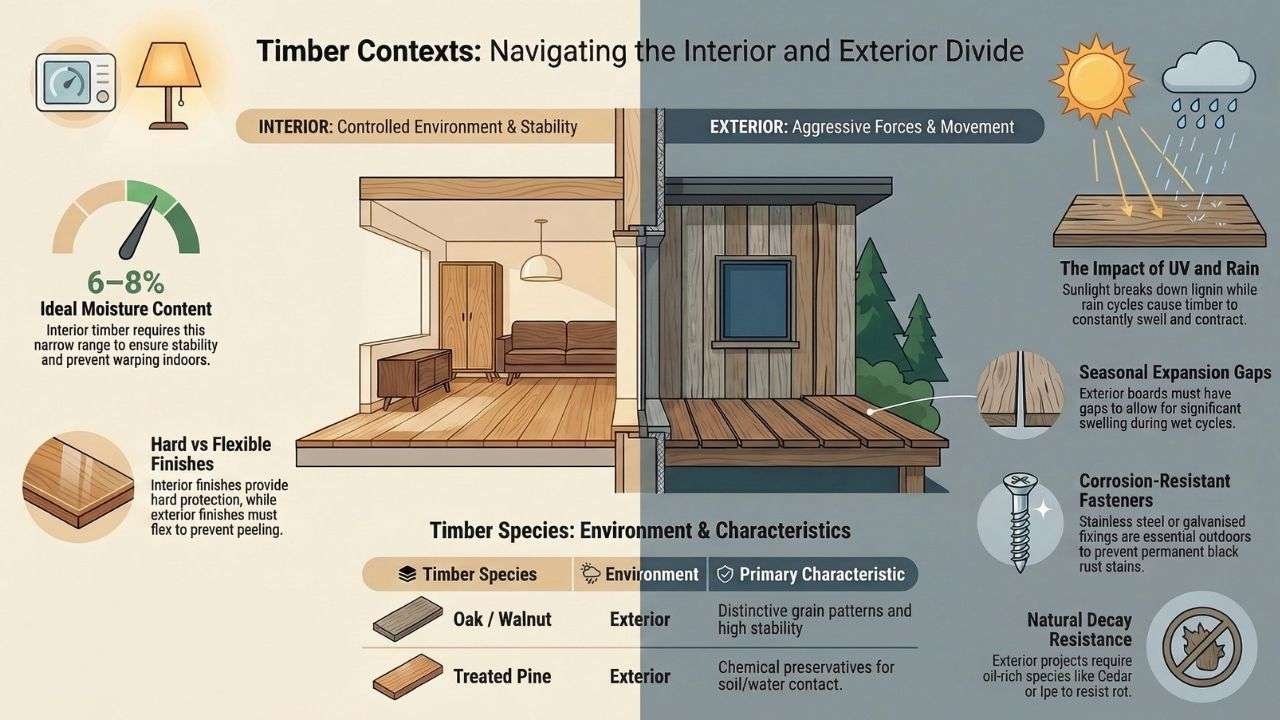
Exterior woodwork lives in a shifting climate that never pauses. Sunlight breaks down lignin and leaves a silvered surface.
Rain pushes moisture deep into the grain. Humidity cycles cause boards to swell then contract.
These forces create a rhythm that exterior timber must endure. Interior woodwork sits in a controlled environment where the air is filtered and the temperature is steady.
The challenges are quieter. Dry air can open small cracks in a panel and a cold glass can leave a pale ring on an oiled surface.
The contrast is not about hostility or comfort. It is about the scale of the forces acting on the wood.
Material Selection Determines Longevity.
Species choice is the first structural decision. Cedar and redwood contain natural oils that resist decay.
Ipe, also known as Brazilian Walnut, is dense and heavy with a surface that feels almost waxy when freshly milled. Pressure treated pine carries preservatives deep into the fibres.
These materials hold up when exposed to rain and sun. Interior work relies on stability and appearance. Poplar planes cleanly and takes paint without fuss.
Oak and maple offer crisp grain that responds well to fine sanding. Walnut and cherry bring warmth to a room through colour alone.
A piece of pressure treated lumber brought indoors will twist as it dries. The chemicals leave a faint scent and the surface remains coarse.
The mismatch becomes obvious once the wood acclimates.
Moisture Content Controls Movement.
Kiln dried interior lumber arrives at a moisture content that suits a climate controlled home. The figure is usually between 6 and 8 percent.
This narrow range keeps movement predictable. Construction lumber used outdoors often carries far more moisture.
When brought inside it shrinks and can distort within days. A board that felt straight in the yard may cup once the heating system draws moisture from it.
This is one of the more counter intuitive aspects of woodworking.
A piece of wood that feels solid and heavy is often the least stable choice for interior work because the weight comes from water not density.
Joinery Responds To Seasonal Change.
Exterior joinery must shed water and allow for expansion.
A horizontal surface that traps moisture will fail long before the rest of the structure. Gaps between deck boards give the wood room to move.
Waterproof adhesives and stainless steel fasteners prevent staining. Interior joinery can be more precise.
A dovetail joint relies on tight contact between surfaces. A domino joint creates alignment that stays true through the seasons. The difference is not about craftsmanship. It is about the forces the joint must resist. A pergola beam can accept a small seasonal gap. A cabinet drawer cannot.
Finishes Define Protection And Appearance.
Exterior finishes must flex with the wood. A penetrating oil sinks into the grain and allows moisture to escape.
A marine varnish offers a glossy surface that can tolerate sunlight without peeling. Film forming finishes that work well indoors often fail outside because trapped moisture pushes them away from the surface.
Interior finishes focus on touch and clarity. Polyurethane creates a hard surface that resists spills. Shellac gives a warm glow that highlights figure.
Lacquer dries quickly and suits furniture with clean lines. Wax adds a soft sheen that feels pleasant under the hand. The choice depends on how the piece will be used and how often it will be handled.
Rot And Pests Follow Moisture.
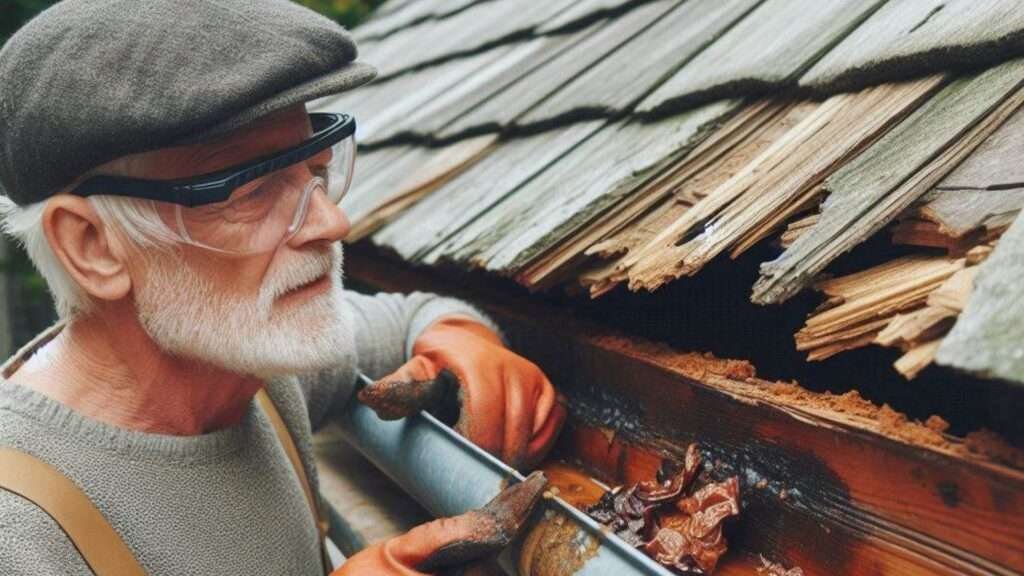
Exterior wood that stays damp becomes vulnerable to fungal decay. Dry rot begins when moisture lingers in shaded areas.
Wood boring beetles target timber that remains wet for long periods. Keeping exterior wood dry is the most effective defence.
Interior wood faces different pressures. Powderpost beetles can emerge from lumber that was not properly treated.
Termites can move through structural elements that remain hidden behind walls. These issues arise slowly and often begin with a single unnoticed piece of infested wood.
The contrast between environments shapes the type of vigilance required.
Design Reflects Context.
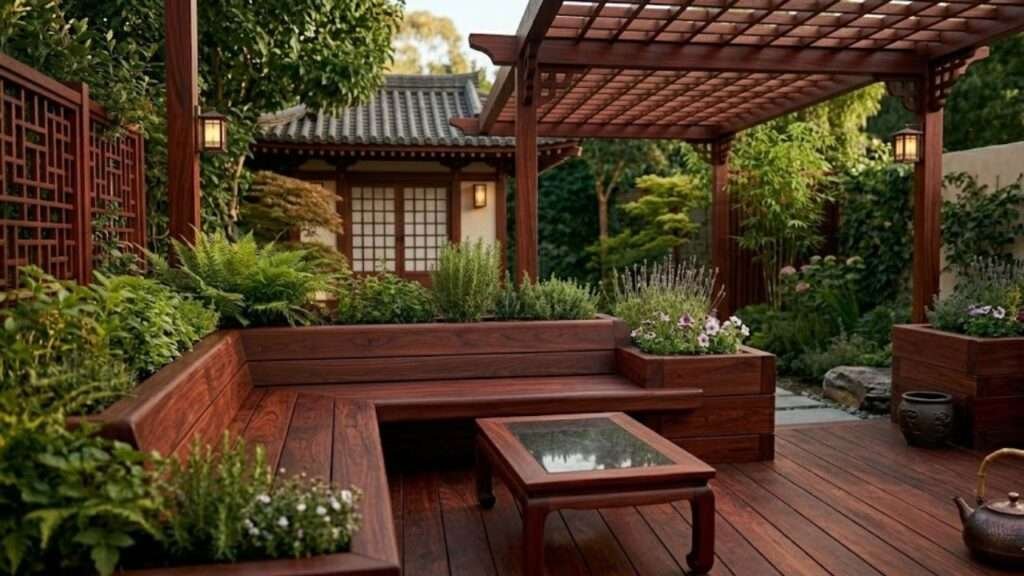
Exterior structures often embrace texture. Rough sawn beams show the marks of the mill. A pergola can carry small irregularities that add character.
Timber cladding weathers into a soft grey that blends with the landscape. Interior design leans toward refinement.
A table leg may taper gently toward the floor. A cabinet door may feature a subtle bevel that catches the light. The difference is not about quality.
It is about intention. A small tangential observation arises here.
The grain pattern that looks bold and expressive on an outdoor bench can feel overwhelming when used on a narrow interior trim piece. Scale changes perception.
Expansion Gaps Maintain Stability.
Wood expands across its width far more than along its length. This rule guides both exterior and interior work. Deck boards need space between them so they do not press against each other when wet.
A solid wood tabletop must be attached with hardware that allows movement. Buttons or z clips hold the top securely while letting it shift with humidity.
The trade off is that these systems require planning. A tabletop fixed rigidly to its base may look perfect on the day it is built but can crack once the seasons change. Allowing movement preserves the piece.
Fasteners Influence Appearance And Durability.
Exterior fasteners must resist corrosion. Stainless steel and hot dipped galvanized screws prevent black stains that appear when tannins react with rust. These stains can spread across the grain and become difficult to remove.
Interior work can rely on standard steel fasteners. Brass screws add a decorative element to fine furniture.
The choice of fastener affects both performance and appearance. A single mismatched screw on an exterior gate can leave a dark streak that draws the eye every time the sun hits it.
Maintenance Defines The Relationship With Wood.
Exterior woodwork requires regular attention. A deck stain may last two or three years before it needs renewal.
Painted window sashes need fresh coats every few years. Ignoring these cycles allows moisture to enter the grain. Interior woodwork ages more gently.
A table may need a new coat of wax after several years of use. A lacquered surface may require only light cleaning.
The difference in maintenance reflects the environments the wood inhabits. A piece that sits in the sun and rain will always need more care than one that lives in a stable room.
Closing Reflections.
Exterior and interior woodwork share a material but not a context. The forces acting on each piece shape the decisions behind it.
Understanding movement moisture and finish allows the craftsperson to work with the wood rather than against it. The result is a home where timber feels coherent across both worlds.