Exterior Home Woodwork

Exterior Home Woodwork shapes the first impression of a home.
It also reflects the quiet discipline of working with materials that live outdoors. The grain shifts with the weather. Light changes the surface hour by hour.
These elements create a setting where craftsmanship becomes part of the landscape rather than something contained inside a workshop.
Understanding the Scope of Exterior Woodwork.
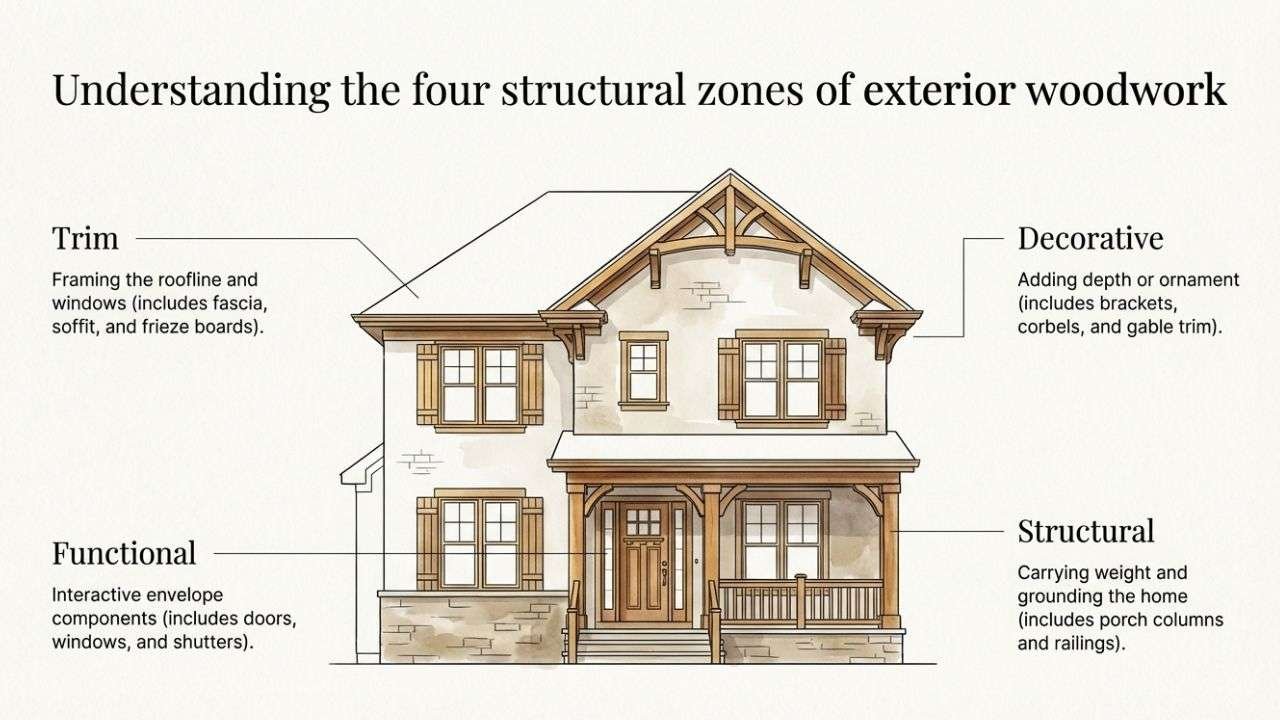
Exterior woodwork includes every wooden component attached to the outside of a house. Trim frames the roofline and windows.
Columns carry the weight of a porch roof. Shutters, brackets and gable details add structure or ornament. Each piece meets the climate directly which gives the work a different rhythm from interior carpentry.
Even a simple fascia board feels more substantial when you lift it and notice the faint scent of resin rising from freshly cut end grain.
- Trim includes fascia, soffit and frieze boards.
- Functional elements include doors, windows and shutters.
- Decorative components include brackets, corbels and gable trim.
- Structural pieces include porch columns and railings.
Functional Purpose in Daily Use.
Exterior woodwork protects the home by closing the small gaps where materials meet. A window casing that sits flush against the siding keeps moisture from settling behind the frame.
A porch railing that fits tightly into its posts prevents movement that would otherwise loosen the joints over time.
The functional role becomes clear when you run a hand along a painted sill and feel how the surface slopes slightly to shed water. That small detail influences the longevity of the entire assembly.
This work also shapes how a house handles seasonal change.
Wood expands and contracts which means the joinery must anticipate movement. A tight joint in winter may open slightly in summer.
This natural shift is not a flaw. It is a reminder that exterior woodwork is a living part of the building envelope.
Architectural and Aesthetic Influence.
The visual impact of exterior woodwork is immediate. Thick square columns give a porch a grounded presence.
Narrow vertical trim around windows creates a crisp outline that catches morning light. Decorative brackets under eaves add depth to a roofline.
These elements influence the character of a house more than many homeowners expect. A woodworkers home feels complete only when the exposed rafter tails are shaped with intention.
A Victorian facade gains its identity from the layered profiles of its trim. Even a contemporary home benefits from the warmth of a cedar soffit that softens the transition between wall and roof.
A small tangential observation often arises during this work. The colour of the surrounding landscape can change how a wood species appears.
A cedar board that looks warm indoors may appear cooler when placed beside grey stone or pale render.
Selecting Wood Species for Exterior Conditions.
Choosing the right wood species determines how well the work will age. Cedar and redwood resist decay naturally.
Their grain feels slightly oily when sanded which hints at their durability.
These species remain stable through seasonal shifts which makes them suitable for trim and exposed details.
The trade-off is cost. High quality boards can be expensive which influences project scope. Pressure treated pine offers an economical alternative.
It withstands moisture well but often arrives with a higher moisture content.
As it dries it may twist or check which requires careful selection and planning.
Fir provides strength and a smooth surface for paint. Cypress offers natural resistance to decay and a pleasant scent when cut.
Tropical hardwoods such as mahogany deliver exceptional durability and a refined appearance. They also raise sustainability considerations which many homeowners weigh carefully.
A nuanced observation emerges when comparing these species. The most durable wood is not always the most satisfying to work with.
Some hardwoods resist shaping which limits design options. A softer species may allow more expressive profiles even if it requires more maintenance.
Engineered Alternatives and Their Role.
Modern exterior work includes materials beyond solid wood. PVC trimboard resists moisture and does not warp.
It cuts cleanly and holds crisp edges although it lacks the tactile warmth of natural wood. Fiber cement trim offers strength and stability.
It holds paint well and remains unaffected by insects. Its weight can slow installation which influences labour planning.
MDF is suitable only in protected areas such as porch ceilings.
It swells when exposed to moisture which limits its use.
Engineered materials provide consistency which can be helpful when matching long runs of trim.
They also reduce maintenance in areas where weather exposure is intense. The limitation is texture. Even the best alternatives do not replicate the subtle grain patterns that make natural wood visually engaging.
Installation Practices That Support Longevity.
Exterior woodwork rewards precision. A well fitted joint remains tight through seasonal changes.
A scarf joint on a long fascia run creates a cleaner line than a simple butt joint. Coping inside corners on trim produces a shadow line that feels intentional. These details influence both appearance and performance.
Water management is central to installation. Flashing directs moisture away from vulnerable areas.
Proper fasteners prevent staining and maintain structural integrity.
Back priming each piece before installation reduces moisture absorption from behind. The smell of primer on raw wood often signals the start of a careful process that continues through each stage of the build.
A practical limitation appears when working with long boards. Transporting and handling them requires space. In small yards or tight driveways this becomes a logistical challenge that affects workflow.
Finishing Choices and Their Effects.
Paint forms a protective layer that shields wood from sunlight and moisture. A high quality primer creates a smooth base.
The final coat reflects light differently depending on sheen. A satin finish softens the appearance of grain while a gloss finish highlights every contour.
Stain interacts with wood in a different way. A penetrating stain sinks into the fibers and reveals the natural pattern. A solid stain behaves more like paint but retains a subtle texture.
UV exposure influences how finishes age. Transparent stains require more frequent reapplication.
Painted surfaces last longer but eventually show wear. The tactile difference between a freshly painted sill and a weathered one is noticeable.
The former feels smooth and cool. The latter feels slightly rough where the grain has begun to rise.
Maintenance and the Rhythm of Inspection.
Exterior woodwork benefits from regular attention. A yearly inspection reveals small changes that might otherwise go unnoticed.
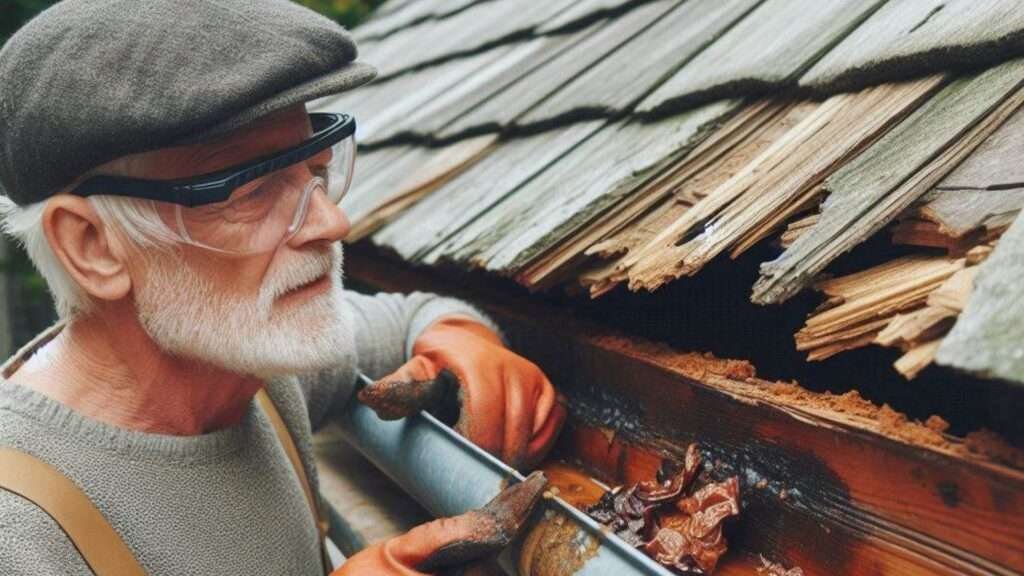
A thin line of cracked caulk around a window casing signals the need for repair. A soft spot at the base of a column suggests moisture retention.
Cleaning surfaces removes dirt that can trap moisture. These tasks become part of the seasonal rhythm of home care.
Replacing a damaged piece promptly prevents larger issues.
The sound of tapping a suspect board with a knuckle often reveals its condition. A solid tone indicates strength. A dull tone suggests internal decay. This simple check becomes second nature over time.
Common Issues and How They Develop.
Rot often begins at end grain where moisture lingers. Insect activity appears in areas where wood remains damp. Peeling paint indicates moisture movement behind the surface. These issues develop gradually.
Observing how sunlight hits different parts of the house helps identify vulnerable areas. North facing trim may stay damp longer after rain. South facing surfaces may fade more quickly due to UV exposure.
A table can clarify typical issues and their likely causes.
| Issue |
Likely Cause |
Typical Location |
| Rot |
Moisture retention |
End grain, column bases |
| Insect damage |
Damp wood |
Shaded trim areas |
| Cracked caulk |
Material movement |
Window and door casings |
| Peeling paint |
Moisture behind surface |
Sills and lower trim |
Closing Perspective.
Exterior woodwork blends craft with environmental awareness. Each piece interacts with light, moisture and temperature.
Working at the edge of the house encourages a slower pace and a closer look at how materials behave outdoors.
The result is a home that feels more grounded in its surroundings and a craft practice that extends beyond the workshop into the open air.