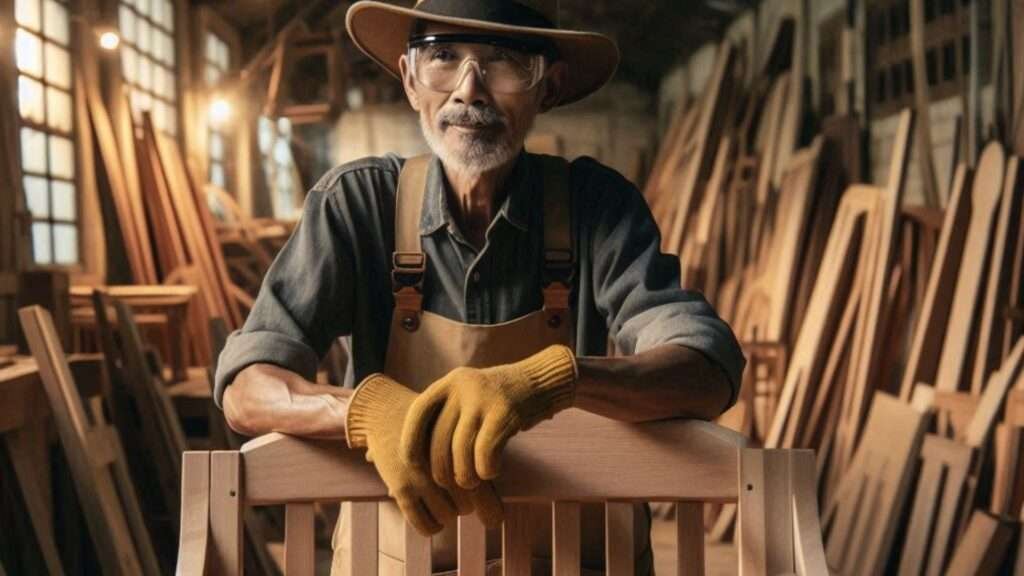
Furniture Design And Production
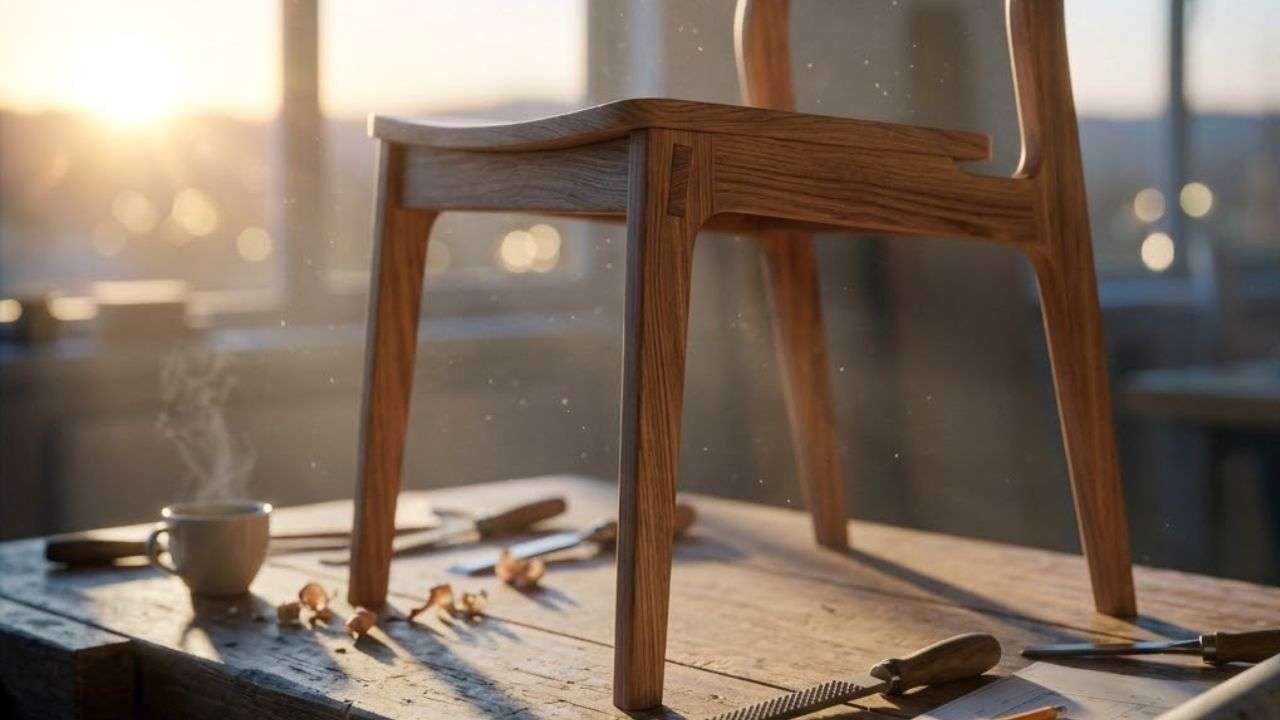
The path from an idea to a finished piece of furniture is rarely linear.
It moves through sketches, materials, prototypes, and quiet moments in the workshop when the grain catches the light in a way that changes the plan.
Articles in this space tend to follow a path with a focus on the lived experience of making things we can use every day. It’s a space where design and production are not separate disciplines but two sides of the same craft.
Design Intent And Early Exploration.
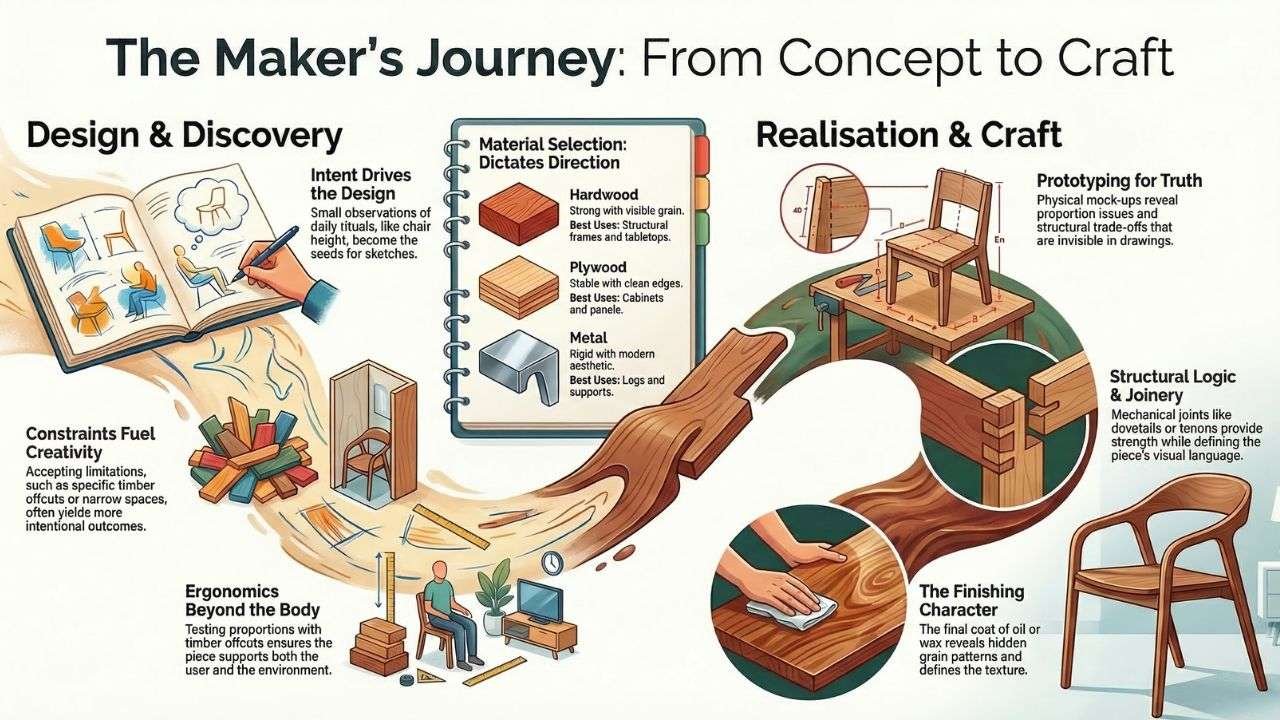
Every piece begins with intent. A maker stands in a room and notices how a corner feels empty or how a chair sits slightly too low for the morning coffee ritual. That small observation becomes the seed of a design.
The early stage is slow by necessity because it shapes everything that follows.
A sketchbook often sits open on a bench with pencil marks smudged by sawdust. The lines are loose at first then tighten as the idea gains weight.
Mood boards help refine direction. They gather textures like linen upholstery or the warm tone of oiled beech.
They also capture architectural cues or the curve of a handle on an old cabinet. These references guide proportion and atmosphere without dictating the final form. A counter-intuitive truth emerges here.
The more constraints a maker accepts the more creative the outcome becomes. A narrow hallway or a specific timber offcut can lead to a design that feels more intentional than a project with unlimited options.
This stage has one limitation that matters. It is easy to over-design before touching any material.
A concept that looks elegant on paper may feel stiff once translated into three dimensions. The workshop corrects these tendencies quickly.
Material Selection And Its Influence.
Material choice shapes the character of a piece long before joinery or finishing.
A board of blackwood with a ripple of figure across its surface invites a different approach than a sheet of birch plywood with its clean uniform layers.
The tactile reality of each material guides proportion and detail. Running a hand across a freshly planed edge reveals density and grain direction in a way no catalogue description can match.
Different materials carry different behaviours. Hardwoods like spotted gum resist shaping but reward patience with crisp edges.
Softwoods like radiata pine accept shaping easily but require thoughtful reinforcement in load-bearing areas.
Manufactured boards offer stability and predictable movement which suits cabinetry with tight tolerances. Metals introduce a cool precision that contrasts with timber’s warmth.
A small table helps clarify how material properties influence design decisions.
| Material | Key Characteristics | Best Uses | Notable Limitation |
| Hardwood | Strong with visible grain | Structural frames and tabletops | Movement across seasons |
| Softwood | Light and workable | Shelving and decorative elements | Lower surface durability |
| Plywood | Stable with clean edges | Cabinets and panels | Exposed edges need treatment |
| Metal | Rigid with modern aesthetic | Legs and supports | Requires specialised tools |
Material sourcing also shapes the final outcome. Reclaimed timber often arrives with nail holes and weathered surfaces that add history to a piece.
These marks influence design choices in subtle ways.
A maker may choose to highlight a knot rather than cut around it because it tells a story about the tree’s life.
Human Fit And Practical Use.
Furniture succeeds when it supports the body comfortably.
A chair that looks refined but presses into the back after ten minutes does not serve its purpose. Ergonomic considerations begin early.
Makers often test seat heights by sitting on offcuts stacked to different levels. The sound of timber shifting under weight gives immediate feedback about stability and comfort.
Different contexts demand different proportions. A lounge chair invites a reclined posture with a deeper seat while a dining chair requires a more upright stance.
These distinctions influence angles and joinery choices. Designing for varied users adds another layer.
A low bench that suits a child may feel awkward for an adult. Universal design principles help bridge these differences without compromising aesthetics.
A small tangential observation often arises during this stage. The light in a room changes how a piece feels in use.
A desk placed near a window may need a slightly deeper top to avoid glare on a laptop screen. These subtle adjustments show how ergonomics extends beyond the body to the environment around it.
From Concept To Prototype.
Prototyping turns ideas into physical form. It is the moment when a maker moves from imagining to testing.
A simple mock-up built from scrap timber can reveal proportion issues that were invisible in drawings. The sound of a joint seating properly or the slight wobble of a leg tells more than measurements alone.
Prototypes allow refinement. A drawer that slides too tightly can be adjusted with a few passes of a plane.
A curve that looked balanced on paper may need softening once seen in full scale. This stage also exposes trade-offs.
A delicate profile may look elegant but require reinforcement to withstand daily use. Makers decide whether to adjust the design or accept the compromise.
Testing extends beyond structure. A chair is sat in repeatedly. A cabinet door is opened and closed until the hinges settle.
These repetitive actions reveal how a piece will behave over time.
They also highlight opportunities for improvement that would not appear in a purely digital workflow.
Production Methods And Workshop Flow.
Once the design is resolved the production phase begins. The workshop shifts from exploration to execution.
Timber is selected for grain continuity and colour match. Boards are jointed and planed until they sit flat on the bench with a quiet thud. This tactile confirmation of readiness sets the tone for the rest of the build.
Different production methods suit different goals.
- Hand tools allow subtle adjustments and create surfaces with a gentle sheen from a sharp plane blade.
- CNC machining offers precision for repeated components and complex curves.
- Templates guide routing tasks and ensure consistency across multiple pieces.
- Laminating thin sheets of timber allows the creation of strong curved forms.
Each method has strengths. Hand tools excel in one-off pieces where the maker responds to the material in real time.
CNC processes shine in small-batch production where accuracy and repeatability matter. The choice depends on the desired outcome rather than a hierarchy of techniques.
A nuanced observation emerges here. Efficiency does not always mean speed. A slower method can produce a better result if it reduces rework or improves fit. Makers learn this through experience rather than theory.
Joinery And Structural Logic.
Joinery determines how a piece holds together. The tactile satisfaction of fitting a tenon into a mortise is one of the defining experiences of woodworking.
The joint should slide in with gentle pressure and seat firmly without gaps. This physical feedback confirms alignment and strength.
Different joints serve different purposes.
- Dovetails provide mechanical strength for drawers.
- Dowels offer alignment for panels.
- Cam locks support flat-pack designs where assembly must be simple.
- Metal brackets reinforce long spans in shelving.
Each choice affects the visual language of the piece.
Exposed joinery communicates craftsmanship while concealed fasteners create a clean modern look. Adhesives play a supporting role by stabilising joints without dominating the structure.
A practical limitation appears in this stage. Some joints require thicker stock or additional reinforcement which can influence the overall proportions. Makers must balance structural needs with aesthetic goals.
Finishing And Final Character.
Finishing defines the tactile and visual qualities of a piece. The first coat of oil often reveals grain patterns that were hidden during construction.
The surface darkens slightly and the workshop fills with the scent of timber warming under the cloth. This moment connects the maker to the material in a way that feels both technical and personal.
Different finishes offer different outcomes.
- Oils highlight natural grain and create a soft sheen.
- Waxes add a gentle tactile quality.
- Lacquers provide a more uniform surface.
- Powder coating gives metal components a durable colour layer.
Upholstery introduces another dimension. The tension of fabric across foam changes the silhouette of a chair.
The texture of wool or linen adds warmth that complements timber surfaces. These details influence how a piece feels in a room even before it is touched.
Finishing also marks the transition from workshop to home. A piece that looked bold under bright task lighting may appear softer in the diffuse light of a living room. Makers often consider this shift when choosing colours and textures.
Closing Reflections.
Furniture design and production is a continuous dialogue between intention and material. Each stage shapes the next and each decision leaves a trace in the final piece.
The process rewards patience and curiosity. It also reminds makers that the most satisfying results come from responding to the material world rather than forcing it to follow a rigid plan.