Wood Grain And Aesthetics
Every board pulled from a stack carries a record that no mill produced and no designer specified.
The pattern on its face is the autobiography of a tree, written in the language of growth, stress, season and time.
Understanding that language changes how a woodworker sees material, chooses it, positions it and finishes it.
What Grain Actually Is.
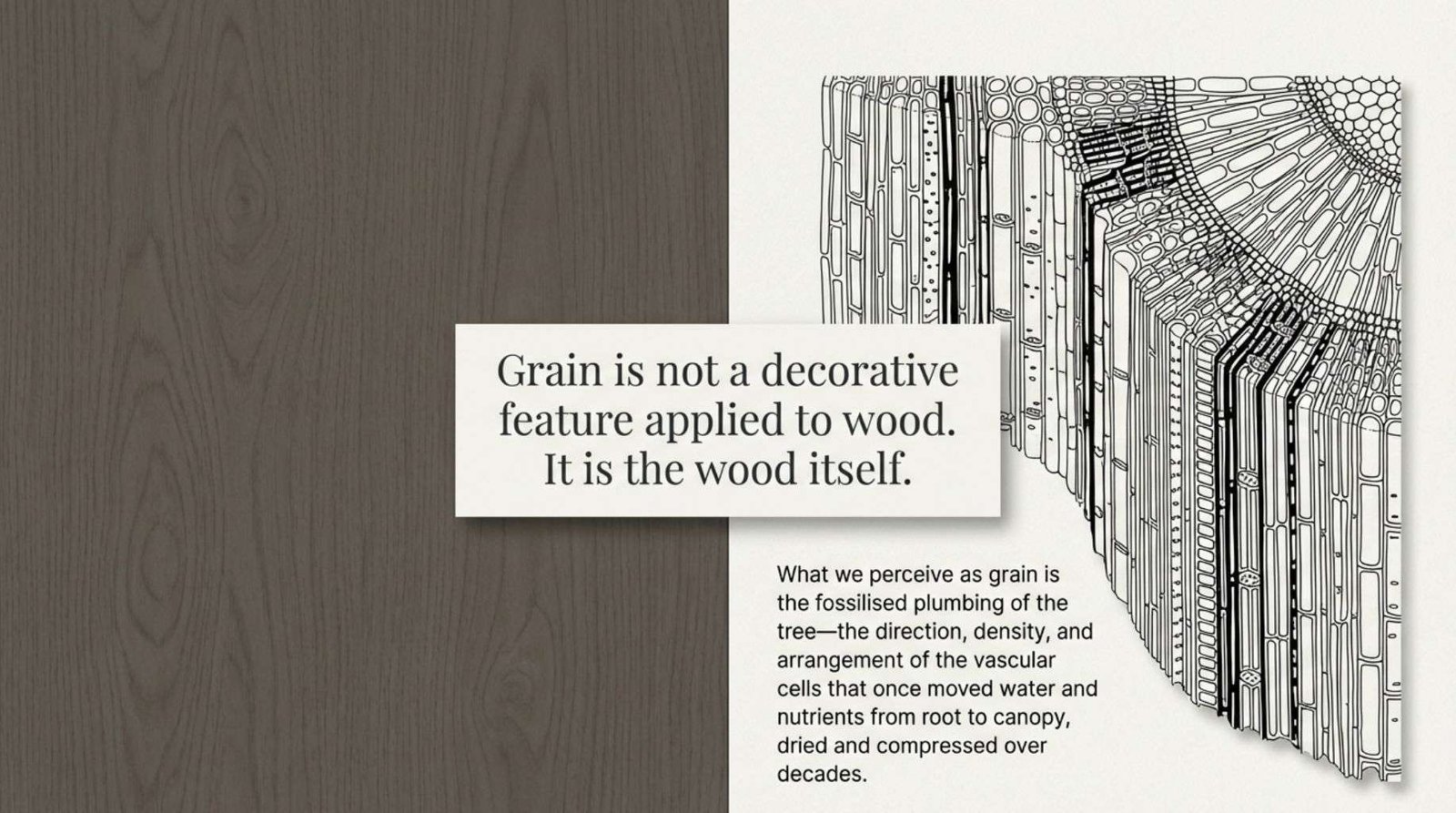
Grain is not a decorative feature applied to wood. It is the wood.
More precisely, it is the direction, density and arrangement of the vascular cells that once moved water and nutrients from root to canopy.
Xylem and phloem are the tree’s plumbing, and grain is what remains when that plumbing dries, compresses and hardens over decades.
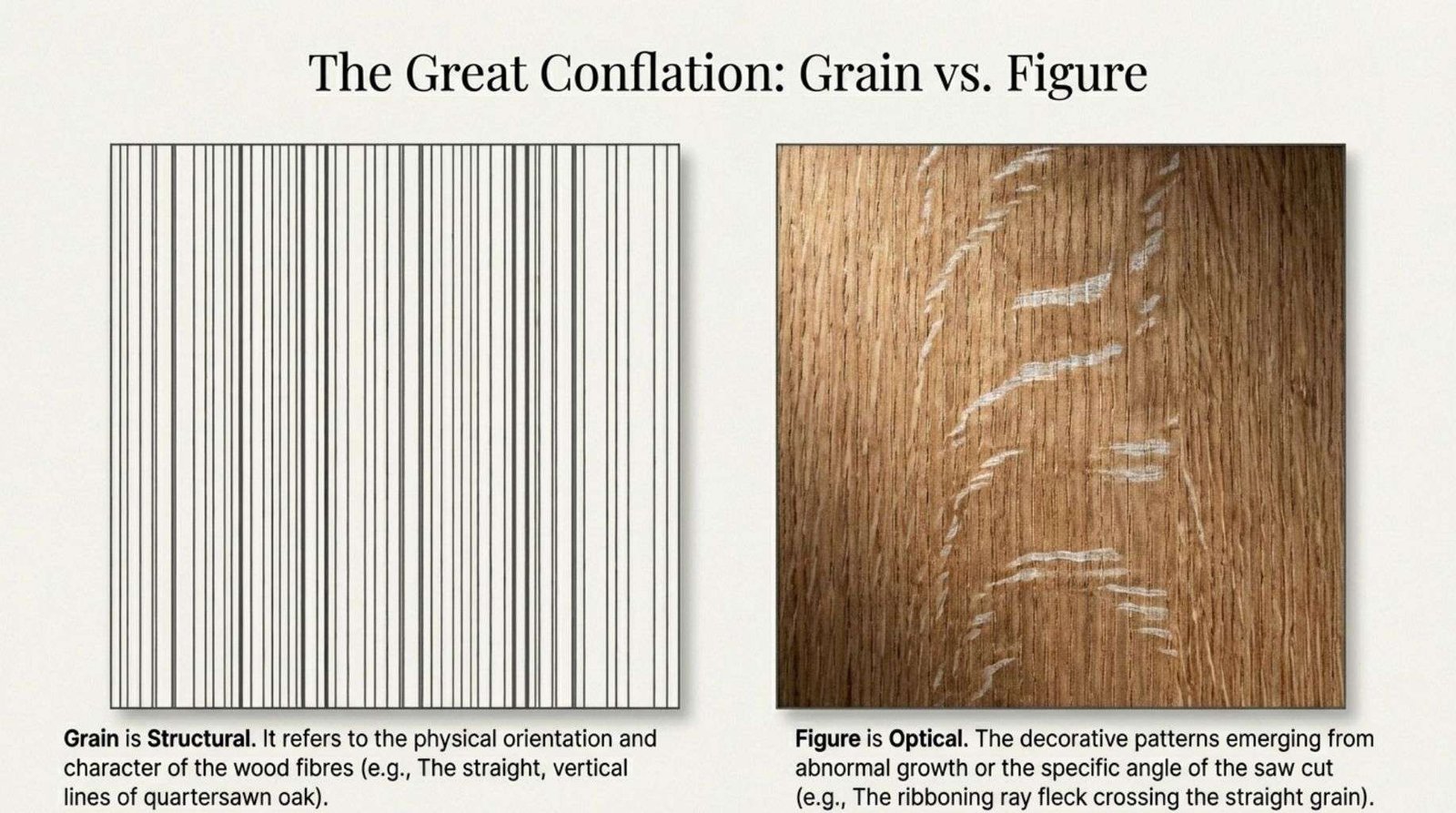
Two terms deserve separation here, because they are commonly conflated. Grain refers to the orientation and character of the fibers.
Figure refers to the decorative patterns that emerge from abnormal growth or from the angle at which a board is cut.
A piece of quartersawn oak has straight, vertical grain. If that same piece shows ribboning ray fleck, that is figure. One is structural, the other is optical.
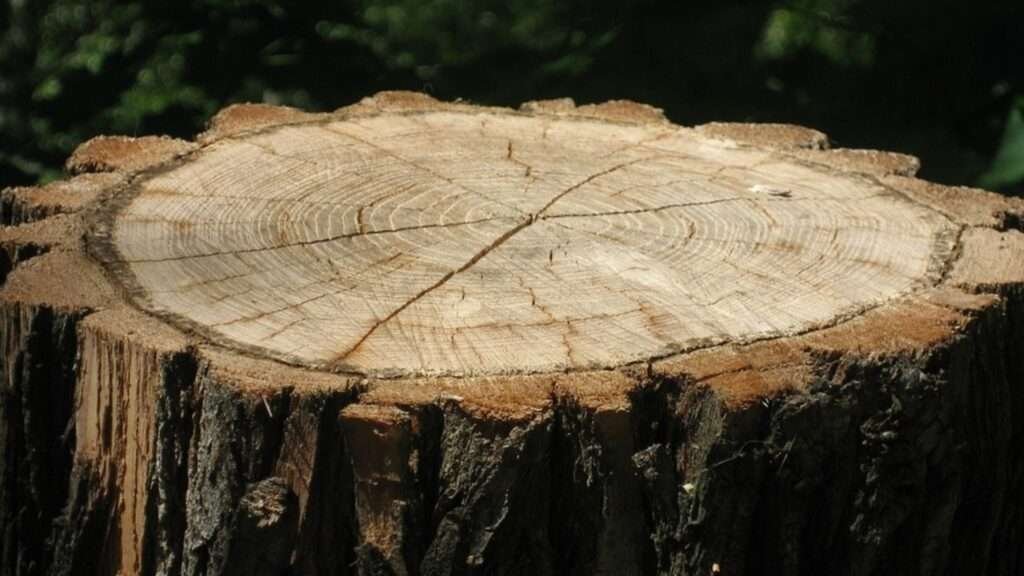
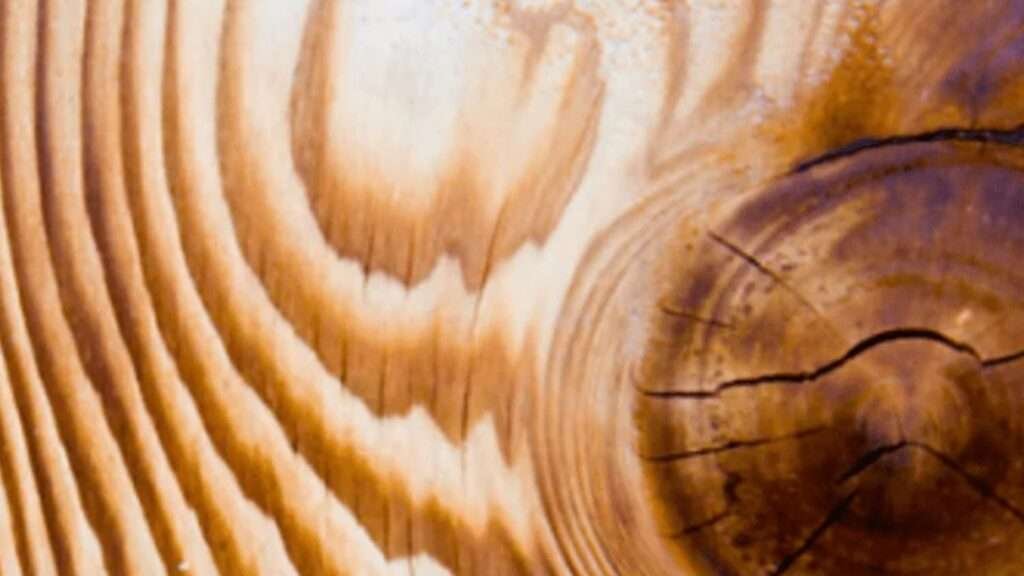
Annual rings, the contrast between pale earlywood laid down in spring and denser, darker latewood from summer, are responsible for the striped pattern most people recognise as “wood grain” on a flat-sawn face.
The Cut Defines the Face.
A single log contains multiple possible surfaces depending on how it passes through the saw.
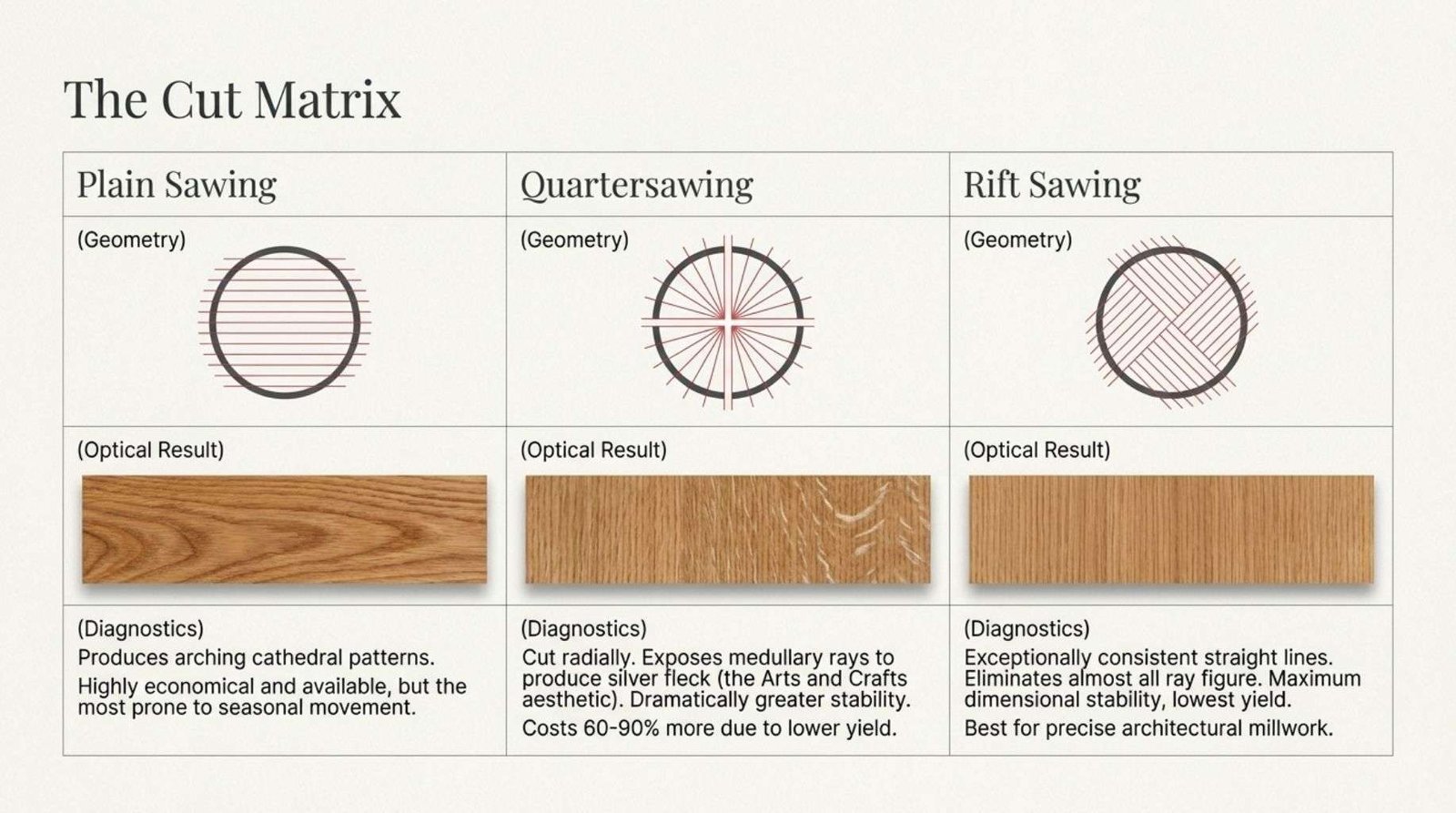
Plain sawing, the most economical method, produces the familiar arching cathedral pattern on the face of a board.
It is widely available and relatively affordable, but it is also the most prone to seasonal movement as moisture content changes.
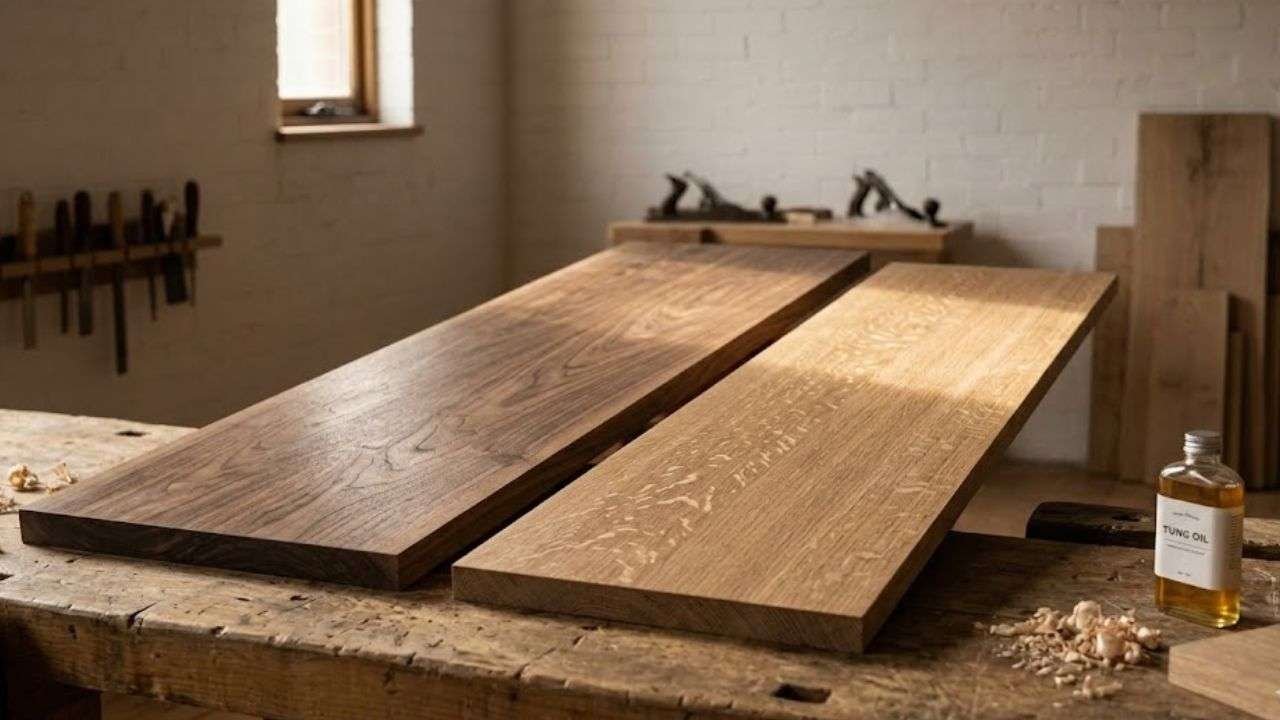
Quartersawing the log radially yields a tight, vertical grain pattern and dramatically greater dimensional stability.
In oak, sycamore and lacewood, this cut also exposes the medullary rays, the storage cells that radiate outward from the pith, producing the silver fleck that defines the Arts and Crafts aesthetic.
Rift sawing goes a step further, eliminating almost all ray figure to produce an exceptionally consistent straight-line grain used in architectural millwork and fine furniture legs where visual uniformity matters more than figure.
The practical trade-off is material yield. Quartersawn and rift-sawn lumber waste more of the log. A quartersawn white oak board may cost sixty to ninety percent more than its plain-sawn equivalent from the same source, and availability is limited in many regions.
The Visual Vocabulary of Figure.
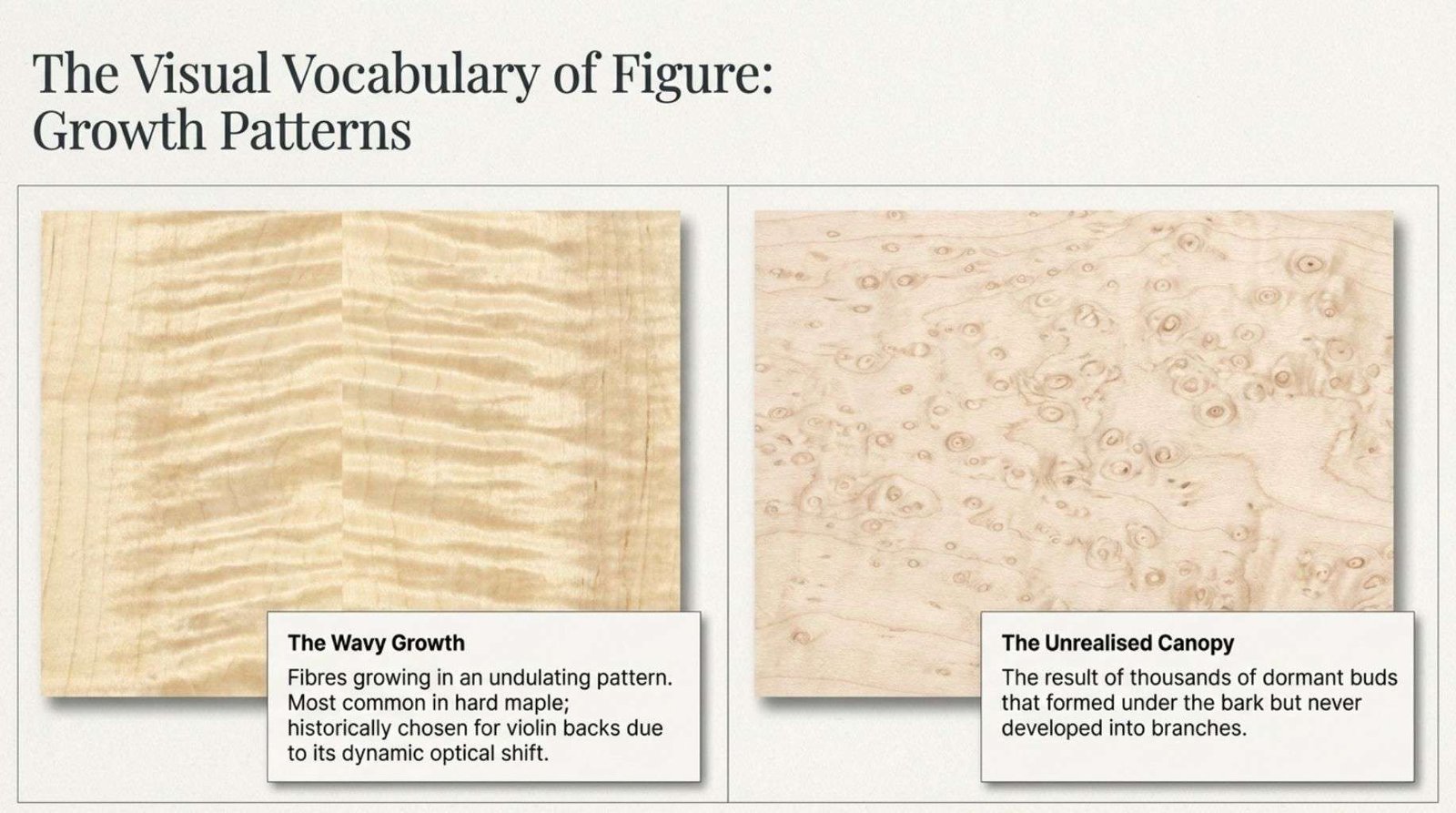
Curly figure, sometimes called tiger stripe or fiddleback, occurs when the wood fibers grow in a wavy pattern.
Under raking light, the surface appears to shift and shimmer as the viewer moves. It is most common in hard maple and is the reason maple is chosen for violin backs.
Bird’s eye figure produces small, circular swirling patterns scattered across the surface, the result of dormant buds that never developed into branches.
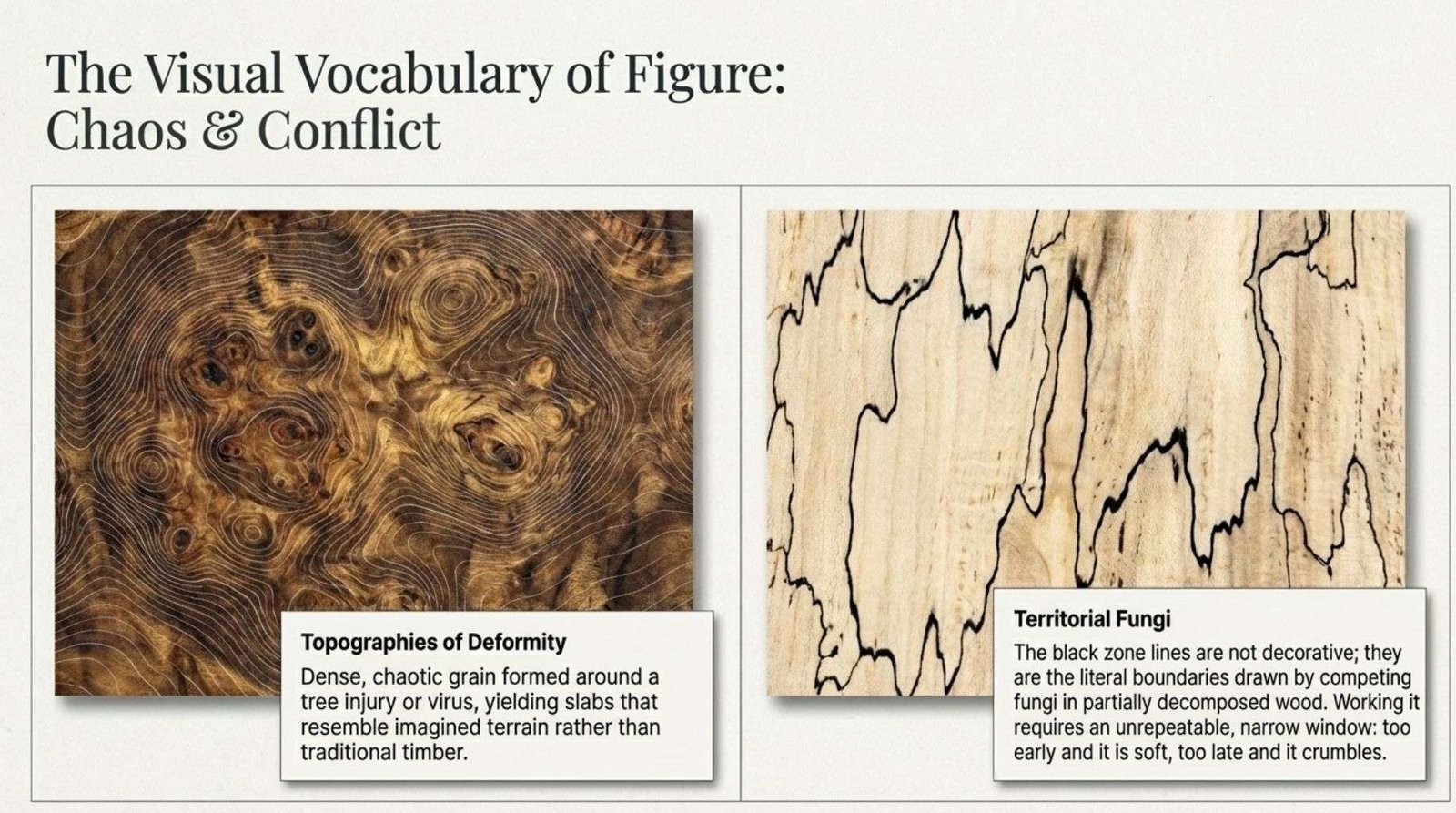
Burl is the most dramatic of all figure types: dense, chaotic grain formed around a tree deformity, cut in slabs that look less like wood and more like topographic maps of imagined terrain.
Spalting deserves a separate note. The black zone lines running through a spalted maple board are not decorative treatments.
They are the territorial boundaries drawn by competing fungi in partially decomposed wood.
Using spalted material requires careful timing: too early and the wood is still soft, too late and it crumbles. The window is narrow and the results are unrepeatable.
Species as Palette.
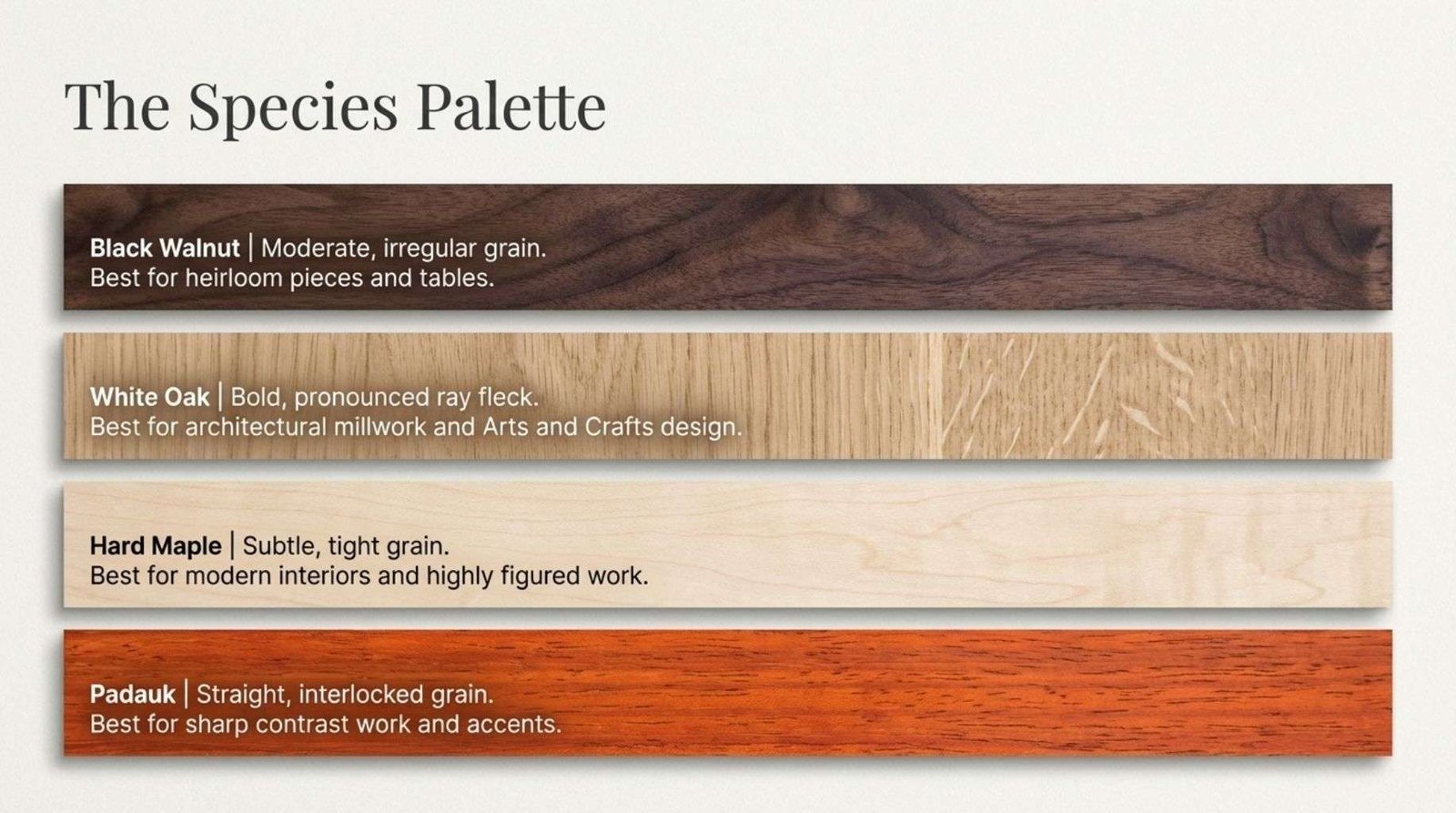
| Species |
Colour Character |
Grain Type |
Best Use |
| Black Walnut |
Chocolate brown with purple undertones |
Moderate, often irregular |
Tables, chairs, heirloom pieces |
| Cherry |
Warm amber, deepens with light exposure |
Fine, even |
Cabinetry, bedroom furniture |
| White Oak |
Pale tan, greying with age |
Bold with pronounced ray fleck |
Arts and Crafts, architectural |
| Hard Maple |
Creamy white, minimal contrast |
Subtle, tight |
Modern interiors, figured work |
| Padauk |
Vivid orange-red that mellows to burgundy |
Straight, interlocked |
Accents, contrast work |
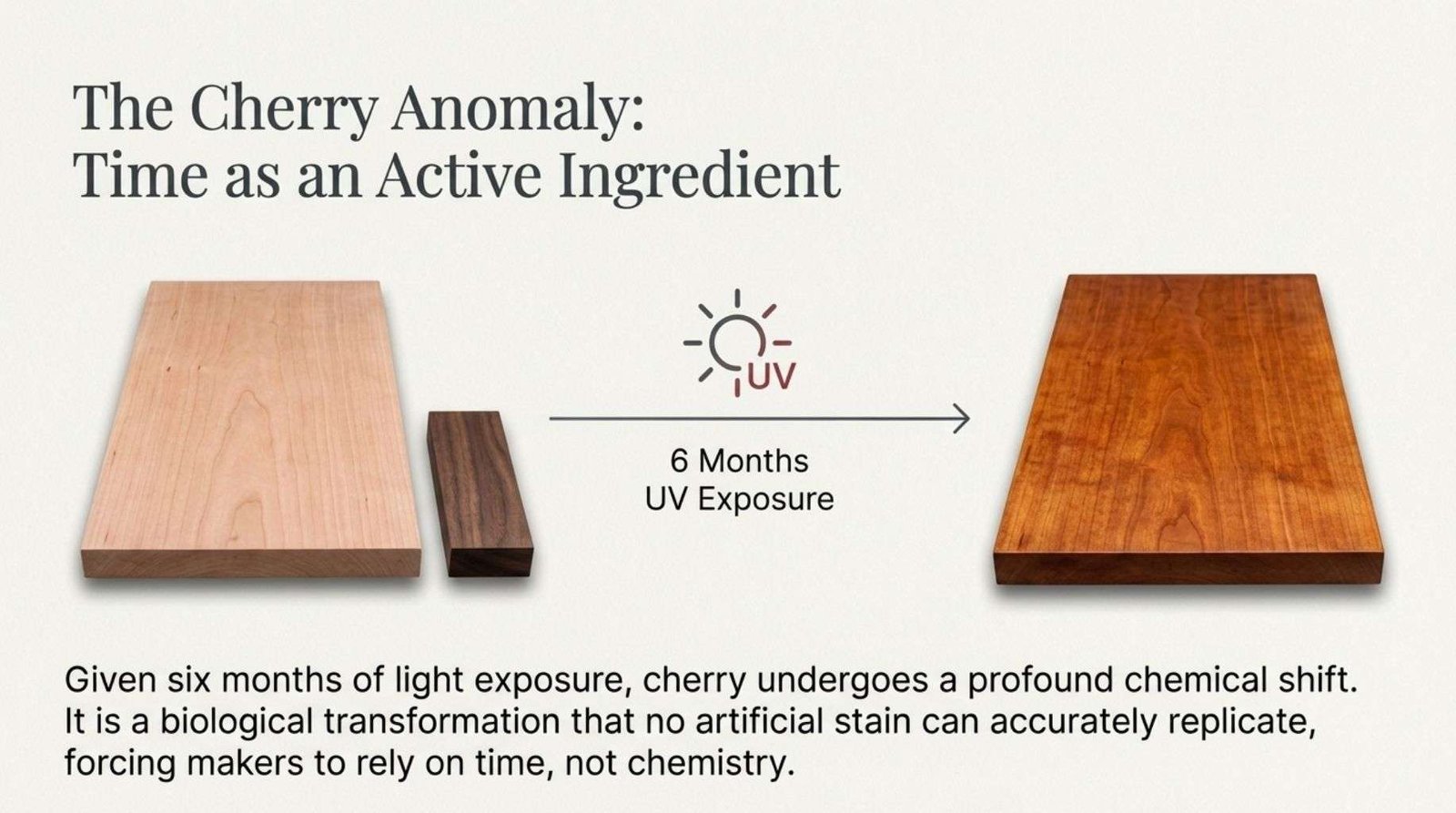
Cherry is worth pausing on. A freshly milled cherry board looks pale and unremarkable beside walnut.
Given six months of light exposure, it shifts into a warm reddish-amber that no stain accurately replicates. Woodworkers who know cherry leave finished pieces near a window before delivery.
Light and the Moving Surface.
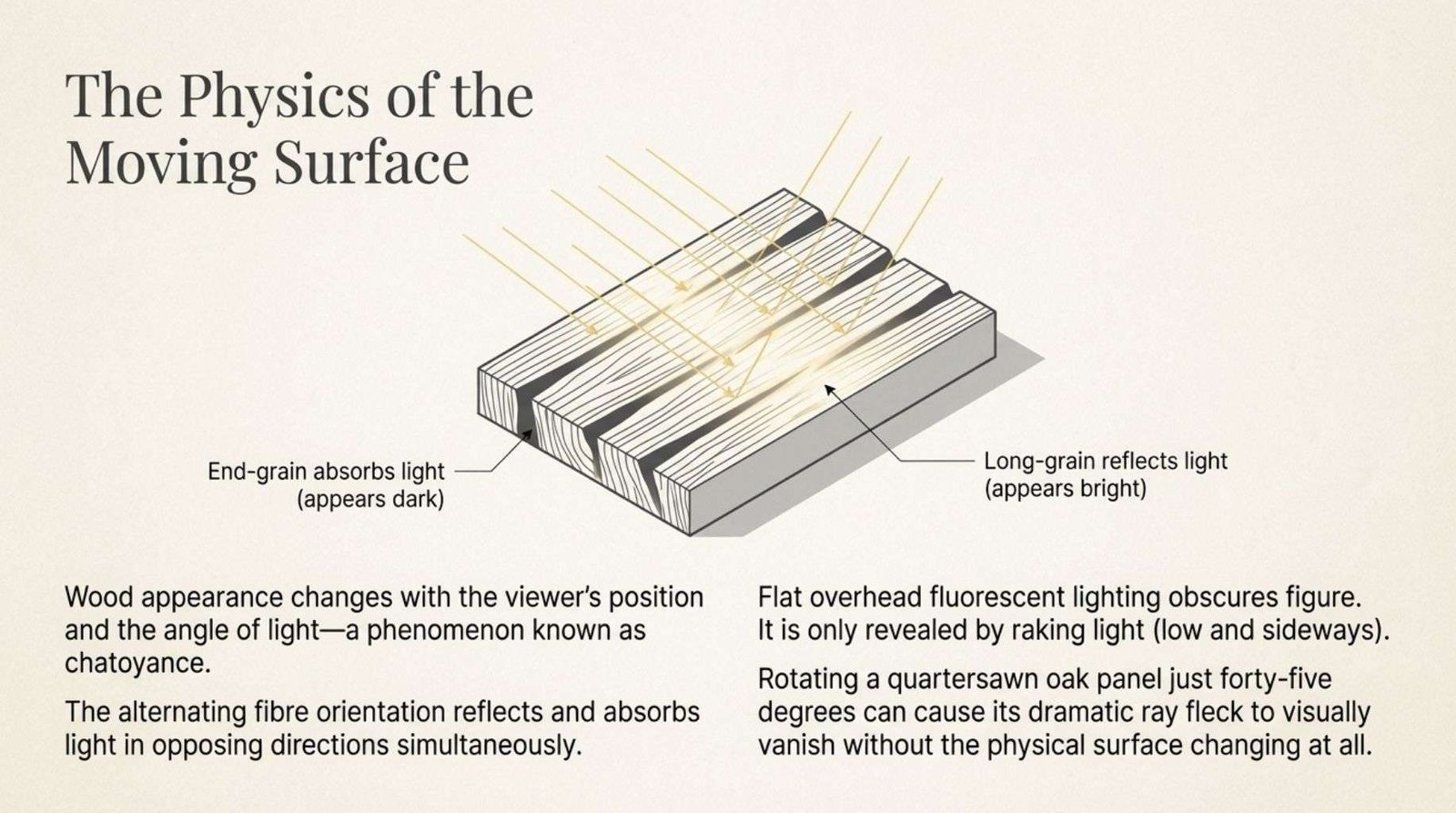
Wood is not a static surface. Its appearance changes with the viewer’s position and the angle of light, a quality called chatoyance.
Curly and quilted figures are particularly prized for this effect because the alternating fiber orientation reflects and absorbs light in opposing directions simultaneously.
End grain absorbs light. Long grain reflects it. This contrast is visible even in a simple cutting board, where the face grain and end grain sections read as entirely different materials under the same finish.
Quartersawn oak demonstrates this most dramatically. Rotating a finished panel forty-five degrees can cause the ray fleck to appear almost to vanish.
The surface has not changed. The relationship between the light source and the fiber orientation has.
This is the counter-intuitive reality of working with figured wood: the most spectacular material often reads as ordinary under flat overhead lighting.
Raking light, the kind that arrives low and sideways through a window on an autumn afternoon, reveals what a workshop fluorescent obscures entirely.
The Finish as Lens.
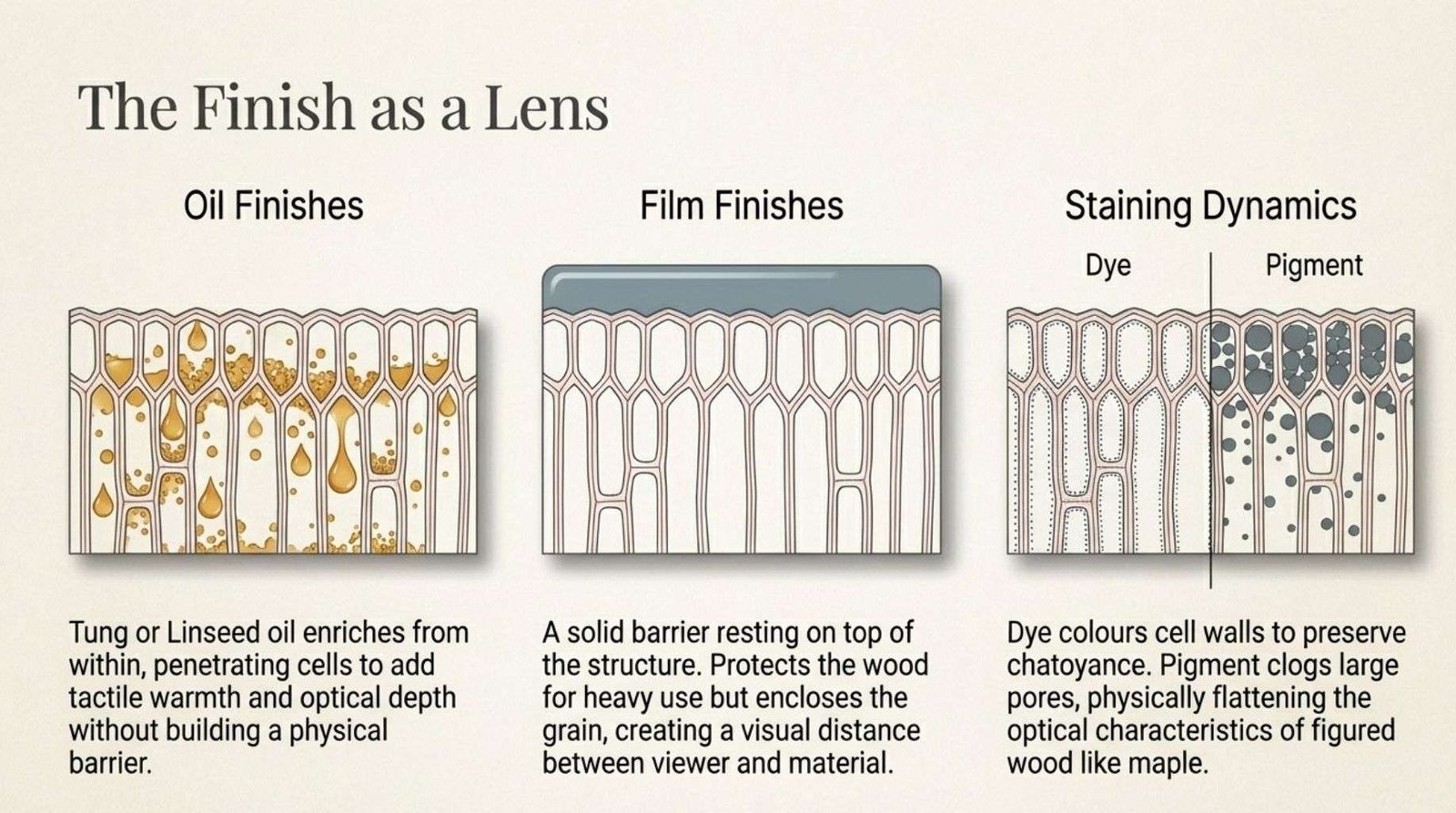
Oil finishes, tung oil, Danish oil, raw linseed, penetrate the wood surface and enrich it from within.
The grain appears to gain depth rather than simply gaining sheen.
Run a finger across well-oiled walnut and the surface has a warmth that film finishes do not replicate.
Film finishes sit above the wood surface and can, particularly at high gloss, create visual distance between the viewer and the material.
The grain is visible but feels enclosed. For tabletops subject to heavy use this is a practical necessity, not an aesthetic failure, but it is a trade-off worth naming.
Staining is the most contested finishing decision in woodworking.
A dye stain, which uses small molecules to colour the wood cell walls directly, can deepen tone without obscuring figure.
A pigment stain fills and highlights the larger pores, which can dramatically alter the visual texture. Used on already-figured maple, heavy pigment staining is likely to flatten the very quality the wood was chosen for.
Grain as Composition.
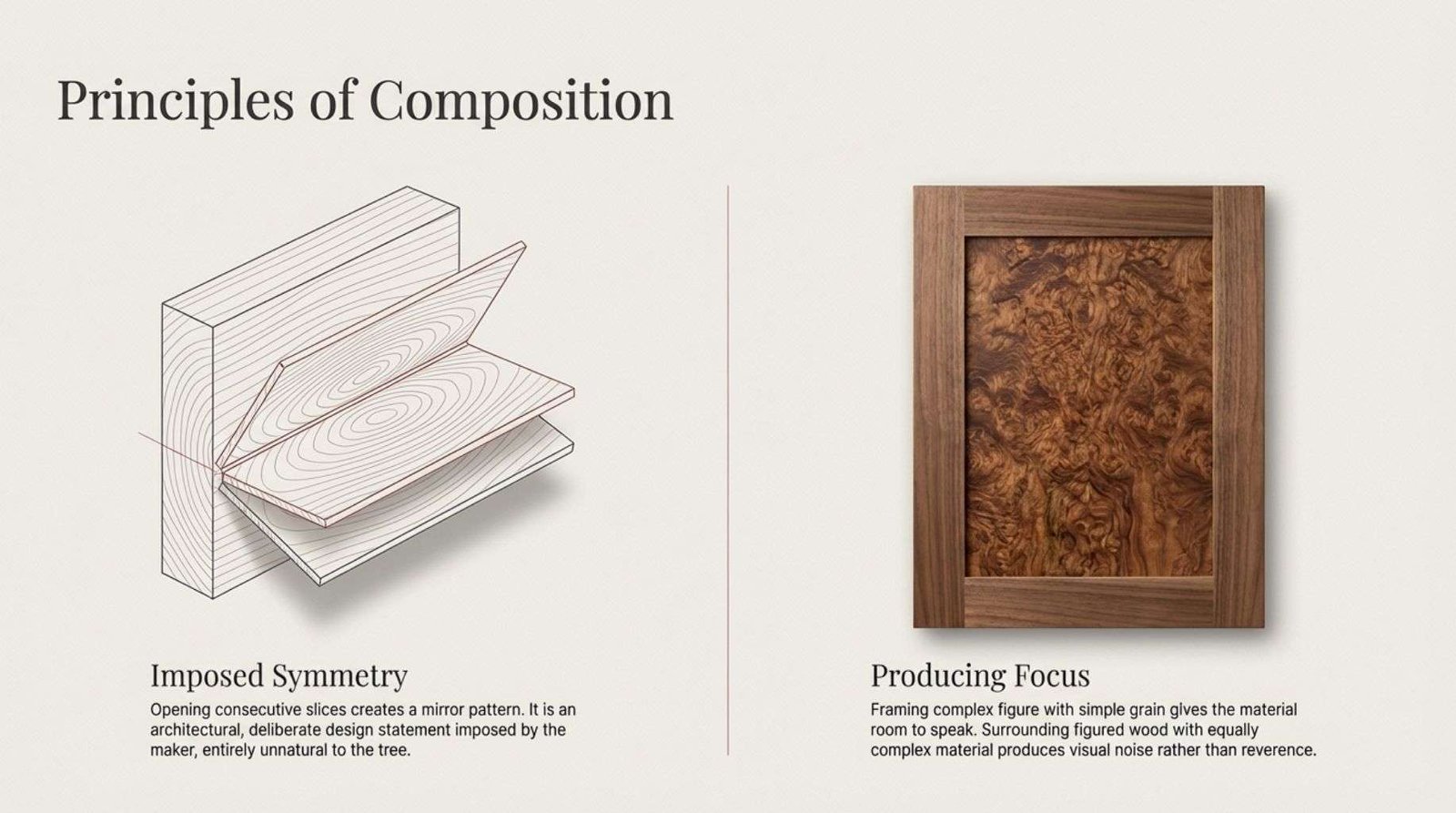
Book matching, the practice of opening two consecutive veneer slices like the pages of a book, creates a symmetrical mirror pattern across a surface.
On a walnut tabletop or a pair of cabinet doors, it reads as deliberate, almost architectural. The symmetry is not natural to the tree.
It is a decision the maker imposes, which makes it a design statement rather than a material characteristic.
Placing a single highly figured board as the centre panel of an otherwise plain piece uses a different logic.
The simplicity of the surrounding timber gives the figure room to speak. Surrounding figured wood with equally complex material produces visual noise where the intention was to produce focus.
Imperfection as Character.
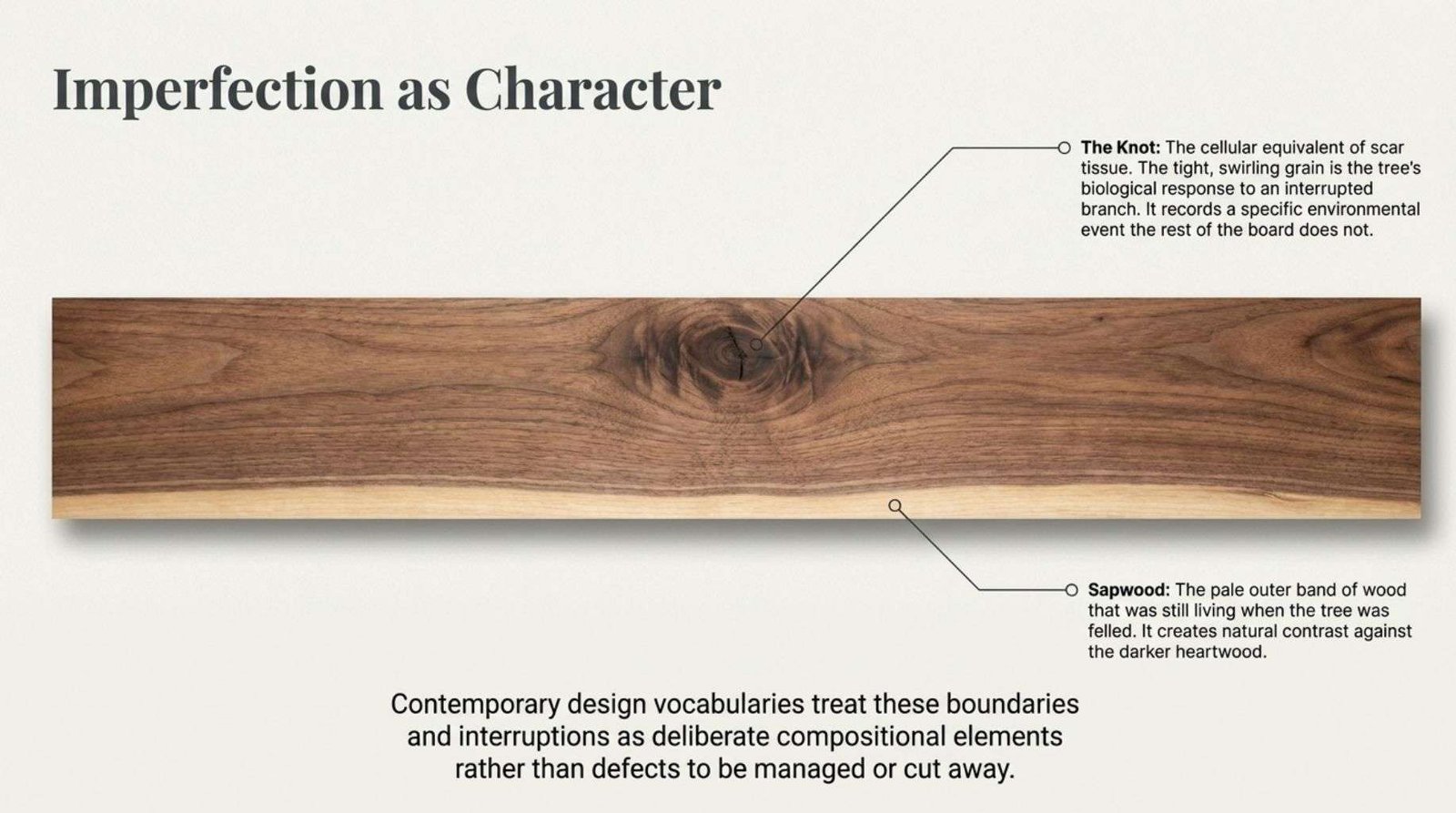
A knot in a board was once a branch. The tight, swirling grain around it is the tree’s response to an interruption in its upward growth, the cellular equivalent of scar tissue. Rustic and contemporary design vocabularies have both absorbed knots as features rather than flaws, and rightly so.
The knot records something the rest of the board does not.
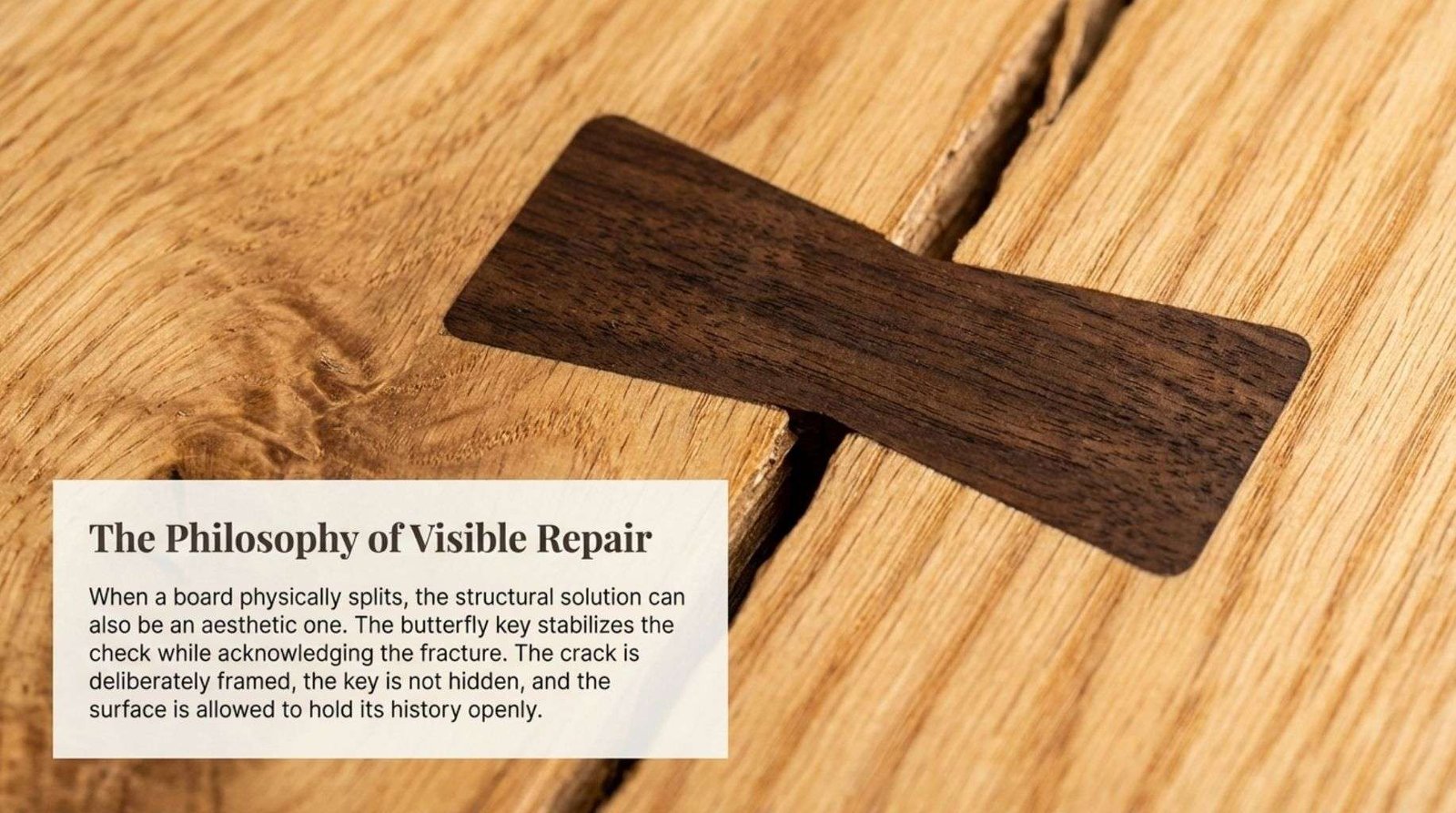
Butterfly keys, the bow-tie shaped inlays used to stabilise a crack or check, are another example of visible repair becoming visible character.
The crack is acknowledged. The key is not hidden. The result is a surface that holds its history openly.
Sapwood, the pale outer wood that was still living when the tree was felled, creates natural contrast against darker heartwood in species like black walnut or figured cherry.
Some woodworkers cut it away. Others frame it deliberately, treating the boundary between heartwood and sapwood as a compositional element rather than a defect to be managed.
The Unrepeatable Material.
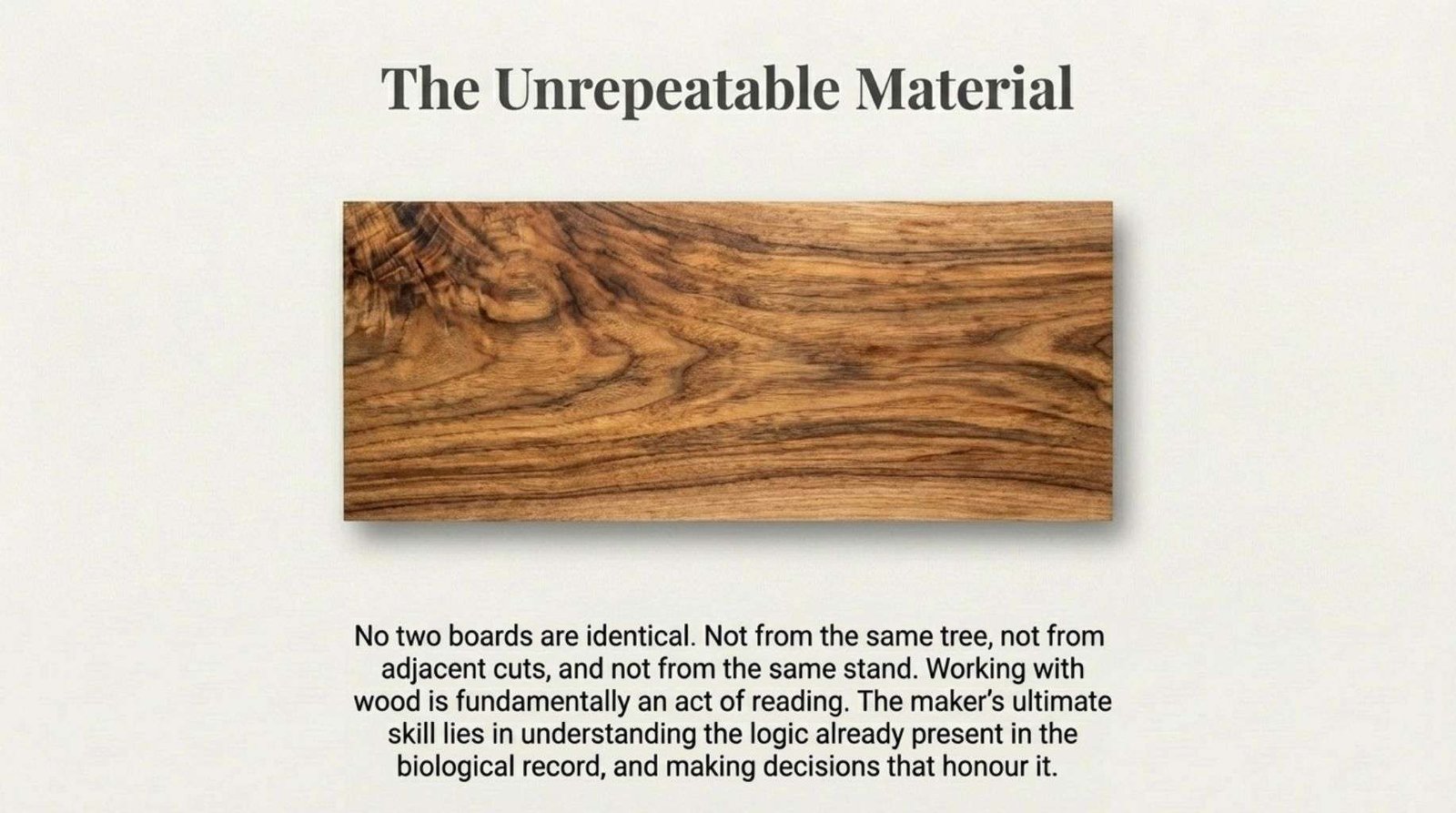
No two boards are identical. Not from the same tree, not from adjacent cuts, not from the same species grown in the same stand.
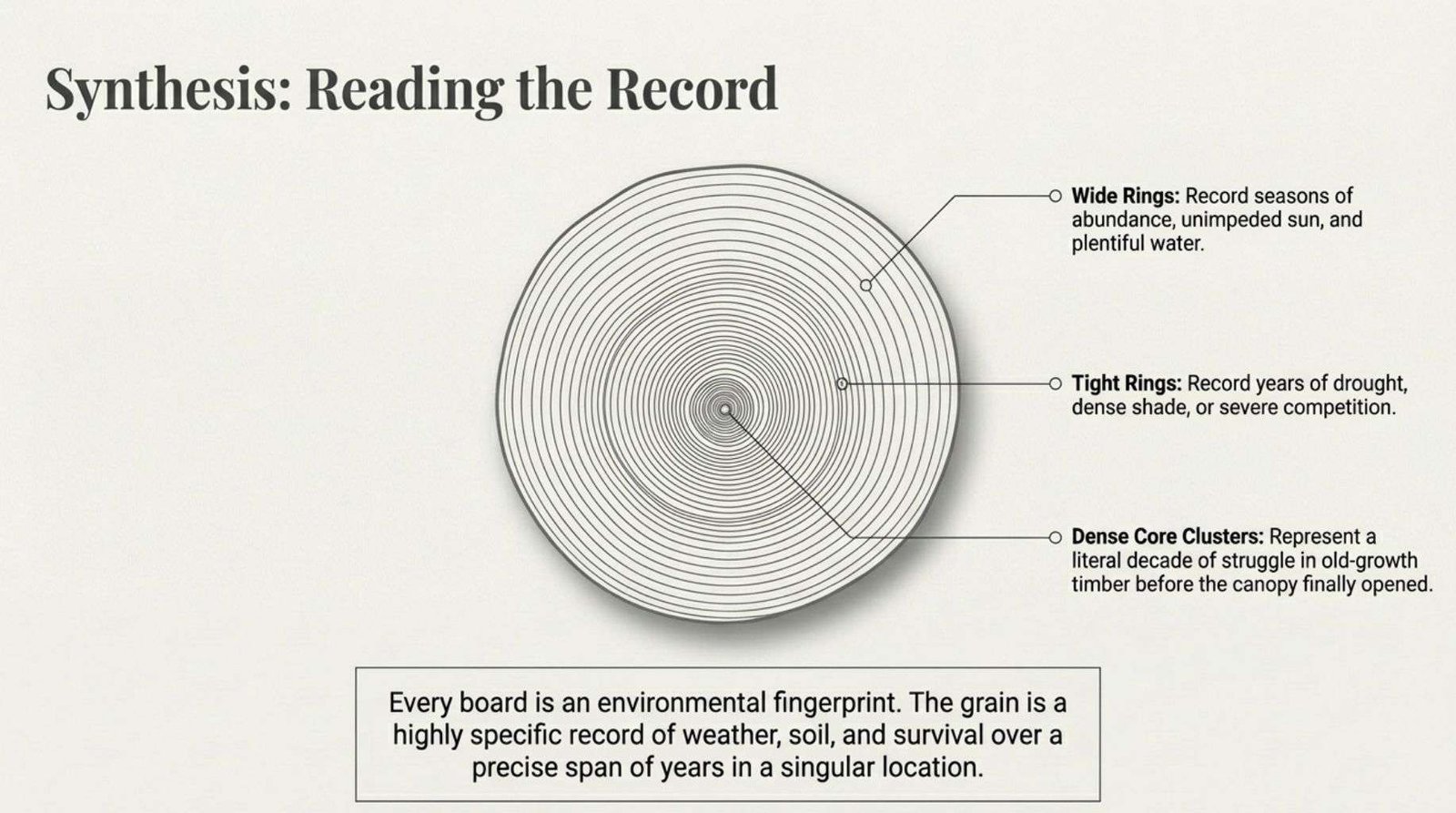
The grain of any board is a record of specific weather, specific soil, specific competition for light across the precise years that particular tree grew in that particular place.
Wide annual rings record seasons of abundance, plentiful water and unimpeded sun. Tight rings record drought, shade or competition.
A dense cluster of narrow rings in the centre of an old-growth board might represent a decade of struggle before the canopy opened.
Working with wood grain is, in the end, a form of reading. The material arrives with its own logic and its own record.
The woodworker’s skill lies in understanding what is already present and making decisions that honour it rather than override it.