Wood Species And Timber Types
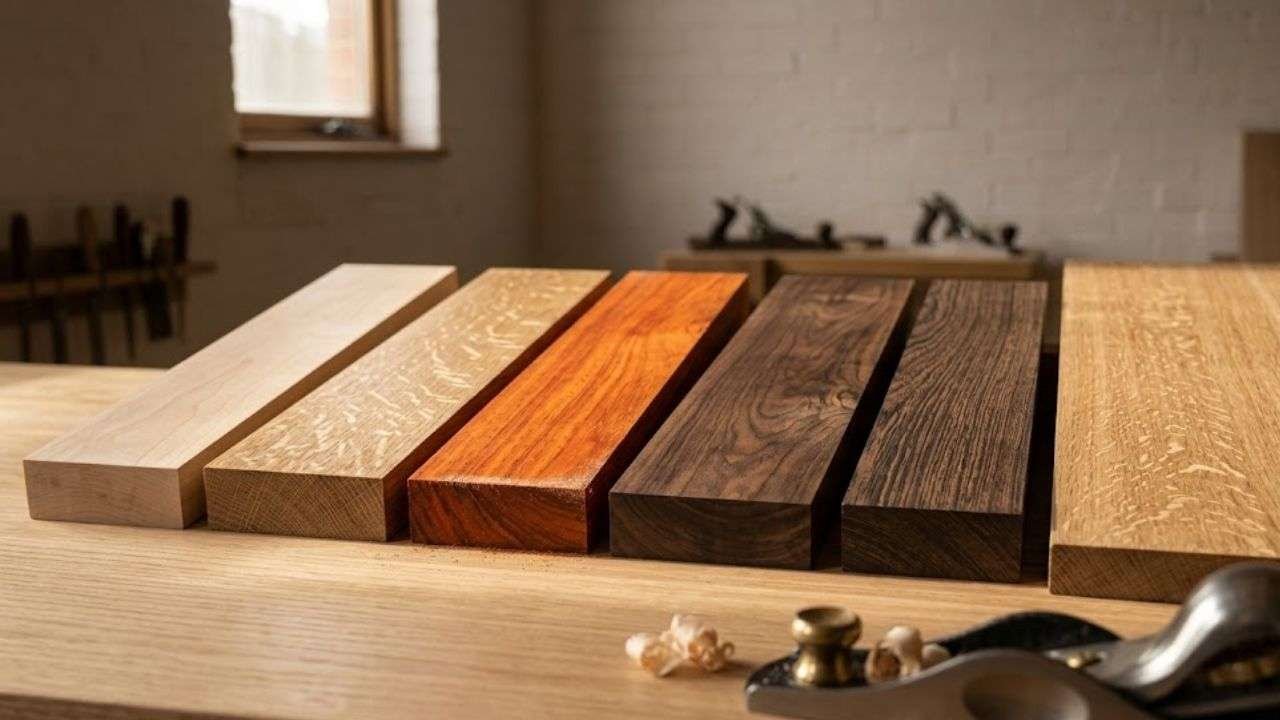
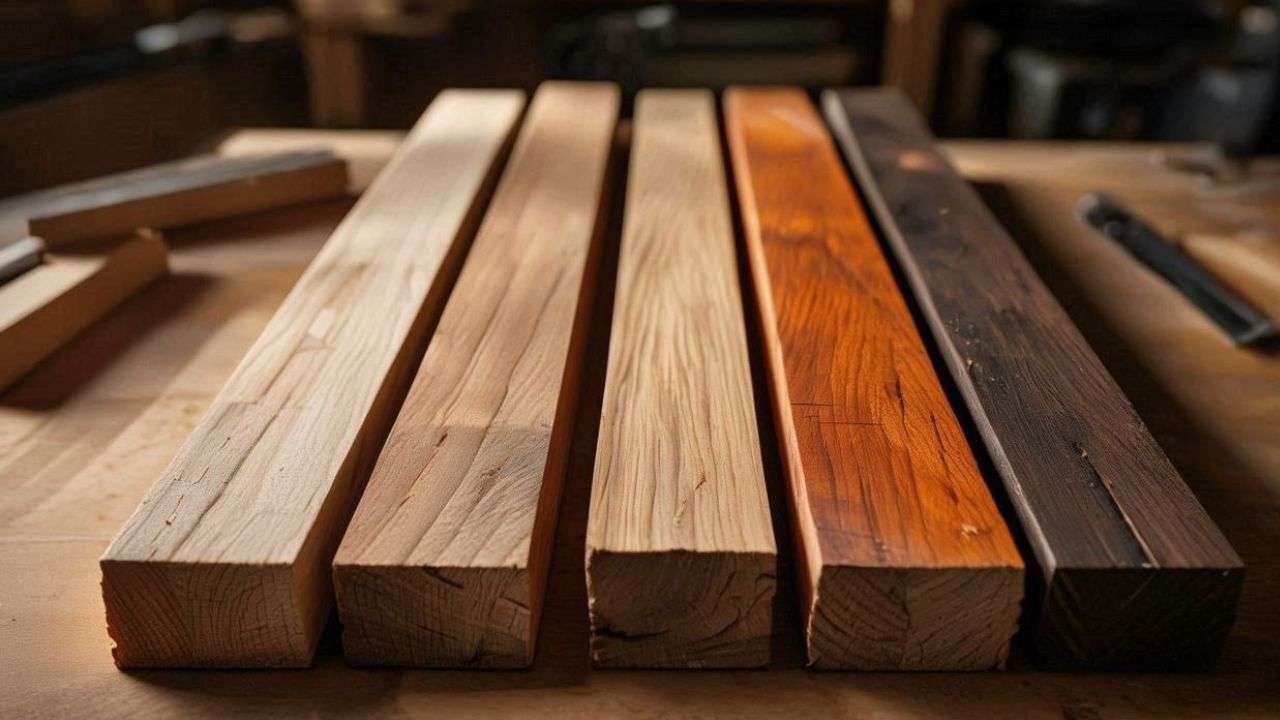
Every species of wood carries a distinct personality. The weight of it across your palm, the way light falls across its grain at an angle, the faint resistance or easy compliance as a plane moves along its surface.
Long before a piece of furniture reaches a room, the timber itself shapes everything that follows.
Hardwood or Softwood: The Botanical Reality.
The terms hardwood and softwood describe biology, not physical density. Hardwoods come from angiosperms, which are broad-leafed trees that lose their leaves seasonally.
Softwoods come from gymnosperms, the cone-bearing conifers. The cellular structures are entirely different.
Hardwoods contain pores and vessels that produce their often dramatic grain patterns and figure. Softwoods grow in uniform, straight columns of cells.
The counter-intuitive fact that most woodworkers discover early is this:
Balsa is a hardwood. Yew is a softwood and will dull a chisel faster than many species classed as hard. The labels are botanical markers, nothing more.
The Anatomy of the Tree.
Understanding what you are working with begins before the log reaches the mill. Every piece of timber carries the structure of its origin.
The heartwood at the core is dense, dark, and chemically resistant to decay because the tree has mineralised it over time.
The sapwood around it is lighter in colour, having recently transported water and nutrients. Many woodworkers avoid wide sapwood runs on furniture surfaces for colour consistency, but some species, most notably Black Walnut, carry a sapwood so pale and creamy beside the dark heartwood that it becomes a design feature in its own right.
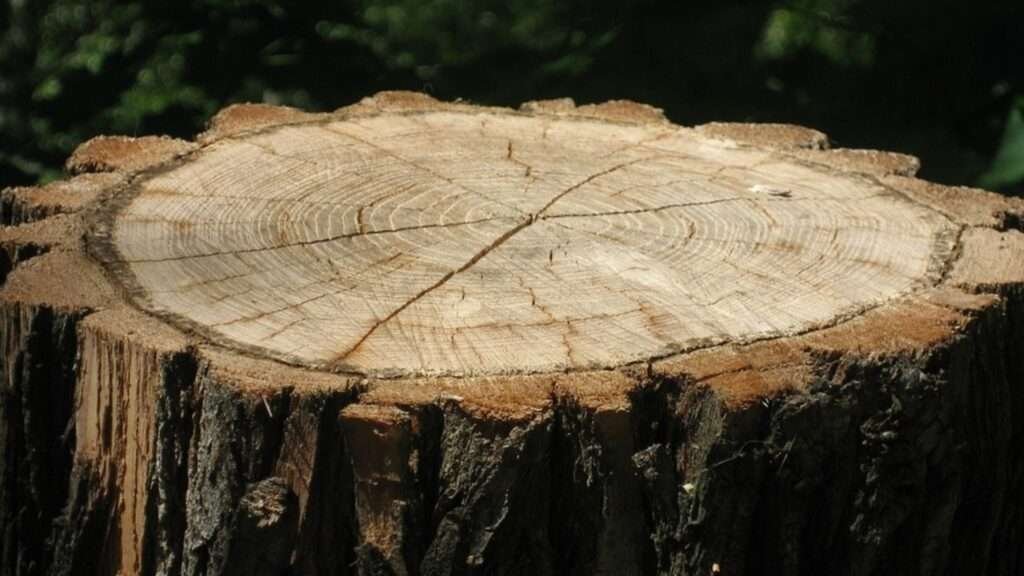
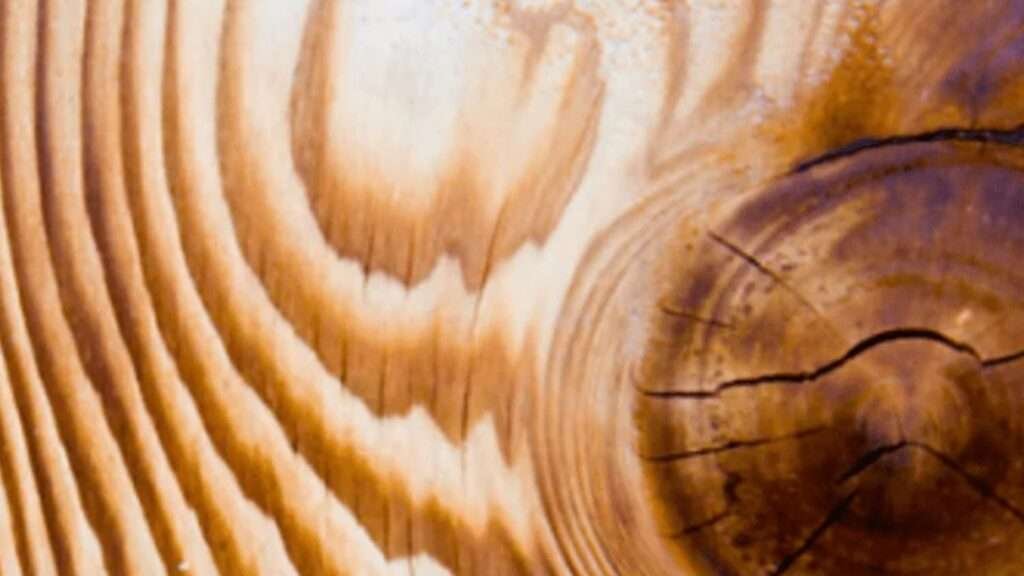
The pith at the very centre of the log is almost always avoided.
It is unstable, prone to cracking, and often the source of the star-shaped checks visible in the end grain of cheaply cut timber.
The Domestic Workhorses.
The temperate hardwoods of North America and Europe are not simply common. They are common because they are genuinely excellent. Each has a character that becomes familiar over years of work.
White Oak is dense, open-grained, and contains tyloses in its pores that make it naturally resistant to water penetration.
That structural quality is why it was chosen historically for ship hulls and whiskey barrels. Quarter-sawn White Oak produces a medullary ray fleck that catches light in a way no other domestic species can replicate.
Black Walnut is the luxury timber of the domestic range. The colour ranges from pale grey-brown in the sapwood to a deep chocolate in the heartwood, sometimes with a purple or green undertone.
It works cleanly with both machines and hand tools, holds crisp edges, and takes an oil finish to a depth that seems almost illuminated.
Hard Maple is the quiet workhorse. The grain is close and subtle, the surface almost white. It is the species used in bowling alley floors and professional kitchen cutting blocks because its Janka hardness of around 1450 lbf places it among the toughest domestic options.
Occasionally Hard Maple produces figure, and curly or bird’s eye Maple at that point becomes a completely different material aesthetically.
Cherry starts pinkish-brown and deepens with light exposure over months into a reddish amber that no stain adequately replicates. The transformation is slow, uneven at first, and then suddenly uniform and beautiful. It is perhaps the most rewarding of the domestics to use simply because the finished piece keeps changing.
The Tropical All-Stars.
Teak, Mahogany, and Rosewood occupy a different tier, both in price and in working character.
Teak is dense, oily, and dimensionally stable in ways that most temperate species are not.
That oil content, however, creates a genuine practical limitation: standard PVA adhesive bonds poorly to freshly machined Teak surfaces, and the preparation step of wiping with solvent before gluing is not optional. The silica in Teak dulls cutting edges faster than almost any other common species.
Brazilian Rosewood is now heavily regulated under CITES and legally unavailable as fresh-cut timber for most commercial purposes.
Its availability in older furniture, veneers, and instrument-making stock continues to decline. Indian Rosewood remains a partial substitute, though the colour and figuring differ.
Padauk is vivid orange-red when freshly milled, almost shockingly bright.
It oxidises to a deep reddish-brown within weeks of exposure to light, and its fine dust is intensely coloured and will migrate onto adjacent pale timbers if not managed during processing.
The Engineered Boards.
Solid timber is not always the correct material. Manufactured boards occupy a substantial and legitimate place in modern furniture production, and dismissing them is a practical error.
| Board Type |
Core Structure |
Best Use |
Key Limitation |
| Plywood |
Cross-grain veneer layers |
Carcasses, structural panels |
Edge grain needs covering or profiling |
| MDF |
Compressed wood fibre |
Paint-grade work, routed profiles |
Heavy and degrades with moisture |
| Particle Board |
Resin-bound wood chips |
Flat-pack substrate |
Low strength, sags over span |
| OSB |
Oriented strand layers |
Industrial aesthetic, structural |
Surface not suited to fine finishing |
MDF is the correct choice for a painted cabinet door where a flat, smooth surface and dimensional stability matter more than weight or screw-holding capacity. The material is not inferior. It is purpose-specific.
Softwoods in Furniture.
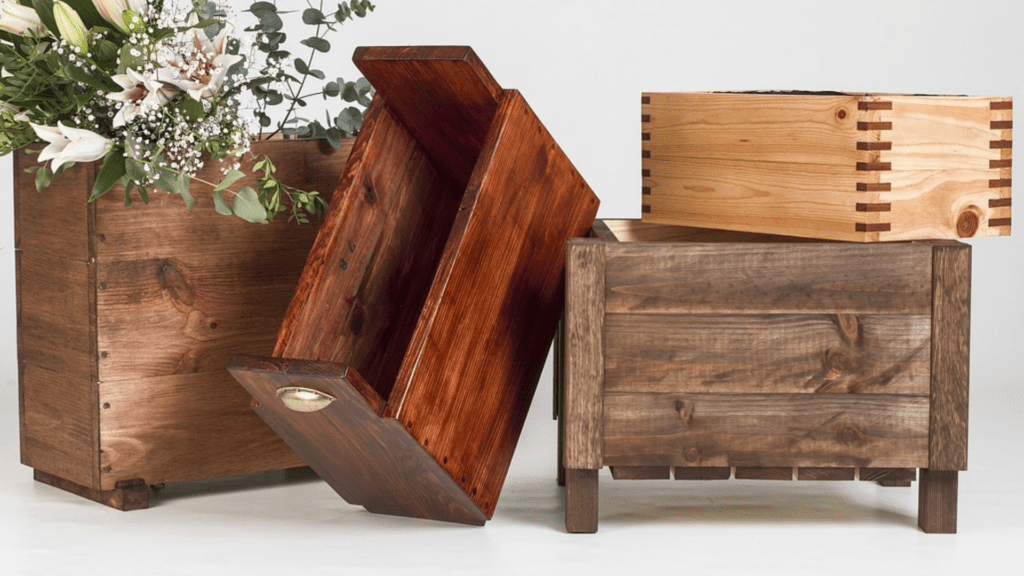
Pine furniture carries centuries of folk tradition behind it. Eastern White Pine is soft enough to mark with a thumbnail but machines cleanly, takes paint without blotching, and produces furniture that has a warmth and informality that hard and dense timbers cannot offer.
The dents and wear it accumulates over years become part of its character rather than evidence of failure.
Aromatic Red Cedar is worth noting as a species that is genuinely difficult to glue well despite its widespread use in closet linings.
Its natural oils resist adhesive penetration in the same way Teak’s do, and joinery in Cedar should rely on mechanical fasteners or be designed to accommodate its tendency to move.
Sustainability and Sourcing.
The FSC (Forest Stewardship Council) certification label identifies timber harvested under verified sustainable forestry management.
It is an imperfect system but the most widely available one.
CITES regulations govern international trade in endangered species and Brazilian Rosewood, certain Mahoganies, and several Rosewoods are subject to significant restriction.
The practical alternative that is gaining use among furniture makers is thermally modified timber.
Domestic species like Ash or Radiata Pine are heated in a low-oxygen environment at temperatures between 160 and 220 degrees Celsius.
The cell structure changes permanently. The timber darkens, becomes more dimensionally stable, resists decay, and performs outdoors comparably to tropical hardwoods without the sourcing complexity.
Urban lumber, milled from trees removed by municipal arborists, occasionally produces genuinely spectacular material.
A Black Walnut recovered from a residential street can yield figured boards that rival anything available commercially.
The preparation requirement is real, however. Urban logs must be properly dried and inspected before machining, and metal contamination is a consistent concern.
Matching the Species to the Project.
The choice of timber is a design decision as much as a structural one.
A dining table made from White Oak communicates something different than the same form made in Cherry or Walnut, even at identical dimensions and proportions.
For structural elements carrying load, choose Hard Maple, White Oak, or Ash.
For tabletops that will take daily use and light exposure, Walnut and Cherry both reward the maker. For outdoor furniture, Teak, Western Red Cedar, or thermally modified Ash will outlast almost any alternative.
For carved work where the tool needs to move freely through the grain, Basswood and Butternut are the standard choices.
For anything receiving paint, Poplar or Soft Maple deliver a stable, inexpensive substrate that holds a finish cleanly.
The grain you hold in your hand before cutting is already telling you where it wants to go.