
Need a New Woodworking Shed
Plan And Build Yourself A New Cedar Woodwork Shed. Building a new woodworking shed in your backyard is an excellent […]
Need a New Woodworking Shed Read More »
Brand New Shed, Outdoor Woodwork, Your Woodshop
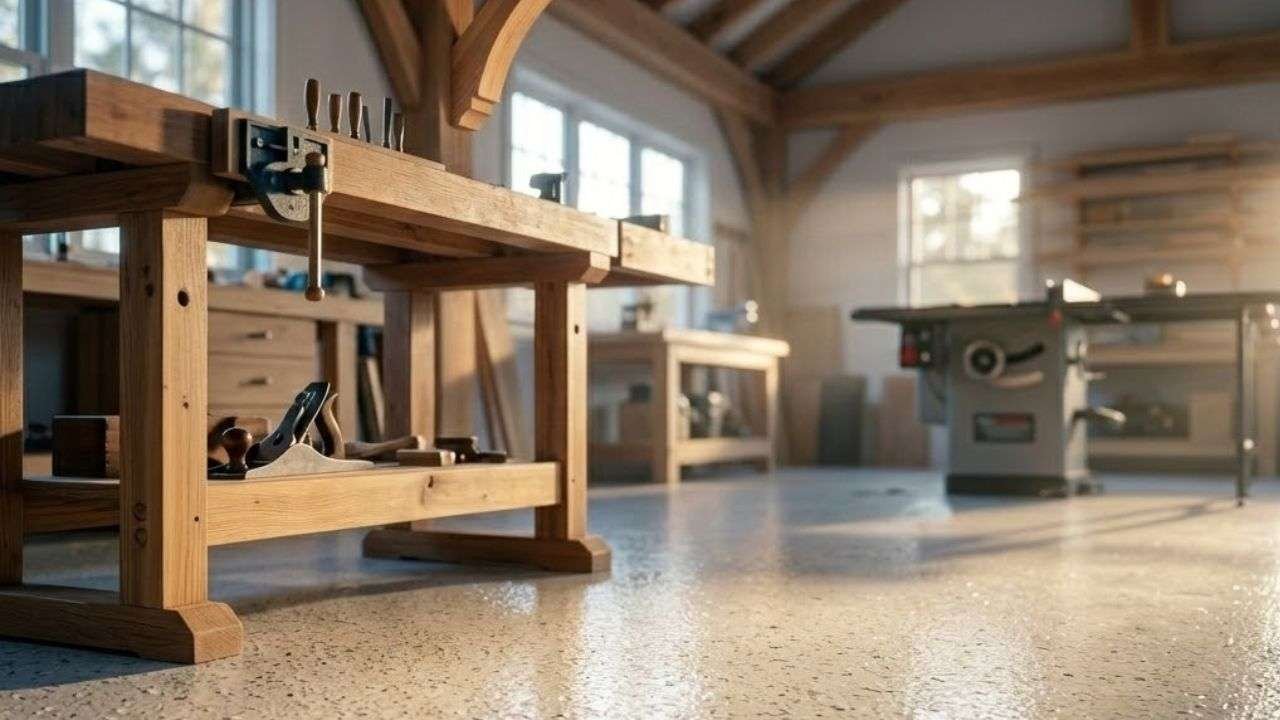
A well considered woodshop floor shapes the way a workspace feels and functions. The surface underfoot influences how tools move how dust settles and how the room holds light.
It is one of the few workshop decisions that affects every task from layout to cleanup. A finished floor also changes the atmosphere of a shop in subtle ways.
The shift from raw concrete to a refined surface is noticeable the moment a machine rolls across it.
The Purpose Of A Finished Woodshop Floor.
A woodshop places different demands on a concrete slab than a garage or storage area.
The floor becomes part of the workflow rather than a passive surface. Raw concrete sheds fine dust that settles on benchtops and drifts into machinery.
The texture of an unfinished slab also hides dropped screws and small offcuts which slows work and interrupts concentration.
A light coloured coating changes this dynamic by reflecting ambient light and making hardware easier to see. The difference is clear when a washer lands on a pale flake surface instead of disappearing into grey concrete.
A coated floor also supports consistent cleanup because glue or finish residue can be wiped away before it hardens. These practical gains accumulate over time and influence the overall rhythm of the shop.
Why Preparation Determines The Outcome.
Concrete preparation is the decisive stage in any coating system.
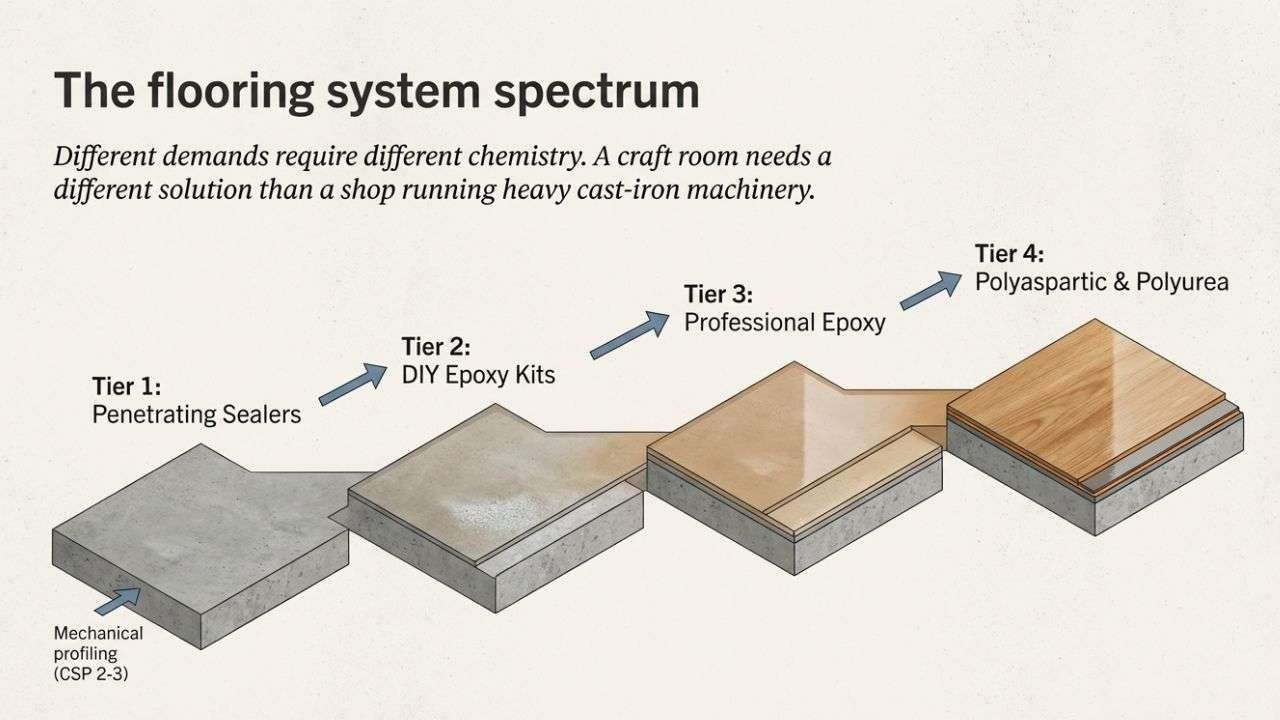
The surface must be profiled so the coating bonds evenly and permanently.
Professionals use industrial grinders that leave a uniform texture similar to fine sandpaper. This mechanical preparation removes old sealers and exposes clean concrete. A bottle of acid etch from a hardware store cannot achieve the same result. The difference becomes obvious when a grinder reveals subtle variations in the slab such as a faint curing compound or a patch of oil that has migrated deeper than expected.
These details matter because a coating applied over an untreated contaminant will lift in sheets. The preparation stage also exposes hairline cracks that can be filled before coating.
The sound of the grinder and the fine concrete dust it produces are reminders that this step is both physical and precise. It is the reason professional floors last for decades rather than years.
Penetrating Sealers As A Minimalist Approach.
Some shops require only a basic improvement rather than a full coating system. Penetrating sealers soak into the concrete and reduce dust while offering mild stain resistance.
They leave the surface looking similar to bare concrete with a slightly denser feel underfoot. The appeal lies in their simplicity. A single coat can be applied with a roller and dries quickly. The limitation is equally clear.
These sealers do not change the floor’s appearance or provide meaningful impact resistance. A dropped chisel will still leave a mark and a heavy cabinet will still grind into the surface when moved.
The sealer reduces maintenance but does not transform the workspace.
This trade off is practical for small craft rooms where heavy machinery is not part of the workflow. It is less suitable for a shop where cast iron tools are moved regularly.
The Reality Of DIY Epoxy Kits.
DIY epoxy kits promise a finished floor with minimal effort. They are accessible and often marketed as a weekend project.
The coatings in these kits are usually water based or low solids which means they form a thin film. The difference becomes apparent when a machine with steel casters rolls across the surface.
The coating flexes slightly and develops fine scratches that accumulate over time. A thin film also struggles with the weight of tool cabinets which can leave faint impressions in the coating.
The surprising part is that these kits perform reasonably well in light use spaces. A craft room with hand tools and small benches may benefit from the dust control and improved appearance.
A woodworking shop with a jointer or bandsaw will not. The limitation is not the concept of epoxy but the chemistry of the kits.
They are designed for convenience rather than longevity. This distinction is often overlooked which leads to disappointment when the coating wears prematurely.
Professional Epoxy As A Long Term Solution.
A professionally installed epoxy system changes the character of a workshop floor. These coatings use 100 percent solids epoxy which forms a thick self levelling layer.
The material spreads smoothly and settles into a uniform surface that feels dense and stable.
The thickness provides impact resistance that protects the slab from dropped tools and rolling loads.
Spilled glue or finish sits on the surface until wiped away. The coating does not absorb colour or moisture which keeps the floor looking consistent over time.
The lifespan of a professional system often exceeds fifteen years in a home shop. The durability becomes part of the workshop’s infrastructure much like a well built bench or a reliable machine.
The only notable limitation is that the coating does not soften the hardness of concrete. Standing for long periods still requires anti fatigue mats at key workstations.
This combination works well because the coating supports cleanliness and the mats support comfort.
Polyaspartic And Polyurea As Premium Alternatives.
Polyaspartic and polyurea coatings offer performance characteristics that differ from epoxy. These materials cure rapidly which allows a floor to be completed in a single day.
The fast cure time also means the installer must work with precision.
The material begins to set within minutes which leaves no margin for hesitation.
The finished surface is extremely hard and resists abrasion from rolling machinery. Polyaspartics also maintain colour stability when exposed to sunlight which is useful in shops with windows or open doors.
The texture of the cured surface feels slightly smoother than epoxy yet remains easy to sweep.
The speed of installation is often the deciding factor for busy workshops. The trade off is that these systems require professional equipment and technique.
Attempting a DIY installation usually results in visible lap lines because the material sets before it can be blended.
Why Flake Finishes Suit Woodshops.
Flake finishes combine practicality with visual refinement. The vinyl flakes create a speckled pattern that hides sawdust and minor scuffs.
This effect is noticeable when sunlight enters the shop and highlights the surface. The flakes break up the light and reduce the appearance of dust between cleanings.
The texture also improves traction without feeling abrasive. A professional installer broadcasts the flakes evenly and then grinds the surface lightly before applying the clear topcoat.
This step ensures the floor feels smooth when sweeping yet retains enough texture for stability. The density of the flakes can be adjusted to create different visual effects.
A light distribution produces a subtle pattern while full coverage creates a terrazzo like appearance. The versatility makes flake systems suitable for both compact hobby shops and larger dedicated workspaces.
Engineered Slip Resistance For Practical Use.
Slip resistance is an important consideration in a woodshop where fine dust settles on the floor.
A glossy coating without texture can feel slick when sawdust accumulates. Professionals address this by adding aggregates such as silica sand or aluminum oxide to the topcoat.
These materials create a micro texture that improves grip while remaining easy to clean. The texture is barely visible but noticeable underfoot.
The installer can adjust the level of slip resistance based on the type of work performed in the shop.
A space used for hand planing or finishing may require a slightly different texture than a machine focused layout. This tailored approach ensures the floor supports the workflow rather than dictating it.
Cost And Longevity Considerations.
The cost of a woodshop floor varies depending on the chosen system. Raw concrete is free but produces dust and requires constant sweeping.
Penetrating sealers offer a low cost improvement with a lifespan of two to five years. DIY epoxy kits sit in the middle range but carry the risk of premature failure. If a DIY coating peels it must be ground off before a professional system can be installed which increases the total cost.
Professional epoxy or polyaspartic systems have a higher initial price but provide a lifespan of fifteen to twenty years.
The value becomes clear when the floor remains stable and attractive long after the machines have been rearranged and the shop has evolved.
A well finished floor becomes part of the workshop’s identity and contributes to its long term usability.
A Floor That Supports The Work.
A finished woodshop floor does more than protect concrete. It shapes the way the space feels and functions.
The right system supports visibility cleanliness and workflow. It also adds a sense of refinement that encourages care in the work performed above it. A durable coating becomes a quiet foundation for the craft that takes place in the room.
Plan And Build Yourself A New Cedar Woodwork Shed. Building a new woodworking shed in your backyard is an excellent […]
Need a New Woodworking Shed Read More »
Brand New Shed, Outdoor Woodwork, Your Woodshop
Protecting Your Woodshop Concrete Floor. A quality woodshop floor is a significant investment and an important part of your woodshop’s
Woodshop Concrete Floor Read More »
Brand New Shed, Woodshop Floor, Your Woodshop