Woodwork Marketing And Branding
The finest dovetail joint in the world means nothing if no one ever sees it.
Skilled woodworkers build things that last for generations, yet the businesses behind that work often struggle to last a decade.
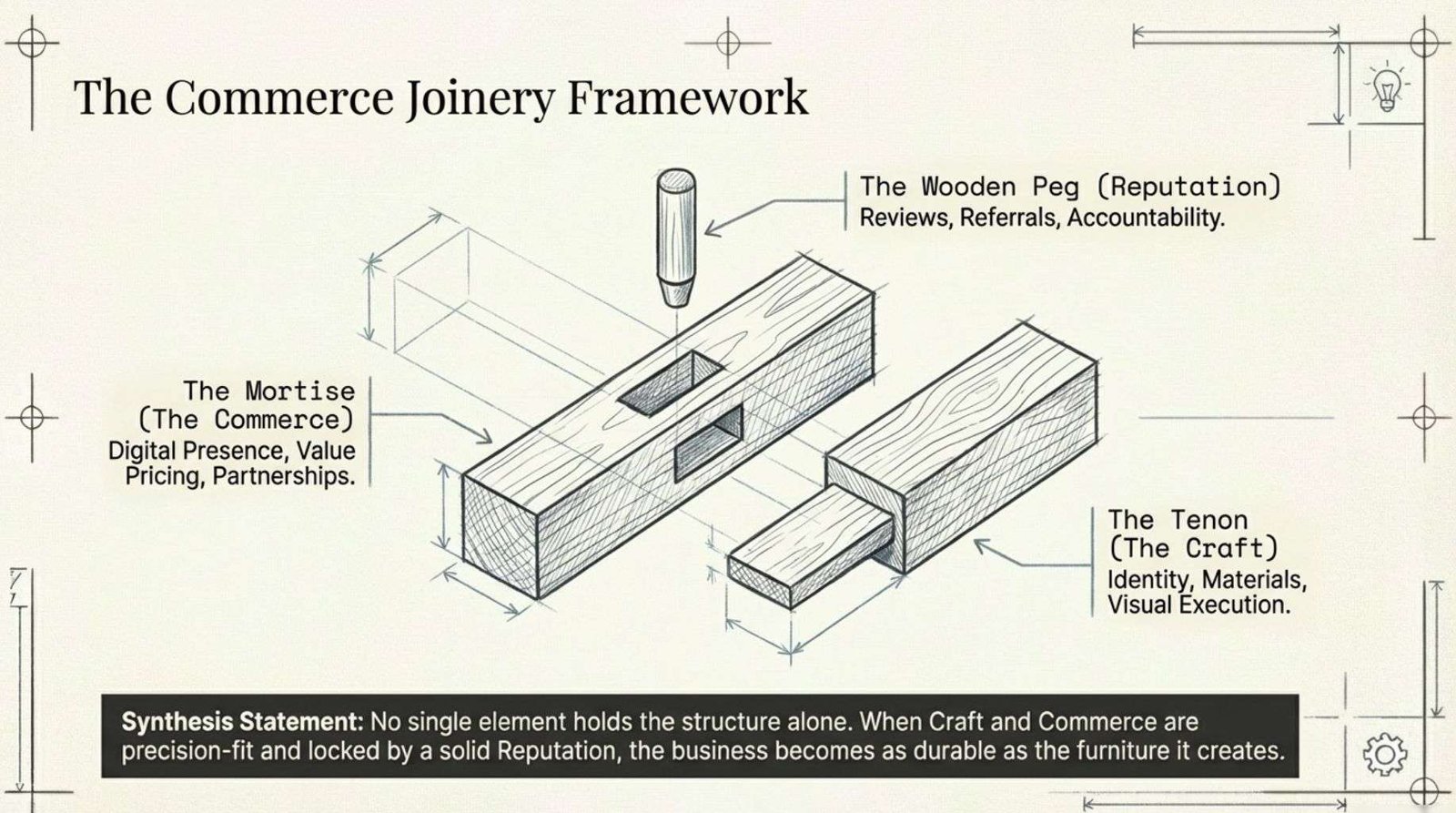
Craft and commerce are not natural partners, but they are learnable ones.
The Foundation: Know Who You Are and Who You Serve.
Every durable brand begins with a clear answer to a deceptively simple question, “Why do you make what you make?”
That answer tends to shape everything downstream.
A woodworker drawn to reclaimed timber by a genuine belief in material reuse will build a very different brand from one who trained in a Danish workshop and works exclusively in white oak and clean geometry. Neither is more marketable than the other, but each requires a different audience.
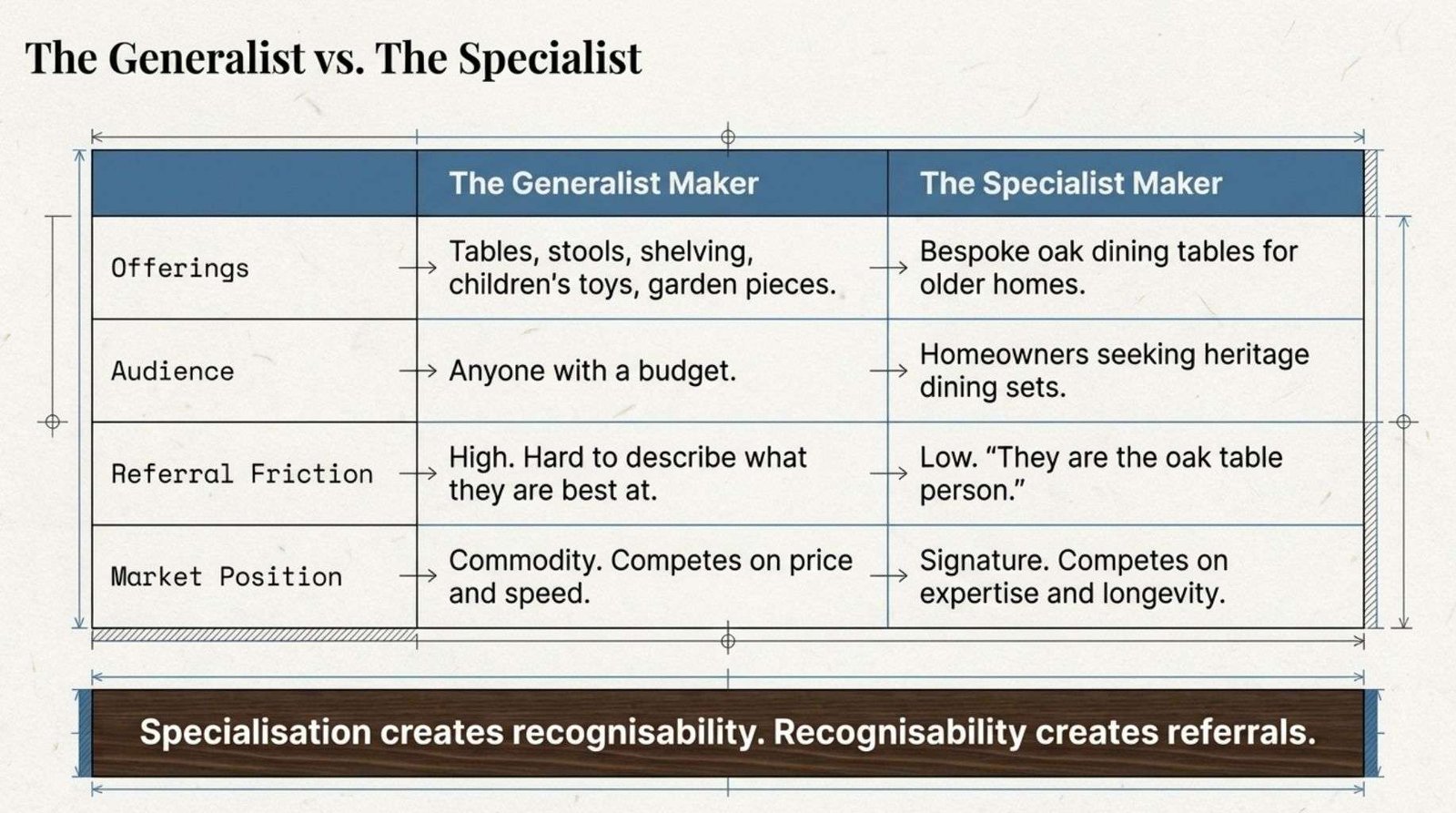
Niching down feels counterintuitive at first. Surely a wider offer means more customers. In practice, a maker known for bespoke oak dining tables for older homes will be recommended far more readily than one who makes tables, stools, shelving, children’s furniture and garden pieces with equal indifference.
Specialisation creates recognisability. Recognisability creates referrals.
Define the ideal customer before spending a single hour on visual identity.
A furniture maker targeting interior designers requires a very different voice and visual register than one selling directly to young couples furnishing their first home. The materials may be identical. The language must not be.
Visual Identity: The Language Before the Words.
Consistency is more powerful than originality. A small maker who photographs every piece against the same warm linen backdrop, uses the same two typefaces on every invoice and tag and applies the same oil finish to every exposed edge builds a recognisable signature over time. That coherence communicates professionalism before a single claim is made.
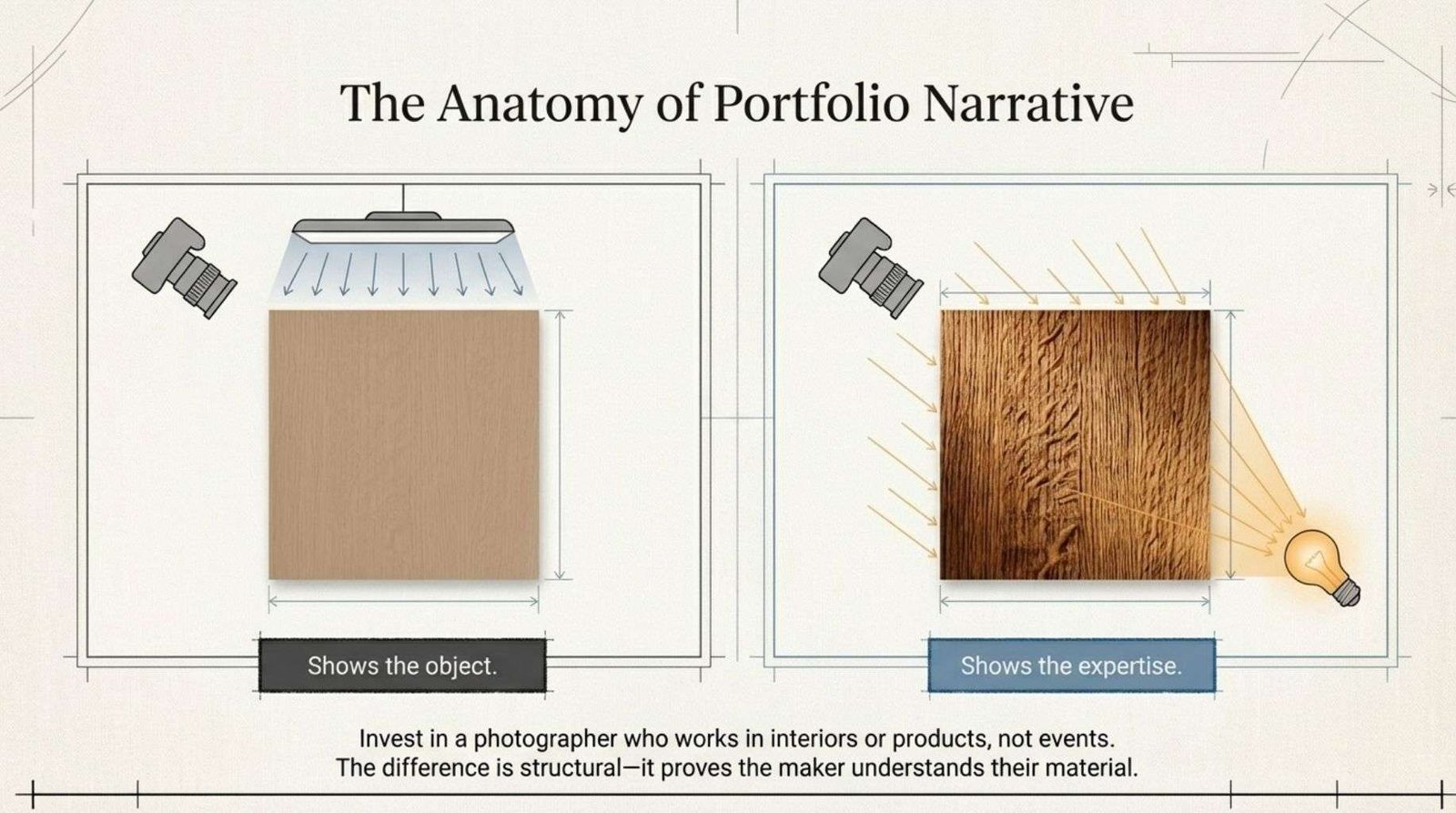
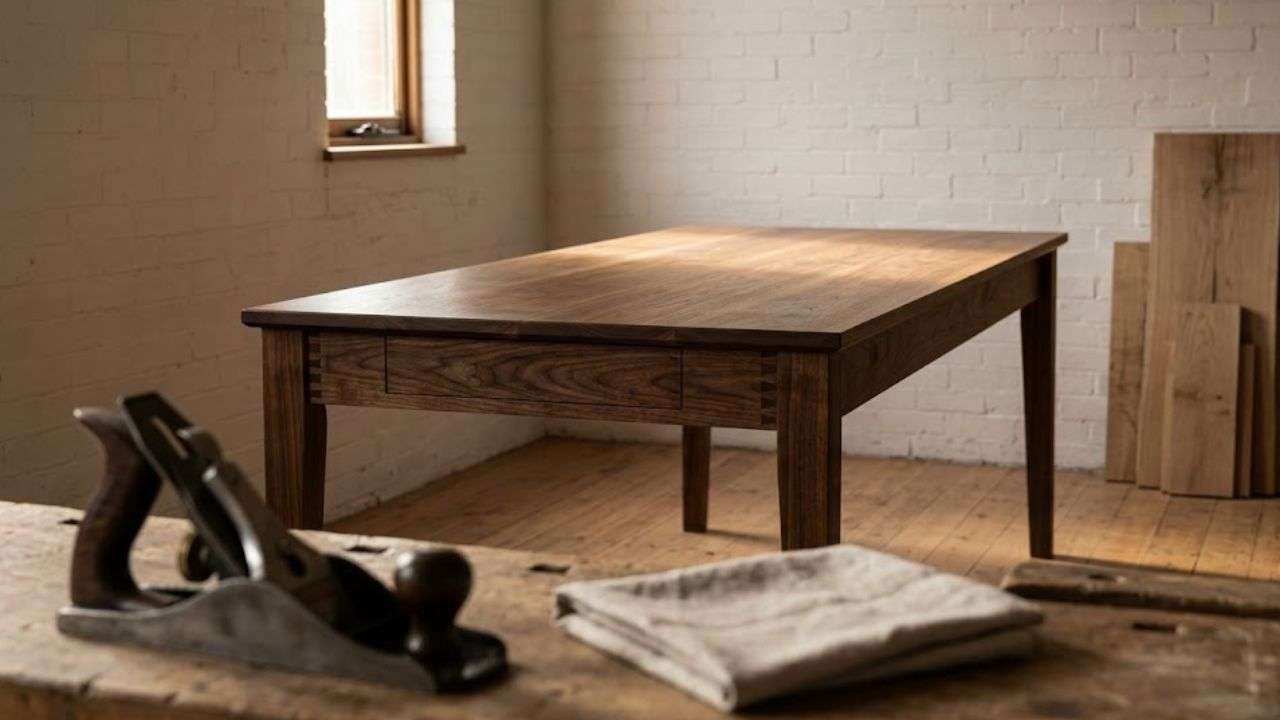
Photography carries the most weight of any visual element. The grain of quarter-sawn oak reads entirely differently under flat overcast light than it does under a single warm bulb raking across the surface at a low angle.
The second image shows more. It shows the maker understands their material. Invest in a half-day with a photographer who works in interiors or product, not events. The difference is structural.
Logo design should reflect the brand’s character, not generic ideas about woodworking. A hand-drawn mark suggests warmth and craft. A geometric, cut letterform suggests precision and structure. Neither is correct by default.
The Portfolio as Narrative.
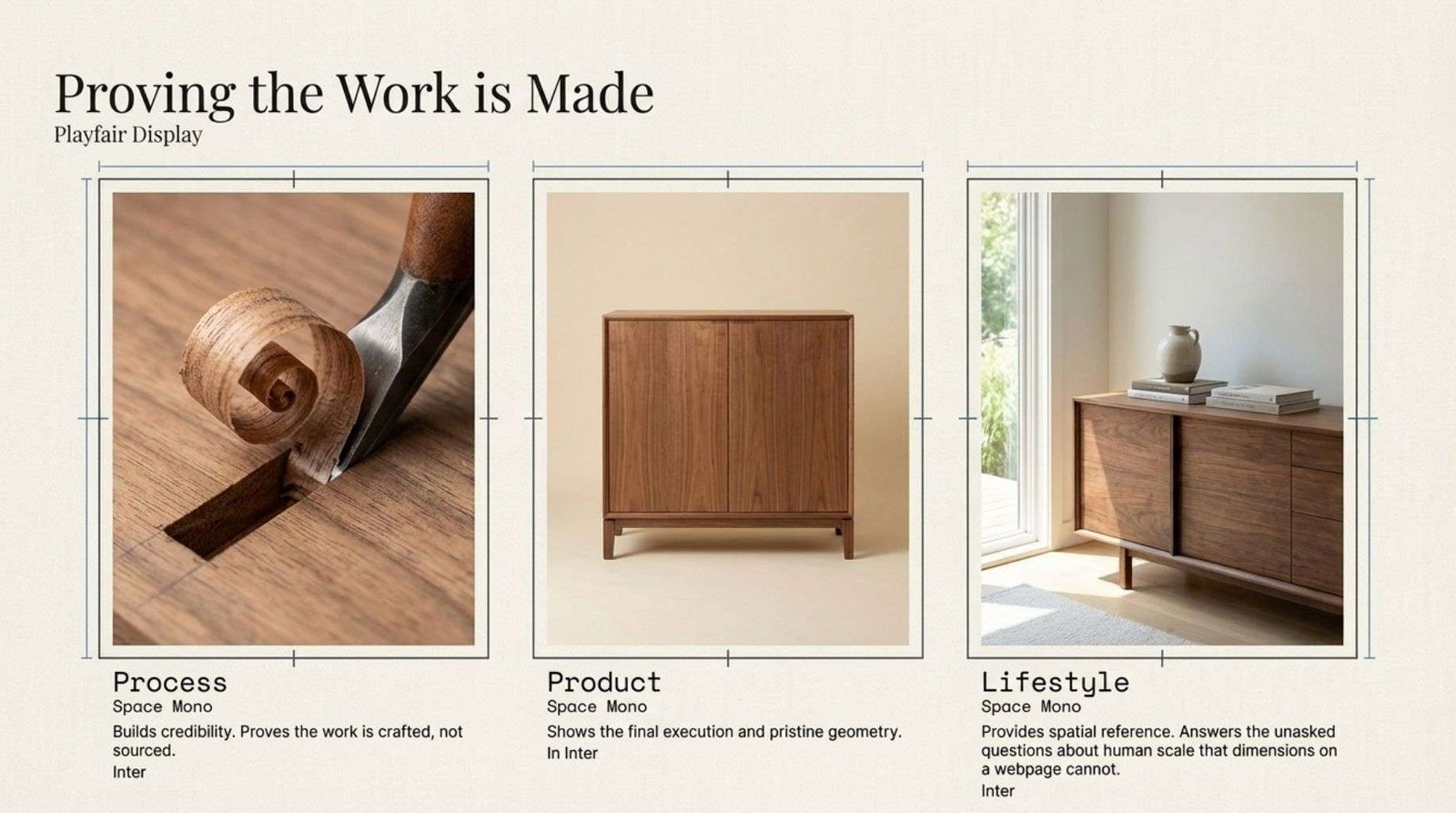
A portfolio that shows only finished pieces tells half the story.
The curl of a hand plane shaving, the end grain of a mortise cut cleanly before glue-up, a jig clamped to a workbench at seven in the morning: these images build the credibility that a studio photograph of a finished cabinet cannot fully supply on its own. They prove the work is made, not sourced.
Lifestyle photography matters for different reasons. A walnut sideboard shown in a real home, with objects living on its surface, gives prospective buyers the spatial reference they need.
Dimensions on a product page are rarely sufficient. Seeing the piece at human scale, beside a doorway or a window, answers the question the buyer was too uncertain to ask.
Digital Presence: The Places You Must Inhabit.
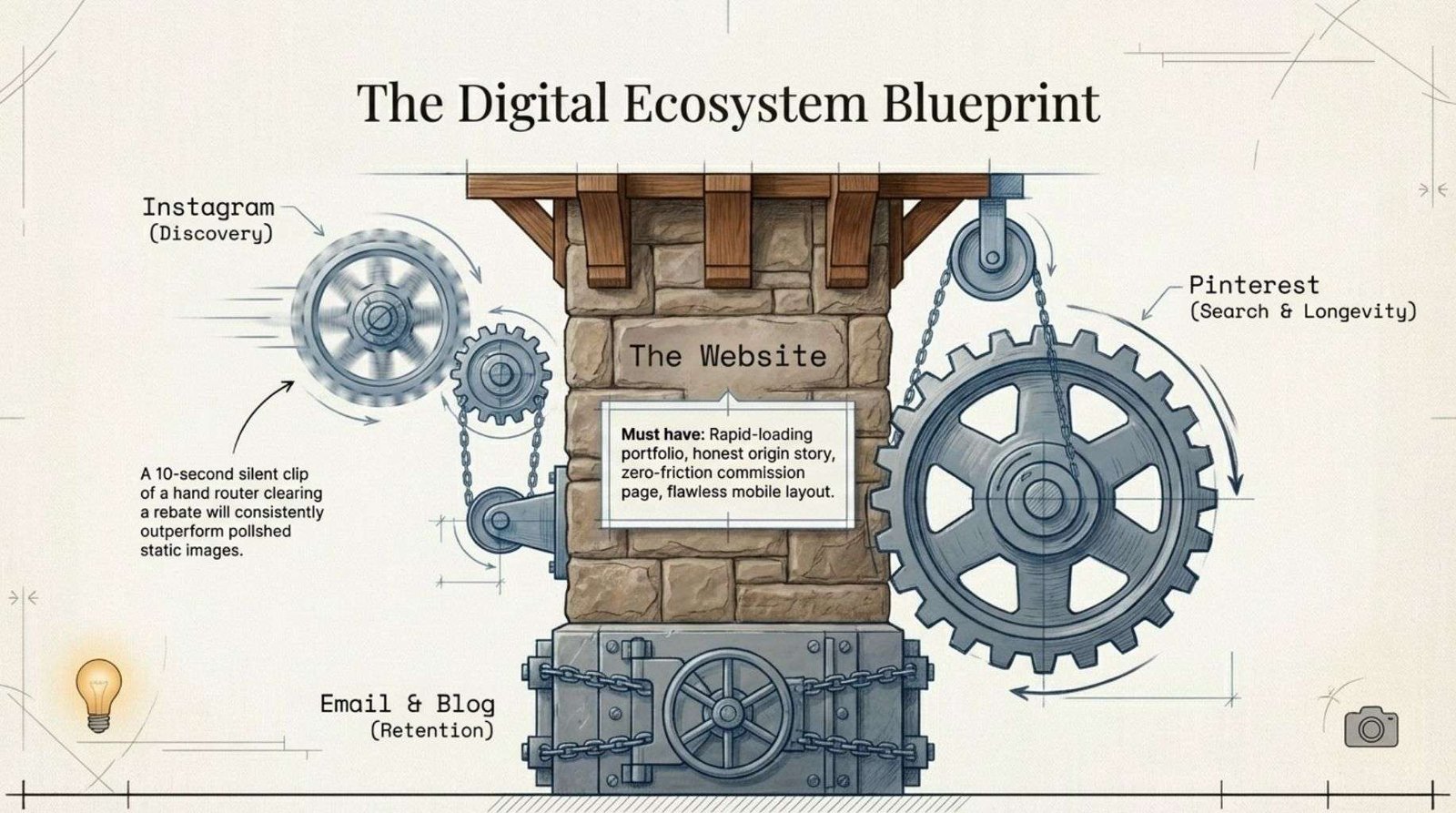
A website is not optional. It is the permanent address from which all other platforms borrow authority.
It needs four things above all: a portfolio that loads quickly, a clear about page that tells the origin story with honesty, a contact or commission page with no friction, and a mobile layout that does not collapse the photography.
Instagram remains the primary discovery platform for craft and design. Short process videos consistently outperform static images in reach.
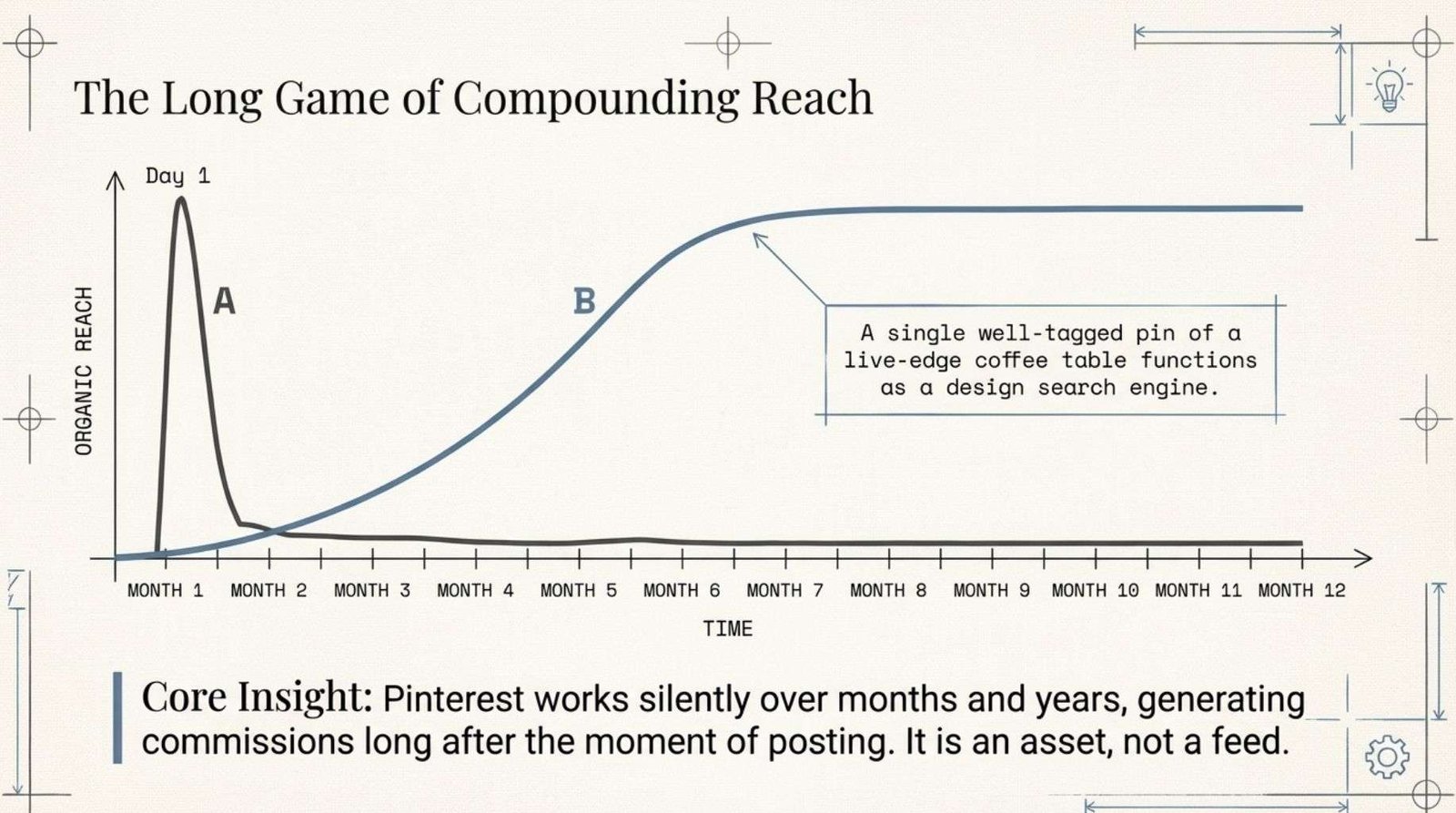
A ten-second clip of a hand router clearing a rebate, posted without commentary, will find more new eyes than a polished finished image shared with a lengthy caption. Pinterest functions as a design search engine and drives traffic silently over months and years.
A piece pinned with accurate keyword descriptions continues working long after the moment of posting.
One platform that genuinely rewards woodworkers, and is frequently ignored, is Pinterest for its compounding organic reach.
A single well-tagged pin of a live-edge coffee table can generate enquiries twelve months after it was posted.
Pricing and the Courage to Hold It.
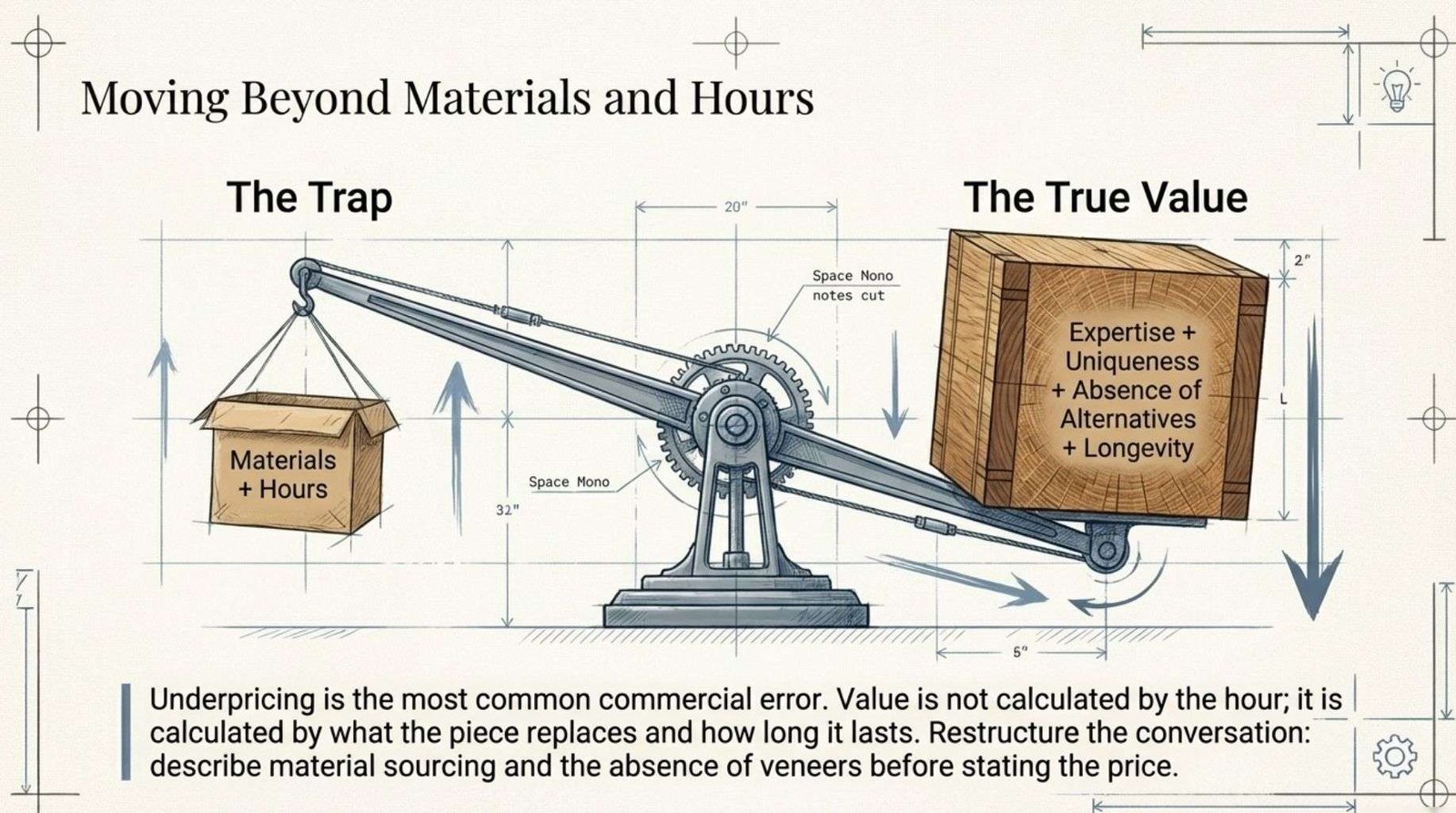
Underpricing is the most common commercial error among skilled makers.
The materials-plus-hours formula ignores three things that buyers might pay for: expertise, uniqueness and the absence of alternatives.
A set of hand-cut mortise-and-tenon chairs takes far longer to make than flat-pack equivalents, but their value is not calculated by the hour.
It is calculated by what they replace and by how long they last.
The practical limitation here is real. Value-based pricing requires confidence in a conversation that many makers find genuinely uncomfortable.
The solution is to restructure the conversation. Describe longevity, material sourcing and the absence of veneers before discussing price.
The number lands differently.
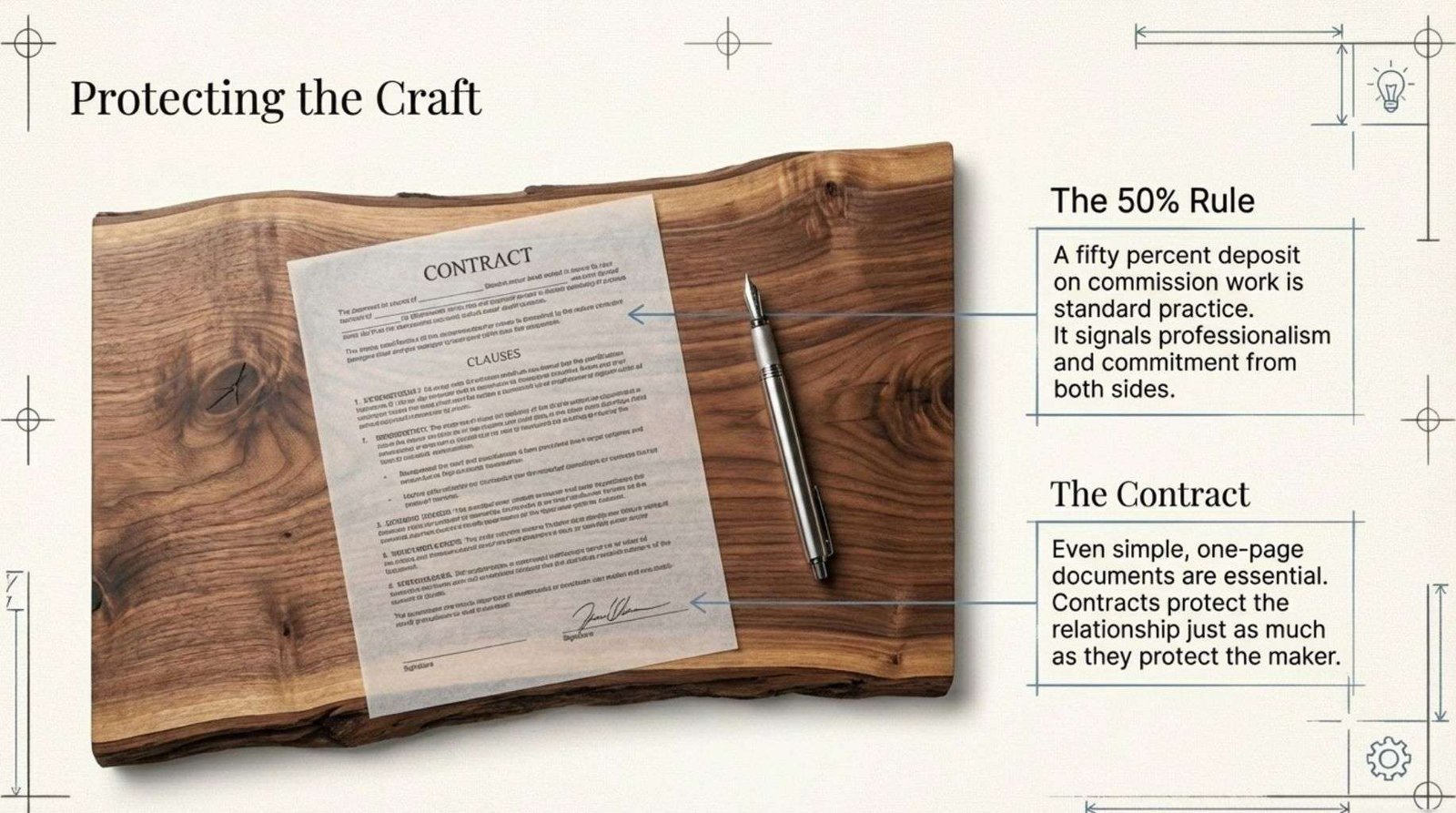
Always require a deposit. A fifty percent deposit on commission work is standard practice and signals professionalism on both sides of the agreement.
Contracts, even simple one-page documents, protect the relationship as much as they protect the maker.
Content as Long-Term Reputation.
A blog post titled “How to choose the right timber for an outdoor dining table” will answer a question that hundreds of people search for each month.
It builds trust before a first enquiry is made. It positions the maker as someone who knows their material rather than someone who sells furniture.
That distinction matters to buyers who are considering a significant spend.
An email list is more durable than any social platform. Followers can be lost to algorithm changes. An email address belongs to the maker.
A quarterly newsletter announcing new work, a recently completed commission or available stock reaches people who already chose to pay attention.
Physical Presence and the Partnerships That Accelerate Trust.
The weight of a business card printed on uncoated 600gsm stock communicates something that a digital portfolio cannot.
Tactile detail is part of the woodworker’s native language and it should extend to every physical touchpoint.
Relationships with interior designers represent perhaps the highest-leverage business development available to a furniture maker working at quality. Designers specify. They return. They refer.
One strong working relationship with a designer who operates at mid-to-high-end residential can supply more consistent work than months of social media activity.
Craft fairs and design exhibitions are often underestimated by makers who attend once without a strategy.
The goal at a show is rarely immediate sales. It is the collection of contacts, conversations with specifiers and a physical demonstration of quality that photographs cannot fully convey. Return visits build recognisability within the design community.
Reputation: The Asset That Compounds.
One unhappy client handled poorly in public does proportionally more damage to a small maker than to a large brand.
The practice of responding to criticism by inviting the conversation offline is not merely diplomatic. It is correct. It demonstrates accountability and closes the loop without amplifying the complaint.
Ask satisfied clients for reviews. Most people will leave one if asked directly and simply, immediately after the piece arrives. Waiting erodes the willingness.
A Google review from a named client carries more weight with new enquiries than any amount of self-published content.
Referral programs need not be elaborate. A sincere handwritten note and a small discount on a future order, offered to a client who has already referred someone, strengthens the relationship and makes the referral behaviour more likely to repeat.
The strongest woodworking businesses are built on this: one client who loves the work and talks about it.