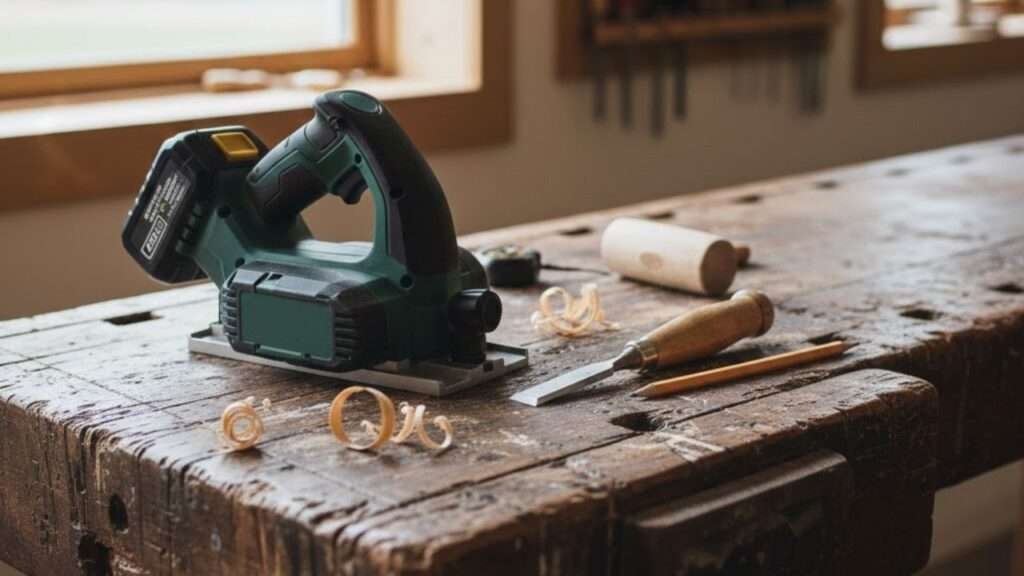
Woodworking is a traditional craft that grows through steady practice and a developing understanding of tools materials and techniques.
Many people begin with simple projects and discover that woodworking offers a long term path of learning that is both practical and creative.
The process of shaping timber into useful and attractive items builds confidence and encourages attention to detail.
As skills improve the woodworker begins to see timber differently and to understand how grain texture and structure influence the final result.
This article explores how woodworking skills develop over time what realistic progress looks like and how a personal hobby can grow into a meaningful creative outlet or even a small business.
The Nature Of Woodworking Skill Development.
Woodworking feels accessible at the beginning because basic projects can be completed with limited tools and straightforward methods.
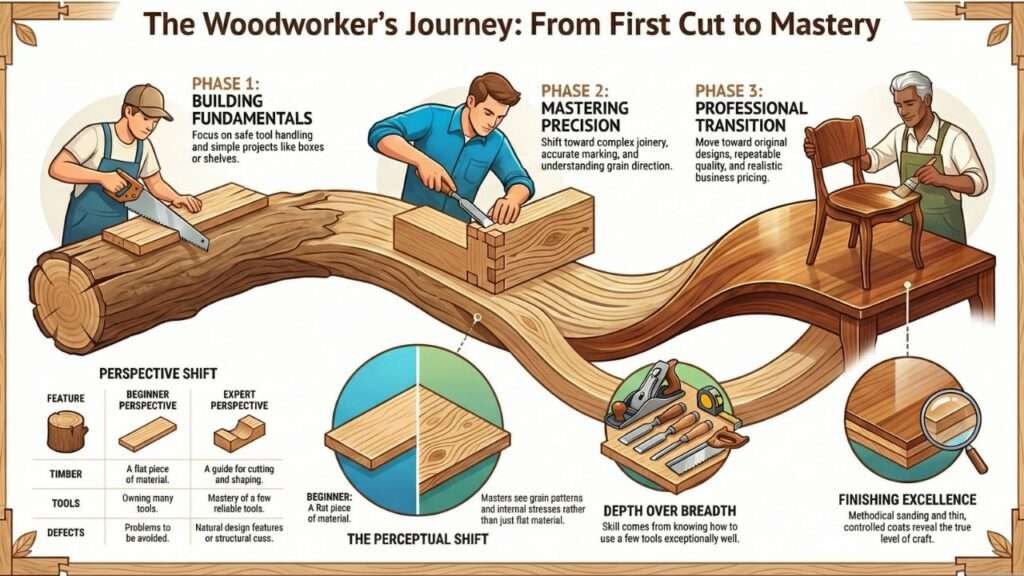
Early tasks such as building a small shelf or a simple box introduce the fundamentals of measuring cutting and assembling.
These first steps are important because they build familiarity with tools and materials. Skill development becomes more complex as the woodworker progresses.
It involves understanding how different species of timber behave learning how grain direction affects cutting and shaping developing control with hand tools and power tools improving accuracy in measuring and marking and refining finishing techniques for consistent results.
The early stages focus on safe tool handling and simple joinery. Over time the focus shifts toward precision design and efficiency.
Mastery is not achieved quickly.
It is the result of repeated practice careful observation and a willingness to adjust methods when results fall short of expectations.
How Perception Of Timber Changes With Experience.
As woodworking skills grow the way timber is viewed begins to change.
A beginner may see a board as a flat piece of material.
A more experienced woodworker sees grain direction internal stresses colour variation and potential uses.
This deeper understanding leads to better decisions at every stage of a project. Skill development changes perception in several ways.
1. Grain patterns become guides for cutting and shaping.
2. Natural defects become design features or structural considerations.
3. Weight and density influence tool choice and joinery.
4. Moisture content and movement become part of planning.
This shift in perception improves the quality of the finished piece and reduces waste. It also helps the woodworker select boards not only for size but also for stability appearance and suitability for the intended project.
The Importance Of Tool Skills.
Tools are central to woodworking but skill does not come from owning many tools. It comes from knowing how to use a few tools well.
A small set of reliable tools can support significant progress when used with care and consistency.
Key areas of tool skill include sharpening cutting edges for clean accurate work controlling hand planes chisels and saws with confidence using measuring and marking tools precisely setting up and maintaining power tools for accurate cuts and choosing the right tool for each operation.
As skills grow the woodworker begins to feel the difference between a rough cut and a clean cut and between a rushed operation and a controlled one.
This sensitivity to feedback from tools and materials is one of the clearest signs of progress.
Finishing As A Reflection Of Craftsmanship.
The finish on a piece of woodworking often reveals the level of skill behind it. Smooth surfaces clean edges and even finishes do not happen by accident.
They are the result of careful preparation and methodical work.
Finishing skill involves following proper sanding sequences addressing surface defects before applying finish selecting finishes that suit the timber and the purpose of the item applying oils varnishes or waxes in thin controlled coats and allowing adequate drying and curing time.
A well finished piece highlights the grain of the wood and protects it from wear and moisture. It also communicates respect for the material and for the time invested in the project.
As finishing skills improve the overall appearance of each piece becomes more refined and consistent.
The Challenge And Satisfaction Of Long Term Learning.
Woodworking appeals to many people because it is a craft that cannot be fully mastered in a short time.
There is always another technique to learn another joint to refine or another type of project to attempt. This ongoing challenge is part of the attraction.
Long term learning in woodworking includes moving from simple joints to more advanced joinery experimenting with curves laminations and complex shapes designing original pieces instead of following plans learning to repair and restore older items and exploring new finishes and surface treatments.
Each project builds on the last. Mistakes become lessons. Successful pieces become proof of progress.
Over time woodworking becomes not only a hobby but also a way to think about problem solving design and patience.
Recognition Of Skill And The Value Of Handmade Work.
As woodworking skills develop others begin to notice the quality of the work. Friends family and visitors often recognise the difference between mass produced items and handmade pieces that show care and attention to detail.
Recognition may appear through requests for custom pieces or repairs positive comments about fit finish and design interest in how items were made or willingness from others to pay for work or materials.
This recognition can be encouraging. It confirms that the time spent learning and practising has real value. It also reinforces the idea that traditional skills still matter in a world of fast manufacturing and disposable products.
Turning A Woodworking Hobby Into A Small Business.
For some people woodworking remains a personal hobby. For others it gradually becomes a source of income. Turning a hobby into a business requires more than skill with tools.
It also requires planning organisation and realistic expectations. Key considerations include choosing a specific type of product or style to focus on understanding material costs and pricing work fairly building a small portfolio of completed pieces ensuring consistent quality and repeatable processes and managing time effectively in a home workshop or shed.
A small woodworking business can begin with simple items such as cutting boards shelves or small furniture pieces.
Sales may start with friends and local markets then expand through online platforms or word of mouth. Growth can be gradual and controlled so that quality remains high and the work stays enjoyable.
Balancing Realism And Ambition.
Realistic expectations are important in woodworking. It is possible to learn basic skills in a short period but advanced work takes time.
Ambition is useful when paired with patience and a willingness to practise.
A balanced approach includes setting achievable project goals at each stage accepting that mistakes are part of learning investing in skills before investing heavily in tools studying plans books and examples of quality work and reviewing each project to identify improvements for the next one.
This balance allows steady progress without frustration. It keeps woodworking enjoyable while still moving toward higher levels of craftsmanship.
Experimenting With Natural Woodworking.
As woodworking skills develop it becomes easier to explore natural woodworking techniques that highlight the organic qualities of timber.
Natural woodworking focuses on working with the material rather than forcing it into rigid shapes or heavily processed forms.
It encourages the woodworker to pay attention to grain movement colour variation and the natural edges that give each piece its character.
This approach supports creativity and helps build a deeper understanding of how timber behaves.
Experimenting with natural woodworking can involve several simple practices.
1. Using live edge boards to preserve the natural outline of the tree.
2. Selecting timber with visible knots or figure to create visual interest.
3. Allowing grain patterns to guide the shape and orientation of a project.
4. Choosing finishes that enhance natural colour rather than covering it.
5. Incorporating offcuts or irregular pieces into small creative projects.
Conclusion.
Developing woodworking skills is a gradual process that combines technical knowledge practical experience and respect for the material.
It begins with simple projects and basic tools then expands into more complex work as confidence grows.
Over time the woodworker learns to see timber differently to use tools with greater control and to finish pieces with care and consistency.
The craft offers challenge satisfaction and the possibility of turning a personal interest into a small business.
Most importantly it provides a way to create lasting useful and attractive items that reflect both the natural qualities of wood and the skill of the person who shaped it.