
Setting Up For Woodworking On A Budget
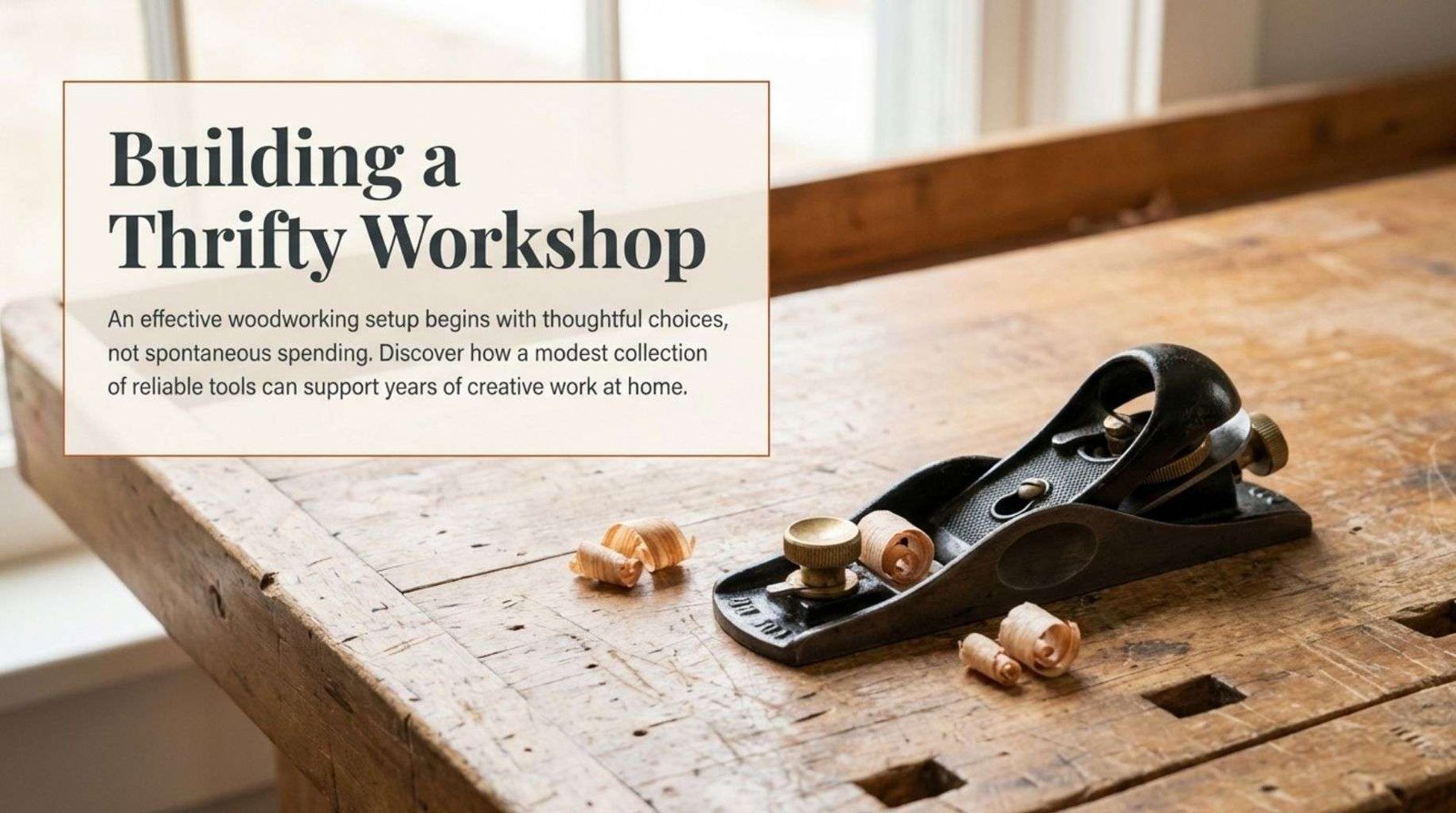
An effective and well-organised woodworking setup begins with thoughtful choices rather than spontaneous large purchases.
Many people over the years have discovered that a modest collection of reliable tools can support years of creative work at home.
A balanced approach helps keep costs manageable while still building a woodshop or woodworking space (shed, garage etc) that feels welcoming, sensible and quite capable.
The goal is to create a space where natural materials, simple routines and steady craftsmanship come together without unnecessary expense.
Understanding the Value of a Thrifty Approach.
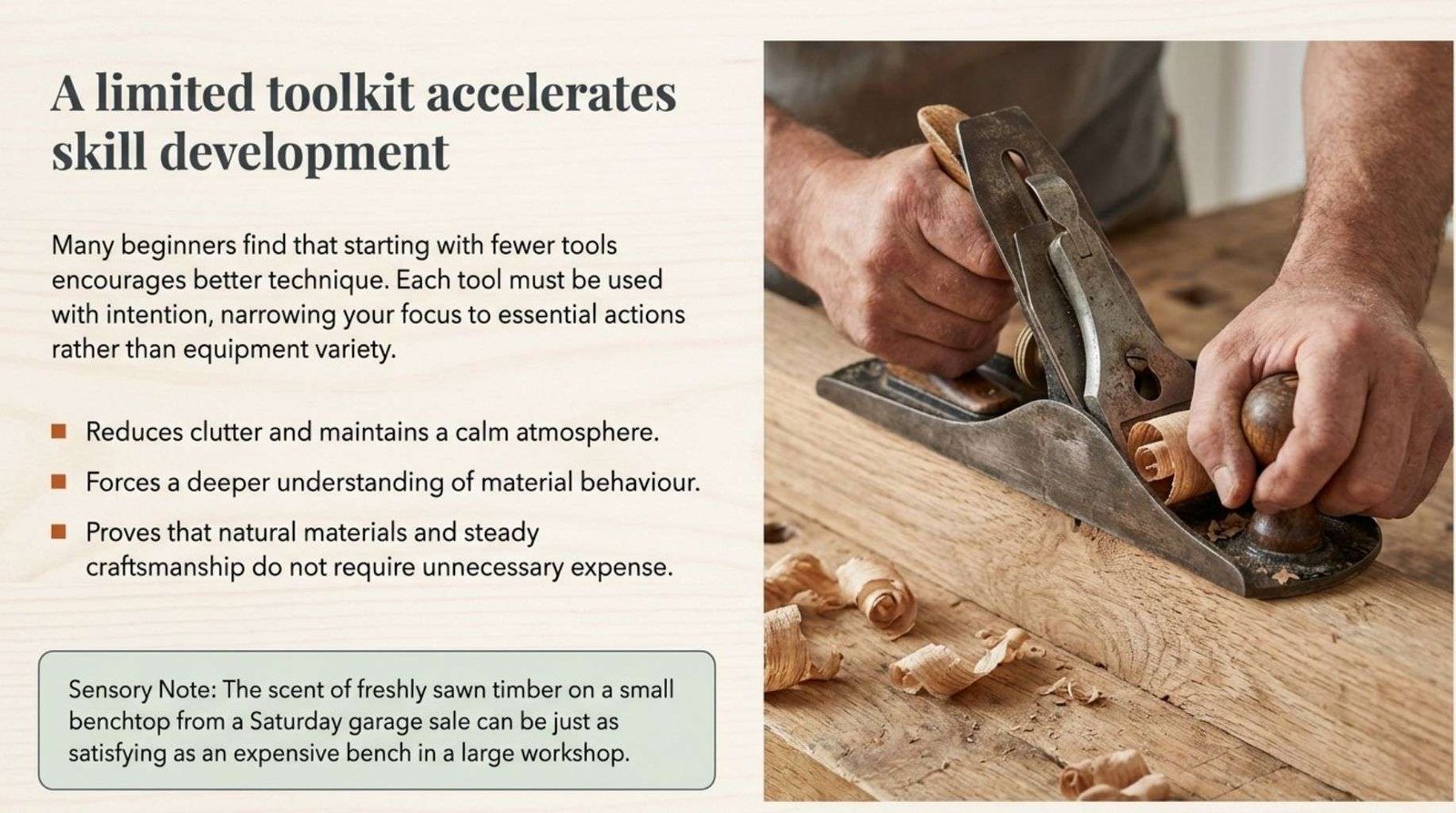
A careful approach to tool selection purchases encourages clarity about what is genuinely useful. The scent of freshly sawn timber on a small benchtop you got from a Saturday garage sale in your shed can be just as satisfying as any expensive bench in a large workshop.
Many beginners find that starting with fewer tools encourages better technique because each tool must be used with intention.
A thrifty setup also reduces clutter which helps maintain a calm atmosphere.
The counter-intuitive insight is that a limited toolkit often accelerates skill development because it narrows the focus to essential actions rather than equipment variety.
Choosing Tools That Support Early Skills.
Early woodworking skills rely on accuracy and repeatability which means the first tools should help with layout and shaping.
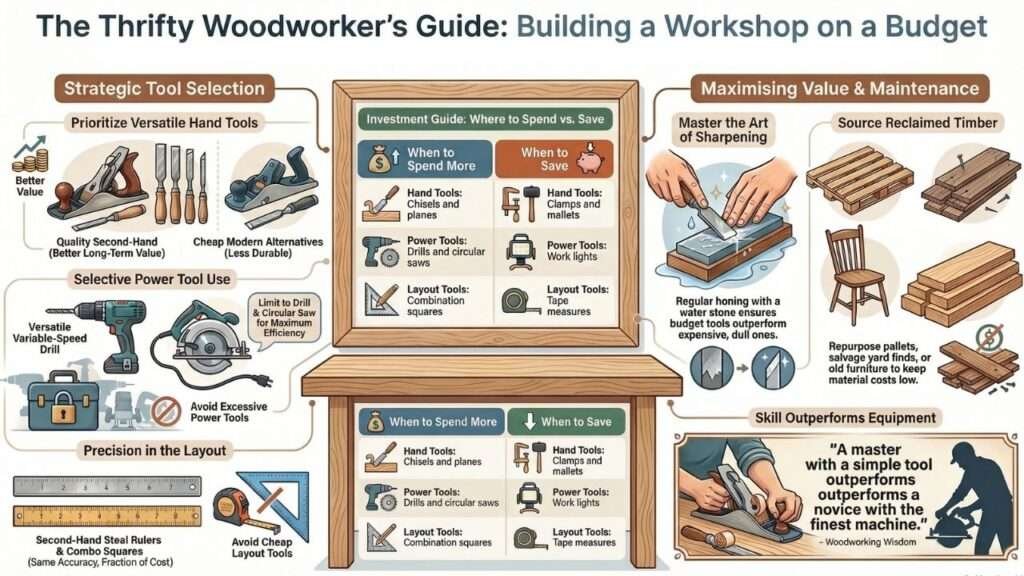
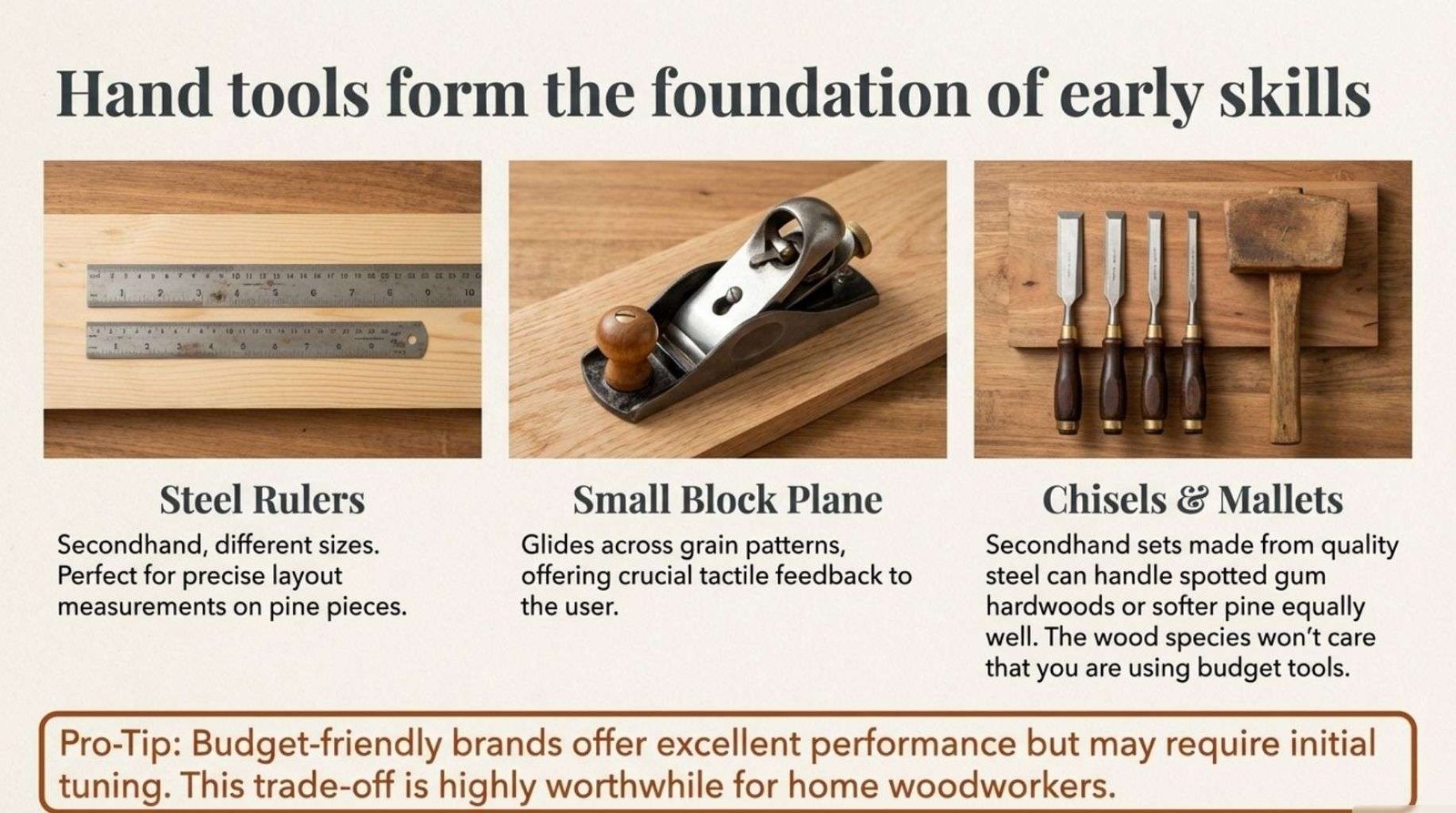
A few second hand different size steel rulers with clear markings can guide precise measurements on pine pieces just as good as new ones.
A small block plane offers tactile feedback as it glides across grain patterns. These tools support foundational habits that influence every future project.
A limitation to acknowledge is that some compact tools may require more passes to achieve the same result as larger versions which can extend project time but also deepen understanding of material behaviour.
Balancing Cost and Quality in Hand Tools.
Hand tools often provide the best value for beginners because they last for many years with basic care.
A well-maintained second hand chisel set made from quality steel that you got from facebook marketplace can handle joinery tasks on hardwoods like spotted gum or softer timbers like pine quite well, the wood species you’re using really won’t care that your using cheap tools.
The weight of a wooden mallet and the feel of a freshly honed edge create a sense of connection to the craft.
When selecting hand tools it helps to compare handles, blade steel, and ease of sharpening. Some budget-friendly brands offer excellent performance although they may require more initial tuning.
This trade-off is worthwhile for many home woodworkers who enjoy the process of refining their tools.
Selecting Power Tools With Purpose.
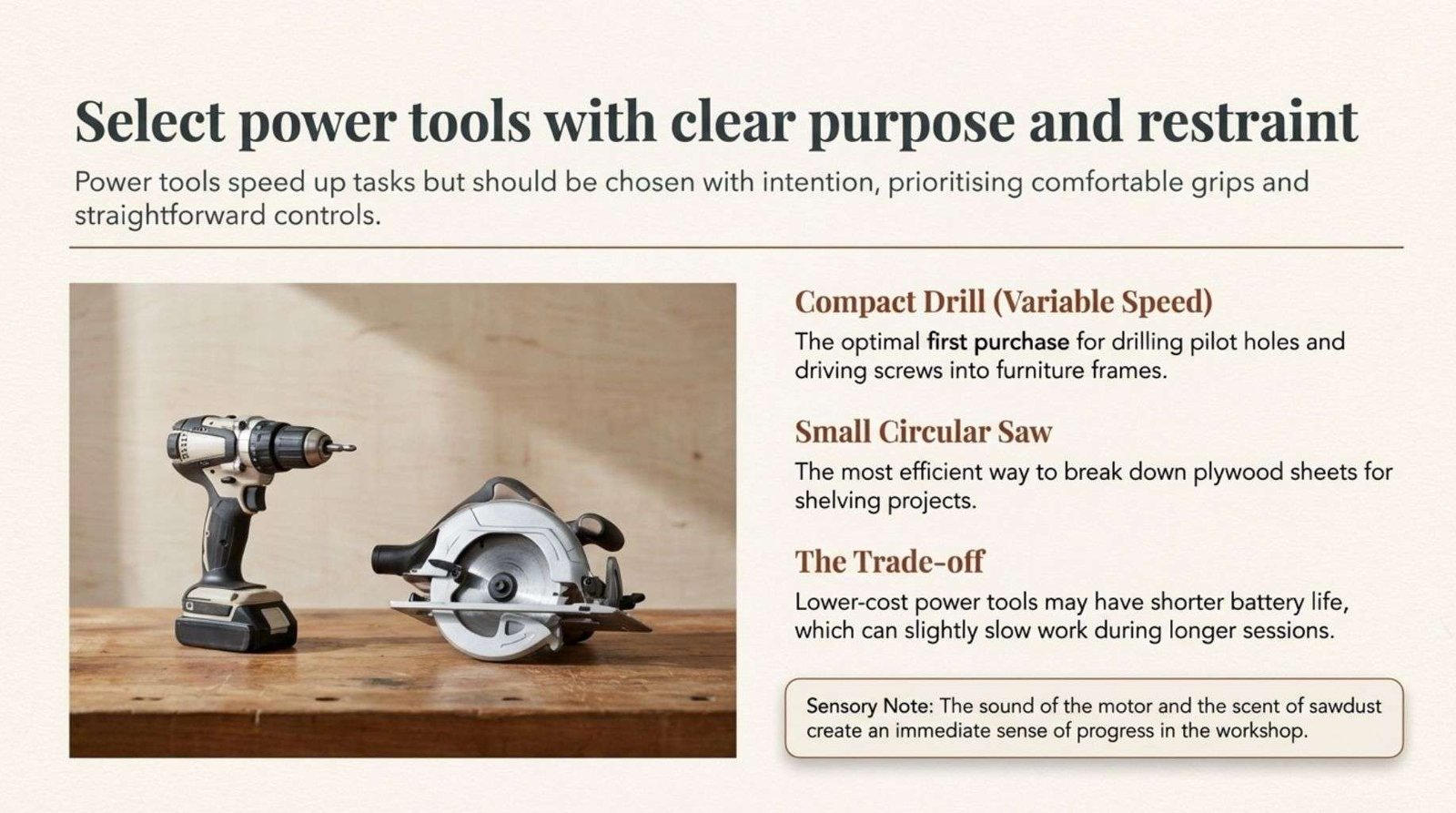
Power tools can speed up tasks but they should be chosen with restraint.
A compact drill with variable speed settings is often the first purchase because it supports drilling pilot holes and driving screws into furniture frames.
A small circular saw can break down plywood sheets for shelving projects.
The sound of the motor and the scent of sawdust create a sense of progress in the workshop. It is helpful to choose tools with comfortable grips and straightforward controls. A limitation to consider is that lower-cost power tools may have shorter battery life which can slow work during longer sessions.
Finding Value Through Secondhand Options.
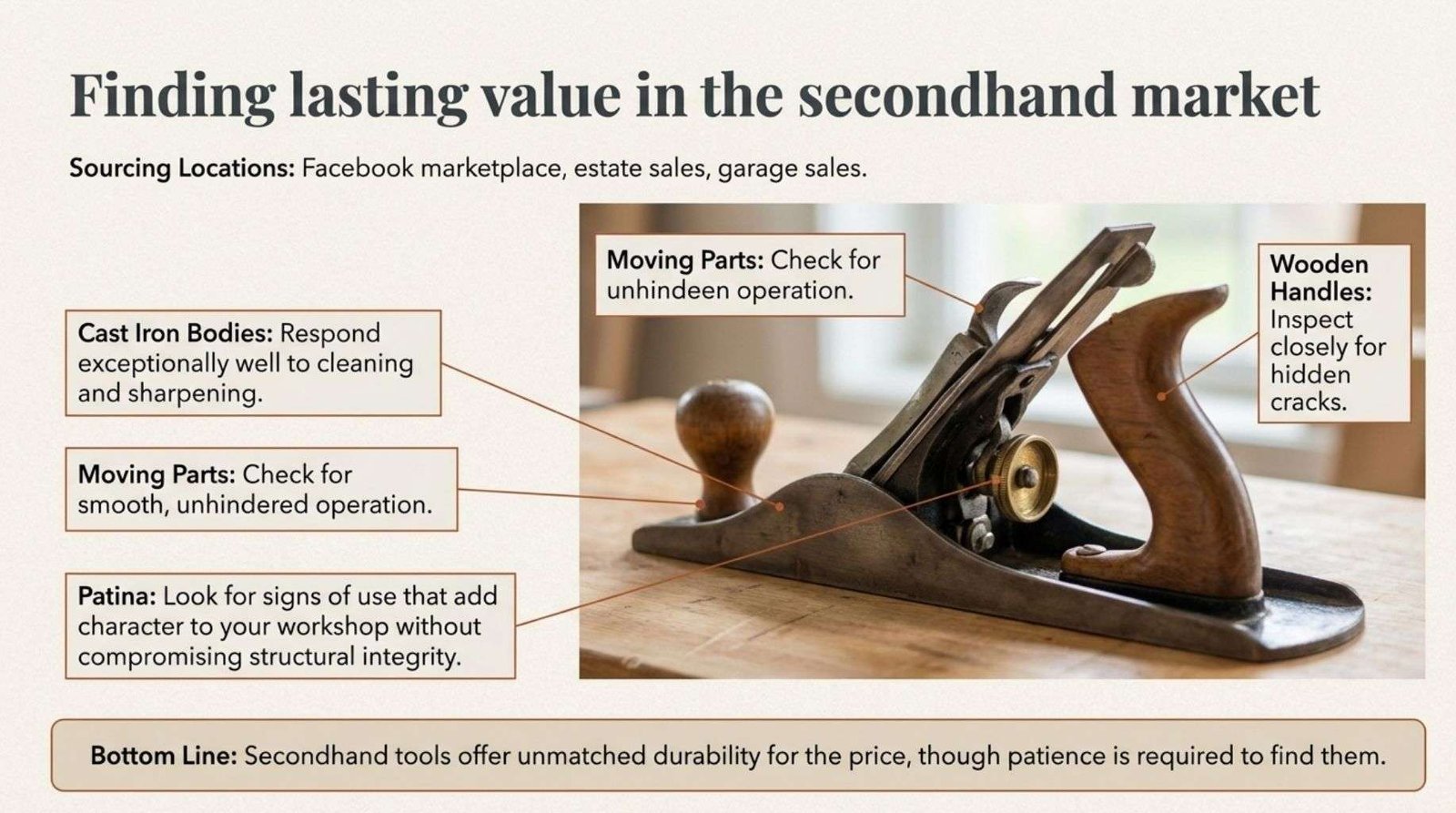
Secondhand markets offer opportunities to acquire quality tools at reduced prices. Many older hand planes have cast iron bodies that respond well to cleaning and sharpening.
Estate sales sometimes include wooden clamps that still hold strong after decades of use.
The patina on an older tool can add character to a workshop. When buying used items it is important to check moving parts for smooth operation and inspect wooden handles for cracks.
The advantage of secondhand tools is their durability although availability can vary which means patience is often required.
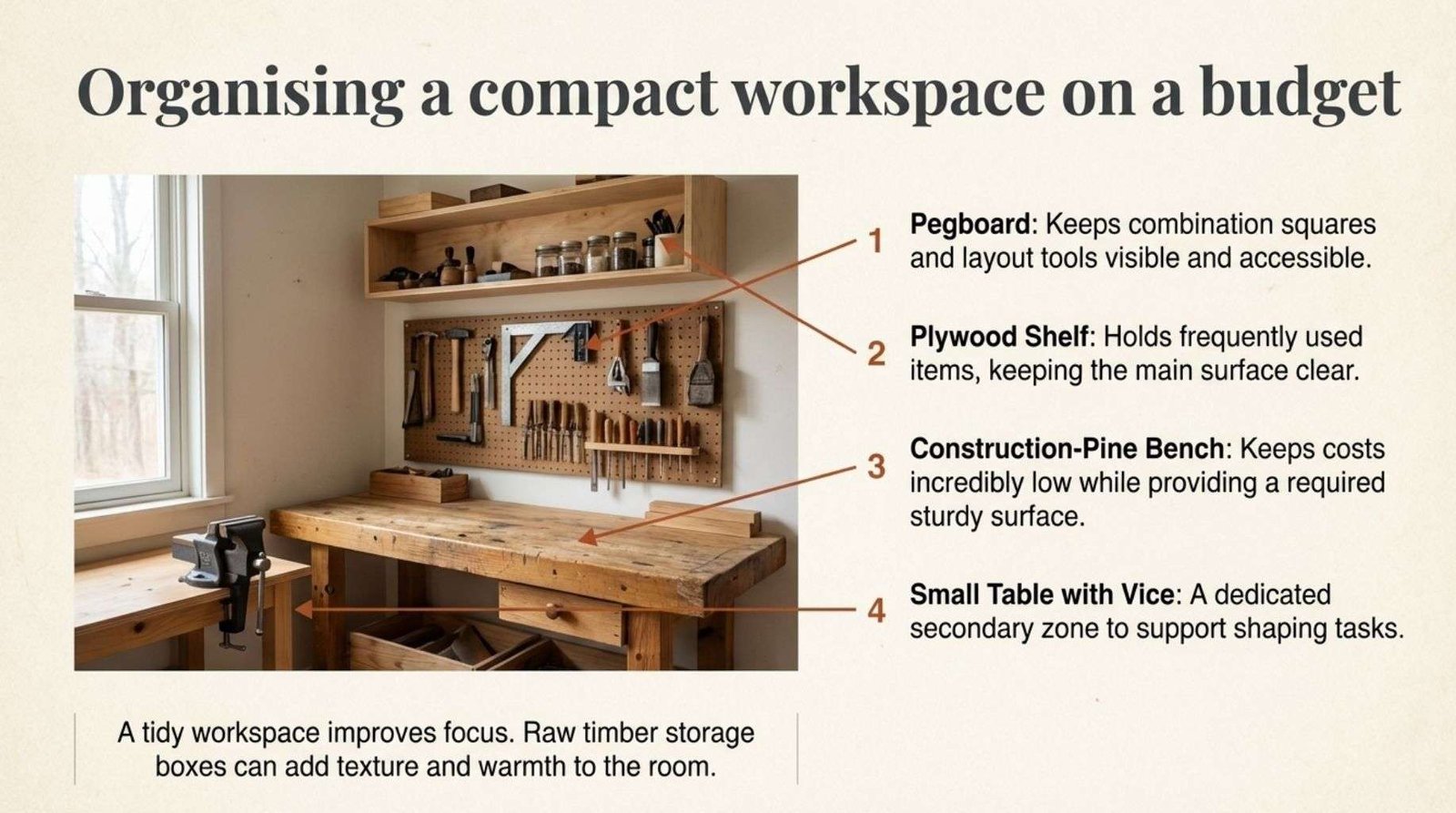
Organising a Small Workshop on a Budget.
A tidy workspace improves focus and reduces time spent searching for tools.
A simple plywood shelf can hold frequently used items while a pegboard keeps layout tools visible.
The texture of raw timber storage boxes adds warmth to the room.
Many woodworkers build their first workbench from construction-grade pine which keeps costs low while providing a sturdy surface.
A small table with a vice can support shaping tasks. The limitation of a compact workshop is reduced space for large projects although careful planning allows most home-scale builds to proceed smoothly.
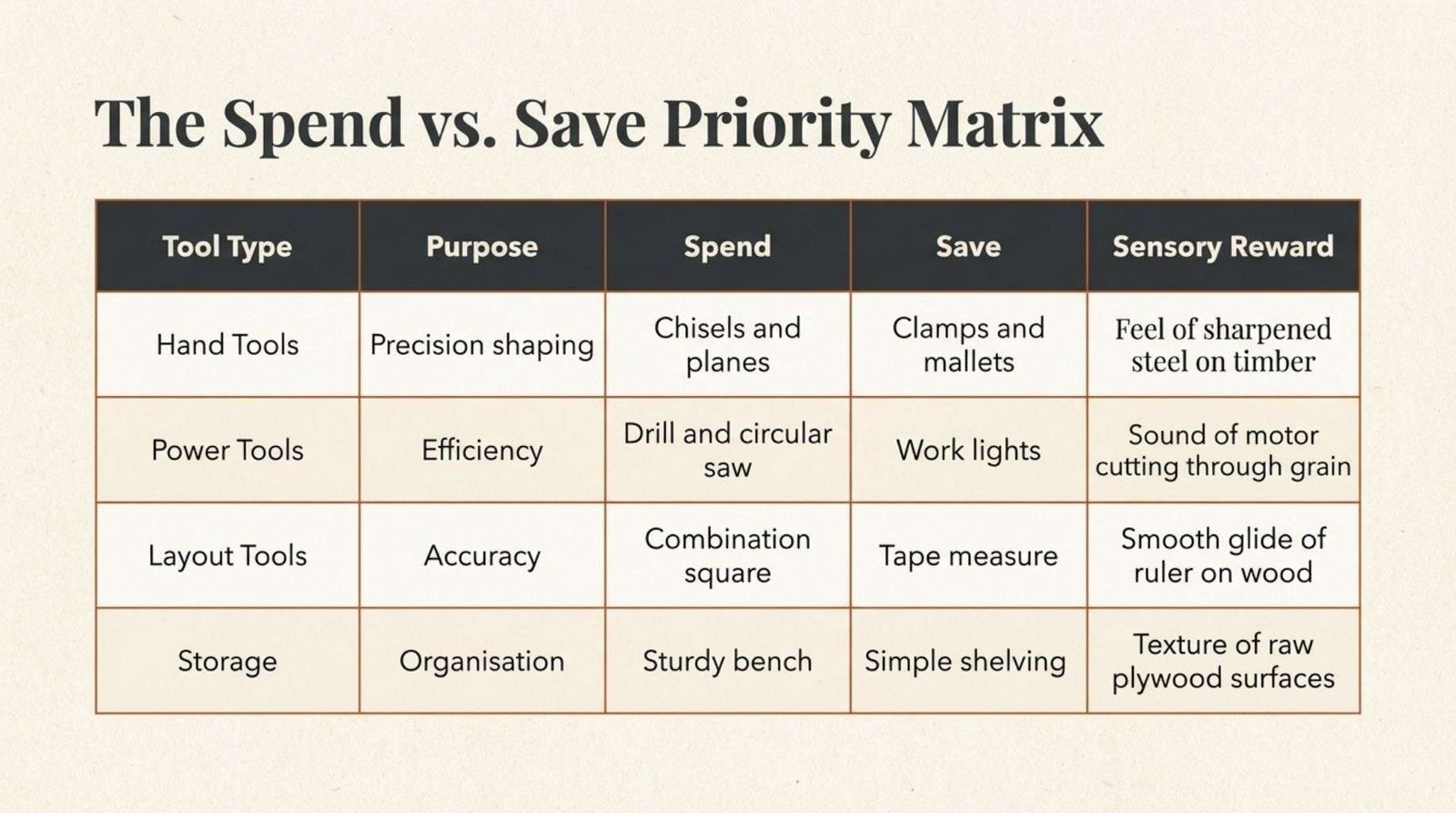
Using a Table to Compare Tool Priorities.
Tool Type | Purpose | When to Spend More | When to Save | Sensory Detail |
Hand Tools | Precision shaping | Chisels and planes | Clamps and mallets | Feel of sharpened steel on timber |
Power Tools | Efficiency | Drill and circular saw | Work lights | Sound of motor cutting through grain |
Layout Tools | Accuracy | Combination square | Tape measure | Smooth glide of ruler on wood |
Storage | Organisation | Sturdy bench | Simple shelving | Texture of raw plywood surfaces |
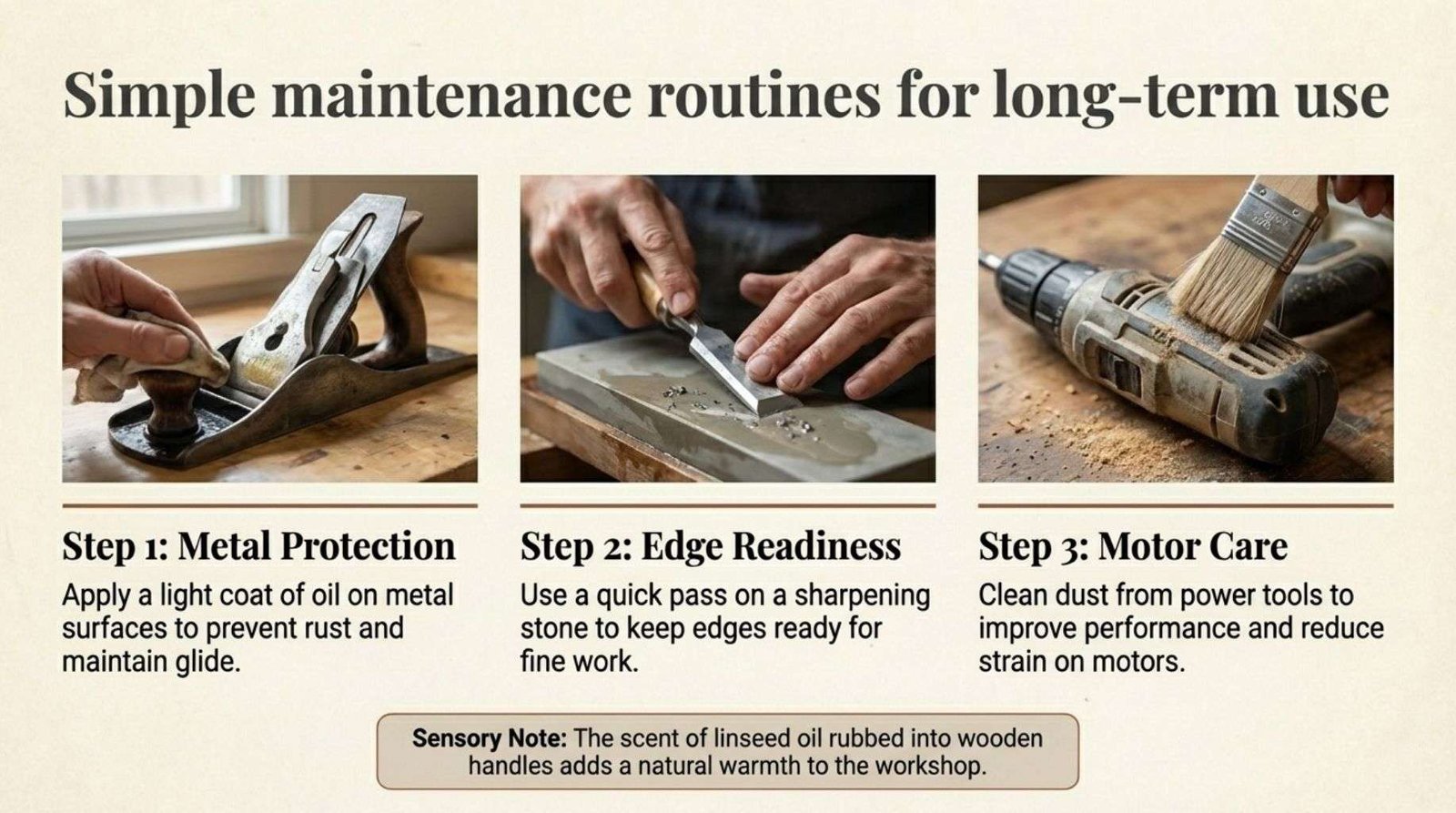
Maintaining Tools for Long-Term Use.
Regular maintenance extends the life of every tool. A light coat of oil on metal surfaces prevents rust while a quick pass on a sharpening stone keeps edges ready for fine work.
The scent of linseed oil on wooden handles adds a natural warmth to the workshop. Cleaning dust from power tools improves performance and reduces strain on motors. Maintenance routines do not need to be complex.
A limitation is that maintenance takes time which must be factored into project planning although many woodworkers find the process calming.
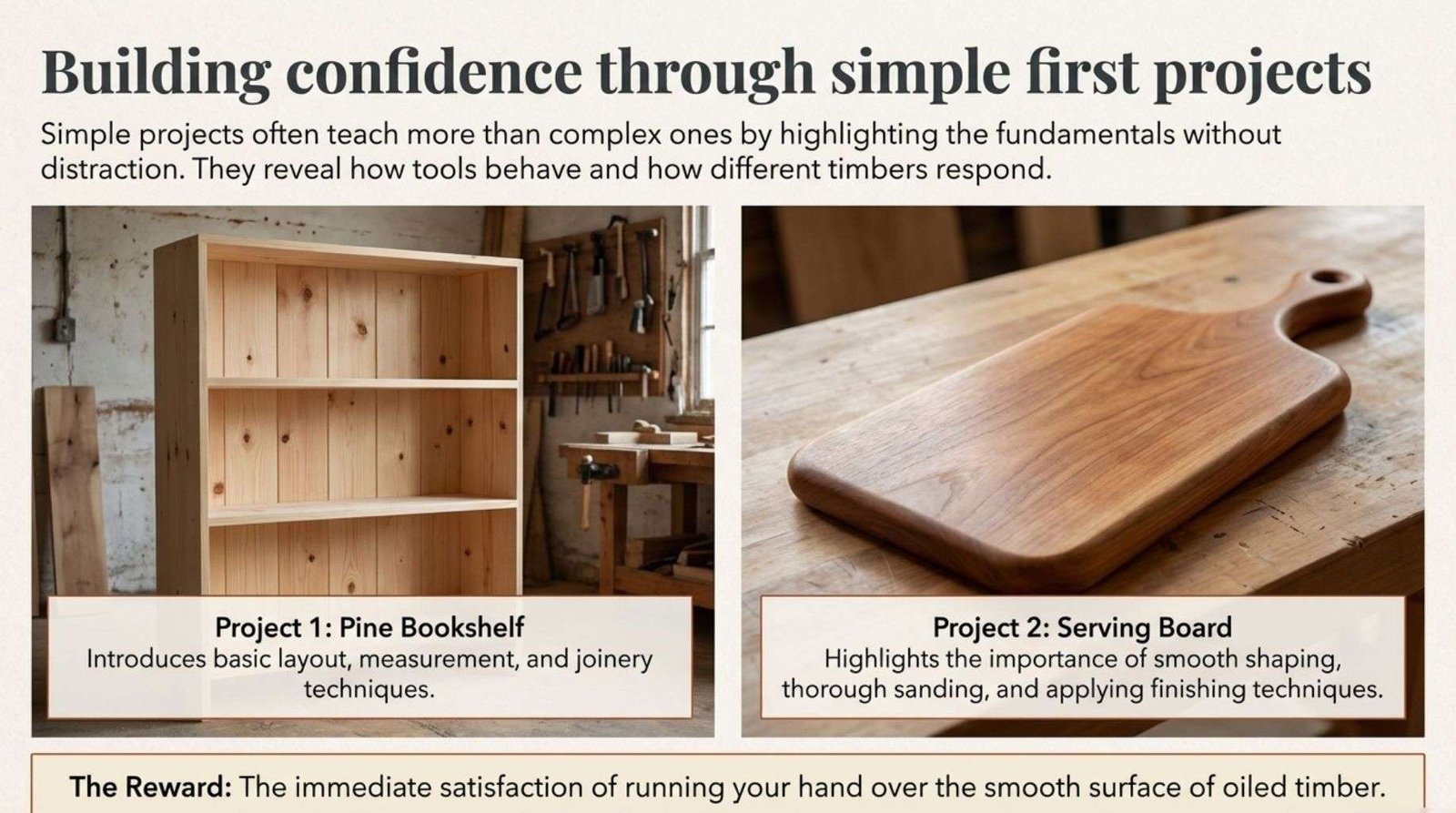
Building Confidence Through Simple Projects.
Small projects help build confidence with a new toolkit.
A pine bookshelf introduces basic joinery while a serving board highlights sanding and finishing techniques.
The smooth surface of oiled timber provides immediate satisfaction.
These early projects reveal how each tool behaves and how different timbers respond to shaping.
A nuanced observation is that simple projects often teach more than complex ones because they highlight the fundamentals without distraction.
Over time the workshop grows naturally as new needs arise.
A thrifty woodworking setup supports creativity without unnecessary expense.
A modest collection of well-chosen tools encourages steady skill development and a calm working environment.
With thoughtful purchases and simple organisation any home can become a welcoming space for woodworking.
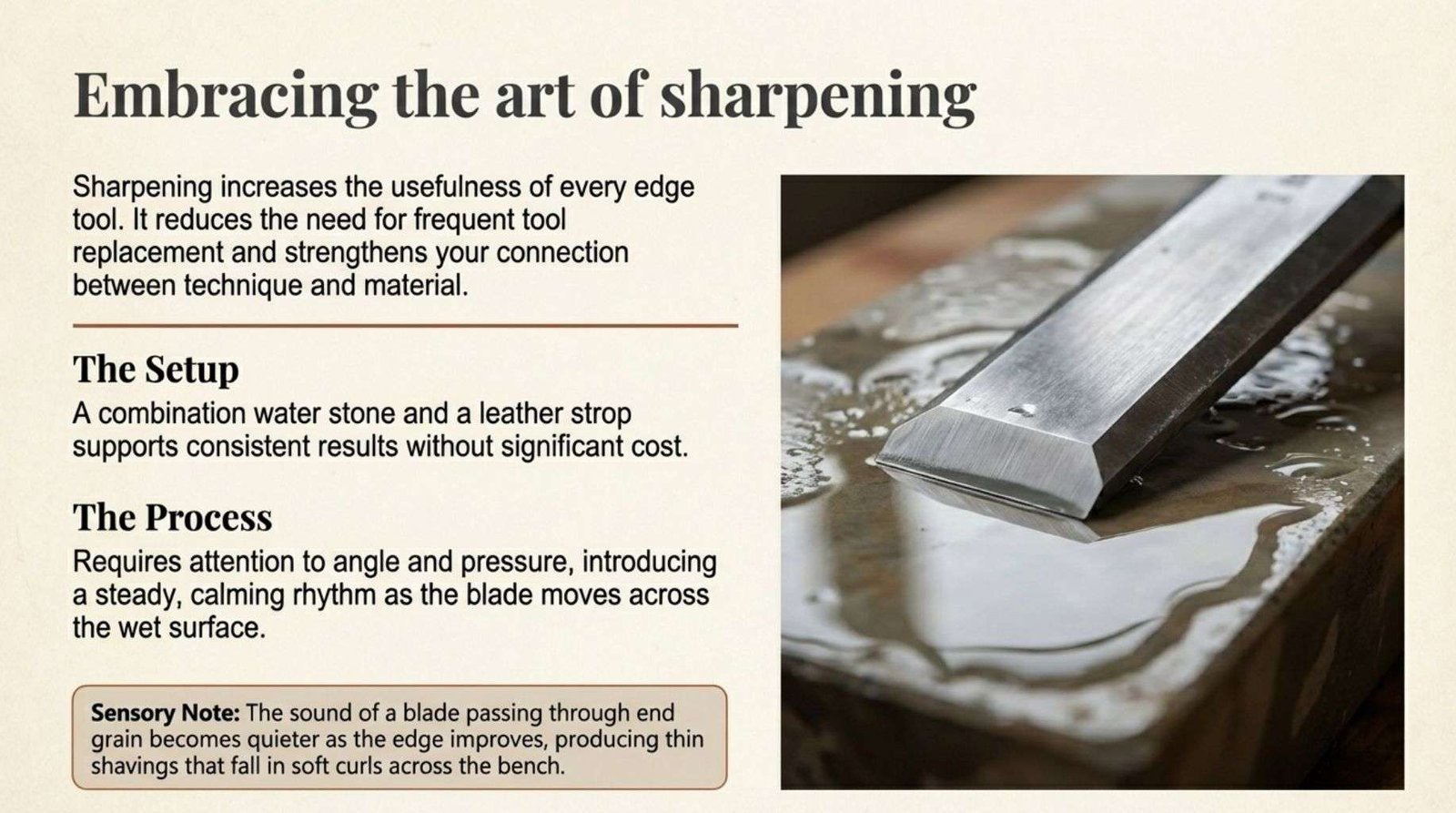
Embracing the Art of Sharpening.
Sharpening increases the usefulness of every edge tool in a thrifty workshop.
A chisel or plane that has been honed with care moves across timber with a smooth and predictable feel.
The sound of a blade passing through end grain becomes quieter as the edge improves. A simple setup with a combination water stone and a leather strop supports consistent results without significant cost.
The process introduces a steady rhythm as the blade moves across the wet surface. There is a learning curve because achieving a refined edge requires attention to angle and pressure.
The reward is clear when a plane produces thin shavings that fall in soft curls across the bench. This approach reduces the need for frequent tool replacement and strengthens the connection between technique and material.
Are There Affordable Woodworking Materials?
Affordable timber is available through many overlooked channels which helps keep project costs manageable.
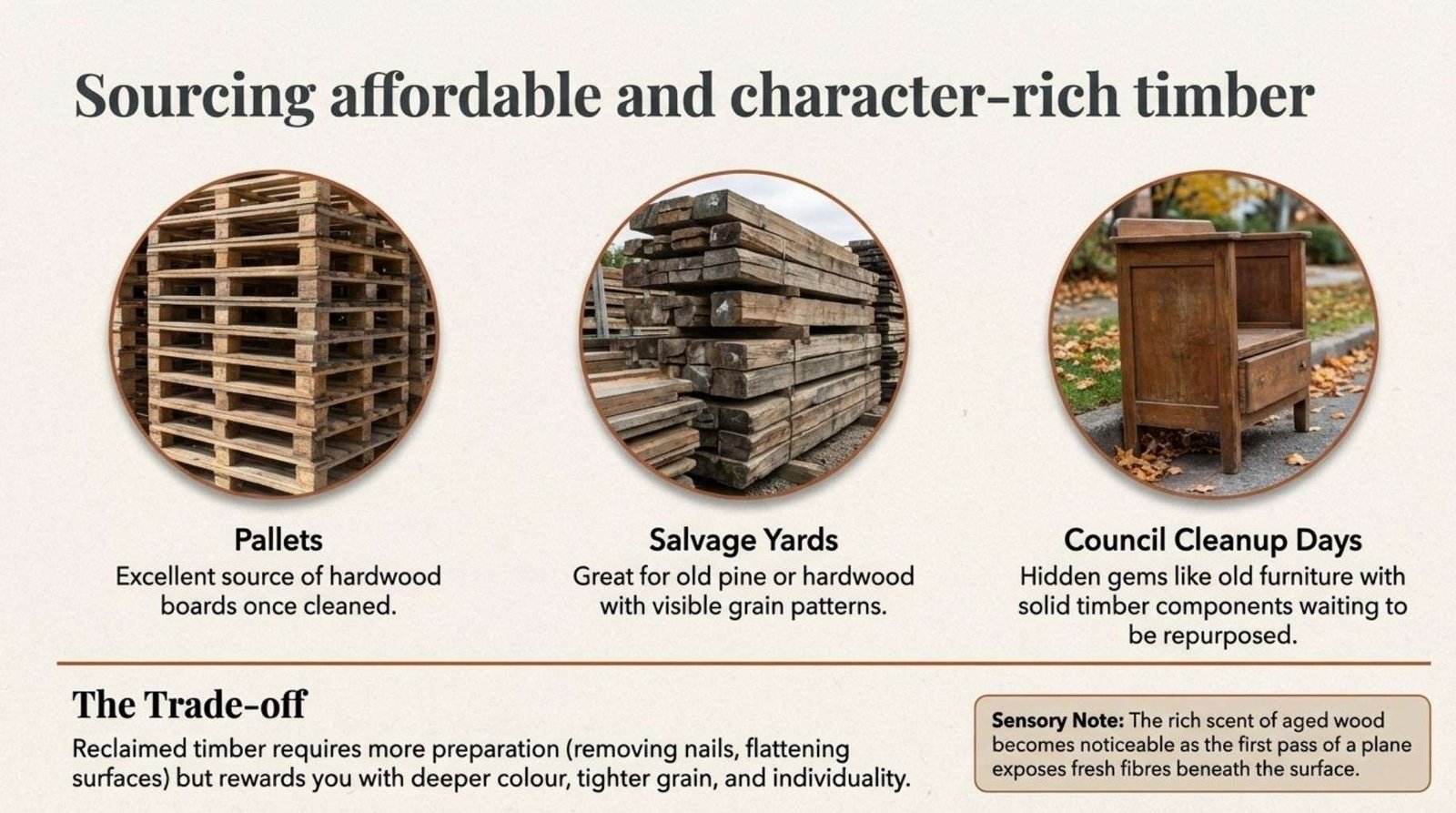
Pallets can provide hardwood boards once they are cleaned and prepared. Salvage yards often hold old pine or hardwood pieces with visible grain patterns that develop character over time.
Council cleanup days sometimes reveal furniture with solid timber components that can be repurposed.
The scent of aged wood becomes noticeable as the first pass of a plane exposes fresh fibres beneath the surface.
Reclaimed timber requires more preparation because nails must be removed and surfaces flattened.
This extra work is balanced by the unique appearance of older material which often shows deeper colour and tighter grain than new stock.
Using reclaimed timber adds individuality to each project and supports a resourceful workshop culture.
Reflections on Skill, Tools, and True Value.
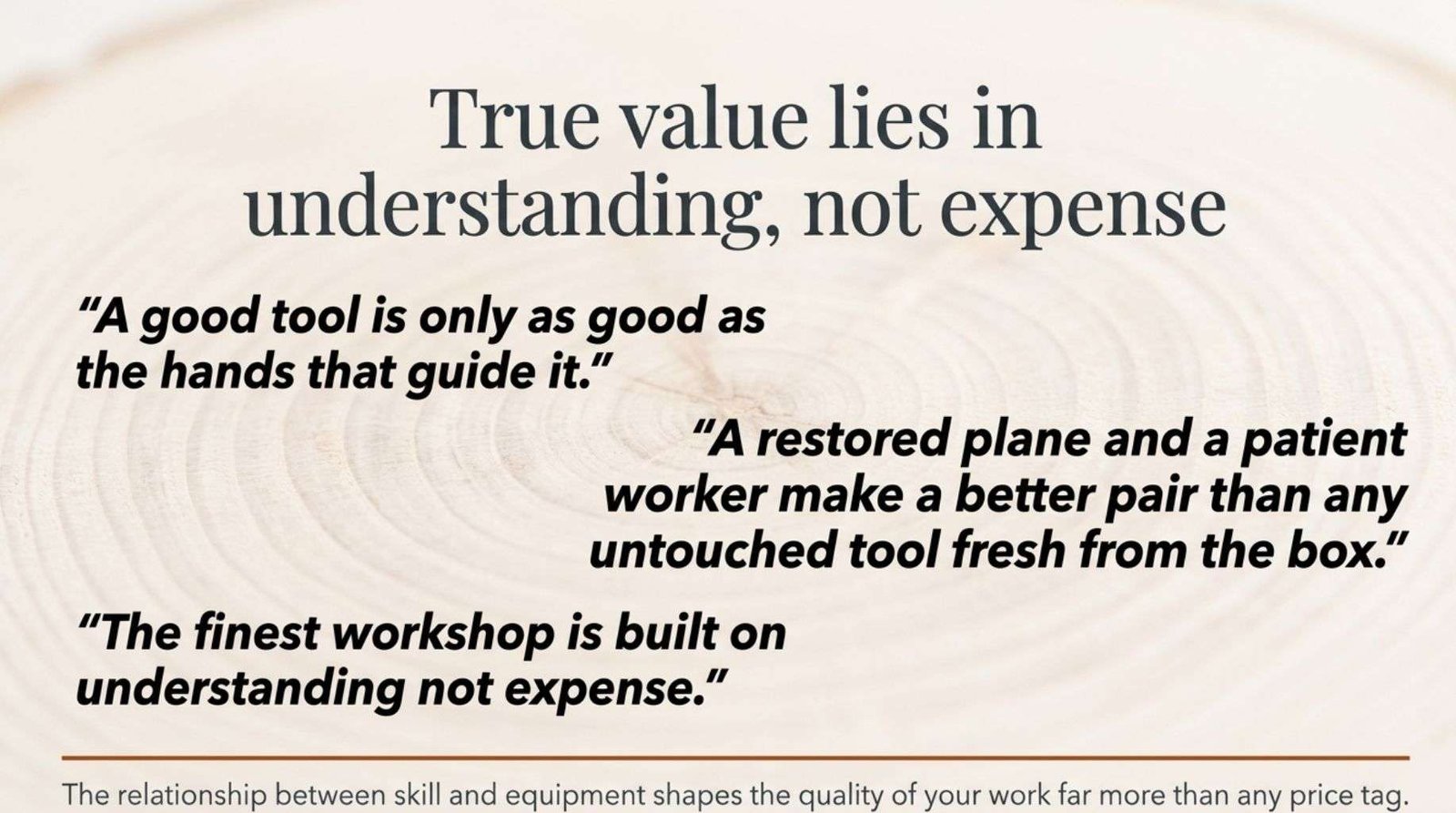
Many woodworkers discover that the relationship between skill and equipment shapes the quality of their work more than any price tag.
This idea appears across generations of craft traditions and continues to resonate in modern workshops.
A simple tool guided by steady hands often produces better results than an expensive tool used without understanding.
The following sayings capture this principle with clarity and respect for the craft:
1. A good tool is only as good as the hands that guide it.
2. A master with a simple tool outperforms a novice with the finest machine.
3. Quality work comes from the worker not the wallet.
4. The value of a tool is revealed by the person using it.
5. A well kept secondhand tool carries more wisdom than a brand new one used without understanding.
6. A sharp old chisel in steady hands shapes timber better than a shiny new one in uncertain hands.
7. A restored plane and a patient worker make a better pair than any untouched tool fresh from the box.
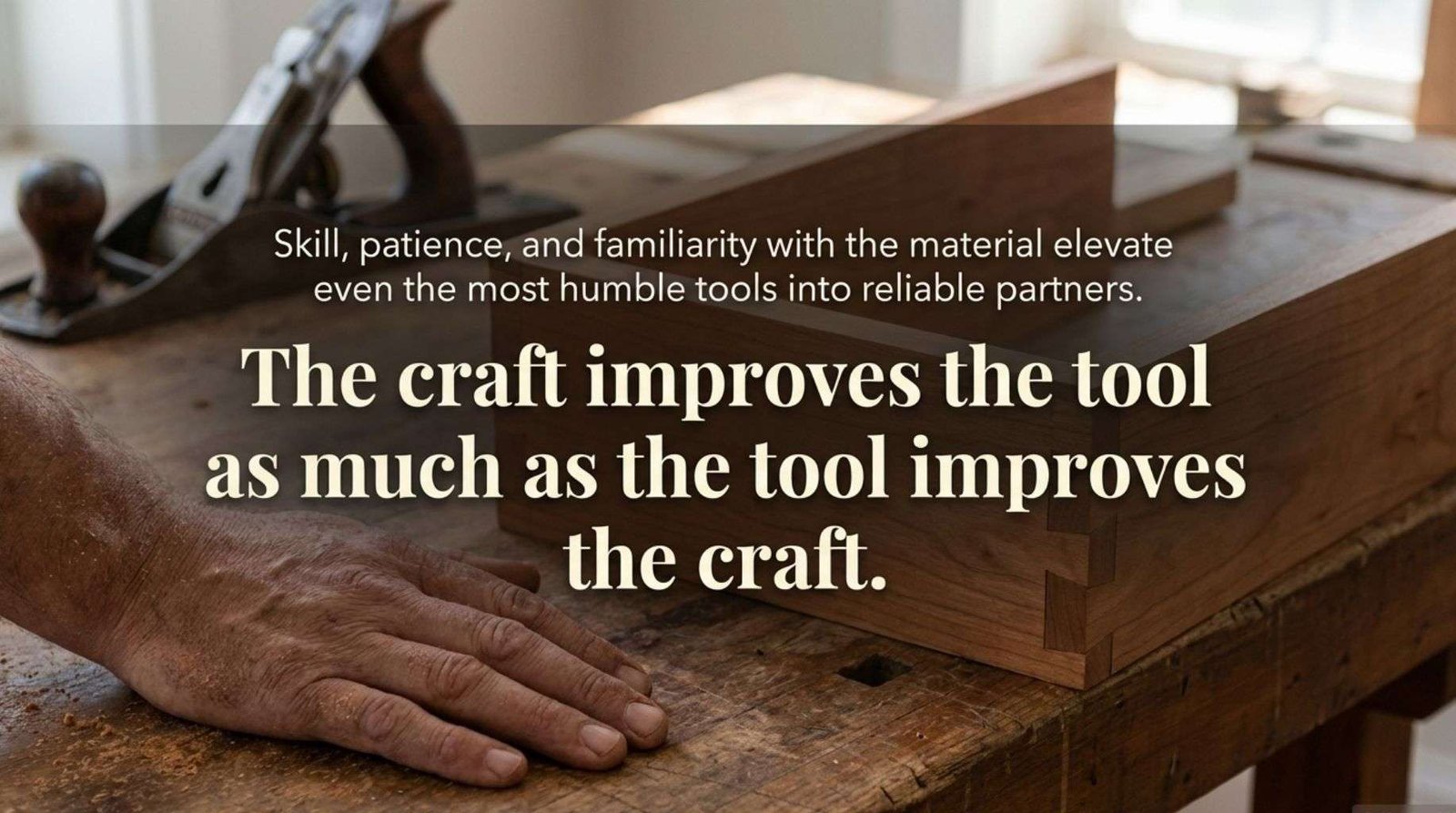
8. The craft improves the tool as much as the tool improves the craft.
9. A careful worker gets more from a modest tool than a careless one gets from the most expensive kit.
10. Skill stretches the value of every tool while inexperience shrinks it.
11. A secondhand tool in capable hands becomes a first rate instrument.
12. Money buys tools but practice makes them useful.
13. The worth of a tool is measured in the work it enables not the price it carried.
14. A tool’s history matters less than the intention behind its use.
15. A skilled hand turns even the simplest tool into something capable.
16. The finest workshop is built on understanding not expense.
17. A secondhand plane tuned with care will outperform a brand new one used without attention.
18. A tool earns its place in the workshop through the hands that use it well.
19. The craft rewards patience more than it rewards spending.
20. A modest tool becomes exceptional when guided by someone who understands the grain.
The above 20 sayings reinforce a central truth of thrifty woodworking.
Skill, patience and familiarity with the material elevate even the most humble tools into reliable partners in the workshop.