Is Building A Home In Australia Supposed To Be This Difficult?
Disclaimer.
This article provides general commentary on residential construction regulation in Australia. It is not professional advice and should not be relied on as guidance for planning, compliance, or project decisions.
Regulatory requirements vary by state and council and may change without notice. Readers should seek independent professional advice for their specific circumstances. The thoughts, views, opinions and ideas expressed are those of the author only.
Sometimes We’ve Got To Get Out Of Our Own Way!
Building a home in Australia was once a practical undertaking.
A block of land, a set of plans, some basic and fully relatable hurdles and a building company.
That combination was sufficient for most of the twentieth century to produce housing at a pace that kept pace with population growth.
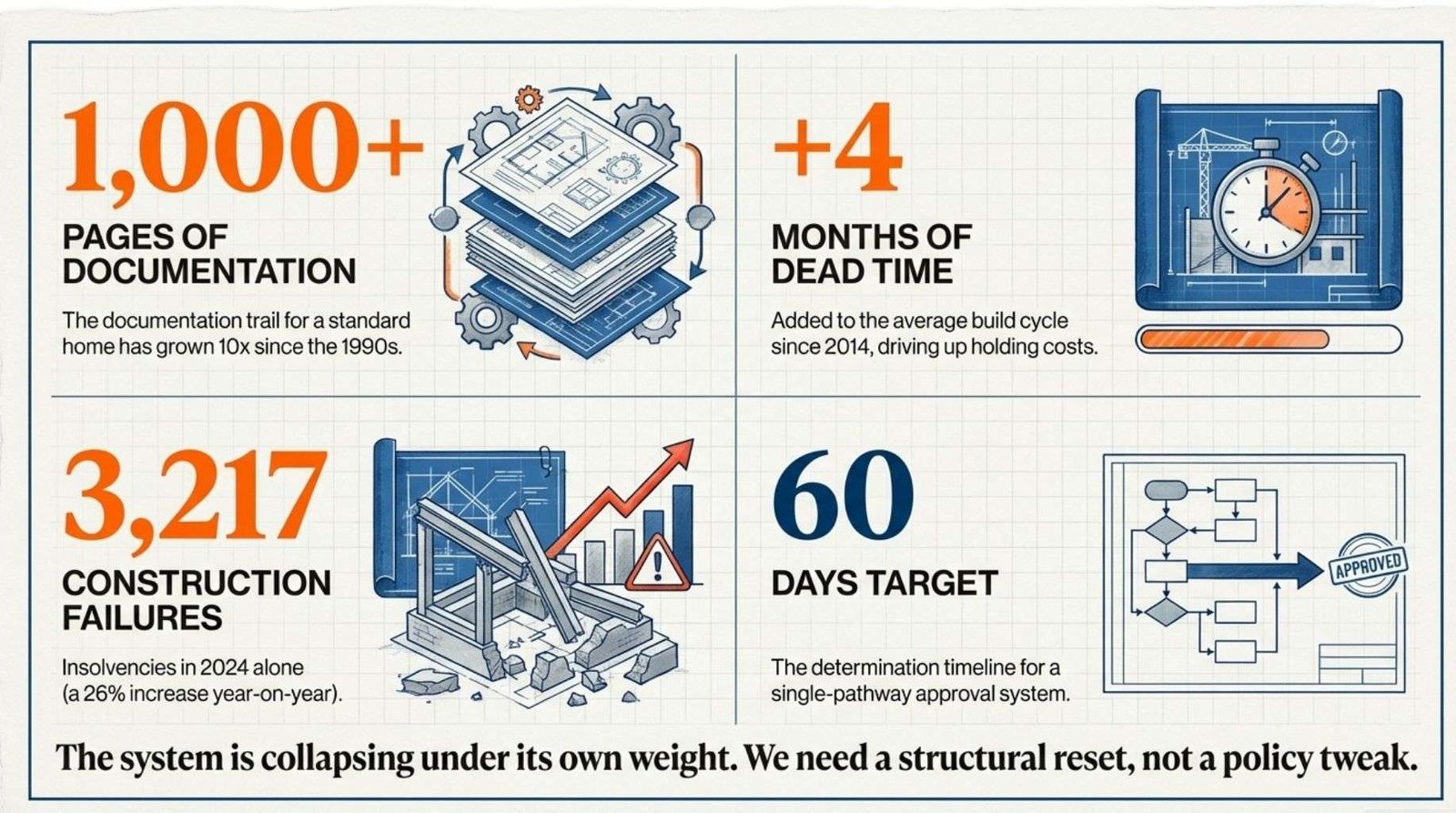
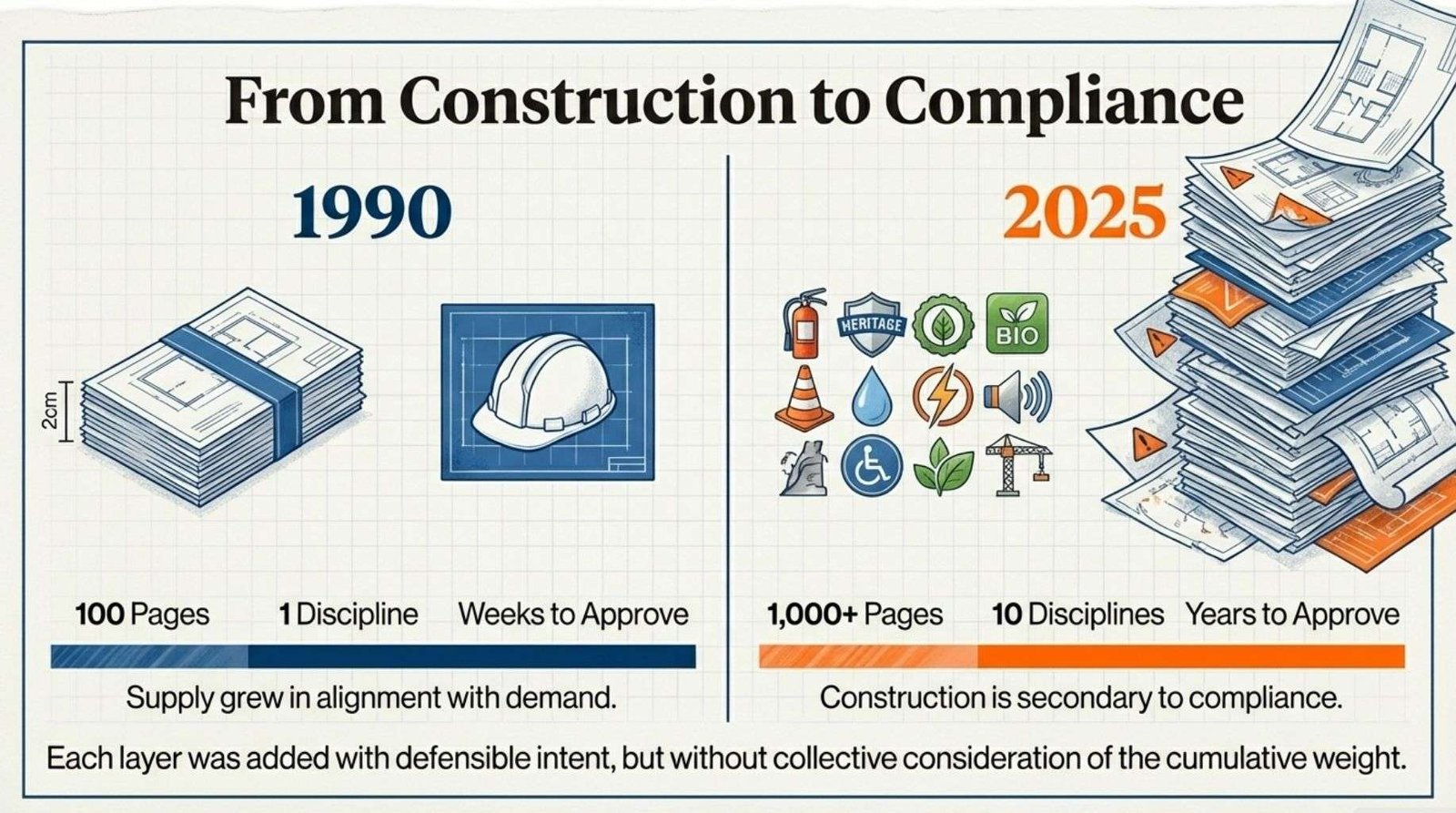
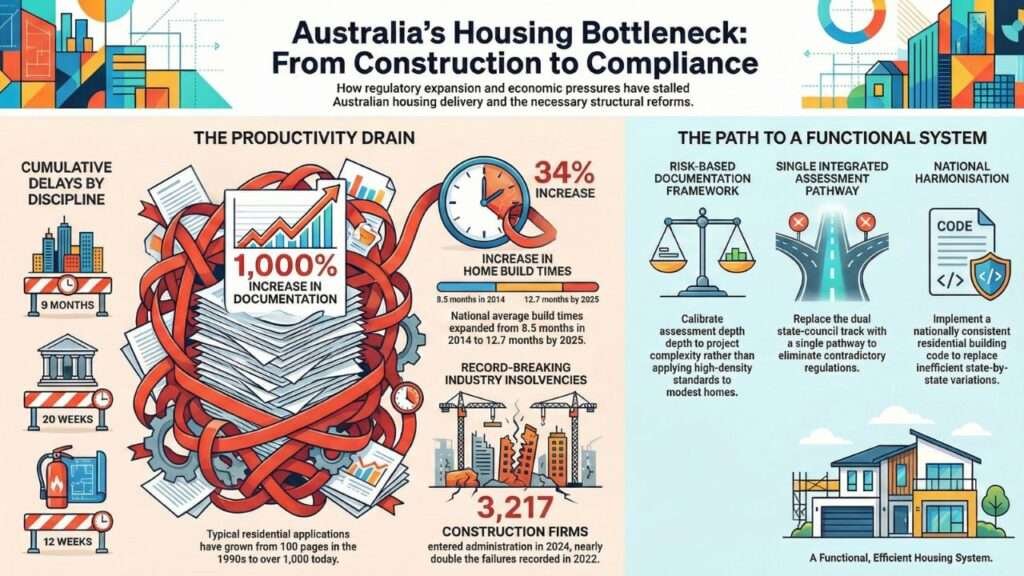
Today that same process involves navigating a document trail that can exceed one thousand pages, engaging up to ten separate professional disciplines and waiting through approval cycles that can extend across multiple years.
The act of construction seems to have become secondary to the act of compliance, which is rather troublesome.
That shift did not happen overnight. It accumulated incrementally across three decades of regulatory expansion, each layer added with defensible intent but without collective consideration of the cumulative weight.
The result is a system that imposes costs no single participant designed but everyone now endures.
From One Hundred Pages to Over One Thousand.
In the late 1980s and early 1990s, a residential building application typically required around one hundred pages of documentation (council and state obligations combined).
The process was not without standards. Structural requirements, setback rules and basic amenity provisions applied however, the framework was proportionate to the task.
That decade of relative simplicity coincided with one of the most productive periods of housing construction in modern Australian history.
Supply grew in reasonable alignment with demand. First home buyers could access the market without extraordinary financial strain.
The regulatory environment was not the only factor driving that outcome but it was a contributing one.
The contrast with today is stark. Environmental assessments, energy efficiency ratings, fire safety engineering reports, heritage impact statements, acoustic reports, shadow diagrams, traffic assessments and arborist certifications are now routine requirements for projects that were once processed in weeks.
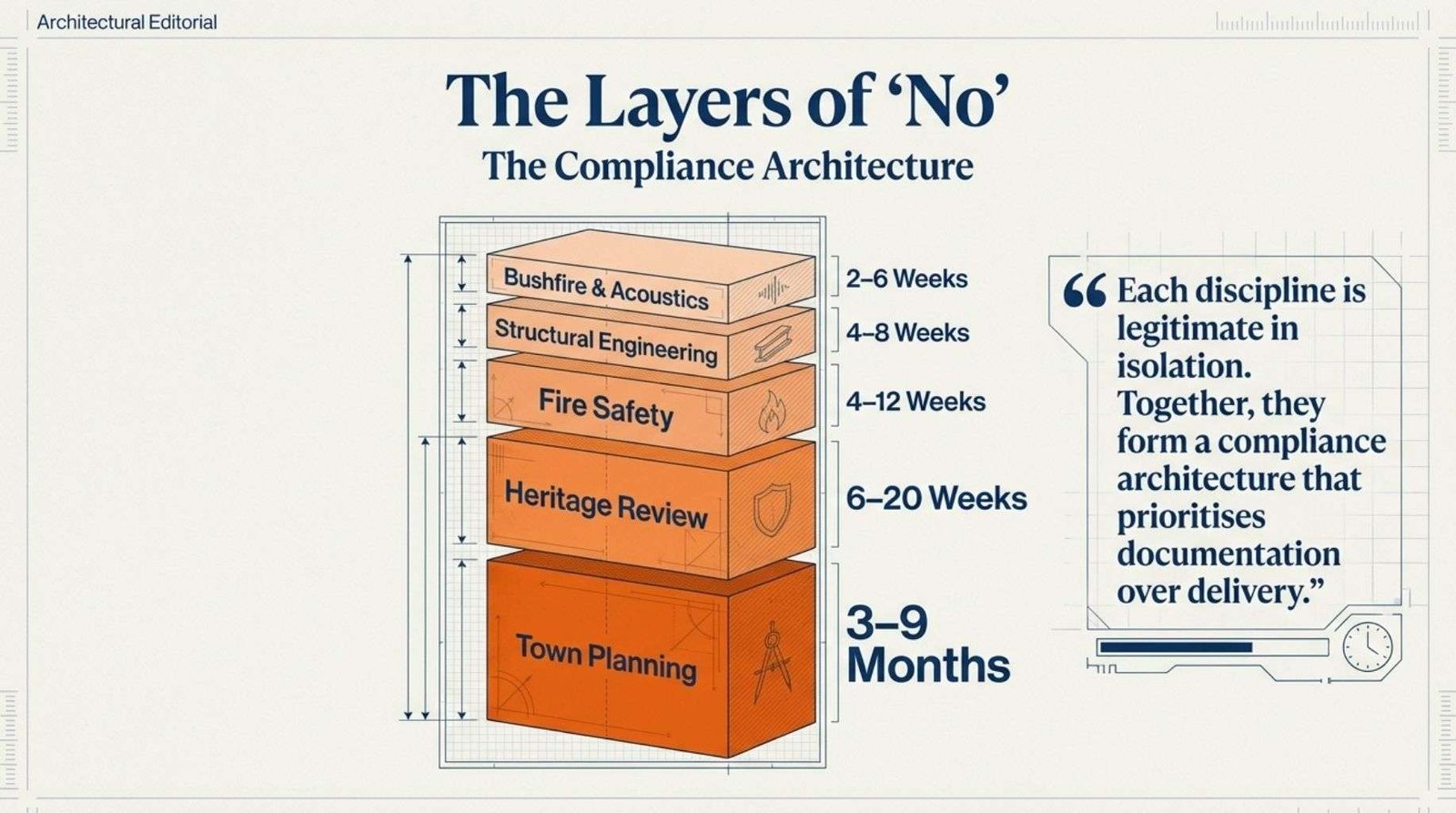
Each discipline is legitimate in isolation. Together they form a compliance architecture that prioritises documentation over delivery.
The Jurisdiction Problem.
Australia’s structure divides planning authority between state and territory governments and local councils.
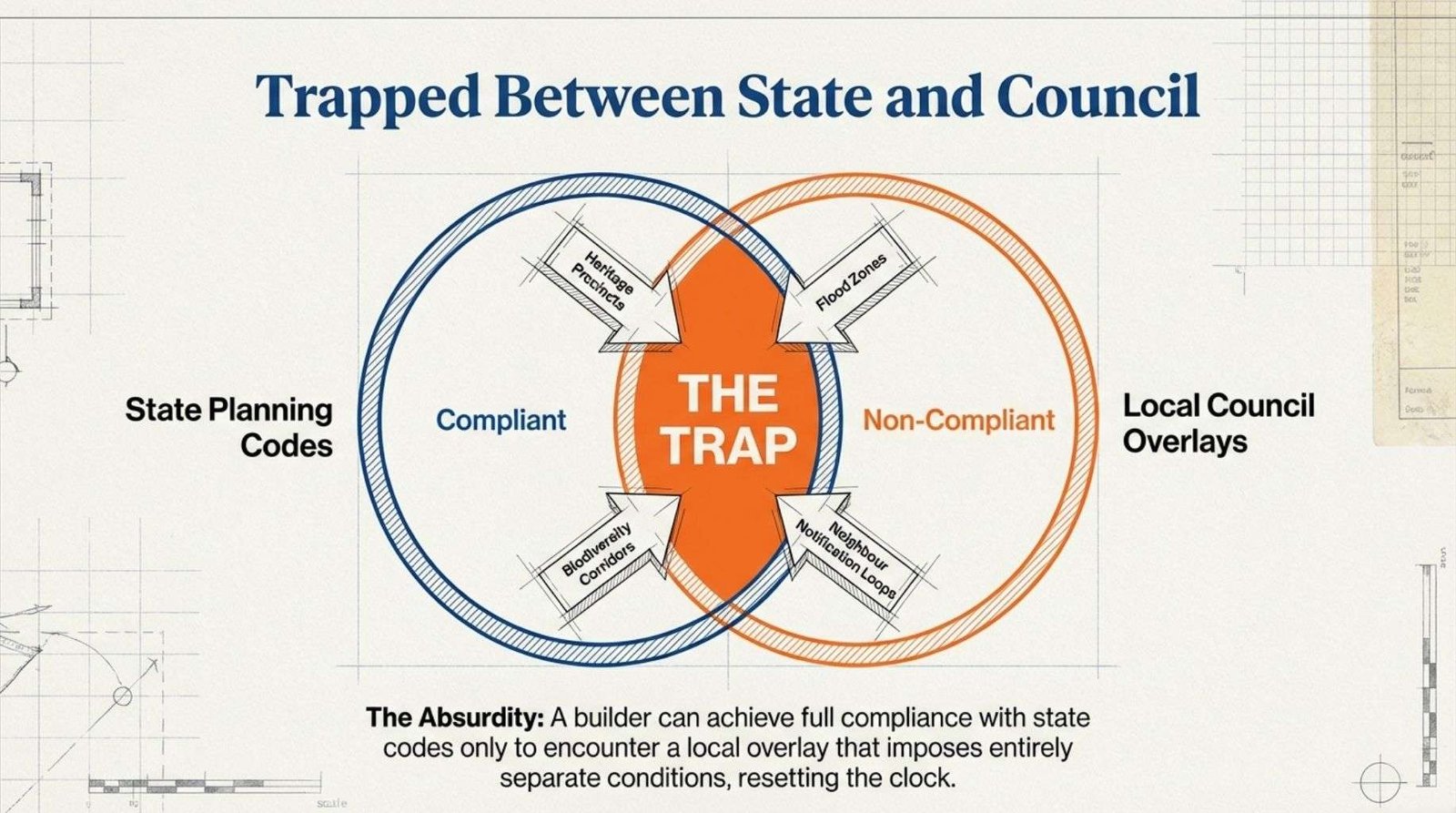
In practice this means a development application must satisfy two parallel regulatory frameworks that do not always align and occasionally contradict.
A builder can achieve full compliance with state planning codes only to encounter a local planning overlay that imposes entirely separate conditions.
Heritage precincts, flood management zones, biodiversity corridors and bushfire management areas each carry their own rules.
In some metropolitan and regional councils, even minor architectural variations from the approved design trigger a new round of neighbour notification and council review.
This is not a hypothetical frustration. It is the operational reality for the majority of residential projects across every state.
The time between a development application and a construction certificate in many Sydney and Melbourne jurisdictions now routinely exceeds twelve months for a standard dwelling. In regional areas where council resources are limited, that timeline can extend further.
The counter-intuitive problem here is that more governance layers do not produce better outcomes.
They produce more opportunities for delay without necessarily producing safer or more considered buildings.
A well-designed single assessment framework with clear authority and defined timelines would outperform the current layered system on almost every measurable outcome.
What the Approval Process Actually Costs.
The financial cost of pre-construction compliance is rarely presented as a single figure.
It is distributed across professional fees, council charges, government levies and holding costs on land that sits idle while approvals progress.
When those components are aggregated, the pre-build regulatory burden on a standard residential project in a major Australian city represents a material share of total project cost.
Less visible is the cost of uncertainty. A builder who cannot confirm when an approval will arrive cannot schedule trades, order materials in advance or price a contract with confidence.
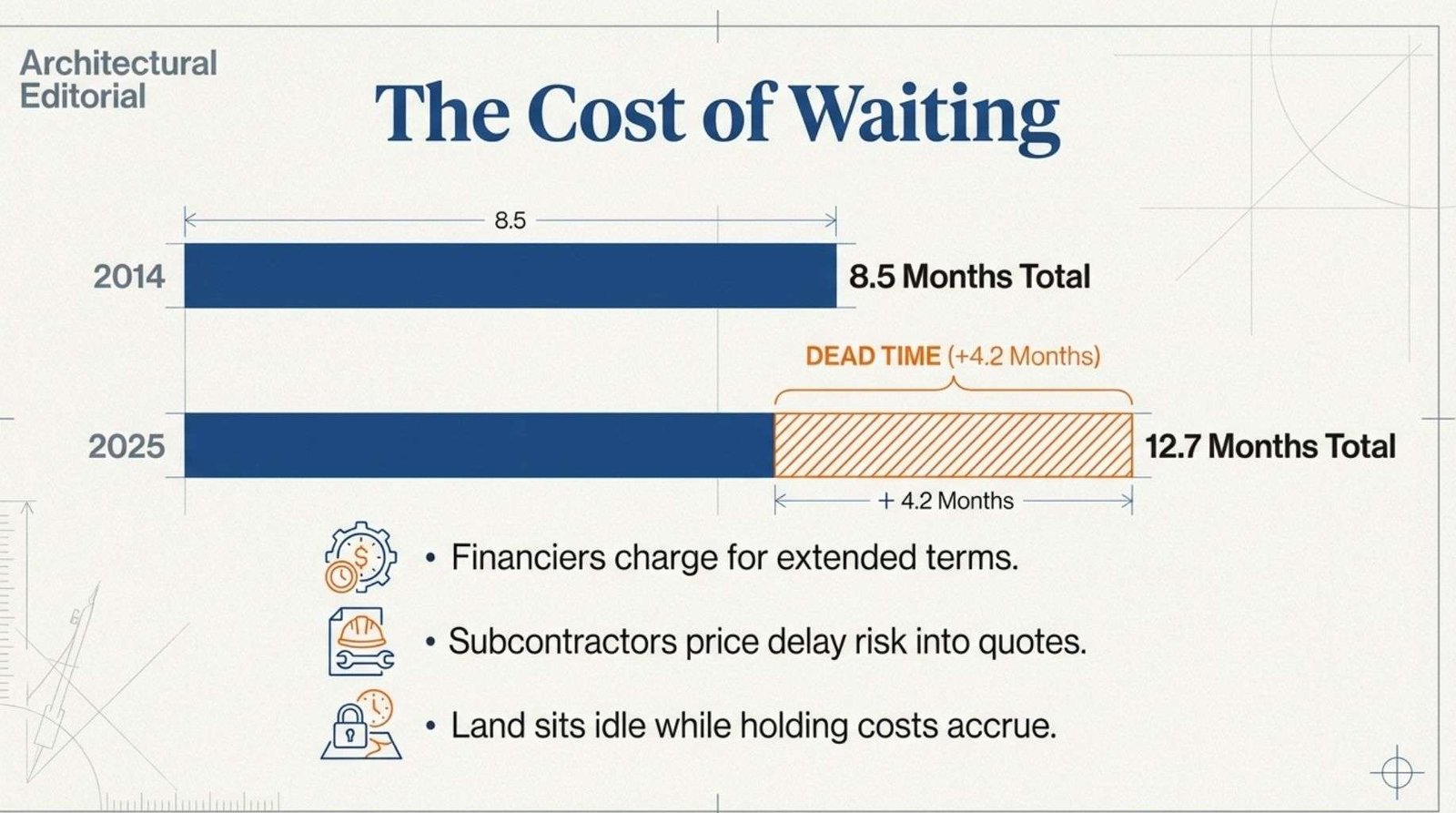
That uncertainty flows through the supply chain as premium. Subcontractors price delay risk into their quotes.
Developers factor approval lag into feasibility assessments. Financiers charge accordingly for extended construction periods.
The trade-off embedded in this system is real. Thorough assessment processes do provide protection against poor outcomes.
A fire safety review that identifies a design flaw before construction is preferable to discovering it afterwards.
However, for the average person looking in, the current system does not seem to scale its scrutiny to project risk.
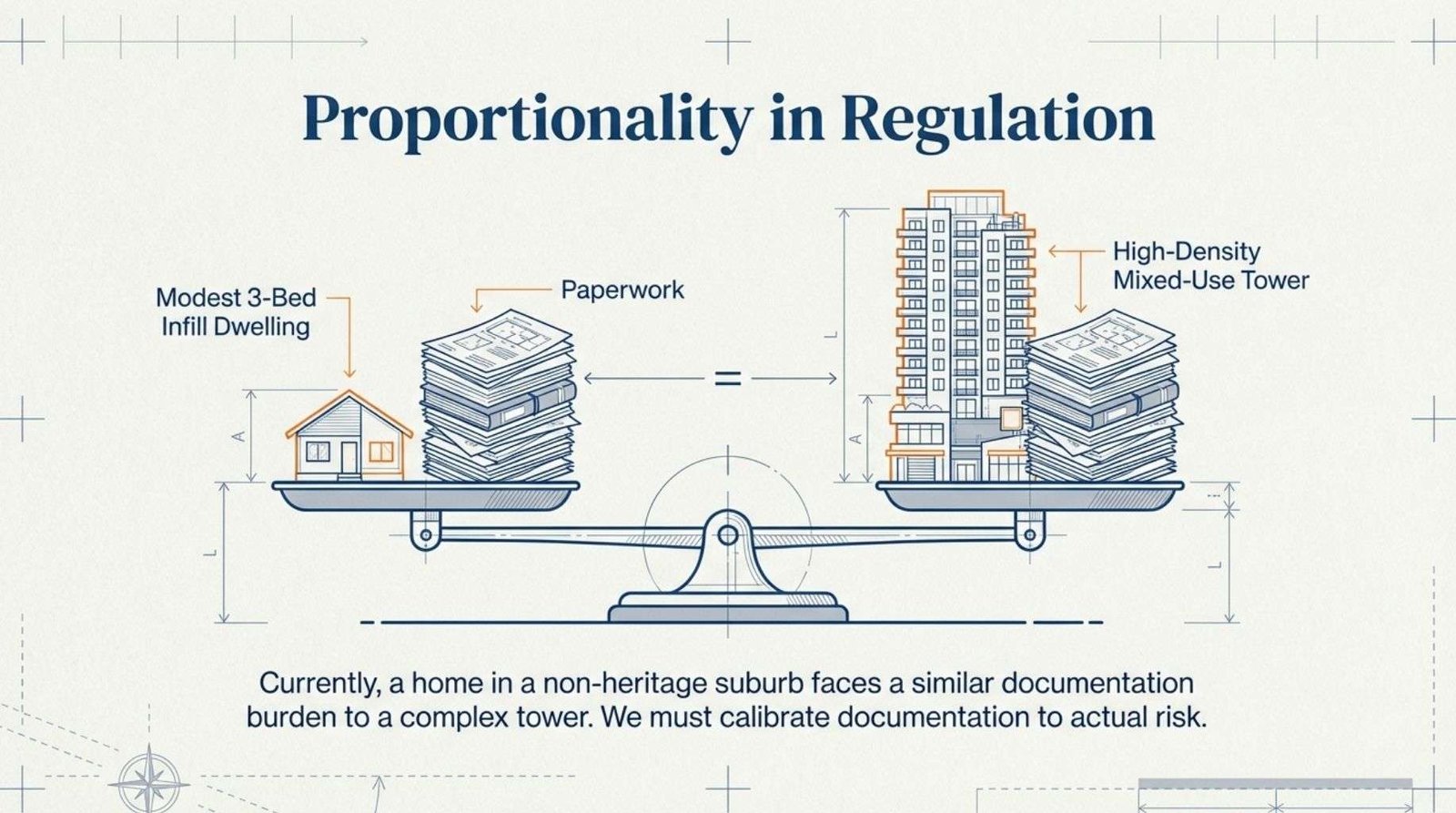
A modest infill dwelling in an established suburb receives levels of documentation burden more appropriate to a high-density mixed-use development. That absence of proportionality is where much of the inefficiency originates.
Regulatory Layers in a Standard Residential Application.
Discipline | Typical Requirement | Average Delay Contribution |
Town Planning | Development application and assessment | 3 to 9 months |
Structural Engineering | Structural certification and review | 4 to 8 weeks |
Energy Efficiency | NatHERS or Section J rating | 2 to 4 weeks |
Fire Safety Engineering | FER or alternate solution report | 4 to 12 weeks |
Bushfire Assessment | BAL rating and construction requirements | 2 to 6 weeks |
Heritage Review | Statement of heritage impact | 6 to 20 weeks |
Arborist Report | Tree protection and impact assessment | 2 to 4 weeks |
Acoustic Engineering | Noise impact and compliance report | 2 to 6 weeks |
The Broader Economic Context.
Housing construction does not exist in isolation from broader economic conditions. The regulatory delays of recent years have intersected with a set of compounding pressures that have made the supply problem acute rather than chronic.
Five consecutive years of elevated cost-of-living growth have eroded household purchasing power.
Construction material costs rose sharply through the post-pandemic period and have not fully retreated.
Electricity price increases have affected the operating costs of manufacturing supply chains that feed into building materials.
The combined effect on project feasibility has been substantial.
Several thousand building and construction companies entered insolvency across the 2022 to 2024 period.
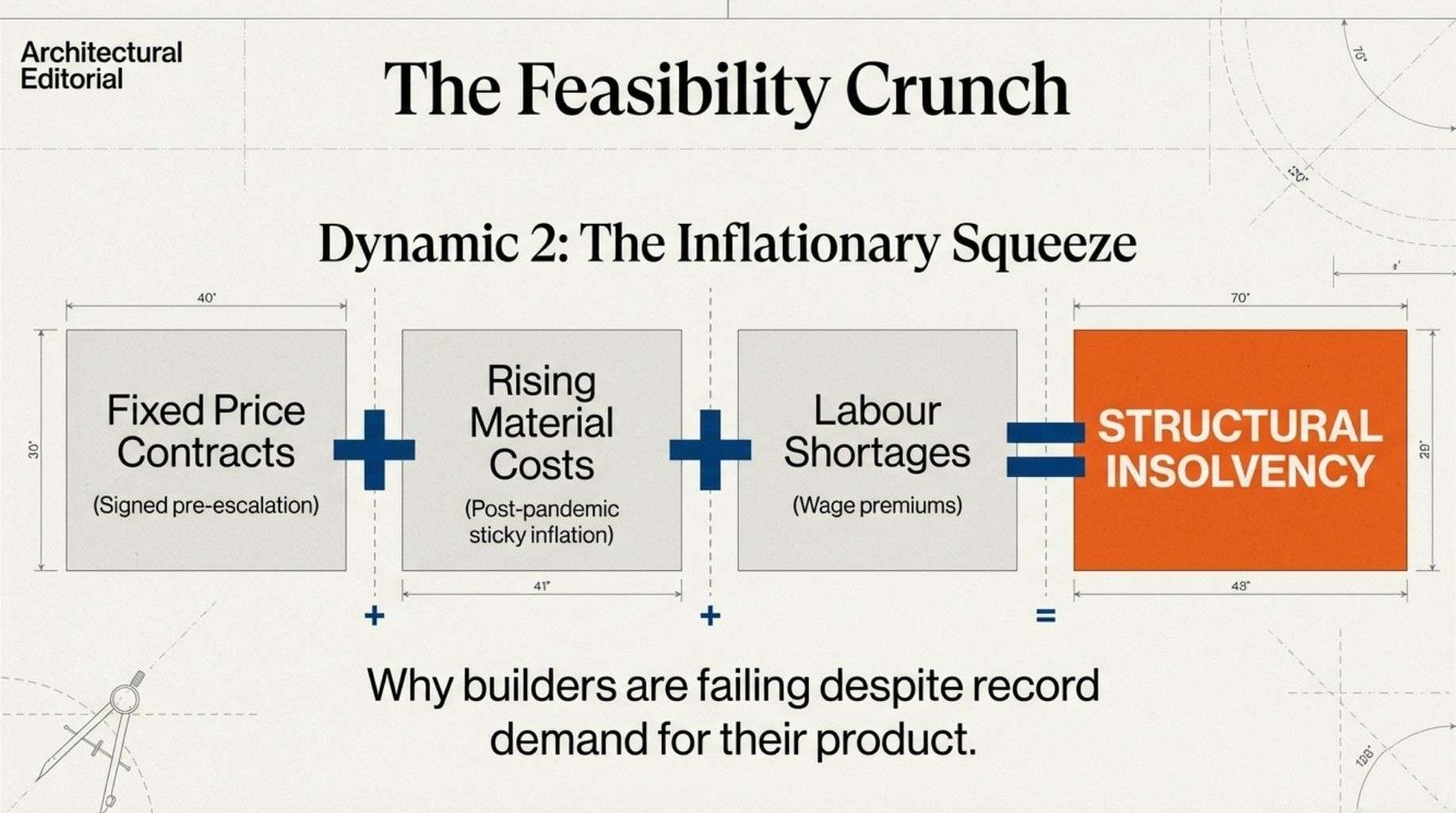
Many of those failures were driven by fixed-price contracts signed before cost escalation made those prices unworkable.
The insolvencies removed experienced operators from the market, reduced competition and left partially completed projects that required costly remediation. The pipeline of skilled builders available to execute new work narrowed precisely when demand for new housing was growing.
Immigration settings that drove population growth without a corresponding expansion of housing supply added sustained pressure to rental markets and purchase prices in every capital city.
Sydney and Melbourne vacancy rates reached historically low levels. Rents increased at rates that compressed household budgets and reduced the capacity of renters to save toward ownership.
The housing system absorbed all of these pressures simultaneously while its regulatory framework continued to generate delay.
Where The Simplification Argument Meets Resistance.
The case for regulatory simplification in residential construction is not contested at the level of principle.
Government housing targets, industry bodies and academic housing economists broadly agree that process complexity contributes to supply constraint. The disagreement arises at the level of implementation.
Local councils resist planning reforms that reduce their discretion over development outcomes in their area.
Heritage advocates argue that streamlined processes risk irreversible loss of built character. Environmental groups maintain that faster approvals will compromise biodiversity and sustainability outcomes.
Each concern reflects a genuine interest. But the aggregate effect of giving each interest a formal veto point is the system that currently exists.
State governments have introduced housing reform packages in New South Wales, Victoria and Queensland over the past three years.
The scope of those reforms has been meaningful in parts and modest in others. Increasing housing density permissible near transport corridors addresses some supply constraints. It does not address the document burden on individual applications or the timeline uncertainty that affects construction financing.
What a Functional System Would Look Like.
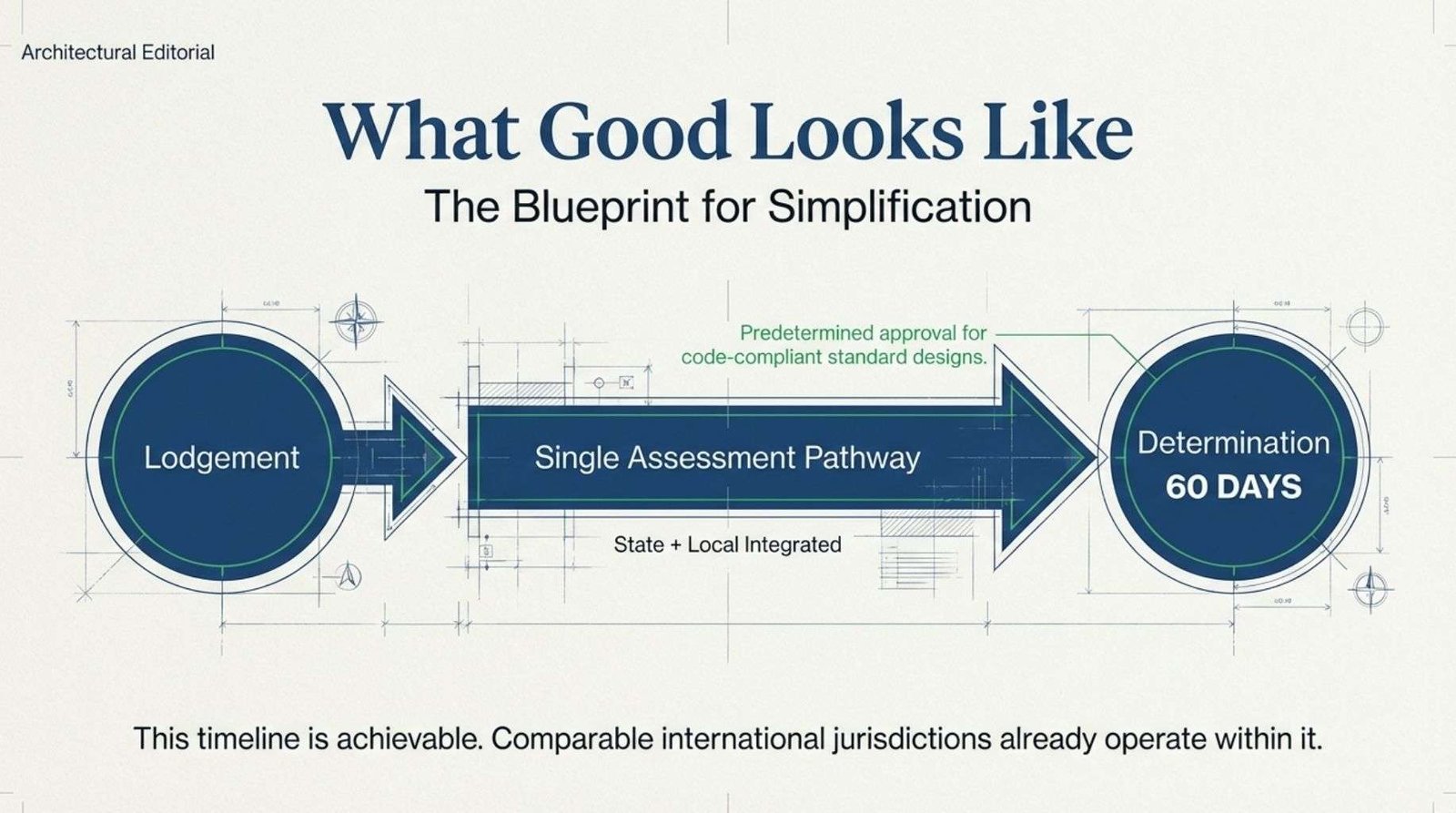
A well-functioning residential approval system would process a standard dwelling application within sixty days from lodgement to determination.
That timeline is achievable. Several comparable international jurisdictions operate within it.
The conditions that make it achievable include a single assessment pathway that integrates state and local requirements, predetermined approval for code-compliant standard designs and a risk-based approach that reserves detailed review for genuinely complex applications.
The documentation requirements that accompany a single residential dwelling should reflect the actual risk profile of that building type.
A 3 bed home on a residential lot in a non-heritage, non-flood, non-bushfire area does not require the same assessment depth as a mixed-use tower.
Calibrating documentation to risk would reduce the compliance burden on the vast majority of residential applications without reducing protections where they are genuinely warranted.
A national residential design code with presumptive approval for compliant designs would eliminate the current state where identical designs require separate assessment processes in different council areas.
Queensland, New South Wales and Victoria each have their own codes. Builders who operate across borders carry the cost of maintaining compliance with multiple frameworks. Standardisation would reduce that cost and increase the pool of operators able to work efficiently across the country.
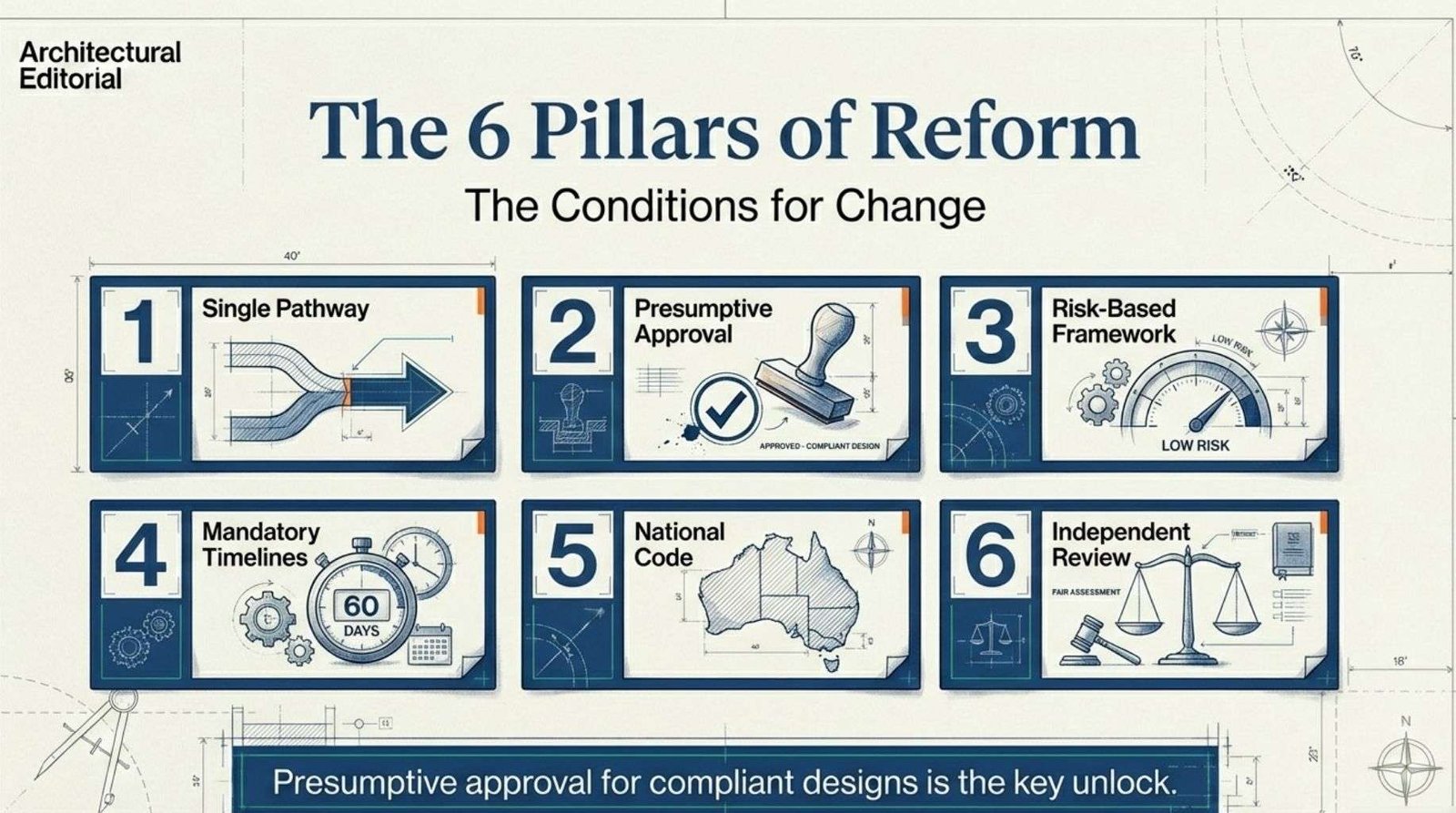
The conditions for a simplified system would require:
1. A single integrated assessment pathway replacing the state-council dual track.
2. Presumptive approval for code-compliant standard residential designs.
3. A risk-based documentation framework calibrated to project complexity.
4. Mandatory determination timelines with financial consequences for breach.
5. A nationally harmonised residential building code replacing state variations.
6. An independent review mechanism for applicants where timelines are exceeded.
The Productivity Case for Action.
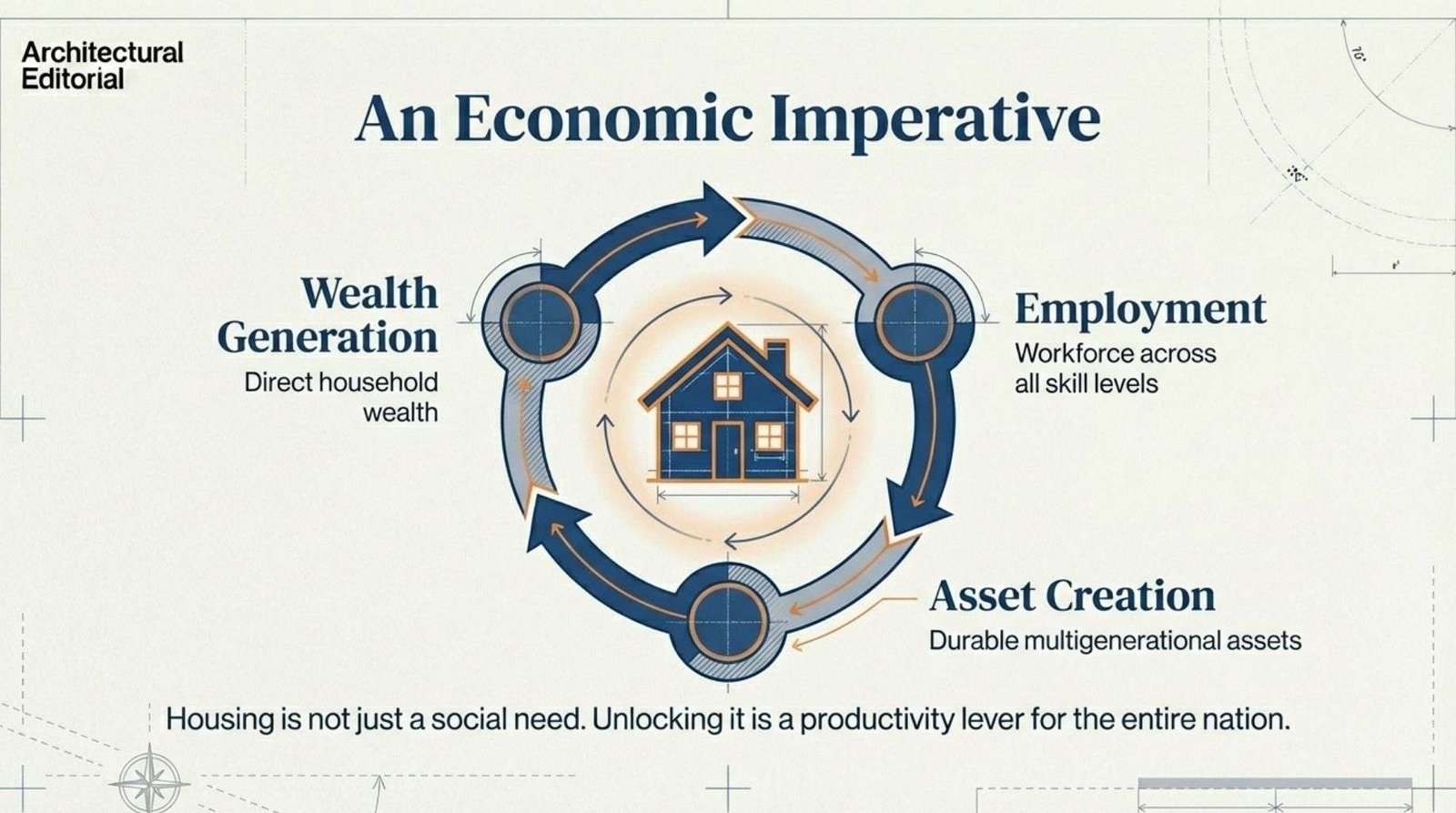
Residential construction is one of the few sectors of the economy that generates direct household wealth, employs large numbers of workers at every skill level and produces a durable physical asset that serves its owners for generations.
Its productivity matters in a way that is concrete and broadly distributed.
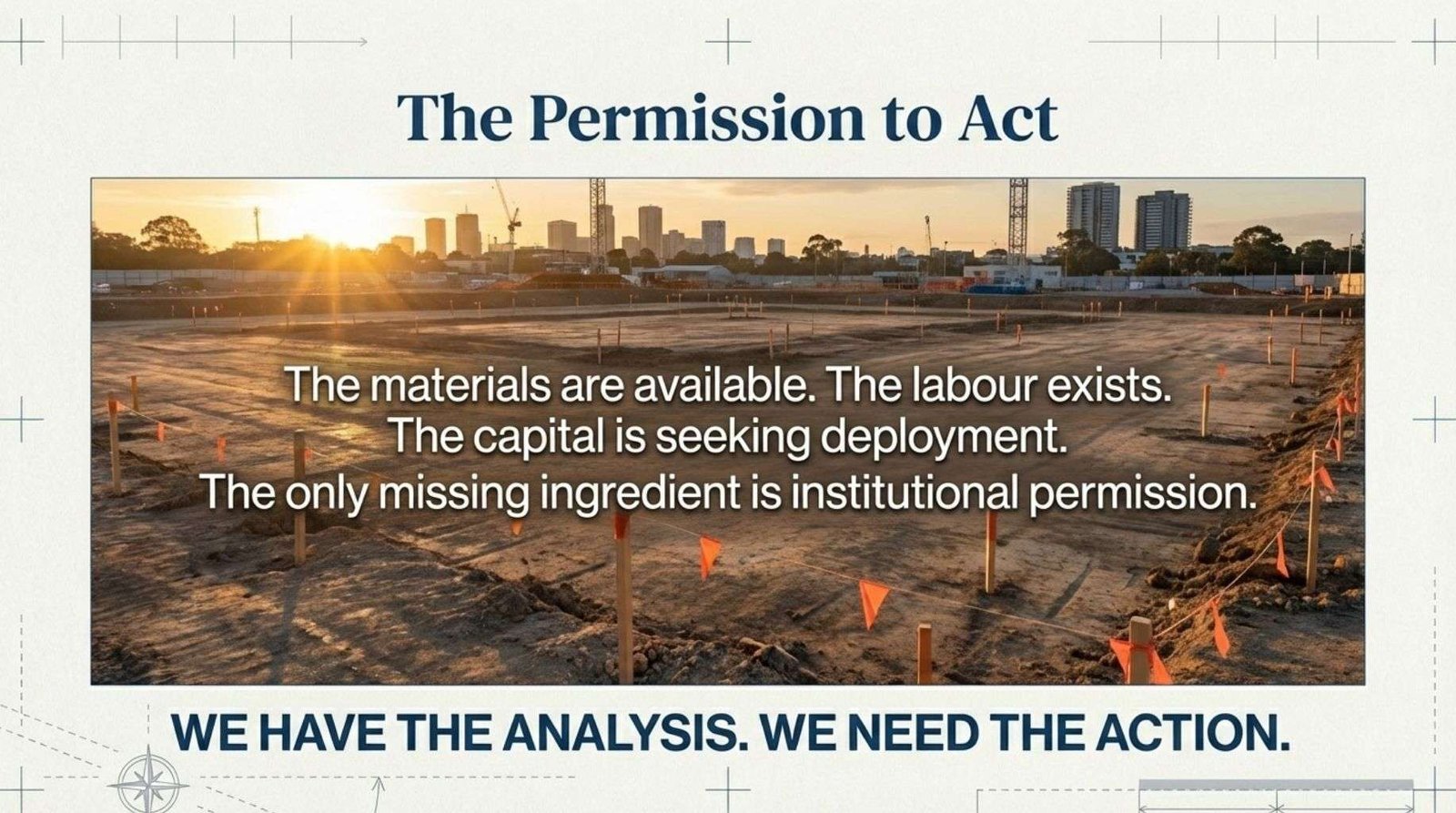
A housing system that takes three years from land acquisition to occupation where two of those years are consumed by approvals is not performing at anything close to its capacity. The materials are available.
The labour exists. The capital is seeking deployment. The constraint is administrative. That is a solvable problem.
It requires political will to consolidate competing interests and a willingness to accept that well-intentioned processes can collectively produce poor outcomes.
Australia has demonstrated the capacity to build efficiently before. The housing stock constructed through the 1980s and early 1990s was not inferior because it was approved more quickly.
It was built to the standards of its time and it housed a generation. The challenge now is not technical or financial at its core. It is institutional.
The Compounding Pressures Behind the Current Breakdown.
The pressures acting on Australia’s housing system are not abstract.
They are measurable, accelerating and concentrated in the very parts of the system responsible for delivering new homes.
Four dynamics in particular have reshaped the operating environment: the insolvency wave, the widening timeline lag, the escalation of compliance costs and the structural mismatch between population growth and housing completions.
Dynamic 1: The Insolvency Wave: A Profitless Boom.
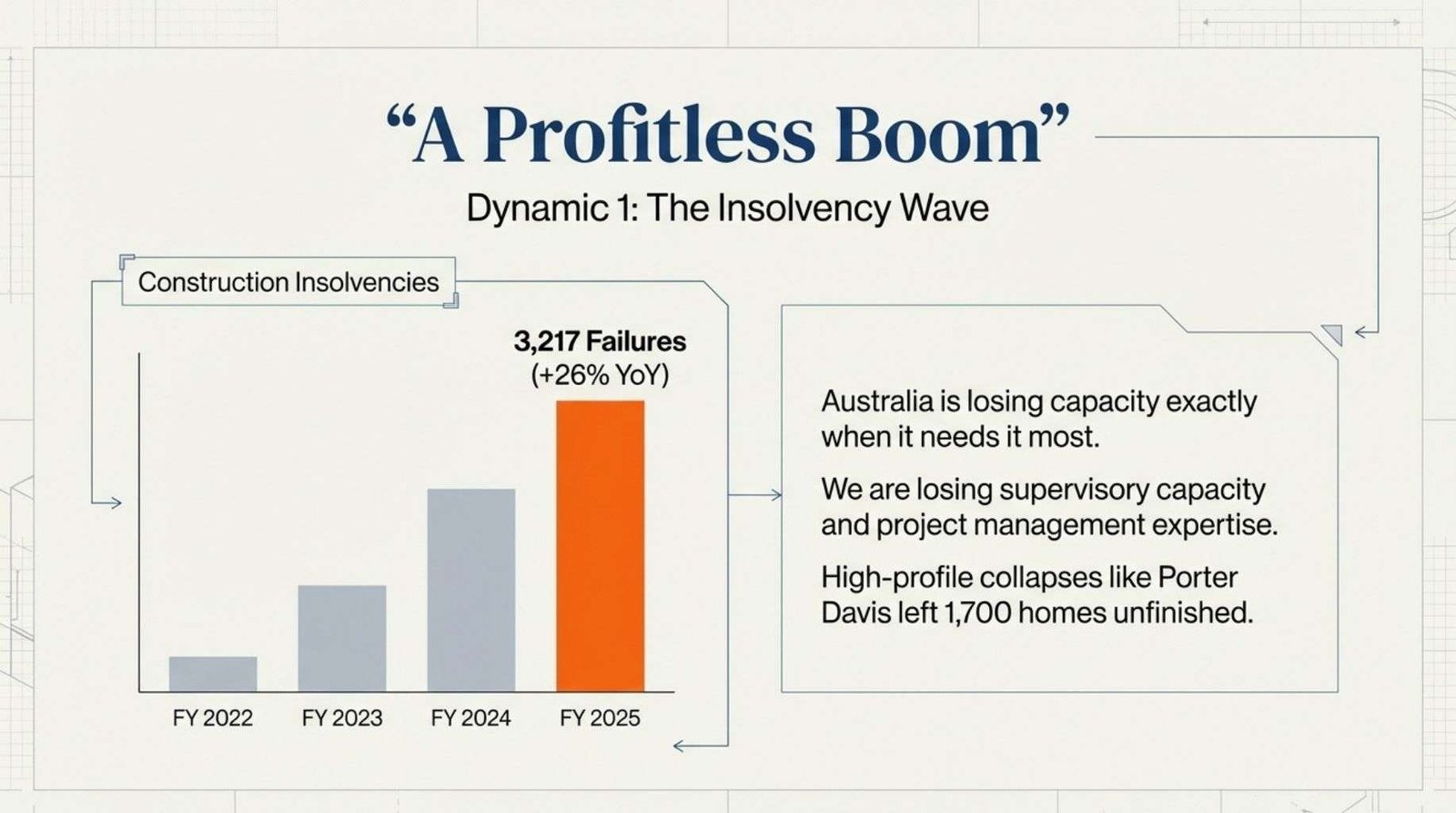
The surge in construction company failures over the past three years is unprecedented in modern Australian history.
Rising material costs, labour shortages and fixed‑price contracts created a structural mismatch between revenue and delivery costs.
The result has been a wave of insolvencies that removed capacity from the sector at the exact moment demand was intensifying.
1. Construction insolvencies almost tripled between FY 2021–22 and FY 2024–25.
2. In 2024 alone, 3,217 construction firms entered administration, a 26% increase on 2023 and nearly double the 1,793 recorded in 2022.
3. The sector now accounts for 27–28% of all business failures nationally, despite representing a far smaller share of total businesses.
4. High‑profile collapses such as Porter Davis (with more than 1,700 homes unfinished) and Lloyd Group illustrate the scale of disruption when experienced operators exit the market.
The consequence is not simply fewer builders.
It is the loss of supervisory capacity, project management expertise and subcontractor networks that take years to rebuild.
Every insolvency leaves behind partially completed homes, stranded clients and a pipeline of work that must be absorbed by an already stretched industry.
The system becomes slower, more expensive and less predictable with each collapse.
Dynamic 2: The Timeline Lag: The Efficiency Gap Widens.
The time required to move a dwelling from approval to completion has expanded sharply.
This is not solely a function of labour shortages or supply chain disruption. It reflects a structural slowdown in the entire concept‑to‑completion cycle.
1. Average home build times increased 34% between 2020 and 2025.
2. As of late 2025, the national average build time reached 12.7 months, with Western Australia and South Australia frequently exceeding 14 to 15 months.
3. A decade earlier, in 2014, the same process averaged 8.5 months.
Australia has effectively added four months of dead time to every home built. Those months represent holding costs, financing costs, rental displacement and delayed occupancy.
They also represent a system that has lost the ability to convert approvals into physical housing at the pace required.
Dynamic 3: The Escalation of Regulation And Compliance.
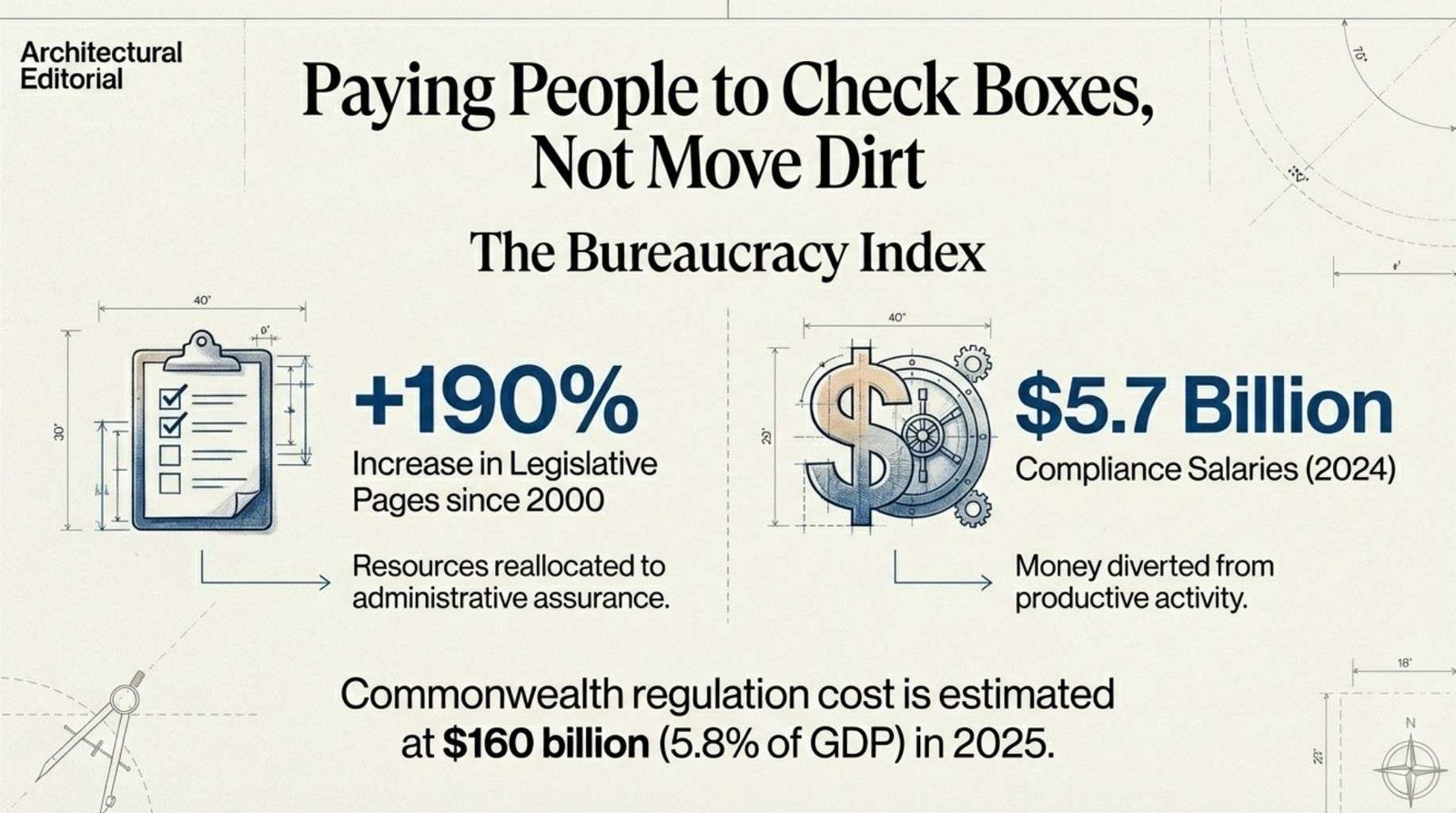
The growth in documentation requirements for a single dwelling mirrors a broader national trend: the expansion of regulatory volume across all levels of government.
1. Since 2000, the volume of federal legislation has grown by 142%, while the number of legislative pages has increased by 190%.
2. A 2025 Mandala Partners report estimated the cost of meeting Commonwealth regulation at $160 billion, or 5.8% of GDP, up from $65 billion in 2013.
3. Compliance‑related salaries in construction and mining reached $5.7 billion in 2024, more than triple the 2010 figure.
The shift is not merely quantitative. It reflects a reallocation of resources away from productive activity and toward administrative assurance. In practical terms, Australia is paying more people to check boxes than to move dirt. The cumulative effect is a system where documentation expands faster than delivery capacity.
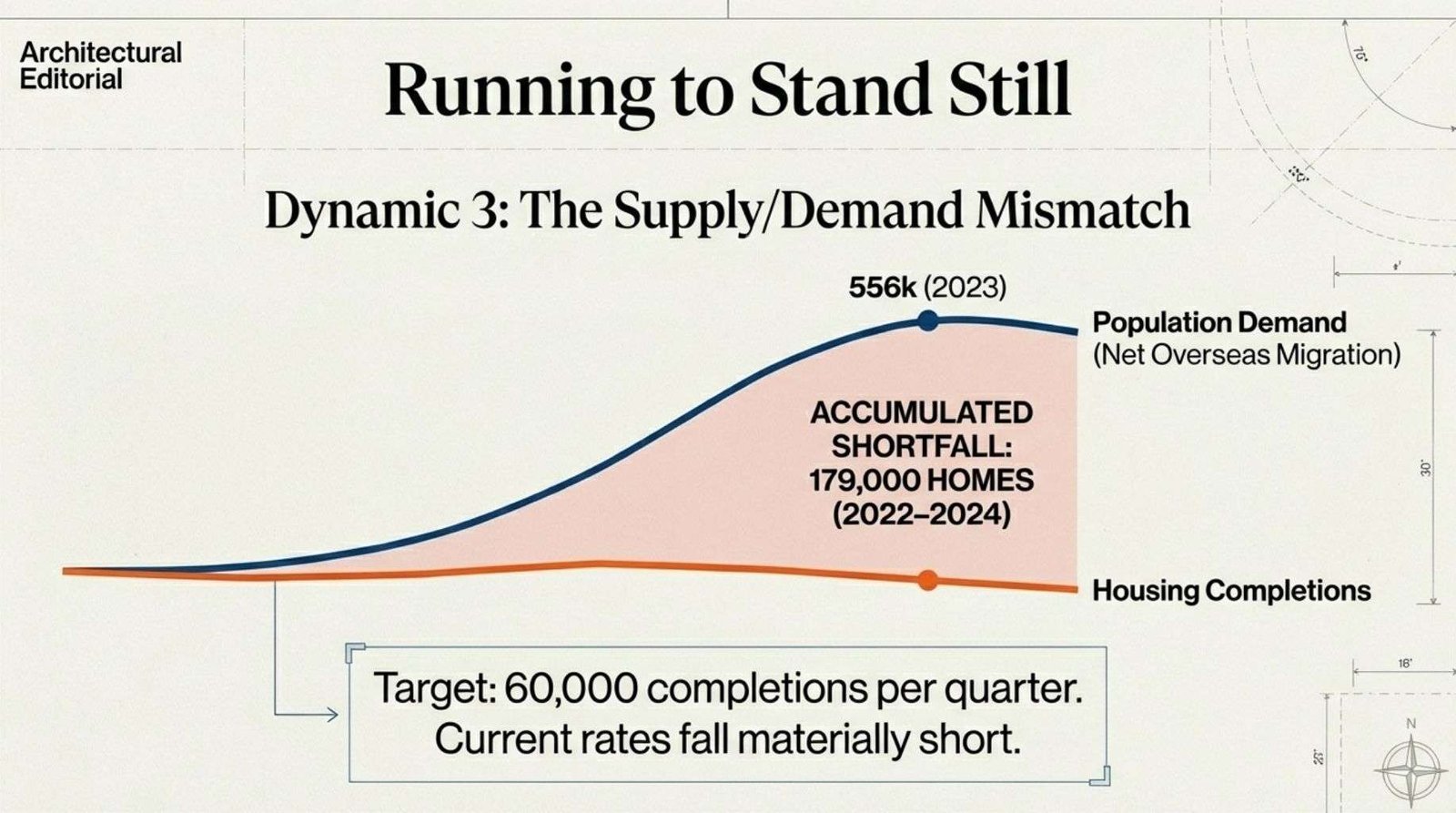
Dynamic 4: The Supply And Demand Mismatch Is Structural Not Cyclical.
Population growth has outpaced housing completions for several years. The gap is now large enough to exert sustained pressure on rents, prices and household formation.
1. Between January 2022 and December 2024, Australia accumulated a housing shortfall of approximately 179,000 homes.
2. Net Overseas Migration peaked at 556,000 in late 2023 and moderated to 306,000 in FY 2024–25, but the backlog created during the peak continues to drive demand.
3. To meet the national target of 1.2 million new homes by 2029, Australia must complete 60,000 dwellings per quarter. Current completion rates fall materially short of that requirement.
The mismatch is not a temporary imbalance. It is the predictable outcome of a system where approvals take too long, construction takes too long and insolvencies remove capacity faster than it can be replaced.
The Permission That Is Missing
The materials to
address Australia’s housing shortfall are largely in place. The workforce,
while stretched, exists.
The capital is
available and seeking productive deployment. The land, particularly in
peri-urban areas, is not scarce in any absolute sense.
What is missing is
the institutional permission to act on all of those inputs at speed. Reforming the regulatory framework for
residential construction is not a concession to development interests at the
expense of community values.
It is a decision
about which community values to prioritise.
A system that takes
three years to approve a single house prioritises process over people.
Reforming that system prioritises the opposite.
A System That Looks More Like a Losing Team Than a Housing Strategy
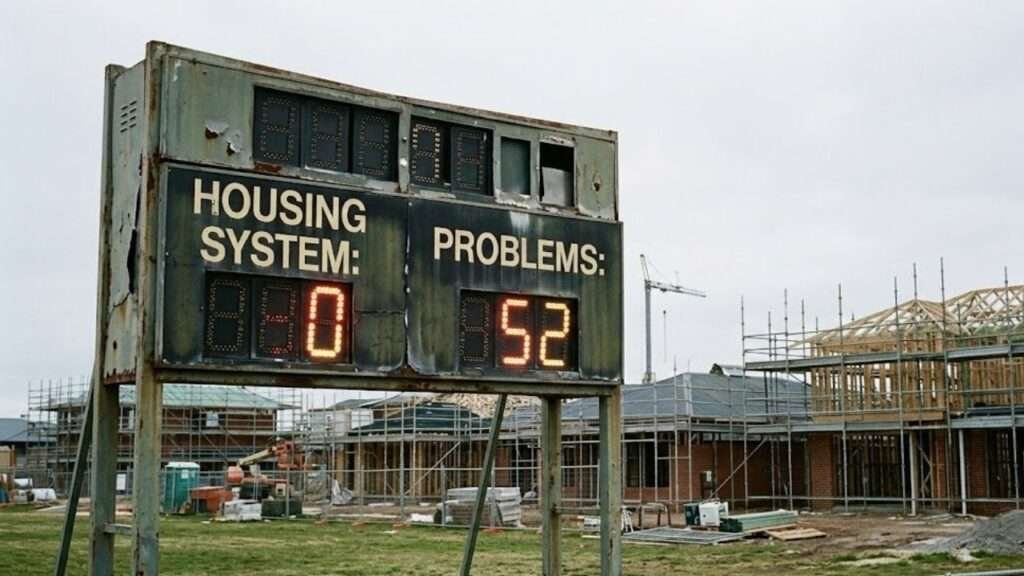
The trajectory of Australia’s housing system over the past five years resembles a sporting team that keeps sliding down the ladder despite having every opportunity to turn things around.
At some point, supporters stop blaming bad luck or tough draws.
They look squarely at leadership, strategy and accountability.
If a team keeps losing year after year, the club doesn’t shrug and say “Well, let’s give it another five seasons and hope it magically improves.” They make changes.
They review the coaching staff, replace the manager, rethink the playbook and bring in players who can actually execute under pressure.
Five years is more than enough time to judge whether a system is working.
Australia’s housing system has had its five years and then some.
The results speak for themselves. Approval times have blown out, construction timelines have stretched, insolvencies have surged and the gap between population growth and housing supply has widened into a structural deficit.
If this were a football side, the fans would be furious. They’d be demanding answers about why the team keeps turning the ball over, why the game plan is so complicated that no one can execute it and why the coaching staff insists on strategies that clearly aren’t delivering wins.
I believe this analogy matters because it highlights something we often avoid saying plainly: systems don’t fix themselves.
They respond to leadership decisions. They respond to structural changes.
They respond to accountability. When a team is underperforming, the club doesn’t sack the water boy or blame the fans.
It looks at the people setting the strategy and asks whether they’re still the right ones to lead. Our housing system deserves the same level of scrutiny.
Not out of anger, but out of basic fairness. Australians have given this system decades to improve. Instead, it has become slower, more expensive and less capable of delivering the one thing it exists to provide: homes.
A functional housing system should feel like a well-coached team, coordinated, disciplined and capable of delivering consistent results.
What we have instead is a side stuck at the bottom of the ladder, insisting that the game plan is fine and the scoreboard is lying.
At some point, you stop accepting excuses and start demanding change.
The housing system is long past that point.
In my personal opinion, if our systems surrounding building new homes in Australia looks broken to you, it’s because it is.
If it looks like a rat, walks like a rat, smells like a rat and if the rat is holding up a sign with one hand saying, “I’m A Rat” and holding a laminated ‘Rat Species Certification’ in the other, then guess what, it’s a rat.