From the Shed: Mastering the Grain & Learning New Skills
Woodworking offers a calm and creative path that begins with simple actions and grows into a lifelong practice.
Many people discover that the early stages come quickly as they learn to guide basic tools and shape familiar forms.
Mastery develops slowly as the grain becomes clearer the finishes become smoother and the material begins to respond to confident hands.
This steady progression builds respect for the wood and for the knowledge that supports each project. Over time the shed becomes a place where ideas take shape and where a hobby can grow into a meaningful part of daily life.
Understanding the Appeal of Woodworking.
Woodworking attracts people who enjoy working with natural materials and who value the quiet focus that comes from shaping timber.
The shed becomes a space where time slows and where each project offers a clear beginning and end. The appeal grows as skills improve and as the connection to the material deepens.
The grain reveals patterns that guide decisions and the surface responds to careful preparation. These small details create a sense of achievement that encourages further exploration.
Developing Skill Through Practice.
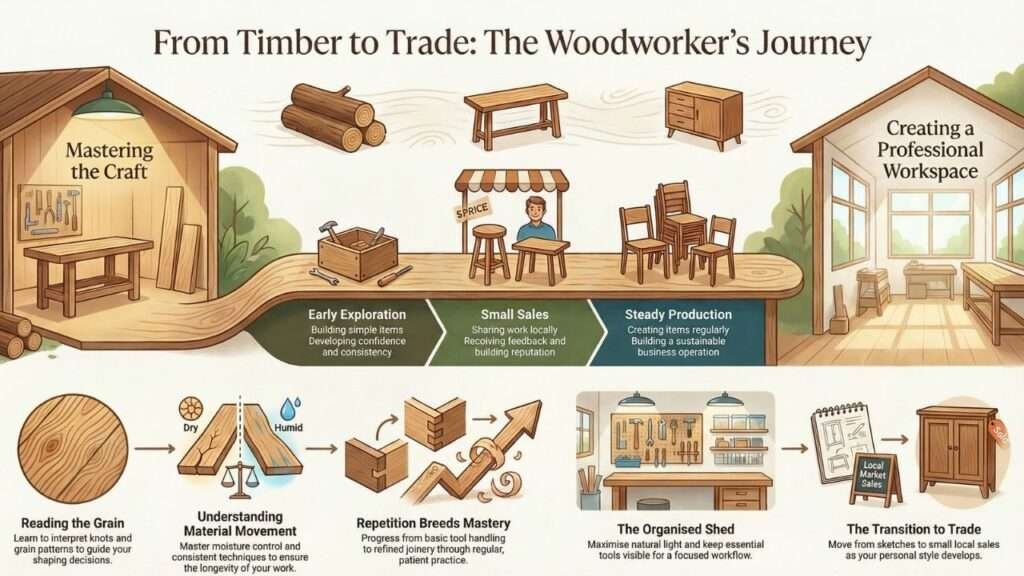
Skill development in woodworking follows a steady path. Early progress comes from learning how tools behave and how timber responds to pressure.
Later progress comes from understanding the subtle differences between species and how each one influences the final result. The shed becomes a place for repetition and refinement as each project builds on the last.
1. Learning to read the grain.
2. Understanding moisture and movement.
3. Improving accuracy through consistent technique.
4. Refining finishes for smoother surfaces.
5. Building confidence through regular practice .
These elements combine to create a foundation that supports more advanced work.
Working With Natural Materials.
Woodworking is grounded in the qualities of natural materials. Timber carries its own history through knots colour shifts and grain direction.
Respecting these features leads to stronger and more attractive results. The shed environment supports this connection by offering a quiet space where the material can be studied and prepared.
The process encourages patience as the wood reveals its character through each stage of shaping and finishing.
Creating a Calm and Productive Workspace.
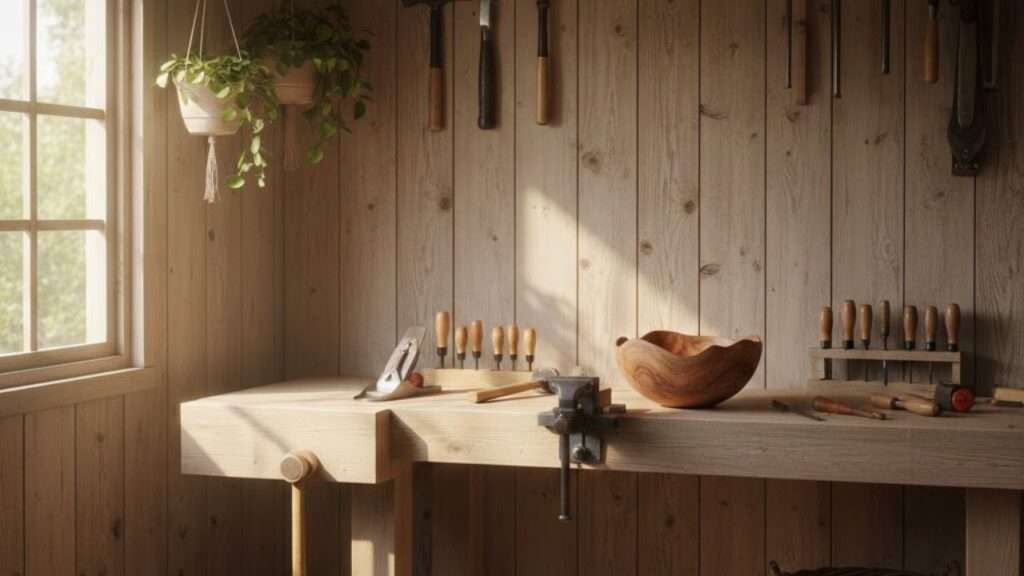
A well organised shed supports creativity and reduces distractions.
The layout does not need to be complex.
It only needs to support clear movement and easy access to essential tools.
A calm workspace encourages steady progress and helps maintain focus on the material.
1. Keep tools visible and accessible.
2. Maintain clear surfaces for layout and assembly.
3. Store timber where it can acclimate evenly.
4. Use natural light where possible.
5. Keep finishes and small items grouped by purpose.
These simple choices create an environment that supports both learning and enjoyment.
Turning Ideas Into Finished Pieces.
As skills develop ideas become easier to translate into physical form.
The shed becomes a place where concepts move from sketches to completed items. The process encourages thoughtful planning and careful execution.
Each project offers opportunities to refine technique and explore new approaches. The satisfaction of seeing a finished piece encourages further experimentation and builds confidence in personal style.
Sharing Work With Others.
Woodworking naturally invites appreciation from others.
People recognise the value of handmade items and the time invested in shaping natural materials. Sharing completed pieces builds connection and encourages further growth.
Feedback from friends and family helps refine design choices and highlights strengths that may not be obvious during the building process.
This exchange supports ongoing improvement and strengthens the sense of purpose behind each project.
Building a Shed Based Business.
Many people discover that their shed can support a small woodworking business. The transition begins with consistent quality and a clear understanding of personal strengths.
A business can grow slowly through local interest and through the steady production of well made items.
The shed remains the centre of activity as ideas become products and as skills continue to develop. A small woodworking business offers flexibility and allows personal style to guide the direction of the work. The following table outlines common paths for turning a hobby into a business:
|
Stage |
Focus |
Outcome |
|
Early exploration |
Building simple items |
Developing confidence and consistency |
|
Skill refinement |
Improving joinery and finishes |
Producing higher quality pieces |
|
Small sales |
Sharing work locally |
Receiving feedback and building reputation |
|
Business planning |
Defining product range |
Establishing a clear direction |
|
Steady production |
Creating items regularly |
Building a sustainable operation |
Each stage supports the next as skills grow and as the shed becomes a productive workspace.
Sustaining Growth Over Time.
Long term progress in woodworking comes from steady practice and a willingness to learn. The shed becomes a place for ongoing development as new techniques are explored and as personal style becomes clearer.
Natural materials continue to offer variety and inspiration.
The process remains rewarding because each project brings new insights and opportunities for refinement.
Closing Thoughts.
Woodworking offers a calm and creative way to build a meaningful life.
The shed becomes a place where natural materials guide thoughtful work and where skills grow through steady practice.
Mastery develops slowly as the grain becomes familiar and as each project strengthens confidence.