Can Natural Woodworking Make Your Home Feel Different?
Natural woodworking has become one of the most appealing ways to bring warmth and authenticity into modern living spaces.
Timber has been part of human life for thousands of years and it continues to offer a sense of comfort that synthetic materials cannot match.
As people search for ways to create calmer homes and more meaningful hobbies natural woodworking provides a practical and creative path.
It blends craftsmanship with natural beauty and it helps shape environments that feel grounded and welcoming.
This article explores the appeal of natural woodworking the benefits it brings to the home and the ways it supports wellbeing sustainability and personal creativity.
The Enduring Appeal Of Natural Wood.
Wood has been central to human life since the earliest tools and shelters. Even with the rise of modern materials timber remains one of the most valued natural resources.
Its appeal comes from its texture its warmth and its ability to age gracefully. Every piece of wood carries a unique grain pattern shaped by years of growth and environmental conditions.
These natural variations give timber a character that cannot be replicated by manufactured surfaces.
Natural woodworking connects people to a long tradition of craftsmanship.
It offers a sense of continuity with the past while still fitting seamlessly into contemporary design.
Timber works well in minimalist interiors rustic homes and modern architectural spaces.
It adapts to different styles without losing its natural identity. This versatility is one of the reasons homeowners continue to choose wood for furniture decor and structural elements.
For beginners woodworking offers a rewarding entry point into hands‑on creativity. Simple projects such as shelves stools or planter boxes allow new woodworkers to build confidence while producing useful items.
For those considering woodworking as a profession the demand for natural handcrafted pieces continues to grow as more people seek authenticity and sustainability in their homes.
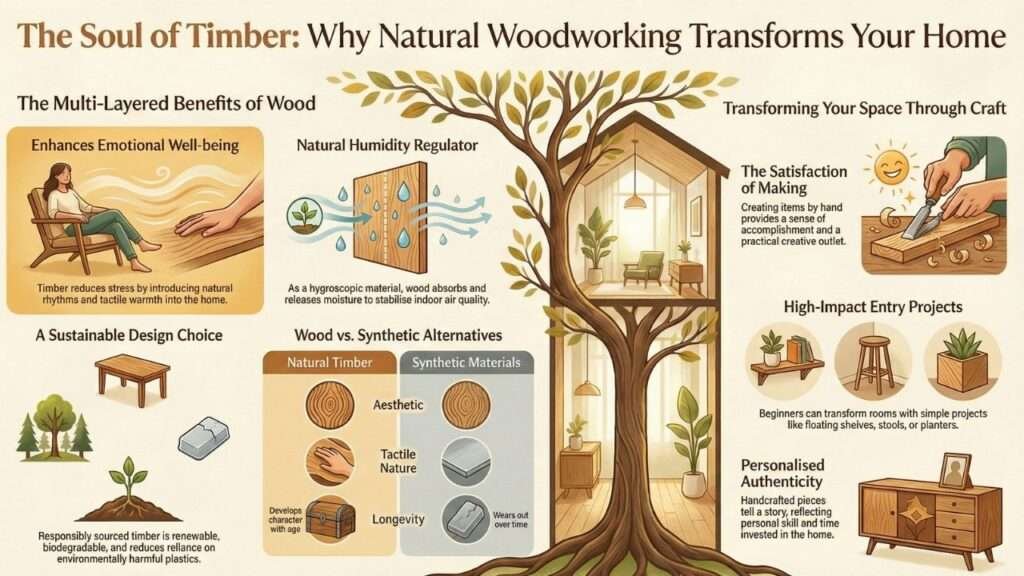
How Wood Shapes The Atmosphere Of A Home.
Wood has a unique ability to influence the emotional tone of a room.
It softens hard surfaces and reduces the sterile feeling that can come from metal plastic or glass.
Timber introduces warmth through its colour and texture and it creates a sense of comfort that helps people feel at ease.
4 qualities tend to contribute to this effect:
Wood reflects light in a gentle natural way.
Grain patterns add visual interest without overwhelming the senses.
Warm tones create a welcoming environment.
Organic textures help balance modern materials.
Homes that incorporate natural wood often feel more grounded.
Timber elements can transform a space without requiring major renovations.
A wooden coffee table a set of shelves or a handmade bench can shift the atmosphere of a room and make it feel more inviting.
This emotional response is rooted in human evolution. People have lived among trees and natural landscapes for most of history.
When natural materials appear in indoor spaces the mind recognises them as familiar and calming. This is why spas wellness centres and retreat spaces often rely on timber to create a peaceful environment.
Wood And Well-being.
Natural materials play an important role in shaping environments that support mental and emotional well-being.
Many people find that wood‑rich interiors help reduce stress and create a sense of balance.
The effect is subtle but consistent. Timber introduces a natural rhythm through its grain patterns and it provides a tactile surface that feels warm and comfortable.
Wood supports wellbeing in at least 4 ways:
Organic textures stimulate the senses gently
Natural patterns create visual harmony
Timber surfaces feel warm to the touch
Wood evokes memories of nature and outdoor spaces
Even a single handcrafted item can influence the mood of a room.
A wooden bowl a carved lamp base or a small side table can introduce a calming presence. These pieces help create a home environment that feels more connected to nature and more supportive of daily life.
Wood And Indoor Air Quality.
Wood has practical benefits that extend beyond aesthetics.
Timber is hygroscopic which means it absorbs and releases moisture depending on the surrounding environment.
This natural property helps regulate indoor humidity and contributes to a more stable indoor climate.
While wood is not a substitute for ventilation it can support healthier air conditions by:
Reducing sudden humidity changes.
Helping maintain comfortable moisture levels.
Minimising dryness caused by air conditioning.
Supporting a more natural indoor atmosphere.
This is one reason timber has been used historically in homes libraries and public buildings. It offers both beauty and function and it helps create environments that feel comfortable throughout the year.
The Satisfaction Of Creating With Wood.
One of the most rewarding aspects of natural woodworking is the act of making. In a world where many products are mass‑produced the opportunity to create something by hand feels meaningful.
Woodworking allows people to shape raw material into functional and decorative items that reflect personal style and skill.
Woodworking offers:
A practical creative outlet
A sense of accomplishment with each completed project
Skills that can be applied throughout the home
The ability to create personalised items
A pathway to a hobby or a professional craft
Simple projects can have a significant impact on a home. A handmade bench can enhance an entryway. A timber planter can bring life to a balcony.
A custom shelf can turn an empty wall into a feature. Each piece becomes part of the home’s story and carries the satisfaction of being made by hand.
Sustainability And Natural Woodworking.
Sustainability is an important consideration for many homeowners.
When sourced responsibly timber is one of the most environmentally friendly materials available. It is renewable biodegradable and long‑lasting.
Choosing natural wood over synthetic materials supports a more sustainable approach to home design.
Natural woodworking supports sustainability by:
Reducing reliance on plastics and composites.
Lowering environmental impact during manufacturing.
Extending product lifespan.
Encouraging repair and maintenance.
Supporting a circular approach to materials.
Handcrafted wooden items often improve with age. Instead of wearing out they develop patina and character. A well‑made timber piece can last for decades and can be passed down through generations.
Ways To Introduce Natural Woodworking Into Your Home.
Natural woodworking can be introduced into the home through small intentional choices.
You do not need to renovate entire rooms to enjoy the benefits of timber. Simple additions can make a noticeable difference.
Consider incorporating:
Floating timber shelves.
Handmade cutting boards.
Wooden planters.
Natural edge side tables.
Timber wall art.
Wooden stools or benches.
Beginners can start with straightforward projects that build confidence. As skills develop more complex pieces can be added to the home.
Each project contributes to a more natural and calming living environment.
A Home That Feels Connected To Nature.
Natural woodworking offers a way to create homes that feel warm grounded and connected to the natural world.
Timber brings beauty and function to living spaces and it supports well-being through its texture colour and presence.
Whether you are exploring woodworking as a hobby or incorporating handcrafted pieces into your home natural wood helps create an environment that feels alive and welcoming.
Each piece reflects the time care and creativity invested in it and together they shape a home that feels both personal and peaceful.