The Many Ways Of Putting Your Skills To Work
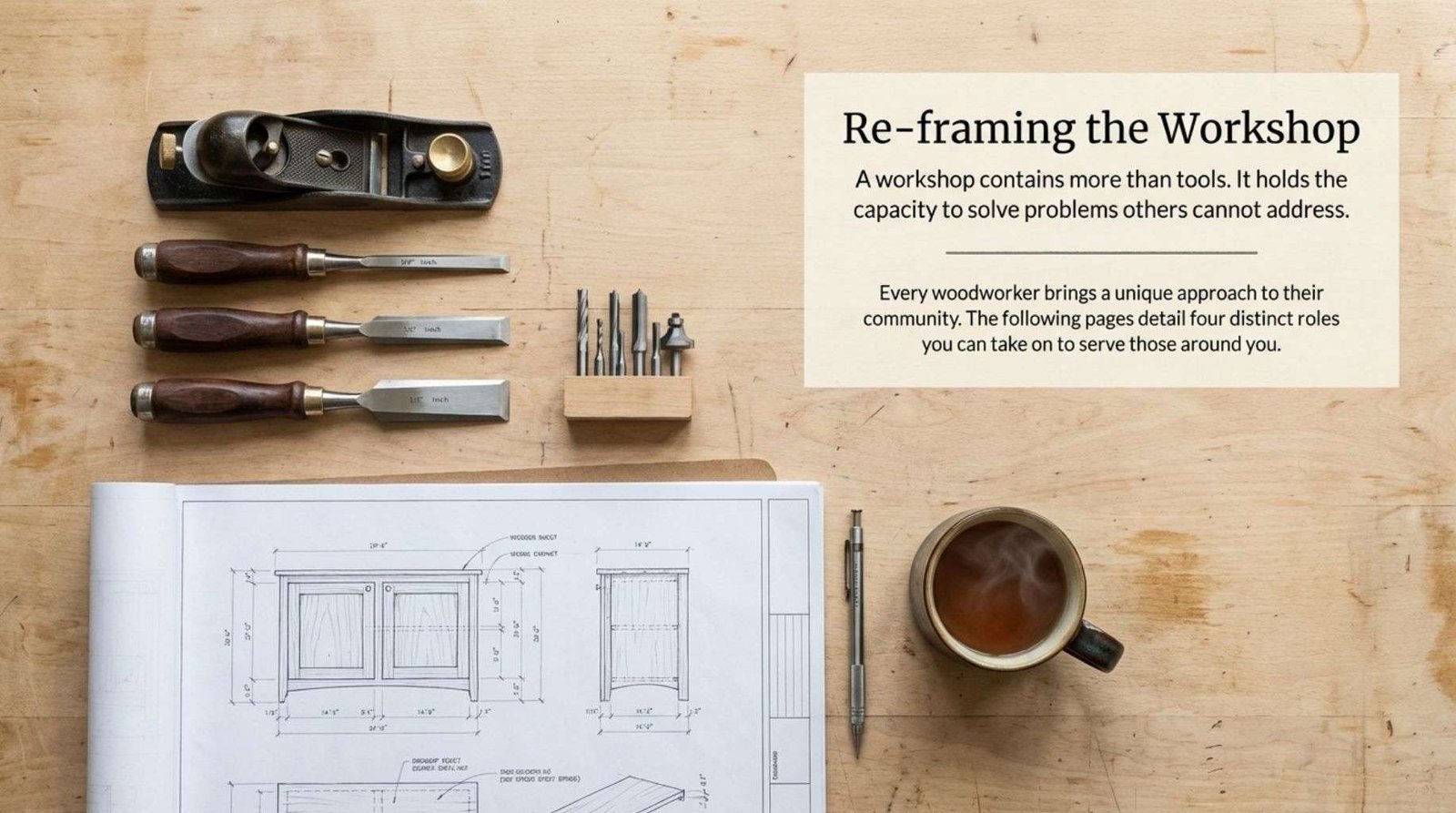
The quiet rhythm of our backyard woodshops (our sheds or garage bays etc) has a way of sharpening attention.
A plane skimming across a board. The soft thud of a mallet setting a joint.
These moments feel personal yet they also point outward. Skills developed in private can have a public life when directed toward the needs of others.
The Great Divide: Why Many People Cannot Fix What They Own.
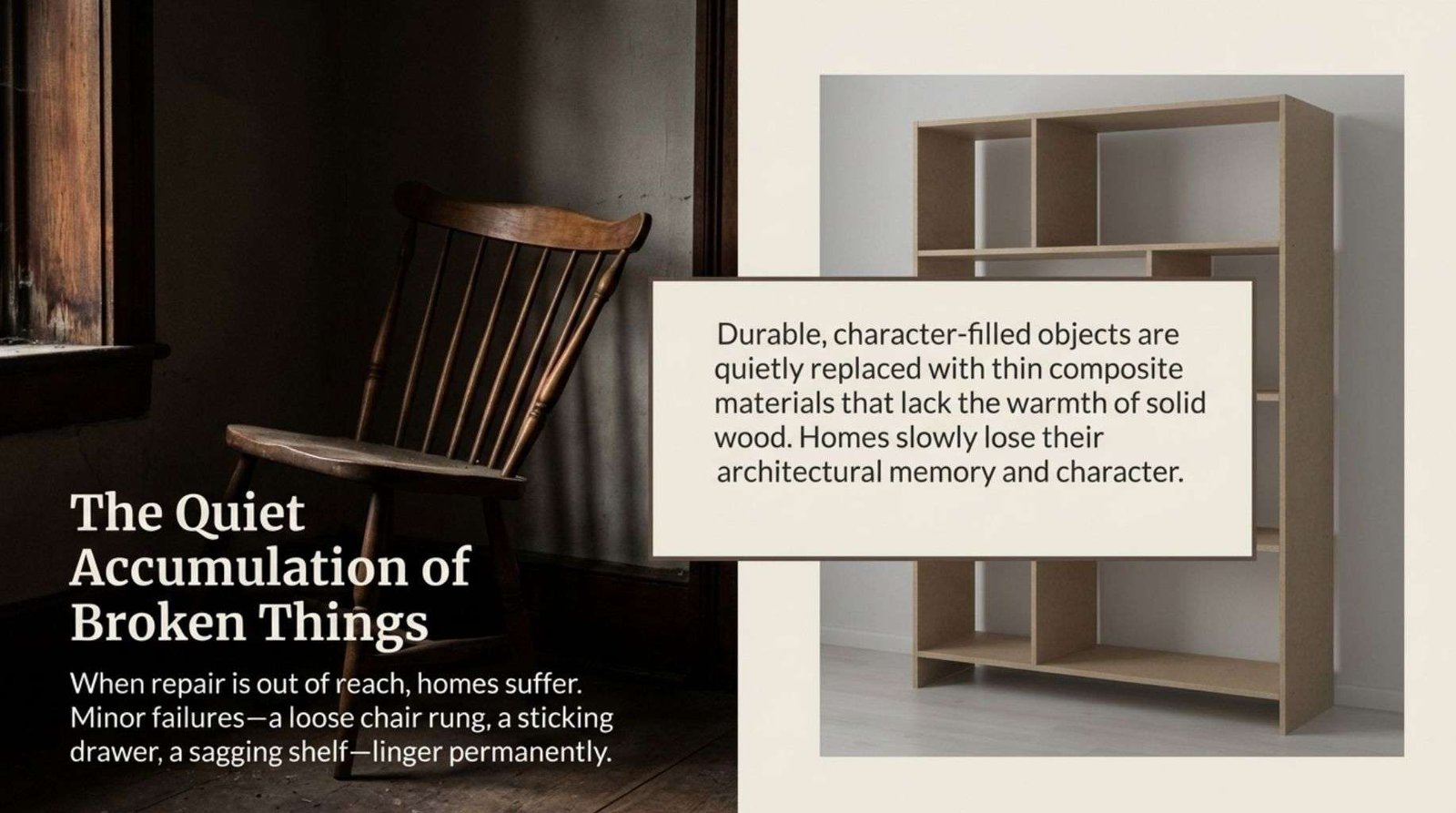
A walk through any home reveals small failures that linger.
A loose chair rung. A drawer that sticks. A shelf that sags under its own weight.
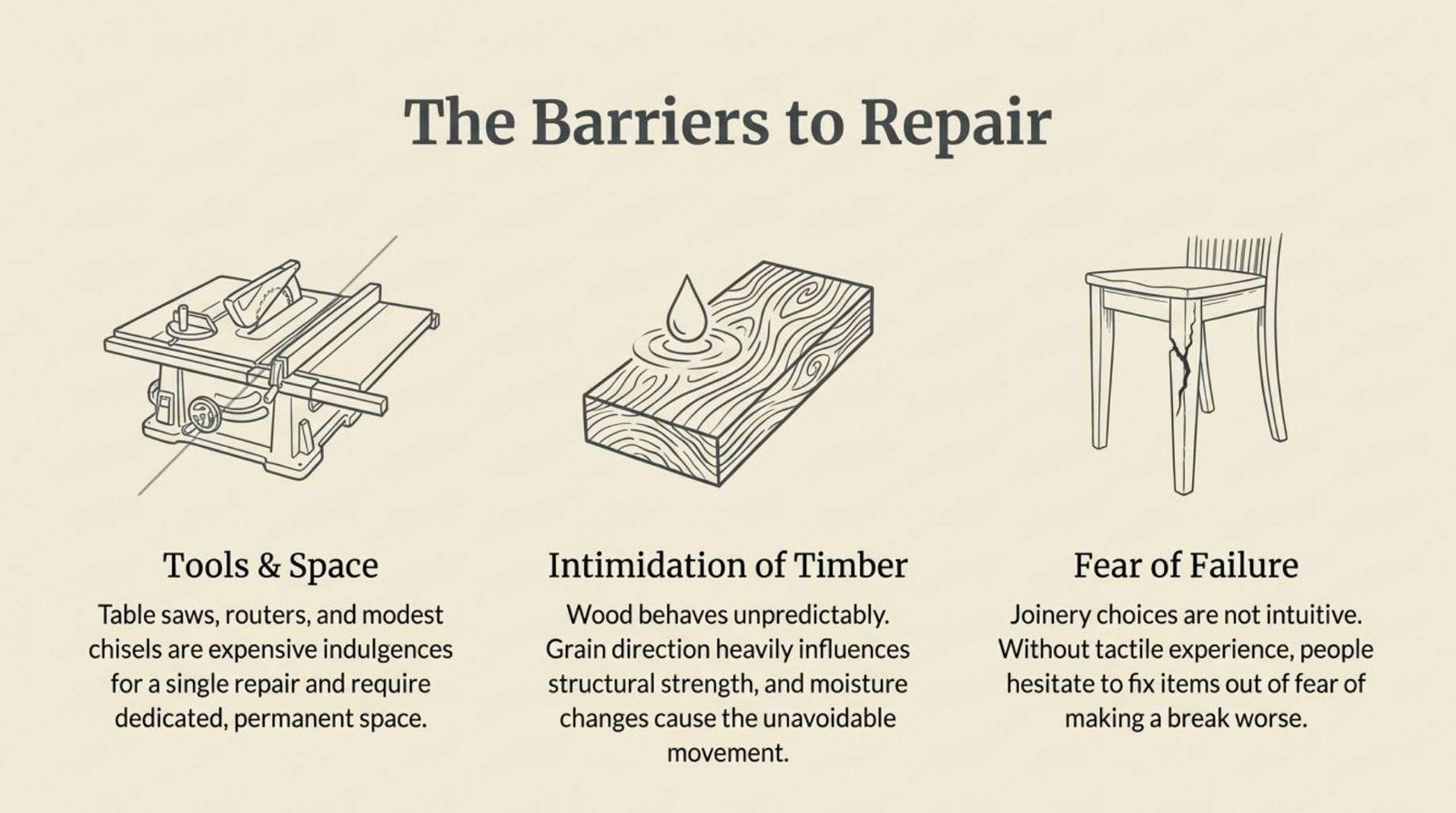
These issues persist because the barriers to solving them are real. Tools are expensive and often require dedicated space.
A table saw or a router is not something most households can justify. Even a modest set of chisels can feel like an indulgence for someone who only needs a single repair.
Knowledge is another barrier. Wood behaves in ways that surprise beginners.
Grain direction influences strength. Moisture changes movement. Joinery choices affect longevity. These are not intuitive concepts.
They are learned through repetition and the tactile experience of handling timber.
Many people hesitate to attempt repairs because they fear making the problem worse. A cracked chair leg or a chipped cabinet door becomes a permanent inconvenience.
The result is a quiet accumulation of broken items that never quite justify professional repair. People settle for replacements made from thin composite materials that lack the warmth of solid wood.
A home slowly loses its character as durable objects are replaced with disposable ones.
The Woodworker as Community Resource.
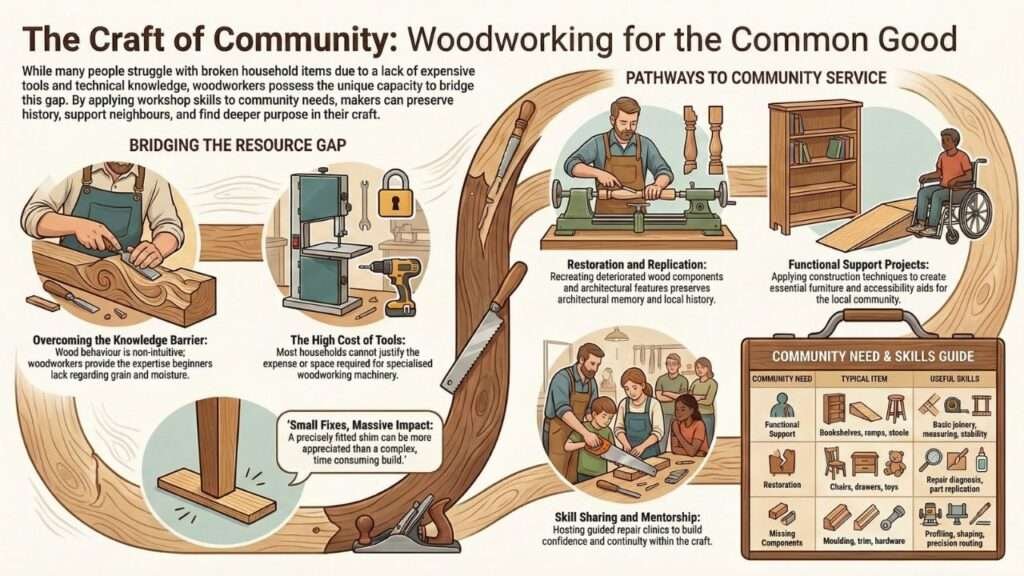
A workshop contains more than tools. It contains the capacity to solve problems that others cannot address. This capacity can take several forms.
Each one draws on a different aspect of craftsmanship.
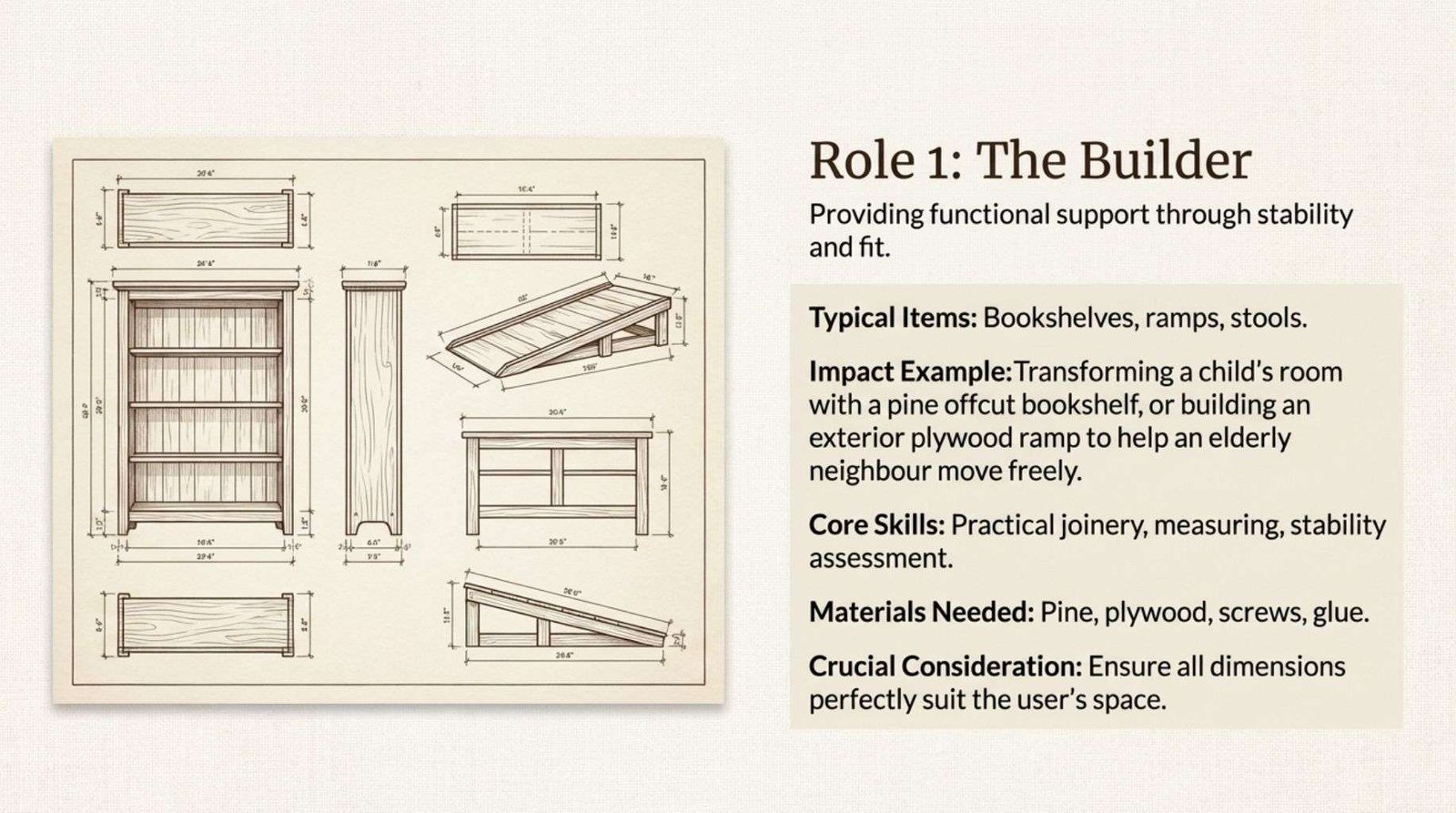
A builder can create items that are financially out of reach for others. A simple bookshelf made from pine offcuts can transform a child’s room.
A small ramp built from exterior plywood can help an elderly neighbor move more freely. These projects rely on practical joinery and a sense of proportion.
The woodworker’s eye for stability and fit becomes a quiet form of support.
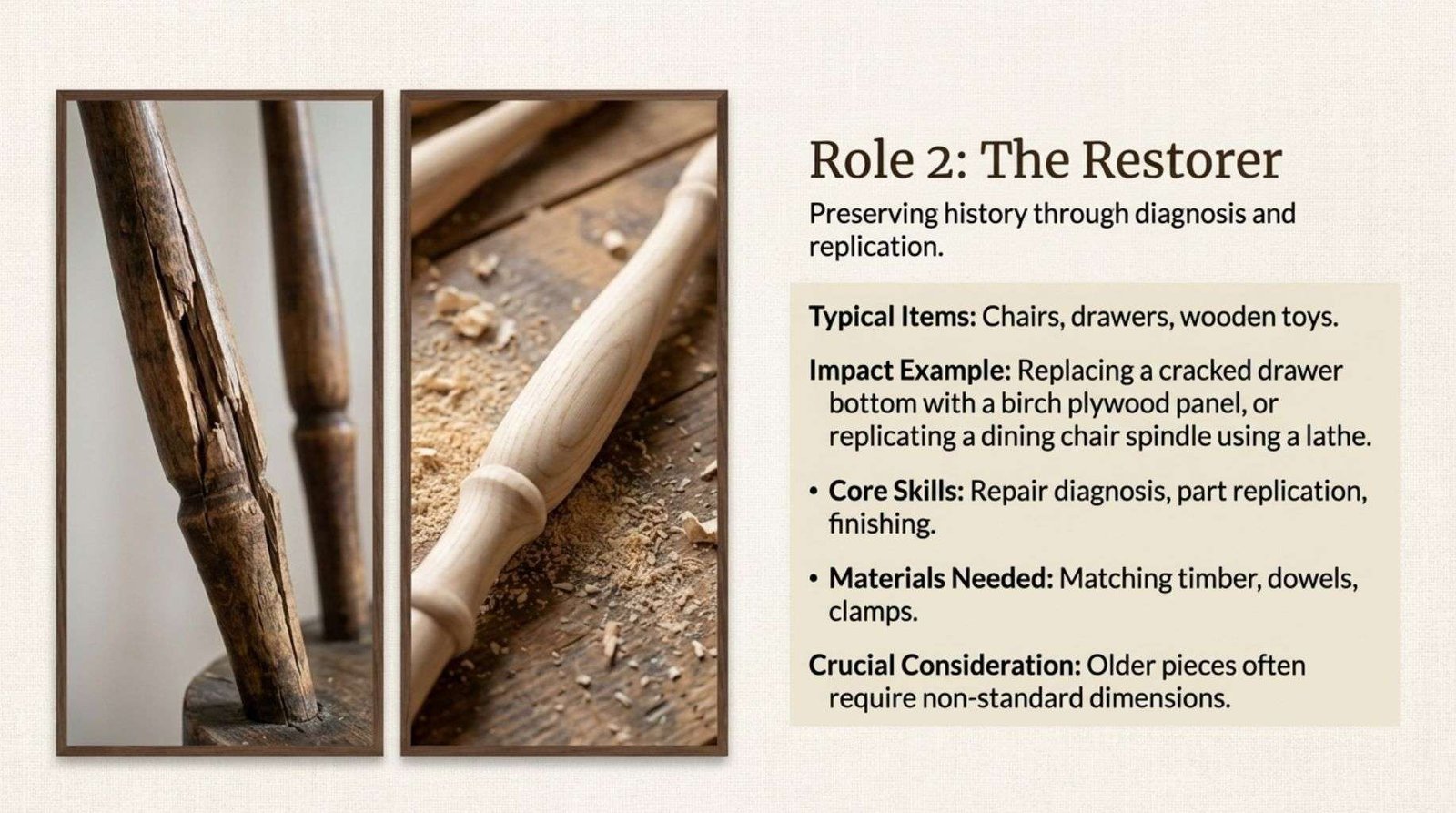
A restorer sees potential in damaged objects. A broken spindle on a dining chair can be replicated with a lathe and a steady hand.
A cracked drawer bottom can be replaced with a panel cut from a sheet of birch plywood. These repairs preserve history.
They also sharpen the craftsperson’s understanding of structure. The tactile feel of old timber often reveals how earlier makers approached their work.
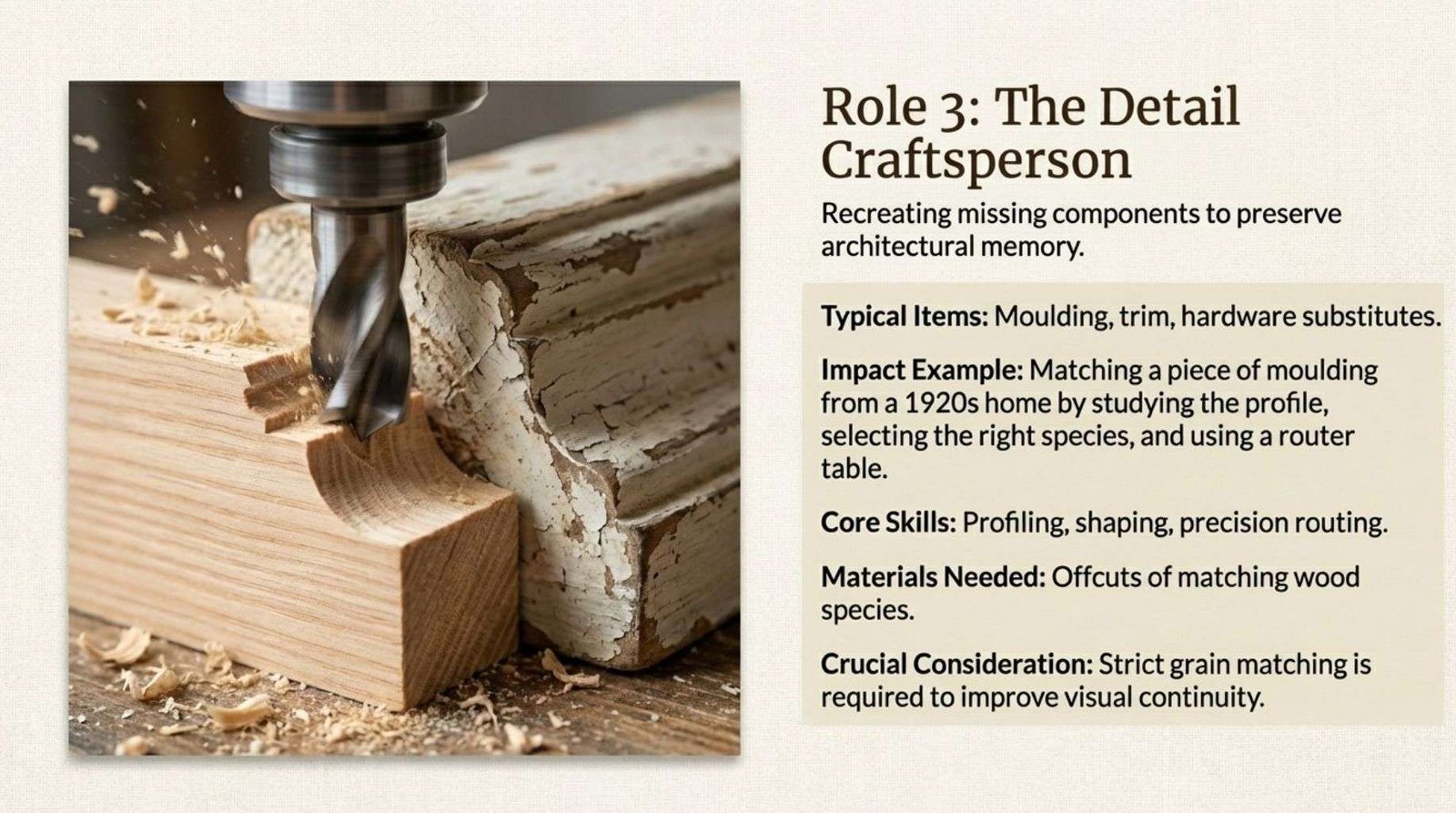
A detail‑oriented craftsperson can recreate missing components.
A piece of moulding from a beautiful 1920s home can be matched by studying the profile and selecting a suitable species.
A router table and a few passes with the correct bit can produce a near‑perfect copy. This work blends patience with precision.
It also demonstrates how woodworking intersects with architectural memory.
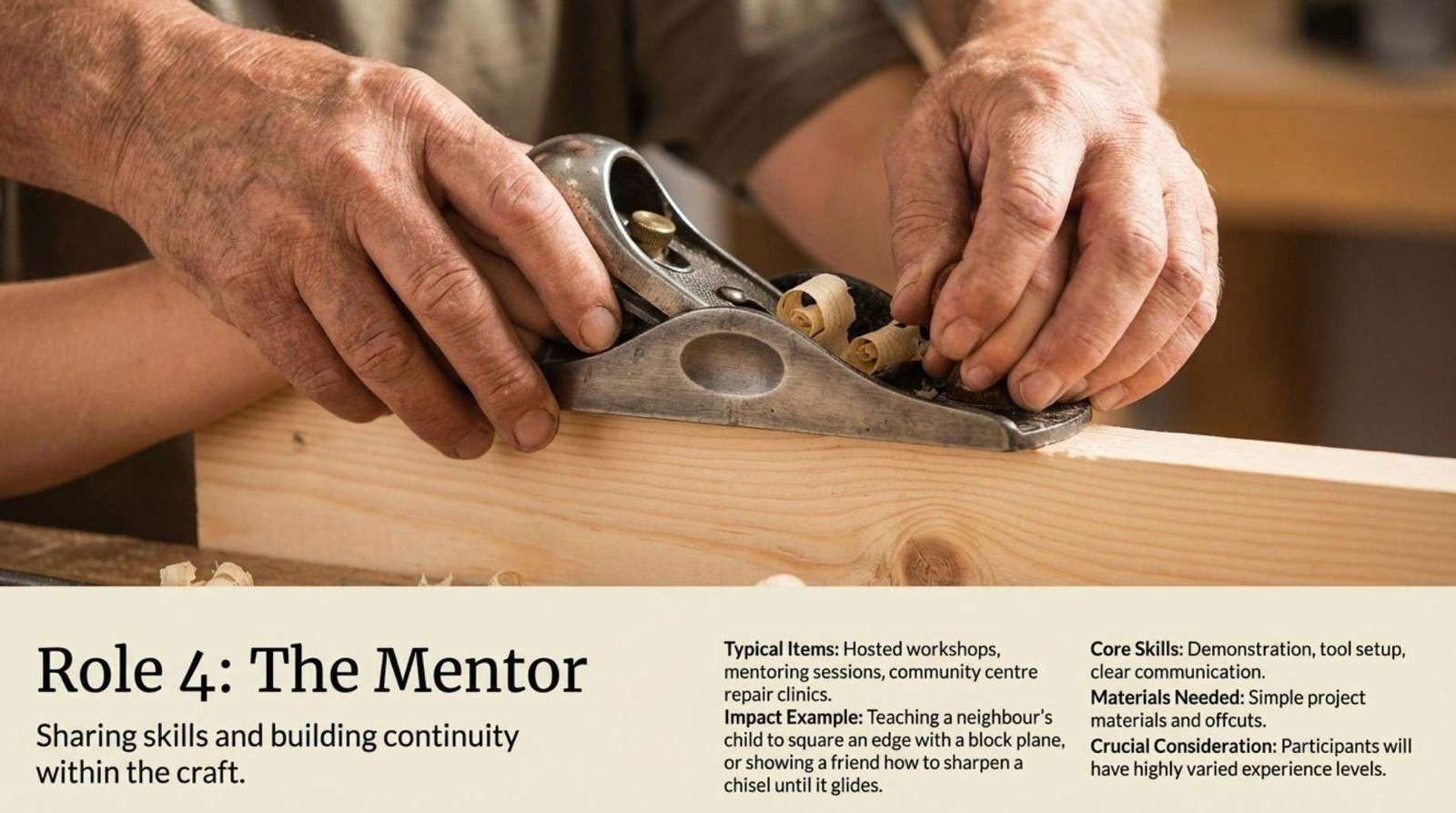
A mentor can share skills with others. A neighbor’s child who shows curiosity about hand tools can learn to square an edge with a block plane.
A friend can learn to sharpen a chisel until it glides through end grain.
A community center can host a small clinic where people bring items for guided repair.
These moments build confidence and they also create a sense of continuity within the craft.
Understanding Motivation and Identifying Who to Help.
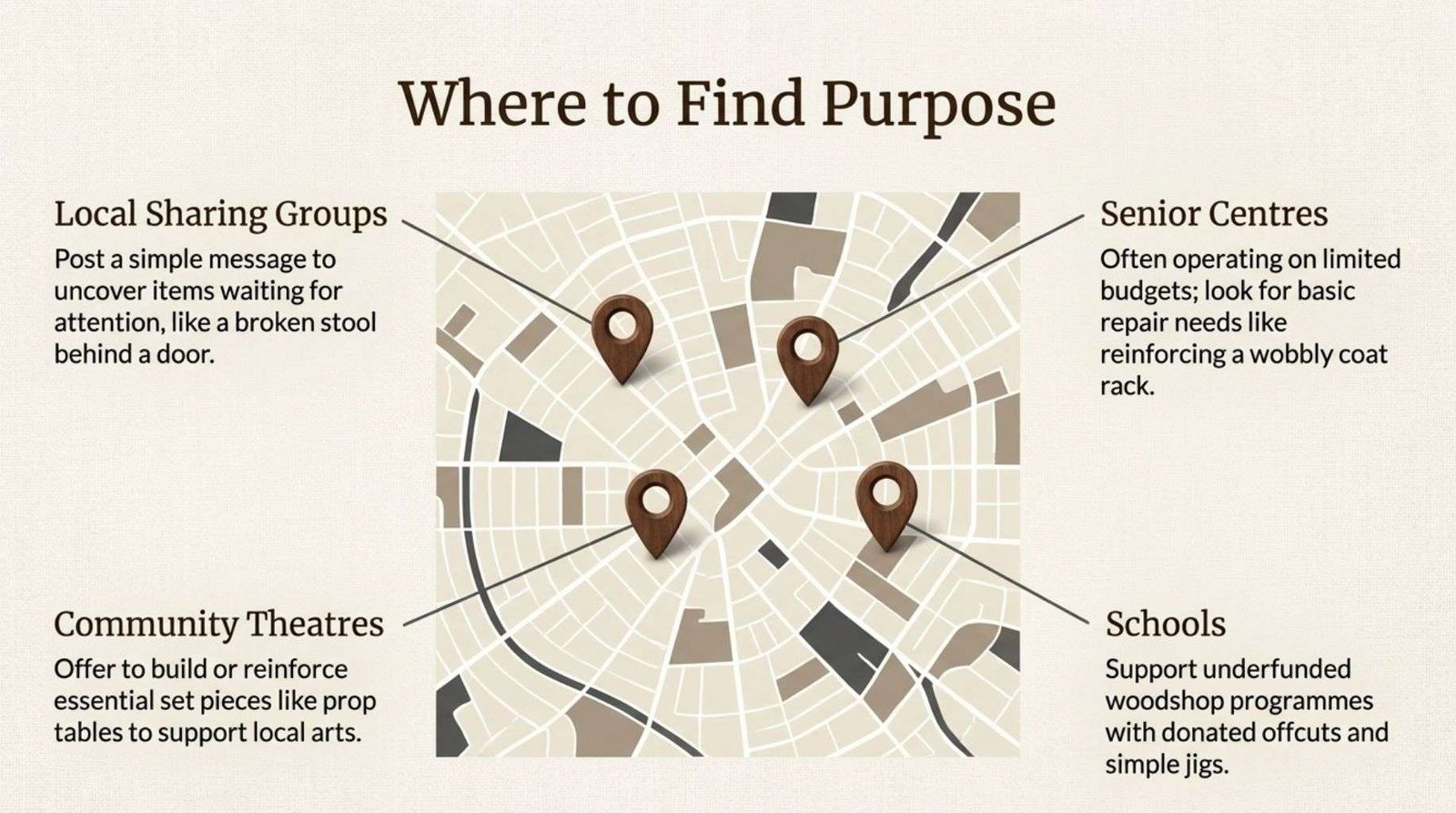
Purpose grows from small beginnings. A single conversation with a neighbor can reveal a need. A broken stool tucked behind a door.
A cabinet door that no longer closes. These are opportunities to offer assistance without fanfare. Posting a simple message in a local sharing group can uncover a surprising number of items waiting for attention.
Organizations often operate with limited budgets. A senior center may need a repaired coat rack. A community theater may need a reinforced prop table.
Schools with underfunded woodshop programs may welcome donated offcuts or simple jigs.
Each request introduces a new challenge that expands the craftsperson’s range.
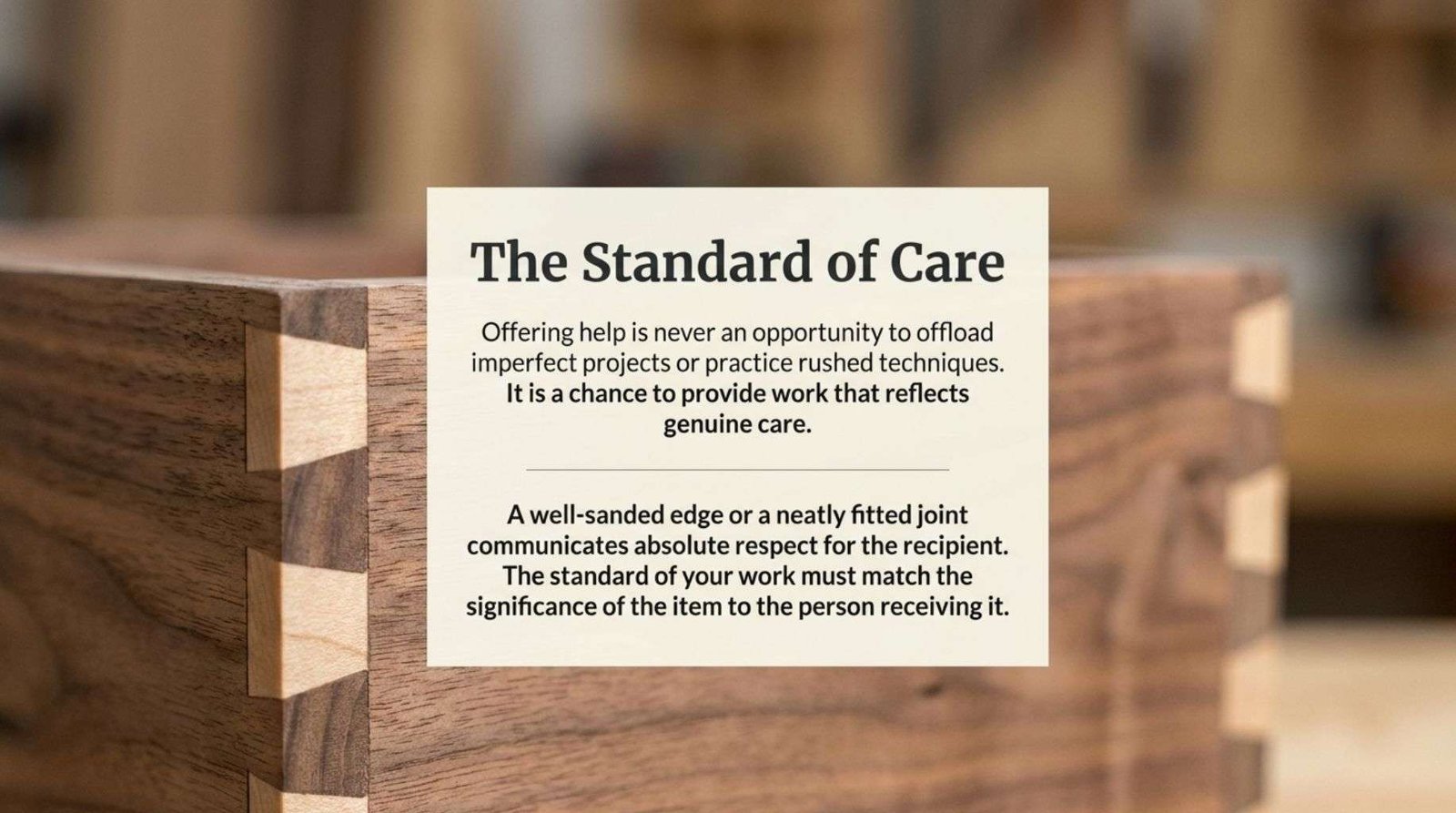
The mindset matters. Offering help is not an opportunity to offload imperfect projects. It is a chance to provide work that reflects care.
A well‑sanded edge or a neatly fitted joint communicates respect for the recipient. The standard should match the significance of the item to the person receiving it.
The Rewards of Community Craftsmanship.
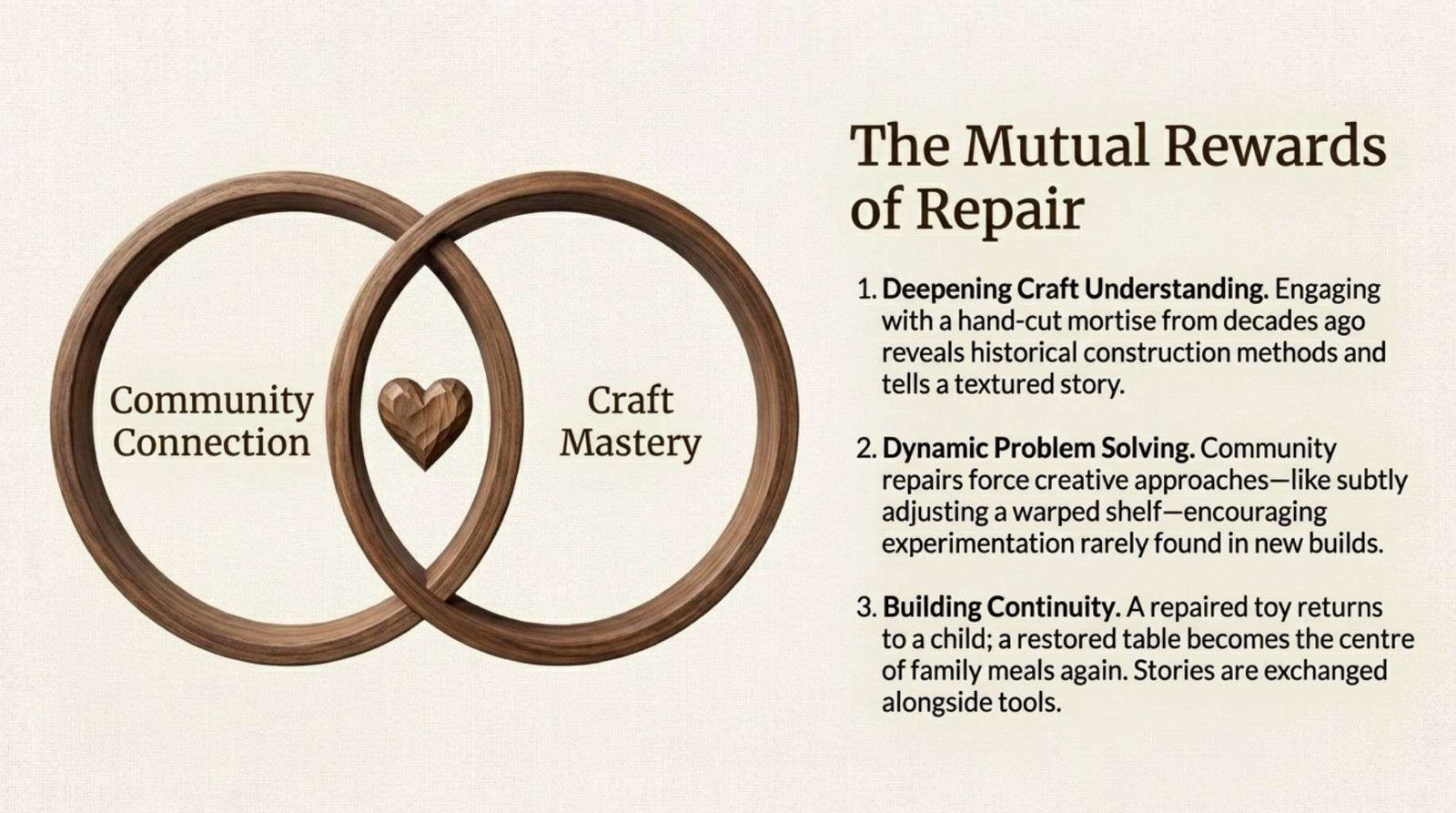
The benefits of this work extend beyond the finished object. Repairing a cherished chair can reveal construction methods that differ from modern practices.
A mortise cut by hand decades ago has a texture that tells a story. Engaging with these details deepens understanding of the craft.
Problem‑solving becomes more dynamic when working on repairs. A split panel may require a creative approach to reinforcement.
A warped shelf may need a subtle adjustment to regain its shape. These challenges refine judgment. They also encourage experimentation with techniques that might not arise in new builds.
Community connection grows naturally. A workshop becomes a place where stories are exchanged along with tools. A repaired toy returns to a child’s hands.
A restored table becomes the center of family meals again. These outcomes create a sense of continuity between the craftsperson and the people around them.
A Practical Table for Community‑Focused Woodworking.
The following table outlines common community needs and the woodworking approaches that address them.
Community Need | Typical Item | Useful Skills | Materials Often Required | Notable Consideration |
Functional support | Bookshelves, ramps, stools | Basic joinery, measuring, stability assessment | Pine, plywood, screws, glue | Ensure dimensions suit the user’s space. |
Restoration | Chairs, drawers, toys | Repair diagnosis, part replication, finishing | Matching timber, dowels, clamps | Older pieces may require nonstandard dimensions. |
Missing components | Moulding, trim, hardware substitutes | Profiling, shaping, precision routing | Offcuts of matching species | Grain matching improves visual continuity. |
Skill sharing | Workshops, mentoring | Demonstration, tool setup, communication | Simple project materials | Participants may have varied experience levels. |
A Tangential Observation.
Workshops often accumulate small offcuts that seem too useful to discard. These pieces can become valuable when helping others.
A narrow strip of hardwood can become a replacement drawer runner.
A short length of cedar can become a handle for a garden tool.
This habit of saving material creates unexpected opportunities for generosity.
A Counter‑Intuitive Insight.
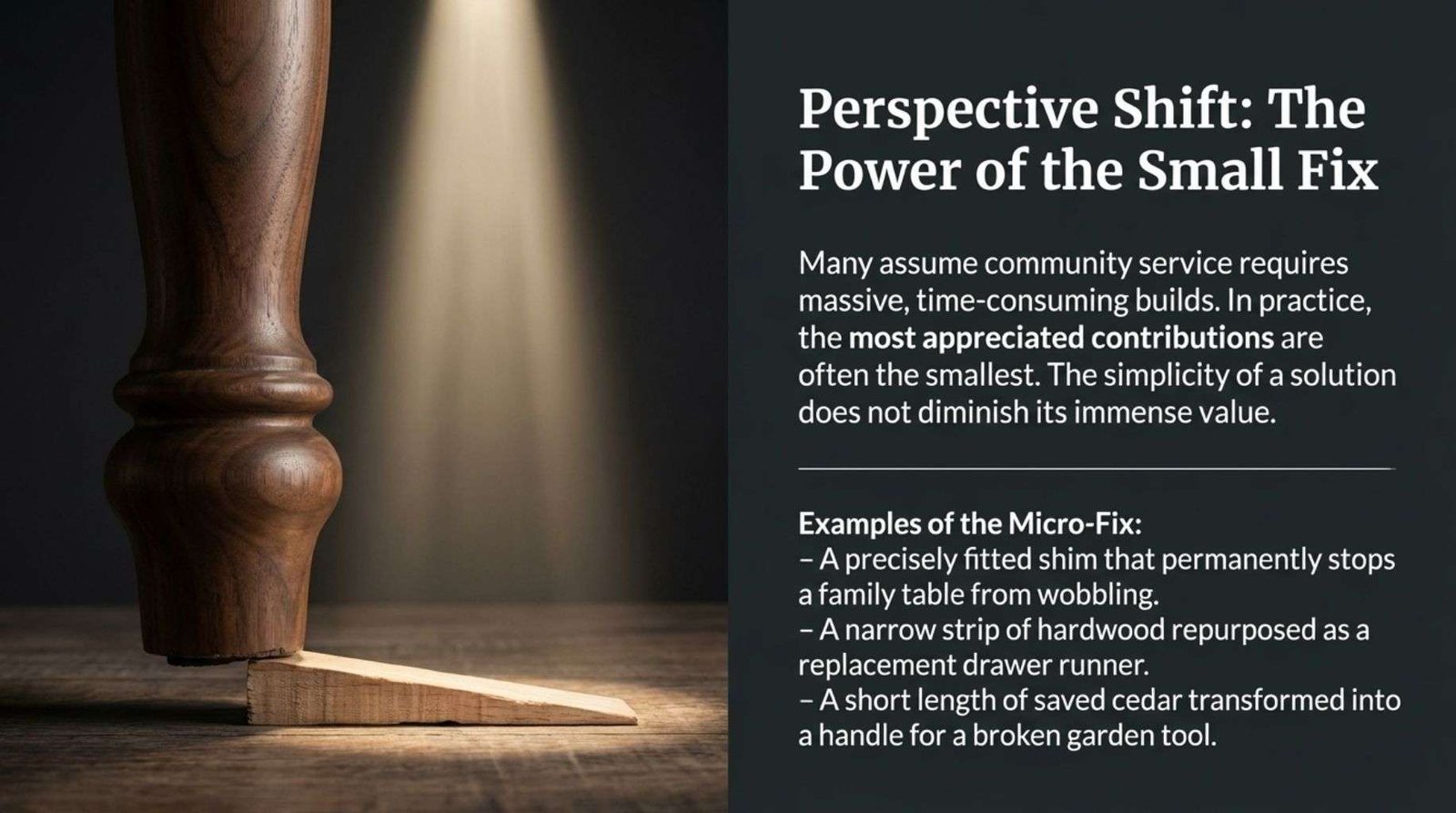
Many woodworkers assume that community service requires large projects. In practice the most appreciated contributions are often the smallest.
A precisely fitted shim that stops a table from wobbling can have more impact than a complex build. The simplicity of the solution does not diminish its value.
A Practical Limitation.
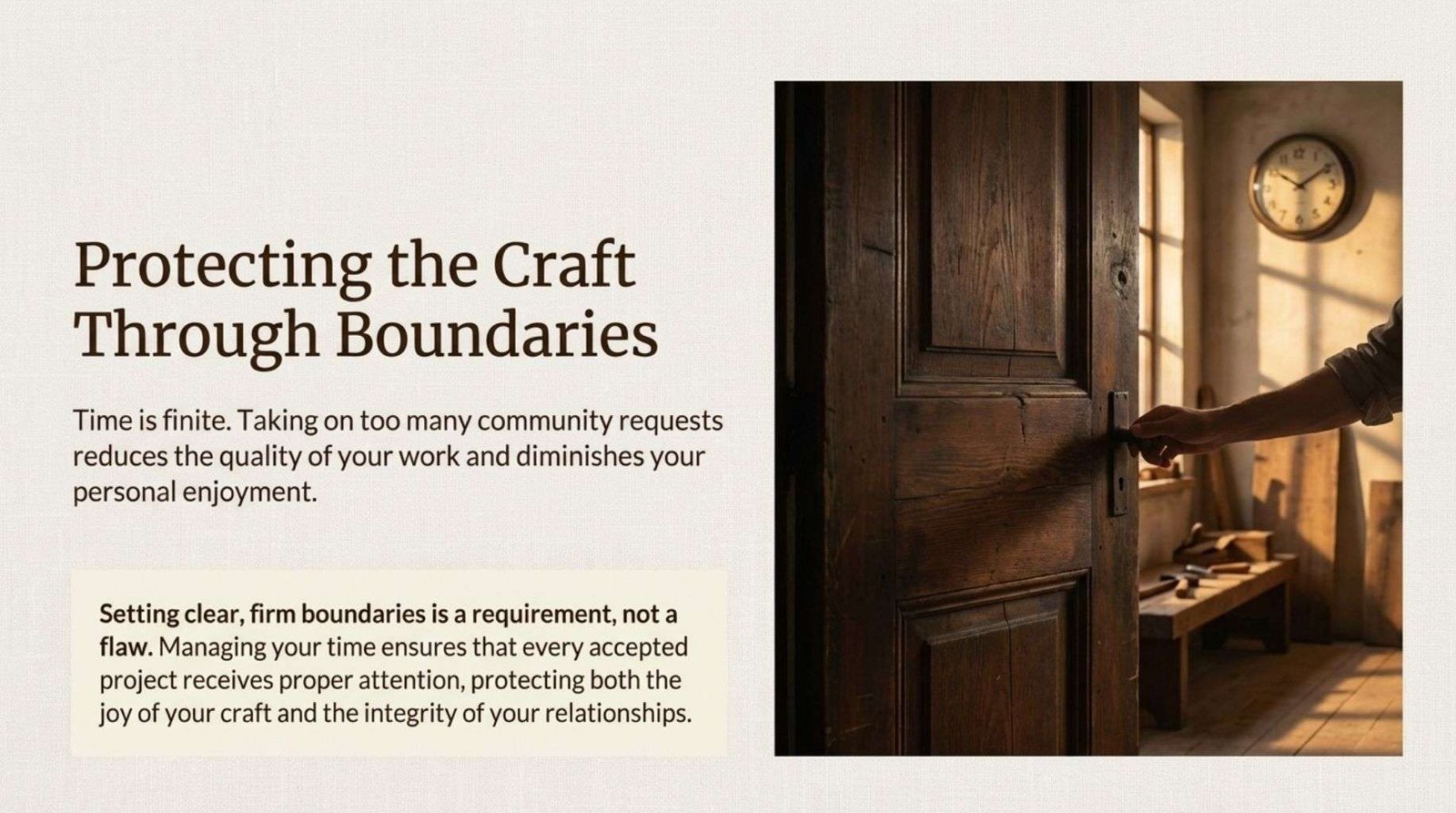
Time is finite. Taking on too many requests can reduce the quality of the work and diminish enjoyment. Setting clear boundaries ensures that each project receives proper attention. This approach protects both the craft and the relationships involved.
A Workshop with Purpose.
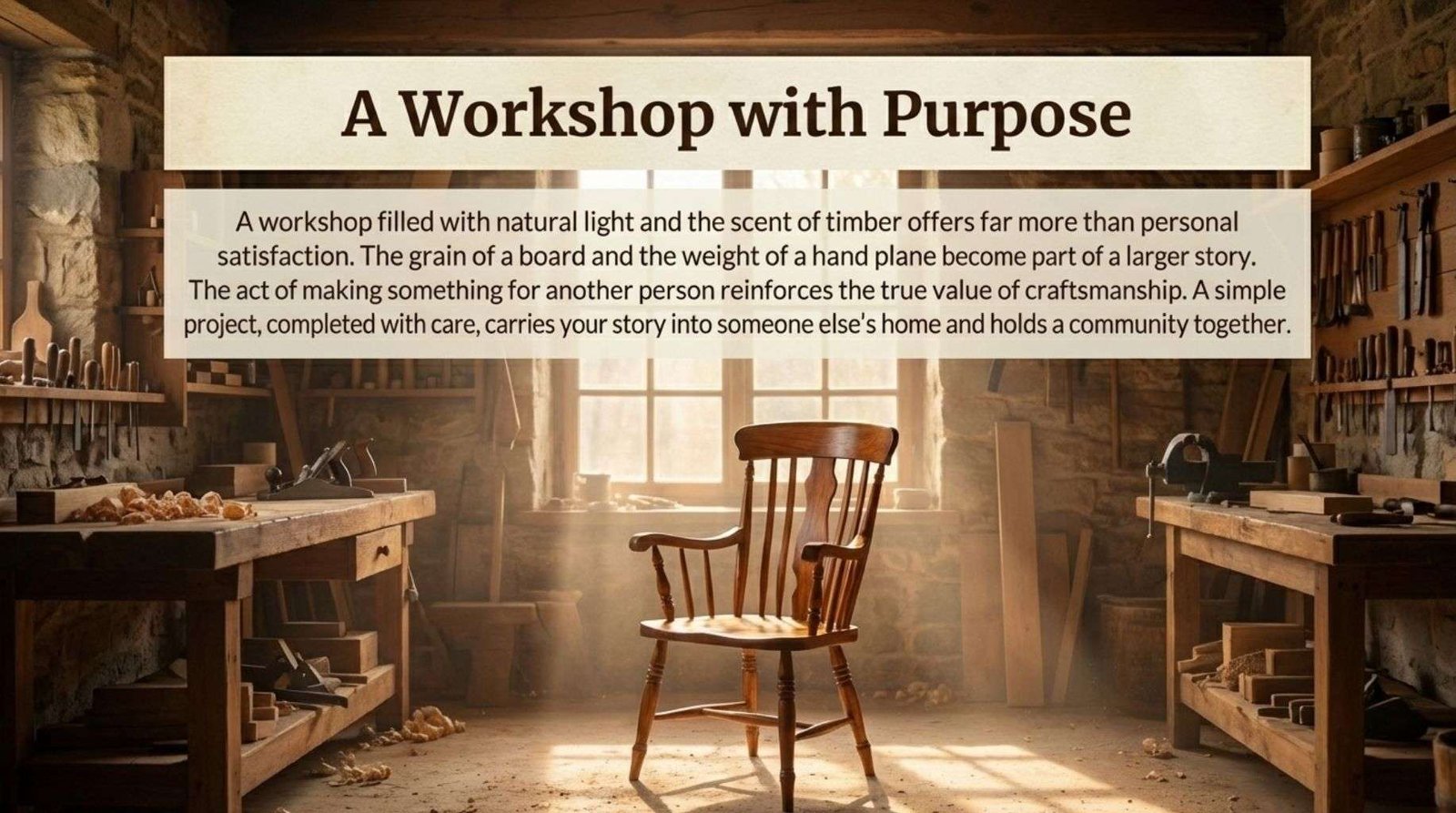
A workshop filled with natural light and the scent of timber offers more than personal satisfaction. It becomes a place where skills meet community needs.
The grain of a board or the weight of a hand plane becomes part of a larger story.
A repaired object or a thoughtfully built item carries that story into someone else’s home. The act of making something for another person reinforces the value of craftsmanship.
It also strengthens the connections that hold a community together. A simple project completed with care can have a lasting effect.