
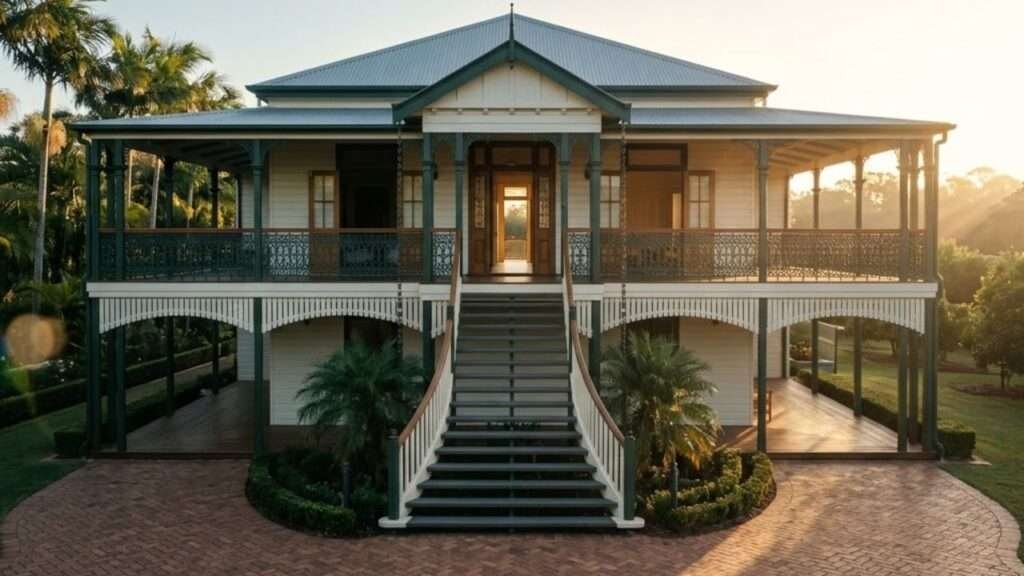
A Queenslander estate built entirely from Queensland White Cypress
Although and unusual title for a post, this is all about what a woodworker might do in terms of building a new home if they won lotto. In this current day and age, for a lot of us, Funding The Great Australian Housing Scheme pivots around the idea of winning lotto, especially if you have a very specific type of home in mind.
A majestic Queenslander Home, a huge home built with treated Queensland White Cypress. So yeah, there is a particular kind of daydream that I entertain differently from other people.
Where a chef might imagine a restaurant and a musician a studio, I picture timber, very specific timber and on a very large scale.
The grain pattern of a particular species, the way it planes, the smell of fresh-cut shavings on a cool morning.
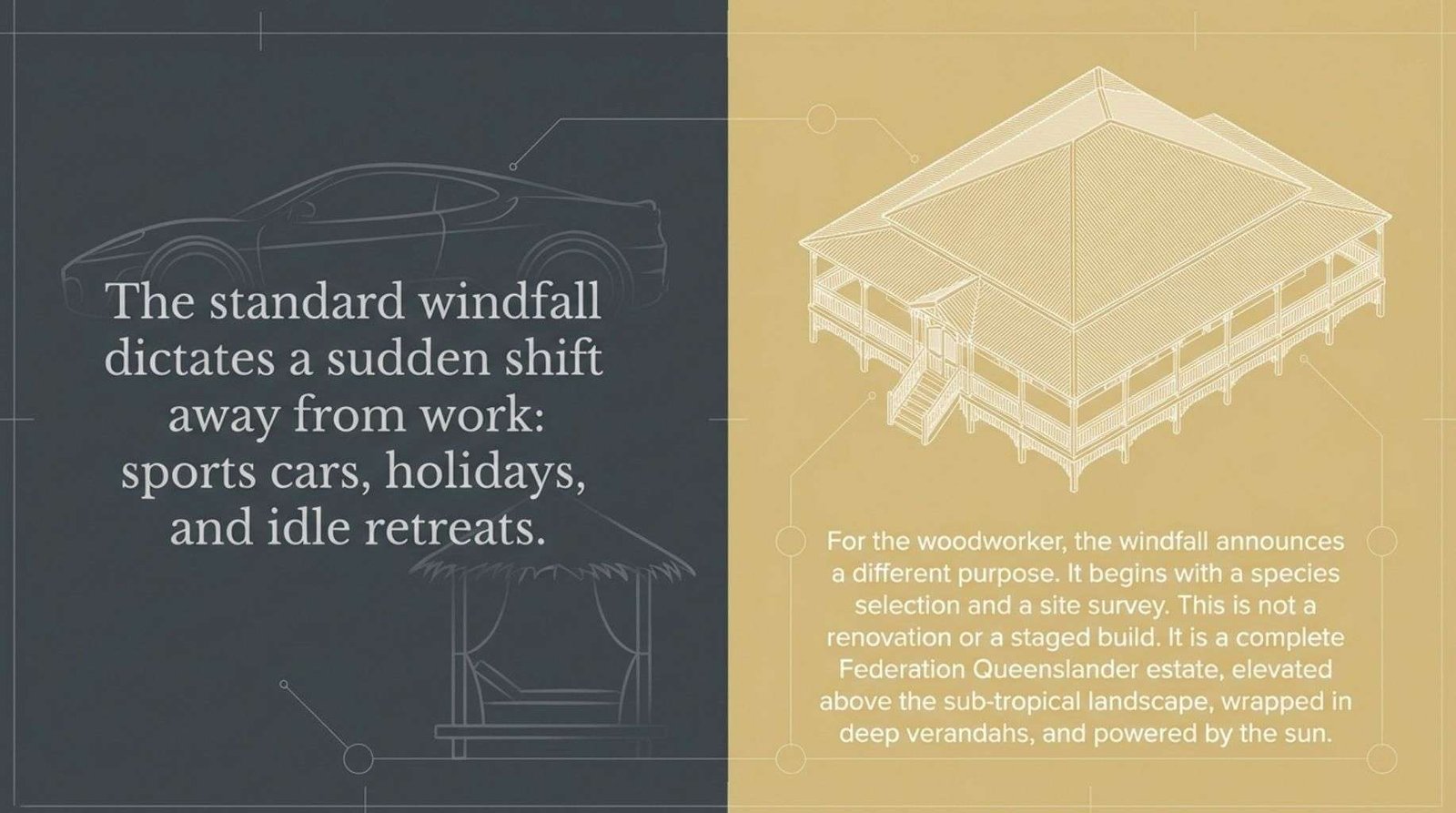
So when the question arises, what would a woodworker do with a huge lottery windfall, the answer does not begin with a car or a holiday. It begins with a species selection and a site survey.
This is the story of a single decision made with total financial freedom and absolute creative conviction: to build what I think of as ‘The Cypress Lotto Manor’. A majestic Federation Queenslander Estate constructed almost entirely from Treated Queensland White Cypress, elevated above the subtropical landscape, wrapped in deep verandahs and powered by the sun.
Not a renovation, not a staged build, a complete estate, conceived as a craftsman’s manifesto and executed at full scale and with the utmost attention to detail and professionalism.
The Logic of Choosing Cypress Pine.
Queensland White Cypress is not a glamorous timber in the way that American black walnut or European oak commands attention in international design circles. It is quieter than that.
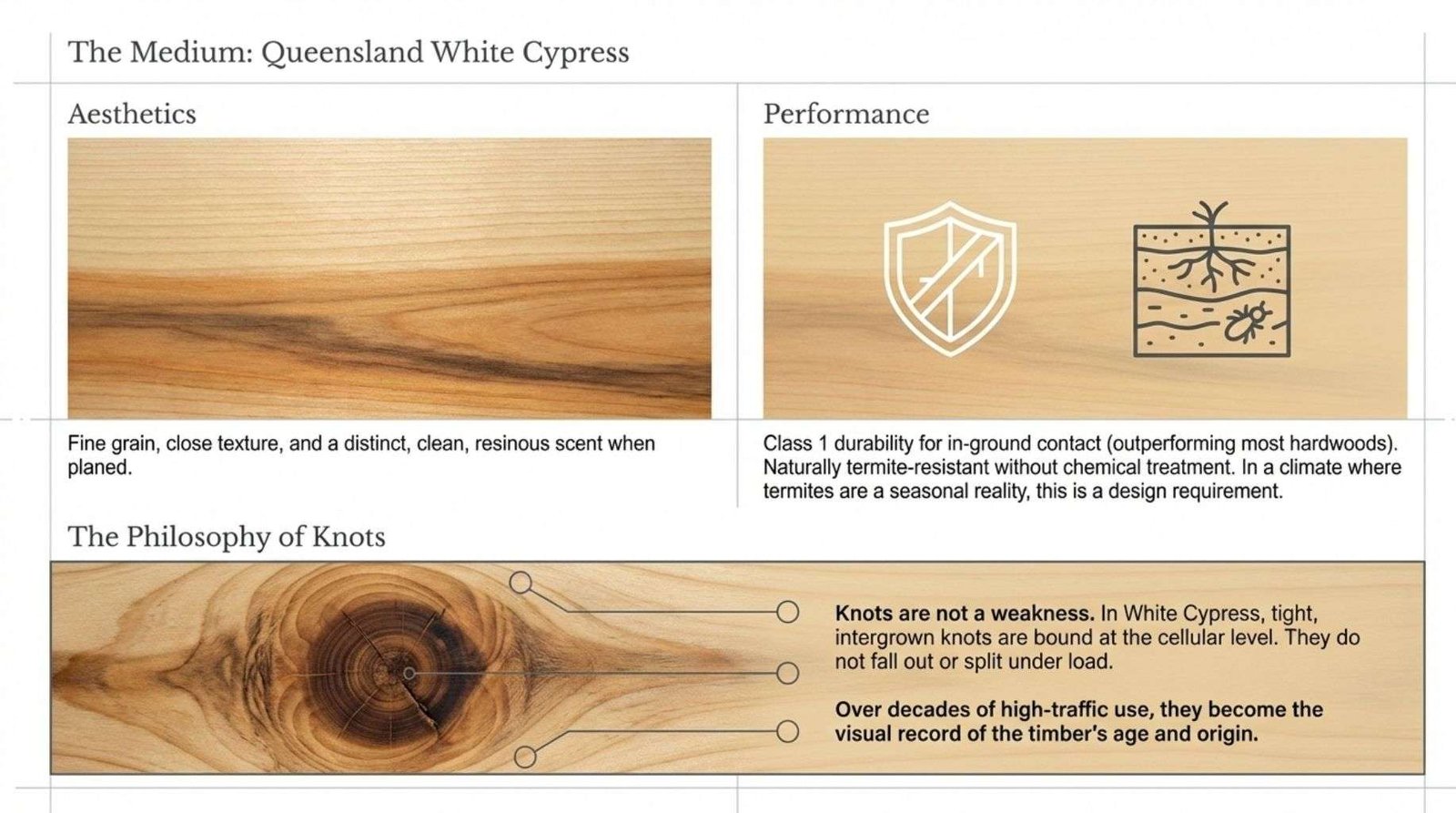
The heartwood runs from pale gold to warm amber, marked by dark knots that are structurally tight rather than decorative affectation. The grain is fine, the texture close, and when it comes off a handplane set to a thin shaving, it releases a clean, resinous scent that is completely its own.
The practical case for Cypress is compelling independent of its aesthetics.
It carries a Class 1 durability rating for in-ground contact, which means it outperforms most Australian hardwoods in direct soil exposure.
More critically for a sub-tropical build, it is naturally termite resistant without chemical treatment, though the structural framing in this estate uses treated stock as a deliberate doubling of that protection.
In a climate where termites are not an abstract risk but a seasonal reality, this is not a preference. It is a design requirement.
The counter-intuitive observation that surprises even experienced builders is this: Cypress actually benefits from knots.
Unlike pine species where knots signal weakness, the tight, intergrown knots in White Cypress are bound to the surrounding timber at the cellular level. They do not fall out. They do not split under load.
In high-traffic flooring applications, the knotty character that some buyers are initially reluctant about becomes, over decades of use, the visual record of the timber’s age and origin. The floor tells a story. That is worth paying for.
Elevation, Form and the Classical Queenslander Silhouette.
Before a single board is selected, the site conditions determine everything.
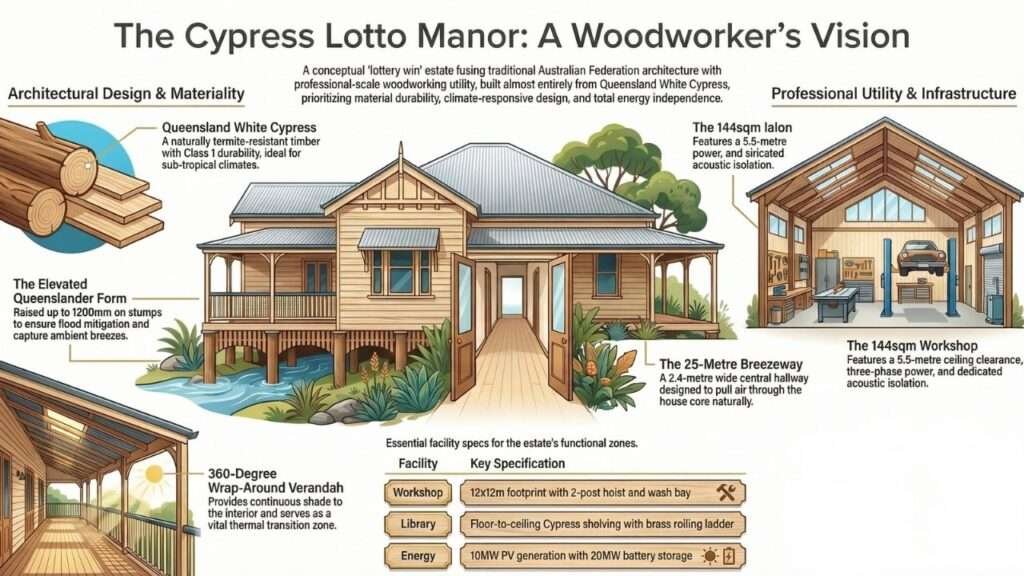
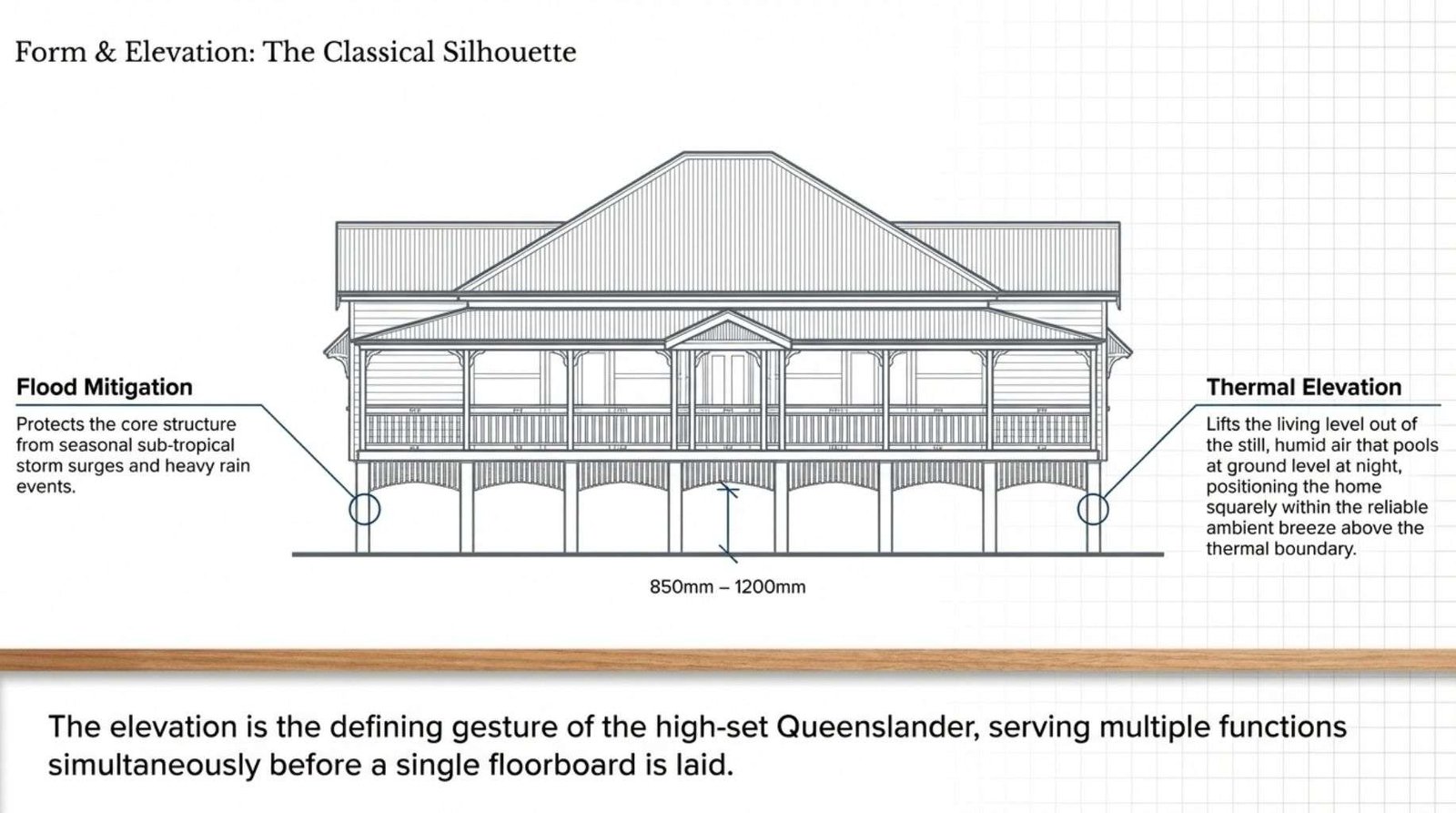
The Cypress Lotto Manor sits elevated, its ground floor platform raised on timber stumps between 850mm and 1200mm above natural ground level.
In my opinion, this is the defining gesture of the high-set Queenslander and it serves multiple functions simultaneously.
Flood mitigation is the most obvious benefit in a sub-tropical setting where storm surges and heavy rain events are seasonal.
However, elevation also delivers something less quantifiable: it places the living level above the still air that pools at ground level during humid nights and into the ambient breeze that moves reliably above that thermal boundary.
The roof is steeply pitched and fully hipped, clad in corrugated steel with a Shale Grey or Monument finish.
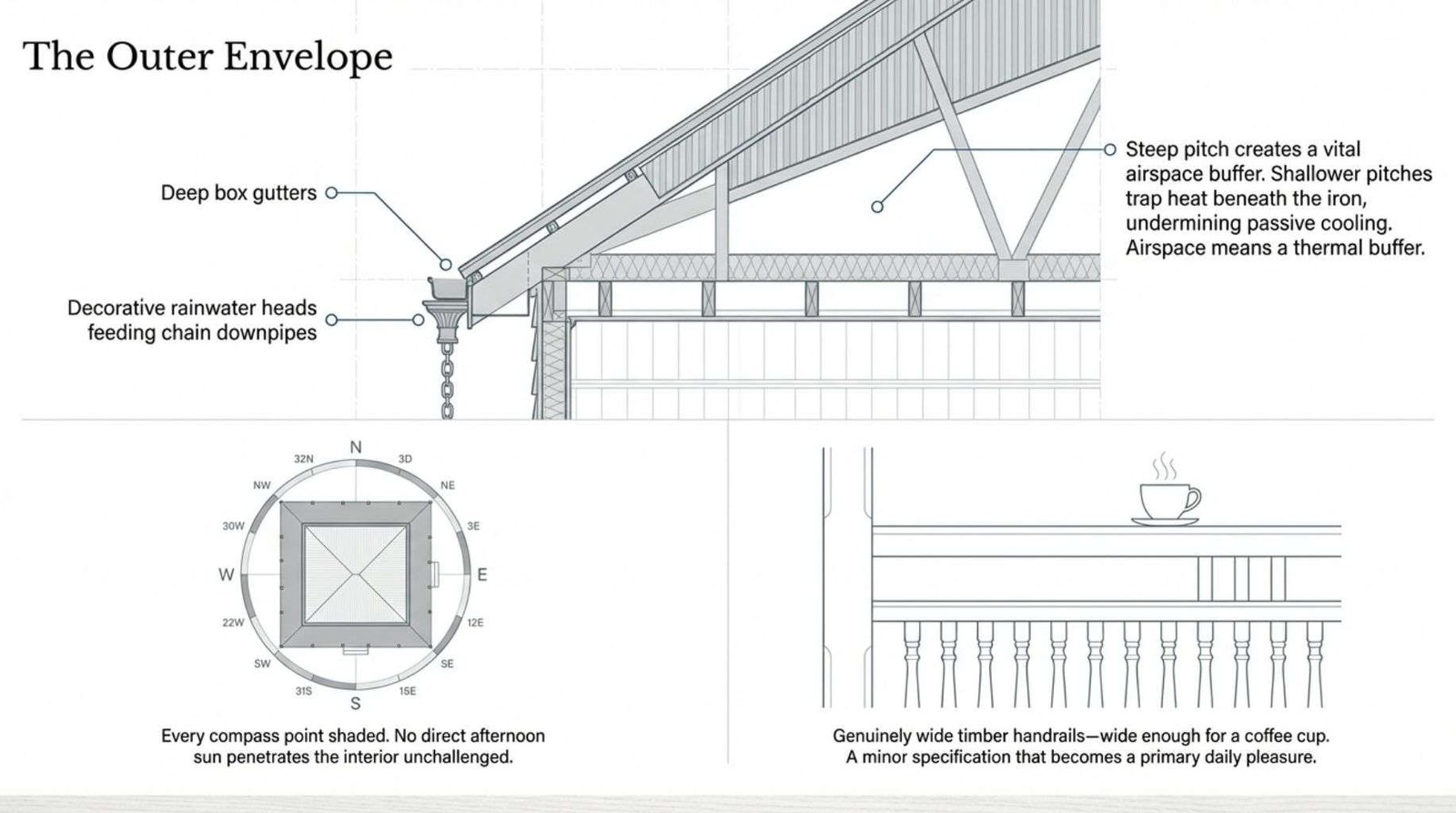
Deep box gutters channel water to decorative rainwater heads that feed chain downpipes, which are both functional and visually detailed in a way that flat spout gutters simply are not.
The roof pitch is not arbitrary. A shallower pitch in this climate traps heat beneath the iron and transfers it into the ceiling space, undermining every effort made by the passive ventilation strategy below.
To me, a steep pitch means airspace, and airspace means a buffer.
The 360-degree wrap-around verandah on the upper level is perhaps the most defining external element. Every compass point has shade.
There is nowhere on the perimeter of this house where direct afternoon sun can penetrate the interior unchallenged.
The balustrade uses either cast-iron lace panels in the Federation tradition or turned timber battens, both resting under a deep timber handrail that is genuinely wide: wide enough to rest a coffee cup on without risk of it tipping.
This is the kind of detail that sounds minor in a specification document and becomes, in daily life, one of the small pleasures of the house.
Floors, Ceilings and the Interior Material Language.
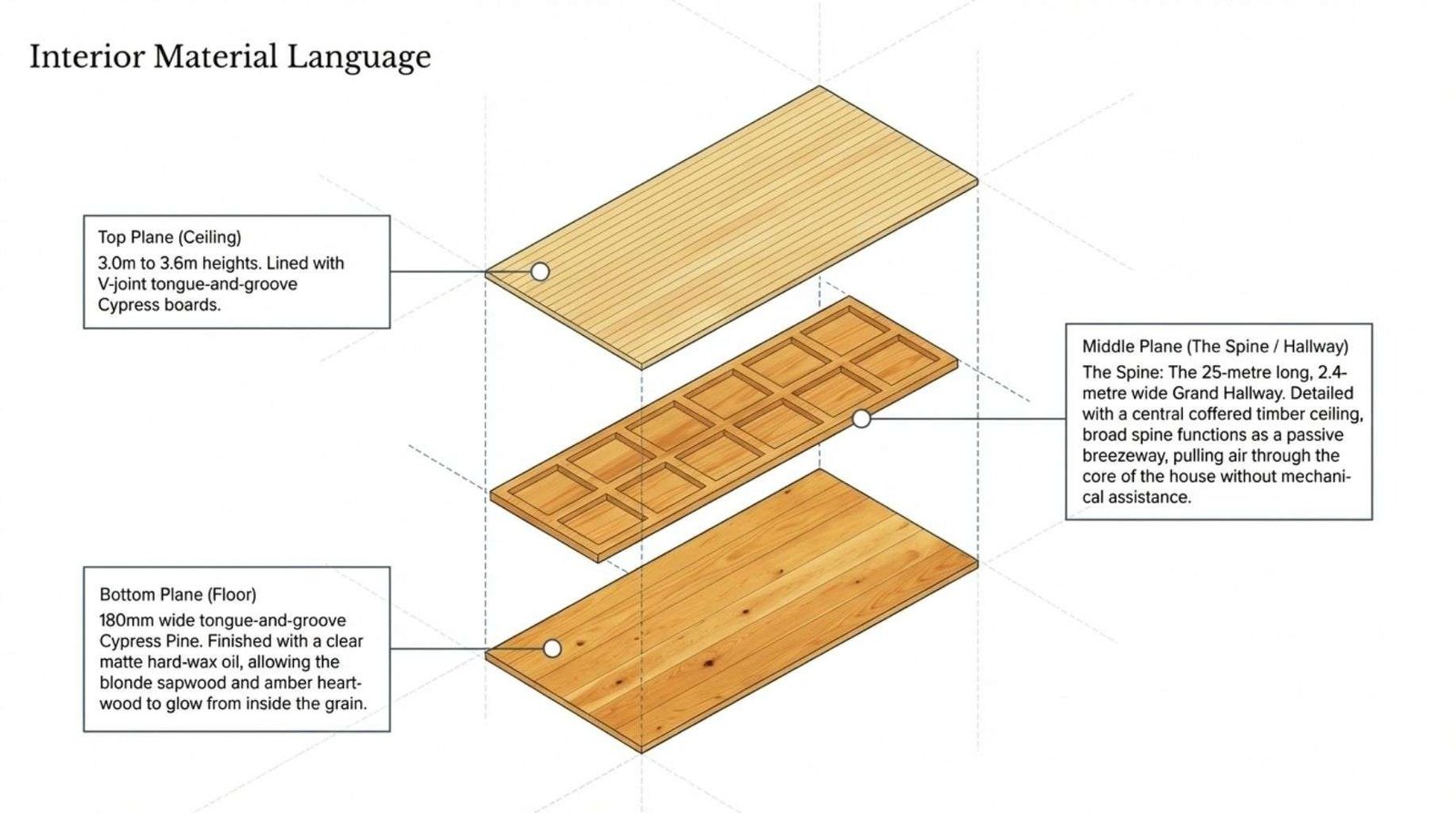
Step through the French doors and the timber speaks immediately. The flooring throughout the upper living level is 180mm wide tongue-and-groove Cypress Pine, finished with a hard-wax oil in clear matte.
The blonde hues of the sapwood and the warmer amber of the heartwood appear side by side across the boards, and the knots, sealed and stable, punctuate the surface with their dark rings.
In morning light entering through the eastern louvre banks, the floor takes on a quality that no engineered timber product can replicate: it glows from the inside of the grain rather than from a surface coating applied on top of it.
The ceilings run V-joint tongue-and-groove boards throughout the upper level, reaching between 3.0m and 3.6m in height depending on the room.
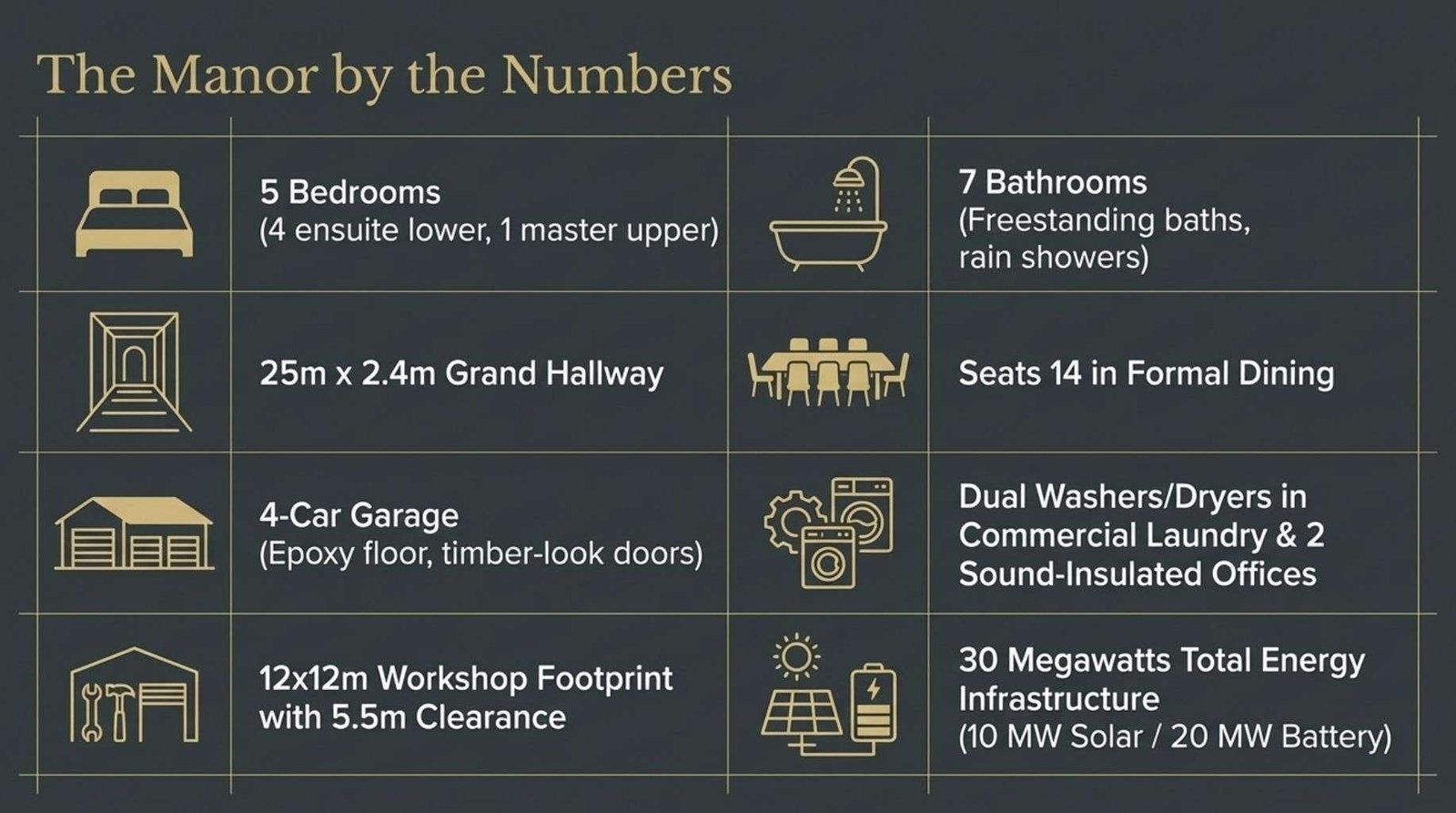
The hallway, which runs the full 25-metre length of the house at 2.4m wide, has a central coffered timber detail that adds visual weight without lowering the ceiling plane. A hallway this wide is unusual in residential construction, and that is the point. It breathes.
It functions as a breezeway when the French doors on both sides are opened, pulling air through the core of the house without the need for mechanical assistance.
The verandah ceilings are lined with the same V-joint Cypress, maintaining what Queenslander architecture has always understood: the verandah is not an external add-on but a room in its own right.
Furnished, used daily and protected from weather, it operates as a spatial and thermal transition between inside and outside. The ceiling treatment makes that intention legible from the moment you step onto the boards.
The Internal Program: Living, Working and Entertaining at Scale.
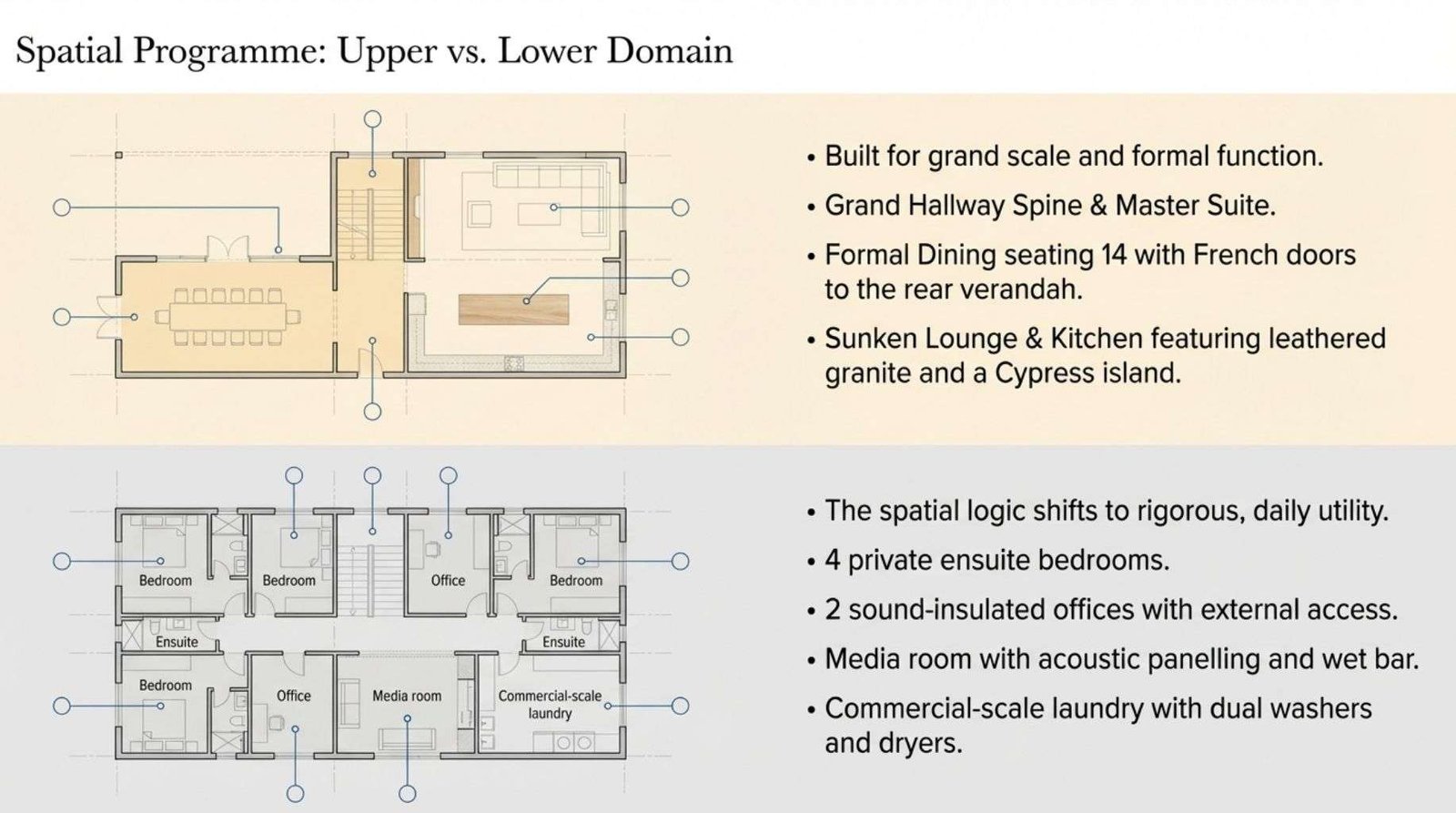
A house built with this level of ambition requires a spatial program that matches it. The upper level houses the formal and social functions of the estate: the grand hallway spine, the kitchen with its Cypress Pine island and leathered granite countertop, the formal dining room that seats fourteen with French doors opening to the rear verandah, and the sunken lounge adjacent to the library.
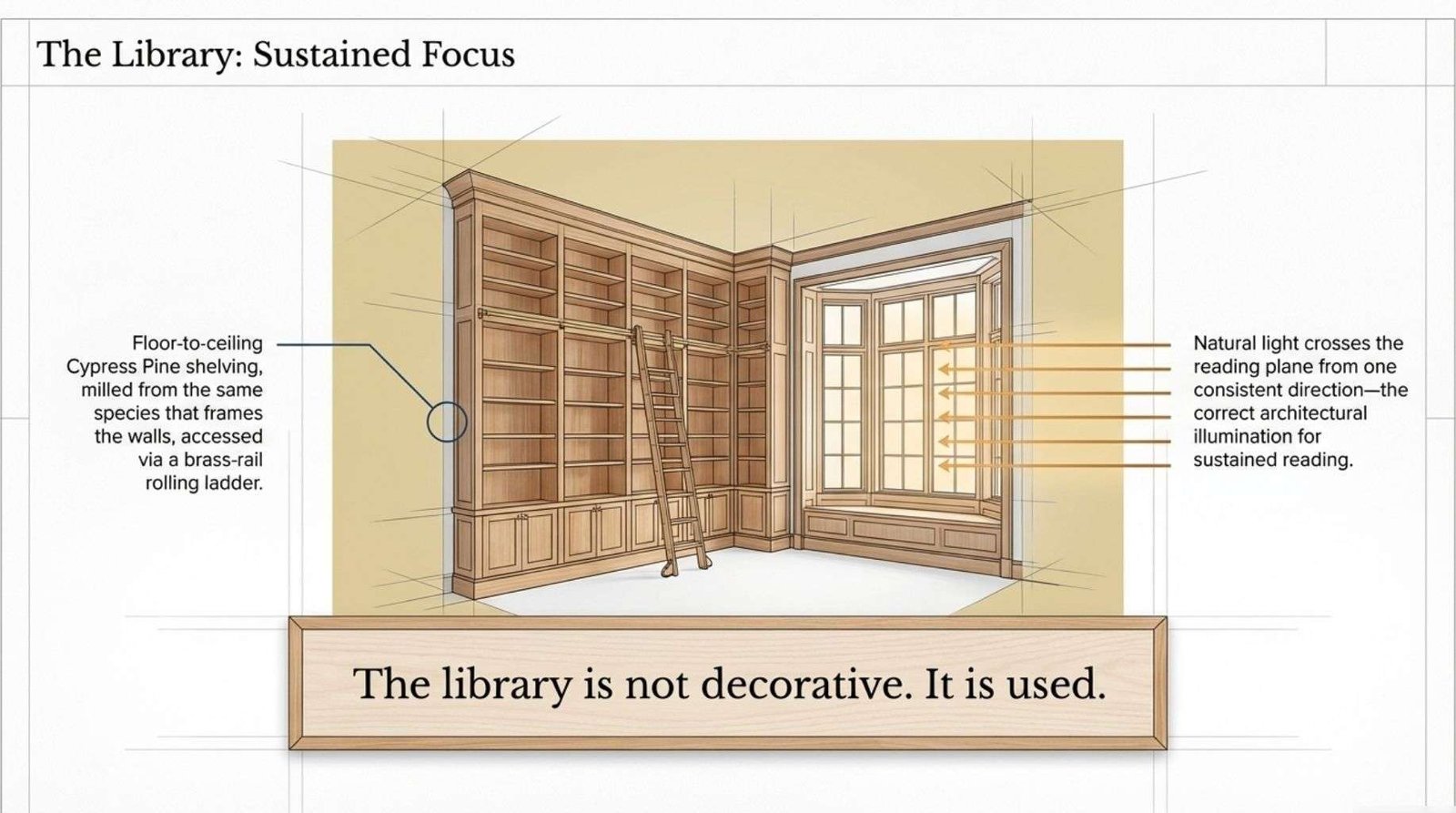
The library deserves particular attention. Located at the quiet end of the hallway, away from the kitchen and the main entertaining spaces, it is shelved floor-to-ceiling in Cypress Pine with a rolling library ladder on a brass rail.
A large bay window with a deep window seat brings natural light across the reading plane from one consistent direction, which is the correct way to illuminate a room intended for sustained reading.
The library is not decorative, it’s used.
Downstairs, the spatial logic shifts. The lower level operates as the family and utility domain: four bedrooms each with a private ensuite, two sound-insulated offices with independent external access, a commercial-scale laundry with dual machines, and a media room with acoustic panelling and a wet bar.
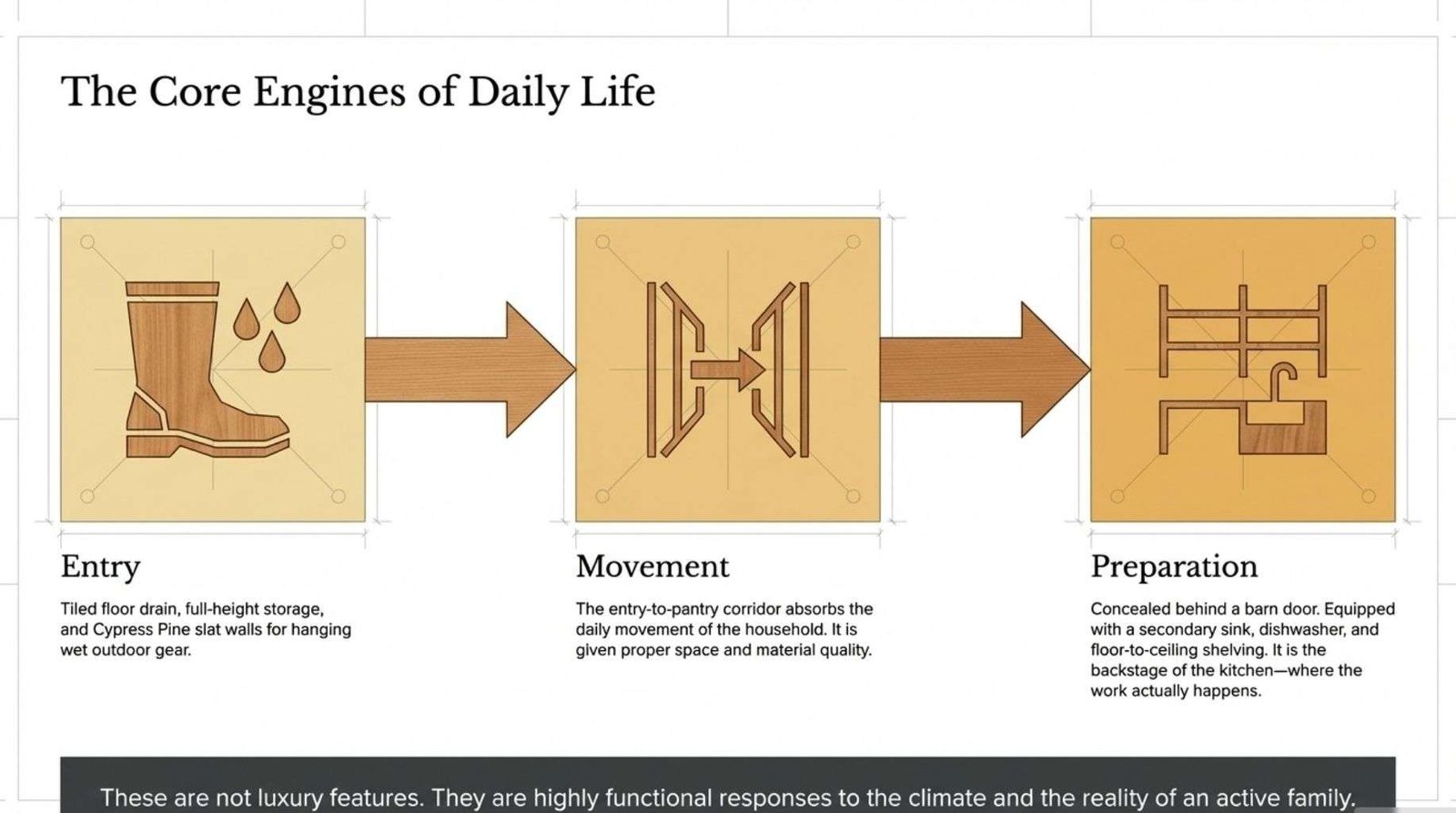
The mudroom at the main family entry is detailed with a floor drain, full-height shoe and coat storage, and Cypress Pine slat walls for hanging wet outdoor gear. These are not luxury features.
They are functional responses to the climate and the lifestyle of a family that uses the property.
There is a small, adjacent observation worth noting here: the most-used room in most Australian family homes is not the formal lounge or the master suite. It is the mudroom and the kitchen together, the entry-to-pantry corridor that absorbs the daily movement of the household.
The Cypress Lotto Manor gives this sequence proper space and material quality. The butler’s pantry behind the barn door has a secondary sink, a dishwasher and floor-to-ceiling shelving.
It is the backstage of the kitchen, and like all effective backstages, it is where the work actually happens.
The Workshop: A Room Built Around the Craft.
This is where the lottery windfall announces its purpose most directly.
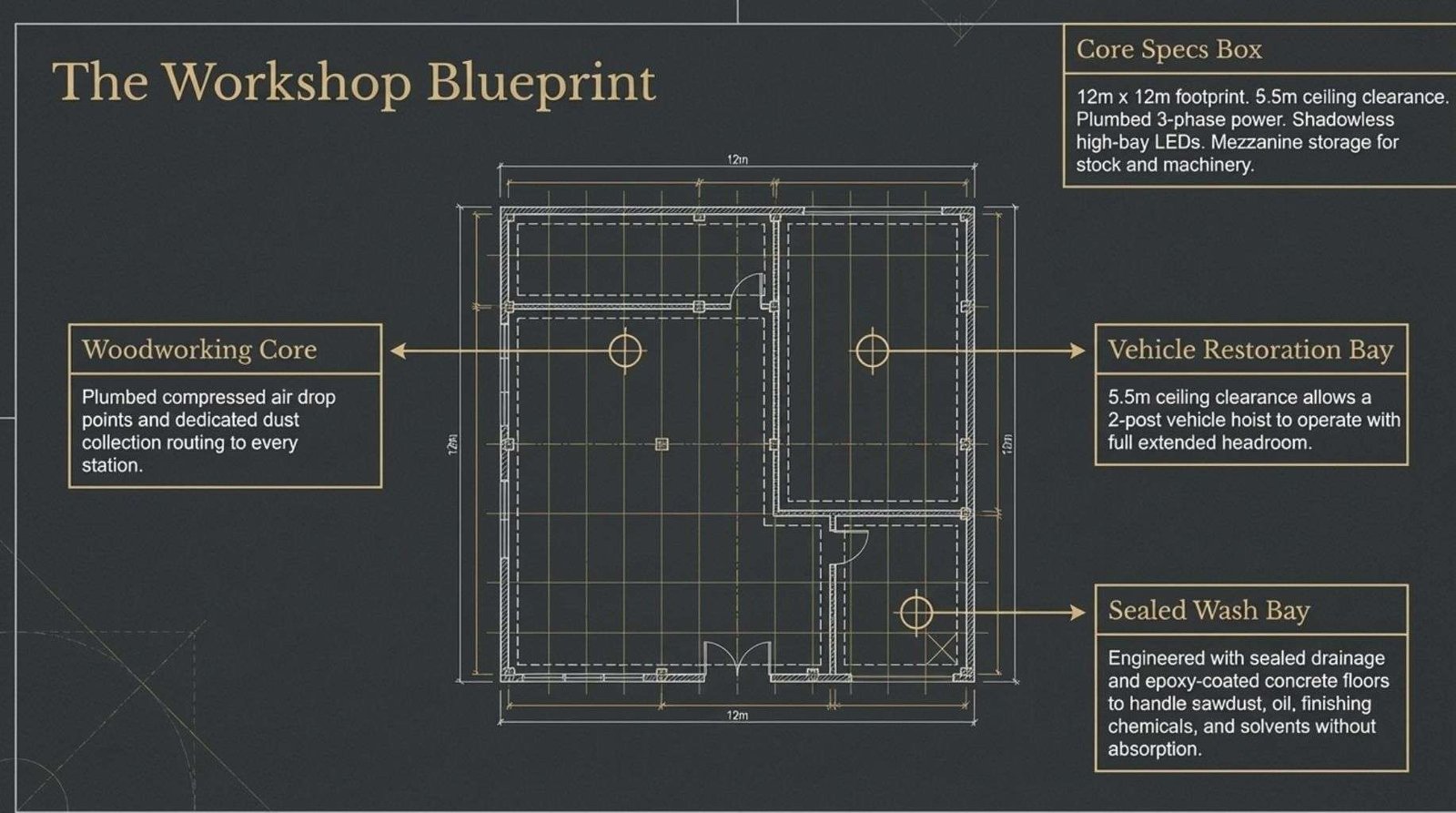
The workshop shed measures 12 metres by 12 metres with a ceiling clearance of 5.5 metres. Three-phase power is plumbed throughout. Compressed air lines run to multiple drop points across the floor.
High-bay LED lighting eliminates shadows at the bench level where precision matters. A mezzanine storage level keeps timber stock, hardware and machinery accessories organised and off the main floor.
The 5.5-metre clearance is not an accident. It allows for a two-post vehicle hoist in the vehicle restoration bay that occupies one end of the shed, with full headroom when the hoist is extended and a body is working at a lift point.
The wash bay at the far end has sealed drainage, appropriate for both vehicle cleaning and the removal of timber finishing chemicals from the floor.
The floor itself is epoxy-coated concrete, which handles the combination of sawdust, timber shavings, oil and solvents without absorbing them.
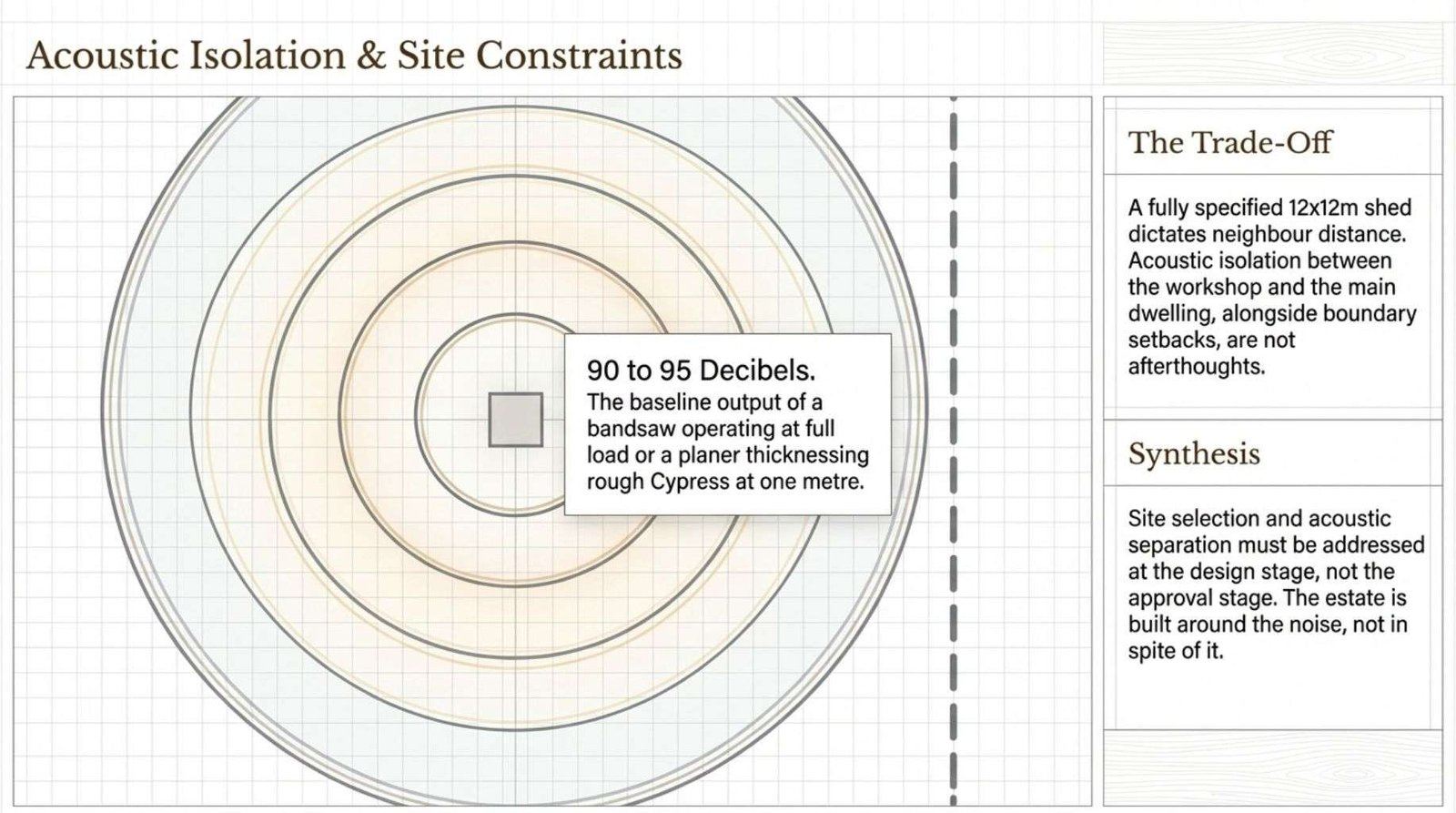
The trade-off in this building is specific and worth naming: a 12x12m shed with full specification fitout will produce noise at a level that determines neighbour distance. The acoustic isolation between the workshop and the main dwelling, and the setback from adjacent properties, are not afterthoughts in the site plan. They are primary constraints.
A band saw operating at full load, or a planer thicknessing rough Cypress to finished dimension, generates approximately 90 to 95 decibels at one metre.
Site selection and acoustic separation must be addressed at the design stage, not the approval stage.
Energy Independence and the Infrastructure Below the Surface.
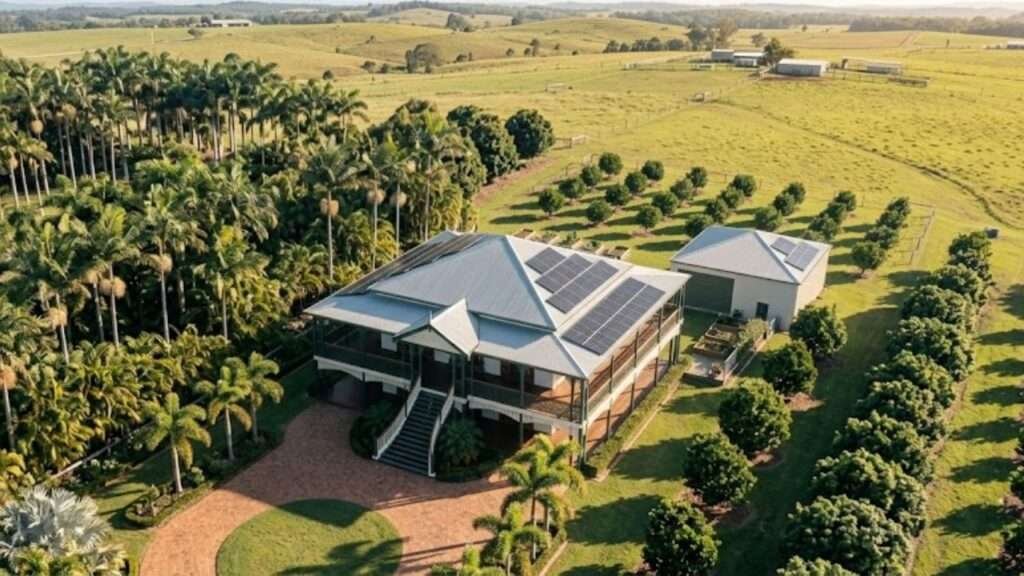
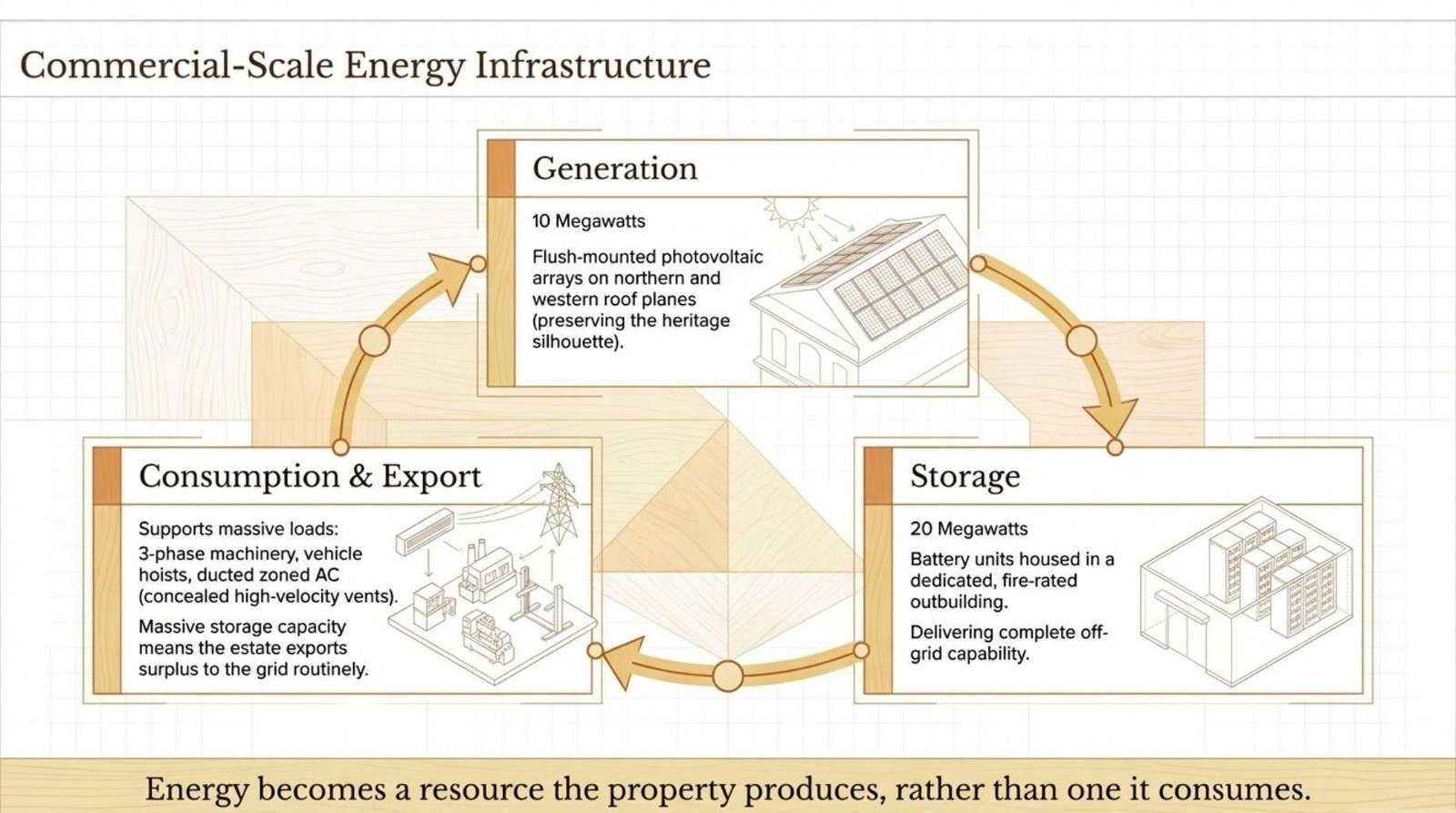
The solar array is specified at 10 megawatts of photovoltaic capacity across the northern and western roof planes.
The panels are engineered to sit flush with the corrugated steel profile, which matters aesthetically on a heritage-influenced form.
Beneath the main structure, two 10-megawatt battery storage units housed in a fire-rated outbuilding provide complete off-grid capability.
This is commercial-scale energy infrastructure applied to a private estate, and it changes the operating logic of the property entirely.
The workshop loads alone justify serious storage capacity. Three-phase machinery, a vehicle hoist, climate control for the main dwelling, and a pool system if one is added later represent a combined load that, on a standard residential connection, would require careful scheduling.
With 20 megawatts of battery storage and a 10-megawatt generation capacity, the estate exports surplus to the grid as a matter of routine. Energy becomes a resource the property produces rather than one it consumes.
Ducted, zoned air conditioning handles the climate-controlled spaces, with high-velocity vents concealed in bulkheads to preserve the ceiling plane.
Period-style ceiling fans supplement mechanical ventilation in every room.
The passive design strategy, elevation, deep verandahs, cross-ventilation through the hallway, high ceilings and louvre banks, reduces the mechanical load significantly. The fans run.
The air conditioning is rarely at full capacity and that’s the correct result.
Landscape, Gardens and the Estate’s Outer Domain.
Room or Space | Quantity | Key Specifications |
Bedrooms | 5 | 4 lower with ensuites, 1 upper master suite |
Bathrooms | 7 | Stone benchtops, freestanding baths, rain showers |
Lounge Room | 1 | Sunken two steps, gas fireplace, heritage architraves |
Entertainment Room | 1 | Acoustic panelling, wet bar, blackout blinds |
Kids Play Room | 1 | Durable flooring, direct yard access |
Dining Room | 1 | Formal, seats 14, French door verandah access |
Library | 1 | Rolling ladder, built-in Cypress shelves, bay window |
Offices | 2 | Sound-insulated walls, separate external entry |
Laundry | 1 | Dual washers, dual dryers, folding bench, deep sink |
Walk-in Pantry | 1 | Butler’s style, secondary sink and appliances |
Kitchen | 1 | Cypress island, leathered granite, induction, pot-filler |
Mudroom | 1 | Tiled drain floor, Cypress slat walls, full storage |
Grand Hallway | 1 | 2.4m wide, 25m long, coffered ceiling detail |
Garage | 4 cars | Epoxy concrete floor, automatic timber-look doors |
Workshop | 1 | 12x12m, 3-phase, mezzanine, 2-post lift, wash bay |
Solar and Battery | 1 system | 10 MW photovoltaic, 20 MW battery storage |
The grounds are organised as a series of distinct outdoor rooms that extend the formal logic of the interior.
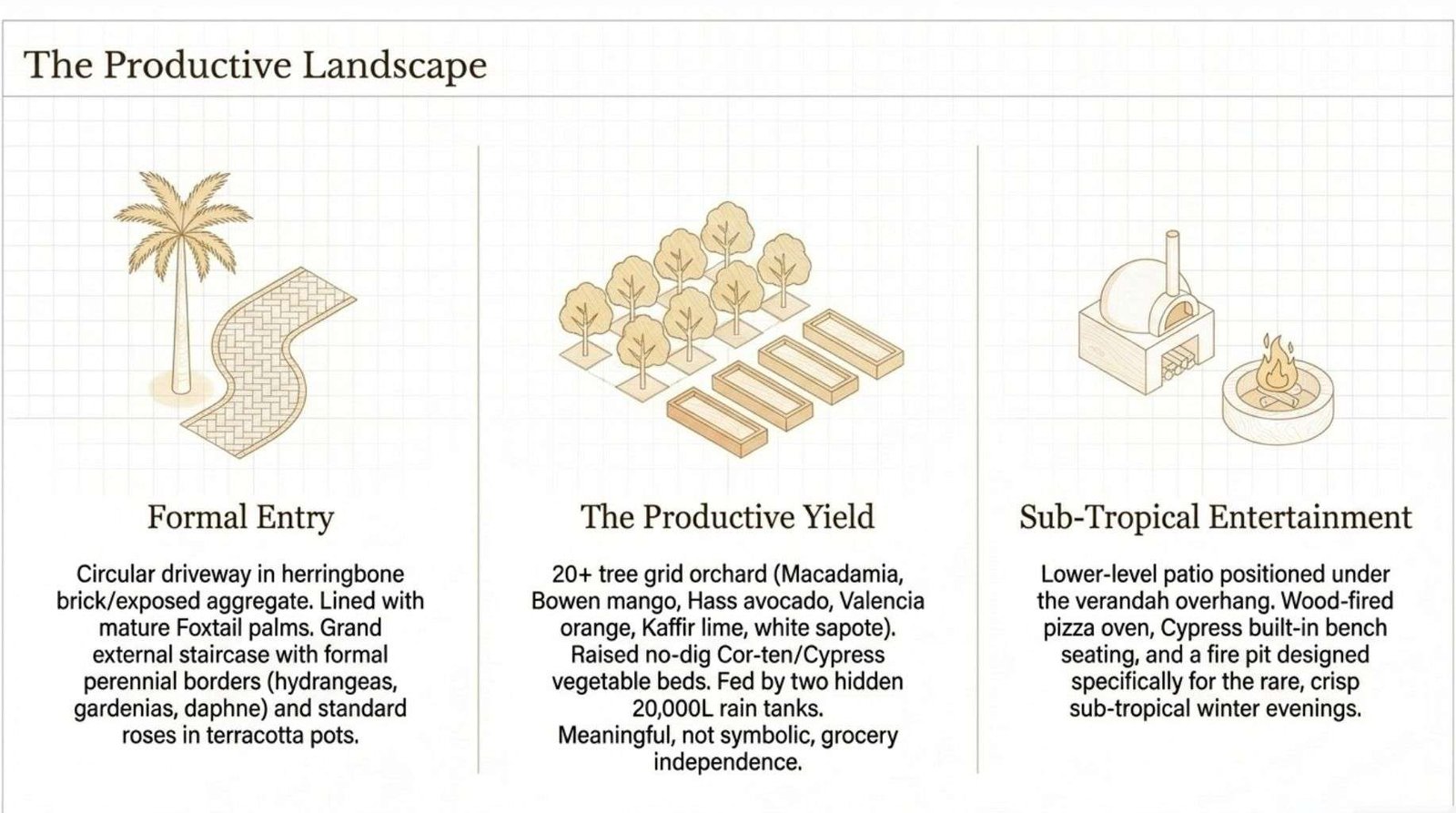
The entry arrives via a circular driveway lined with mature Alexander or Foxtail palms, in herringbone brick or exposed aggregate concrete, leading to the grand external staircase. The front garden features formal perennial borders of hydrangeas, gardenias and daphne along the verandah line, with standard roses in terracotta pots ascending the stair.
At the rear, raised no-dig vegetable beds in either Cor-ten steel or Cypress Pine sleepers sit on automated drip irrigation fed from two 20,000-litre rainwater tanks screened from view.
The orchard is grid-planted with more than twenty trees including Macadamia, Bowen mango, Hass avocado, Valencia orange, Kaffir lime and white sapote. These are not ornamental plantings.
They produce. In a full-production year, the orchard supplies the kitchen with fruit across multiple seasons, and the vegetable garden reduces the household’s grocery dependence in a way that is meaningful rather than symbolic.
The entertainment patio sits under the upper-level verandah overhang, accessible from the lower level, with a wood-fired pizza oven, a fire pit and built-in bench seating in Cypress Pine.
The fire pit operates on a winter evening when the temperature drops enough to want something radiating heat at seated level.
In subtropical Australia, that evening comes less often than expected, but when it does, the patio is ready for it.
What the Manor Represents Beyond Its Specification Sheet.
Every woodworker who has spent years in a small shed, improvising around the limitations of a suburban block, understands at some level what a properly resourced workspace would mean.
Not a fantasy shop fitted with every machine available, but a space where the material can move freely, where stock can be stored flat and stable, where the bench is at the right height under the right light and the dust collection runs to every station without compromise.
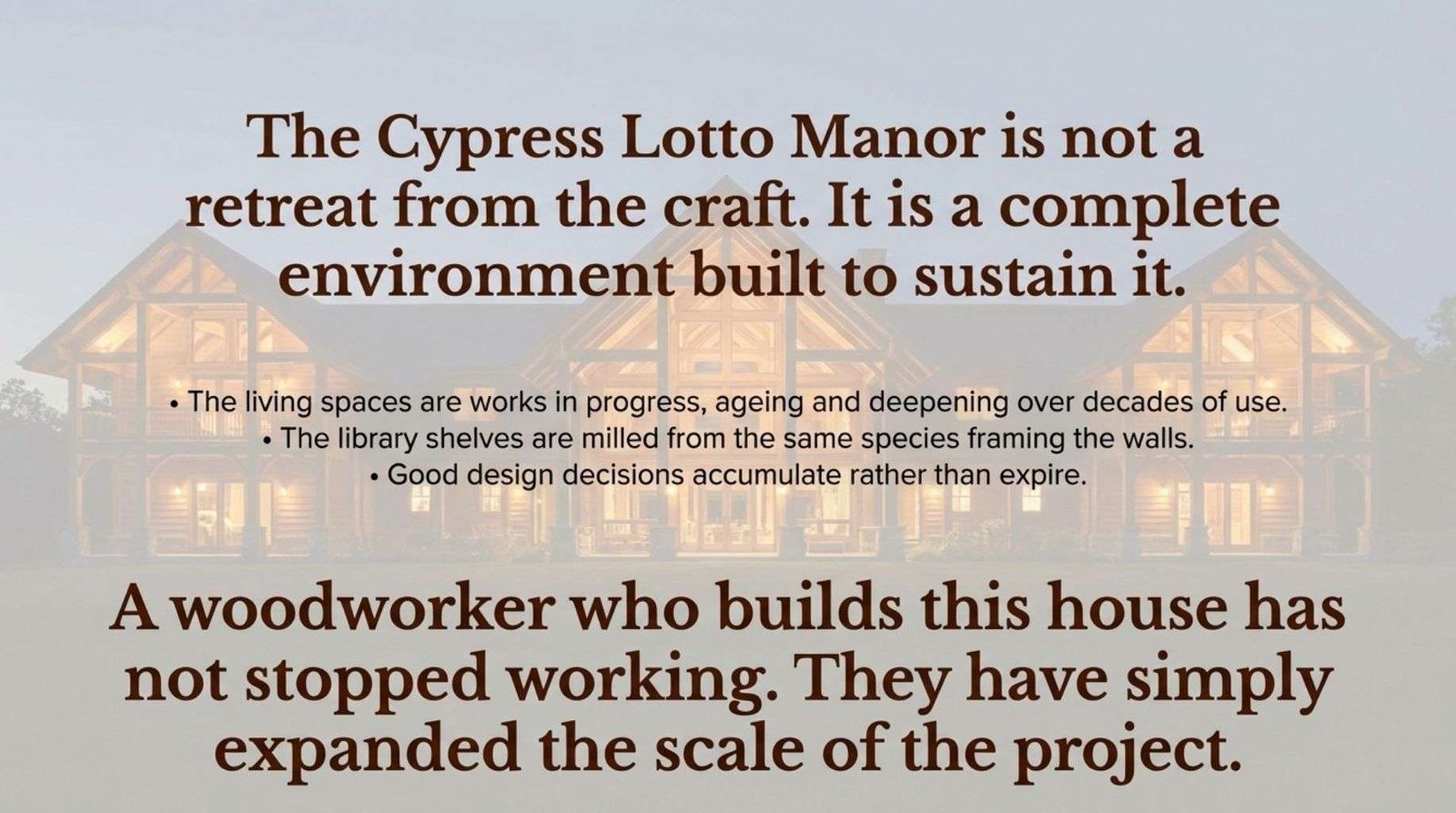
The Cypress Lotto Manor is not a retreat from the craft. It is a complete environment built to sustain it.
The workshop is adjacent to the house but acoustically separated. The timber floors and VJ ceilings of the living spaces are works in progress in their own right, ageing and deepening over decades of use.
The orchard provides material for turned fruit bowls. The Cypress Pine shelving in the library was milled from the same species that frames the walls.
The entire estate is coherent in a way that a house assembled from unrelated materials never quite achieves.
The Federation Queenslander form is historically grounded in practical adaptation to climate. High ceilings, elevated floors, deep verandahs and cross-ventilation are not stylistic choices imported from a design magazine.
They are solutions developed over generations in a specific environment, refined until they worked. Building in this tradition with modern infrastructure and a single-species timber palette is not nostalgia.
It is a recognition that good design decisions accumulate rather than expire.
A woodworker who builds this house has not stopped working. They have simply expanded the scale of the project.






[…] Cypress Lotto Manor I wrote about in an article titled ‘Funding The Great Australian Housing Scheme’ was a concept that captured that […]