Build The Type Of Homes We Will Love And Cherish
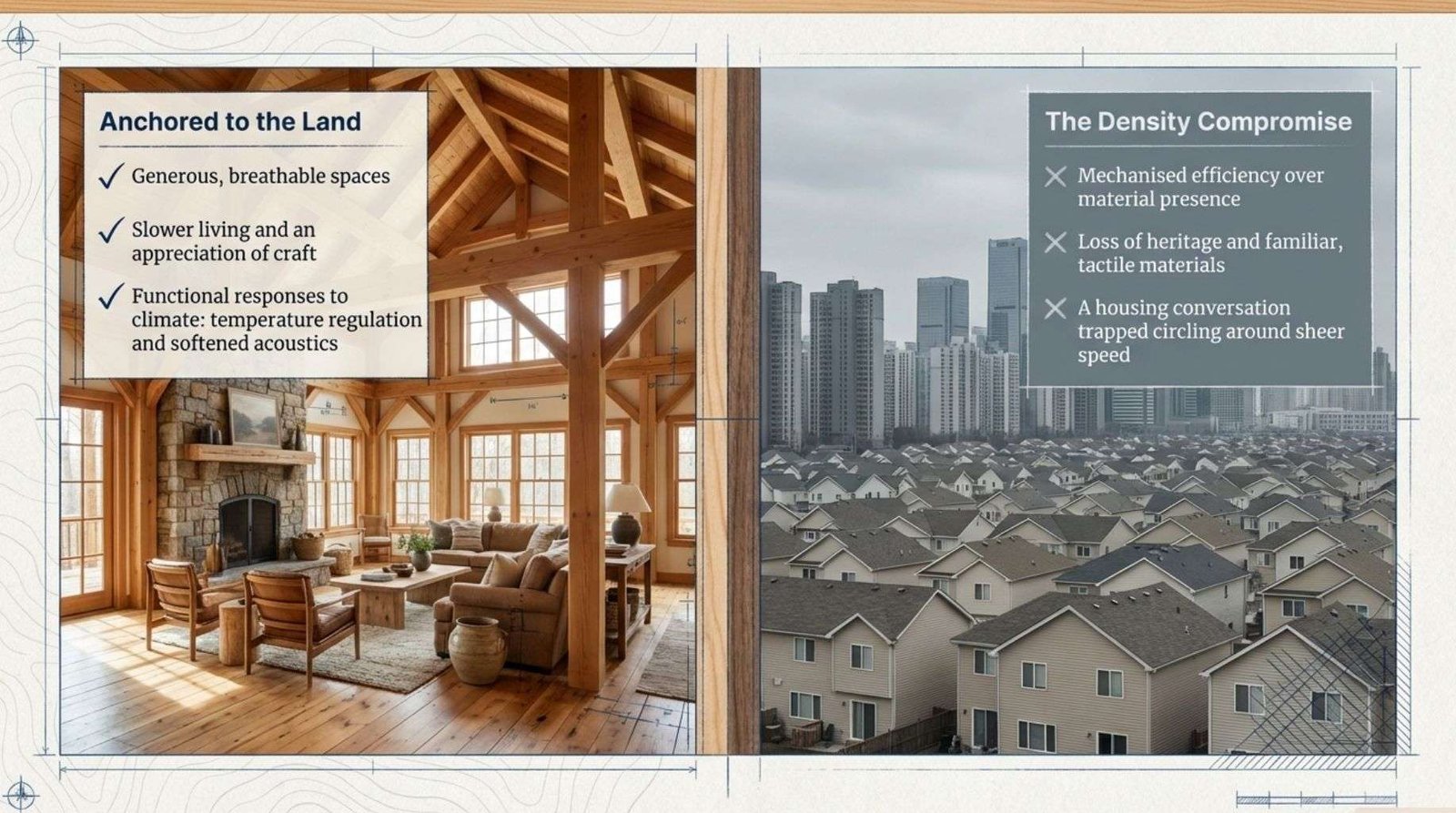
Australia’s housing conversation often circles around density, efficiency and the speed at which new dwellings can be delivered.
Yet there is a quieter current running beneath it. Many people want homes that feel anchored to the land, shaped by timber, light and space and also with plenty of room for the kids and extended family gatherings.
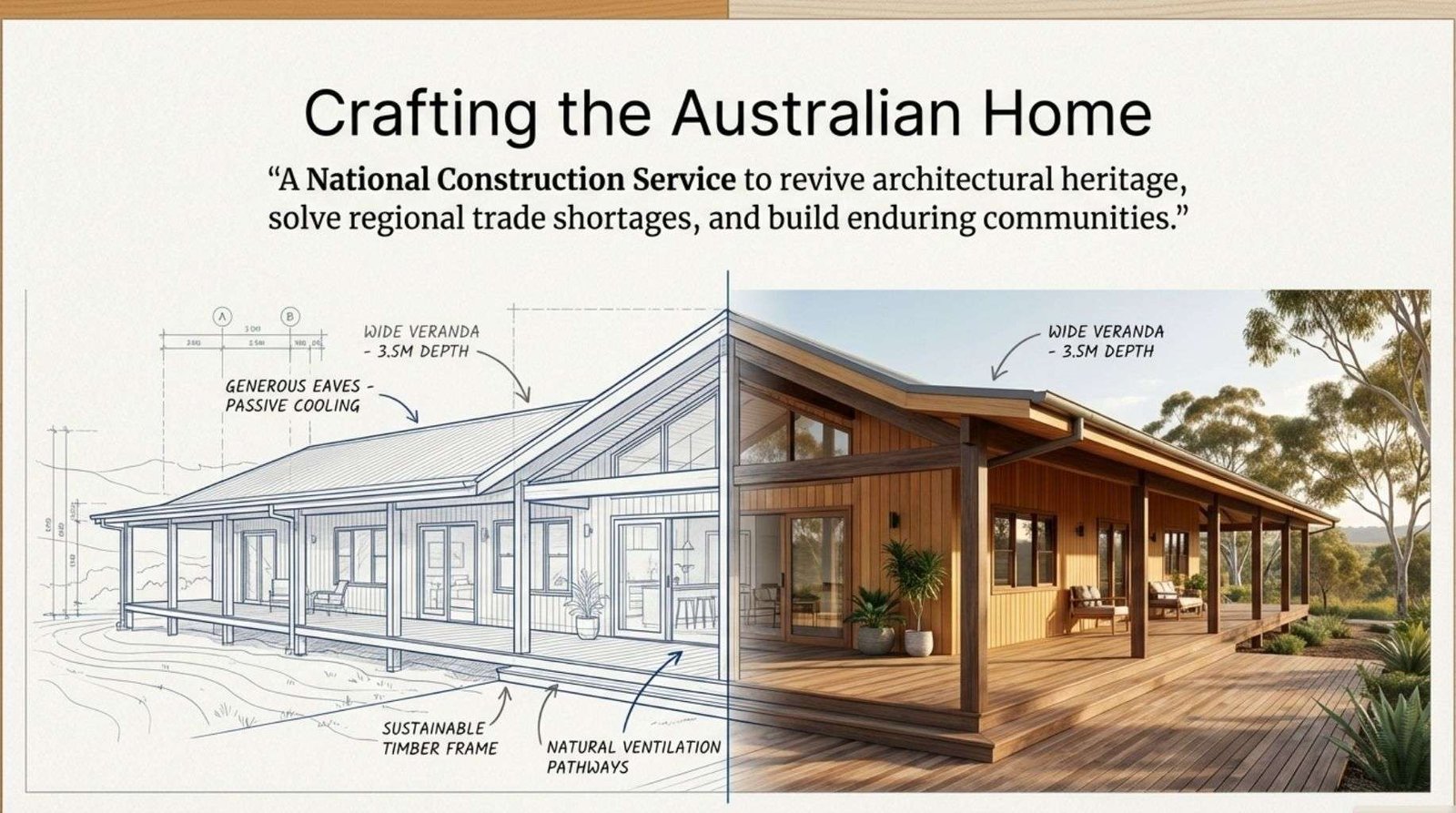
The Cypress Lotto Manor I wrote about in an article titled ‘Funding The Great Australian Housing Scheme’ was a concept that captured that desire.
It is not a blueprint for mass replication, it’s just a reminder that Australian housing can be generous, breathable and connected to heritage.
The problem with such estates is that they absorb a lot more tradies than over styles of mass produced ‘vanilla’ housing does.
So if we want a country full of majestic housing, how do we get enough tradies? Would establishing a national building and construction service’ help Australia build more homes in that spirit?
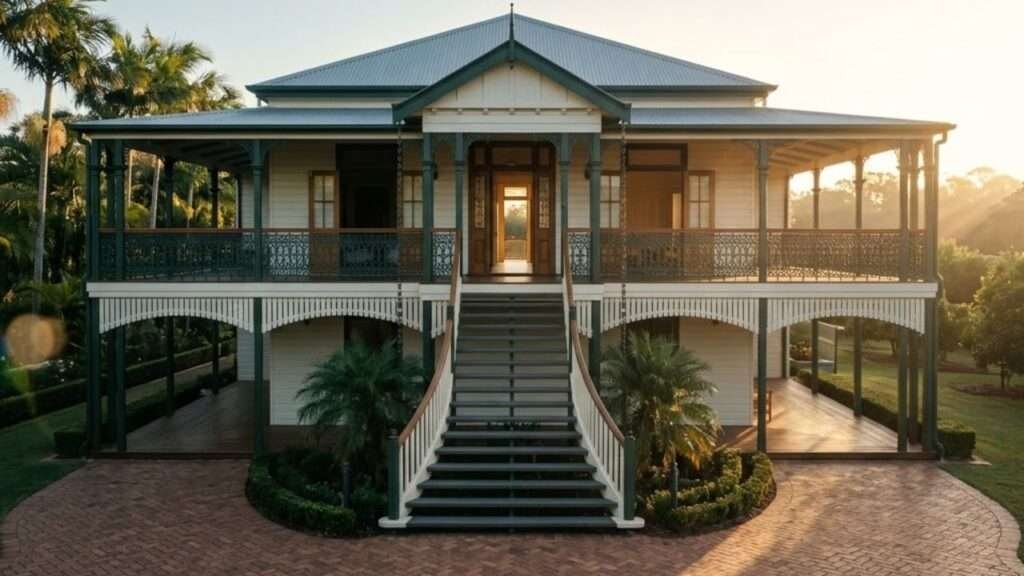
The Appeal of Timber Rich Living.
The Cypress Lotto Manor idea resonates because it draws from materials that feel familiar under the hand. Cypress has a scent that lingers in a workshop and a grain that shifts subtly as the light moves across it.
Homes built with this kind of material presence create a different relationship between people and place.
They encourage slower living and a deeper appreciation of craft. Many woodworkers recognise this instinctively. A home shaped by timber feels more like an extension of the workshop than a separate domain.
This appeal is not nostalgic. It is practical. Timber interiors regulate temperature well and soften acoustics.
Wide verandas and generous eaves create shade patterns that shift through the day. These qualities are not luxuries.
They are functional responses to climate and lifestyle. The Cypress Lotto Manor concept simply brings them together in a coherent form.
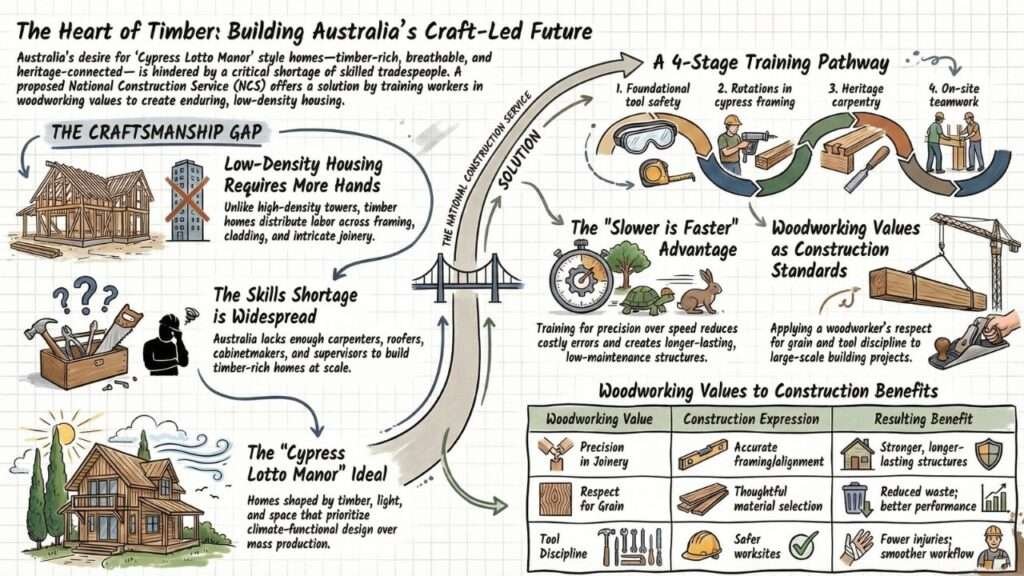
Why Low Density Requires More Hands.
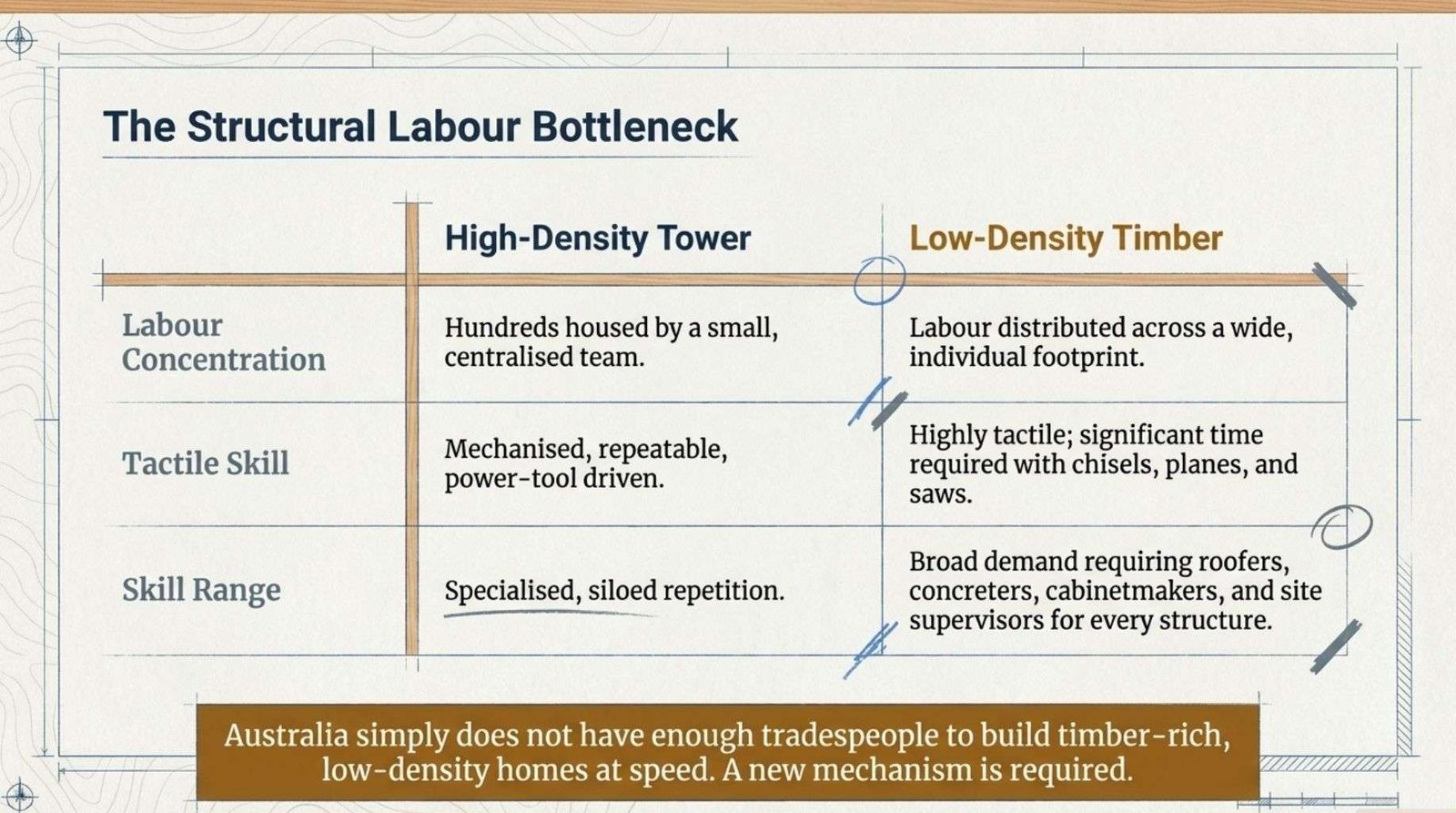
High density construction concentrates labour. A single tower can house hundreds of people with a relatively small team of trades.
Low density timber homes distribute that labour across a much wider footprint. Every structure needs its own framing, cladding, joinery and finishing.
The work is more tactile. It involves more time with chisels, planes and saws. It also demands a broader range of skills.
This is where the challenge emerges. Australia does not have enough tradespeople to build large numbers of timber rich homes at speed.
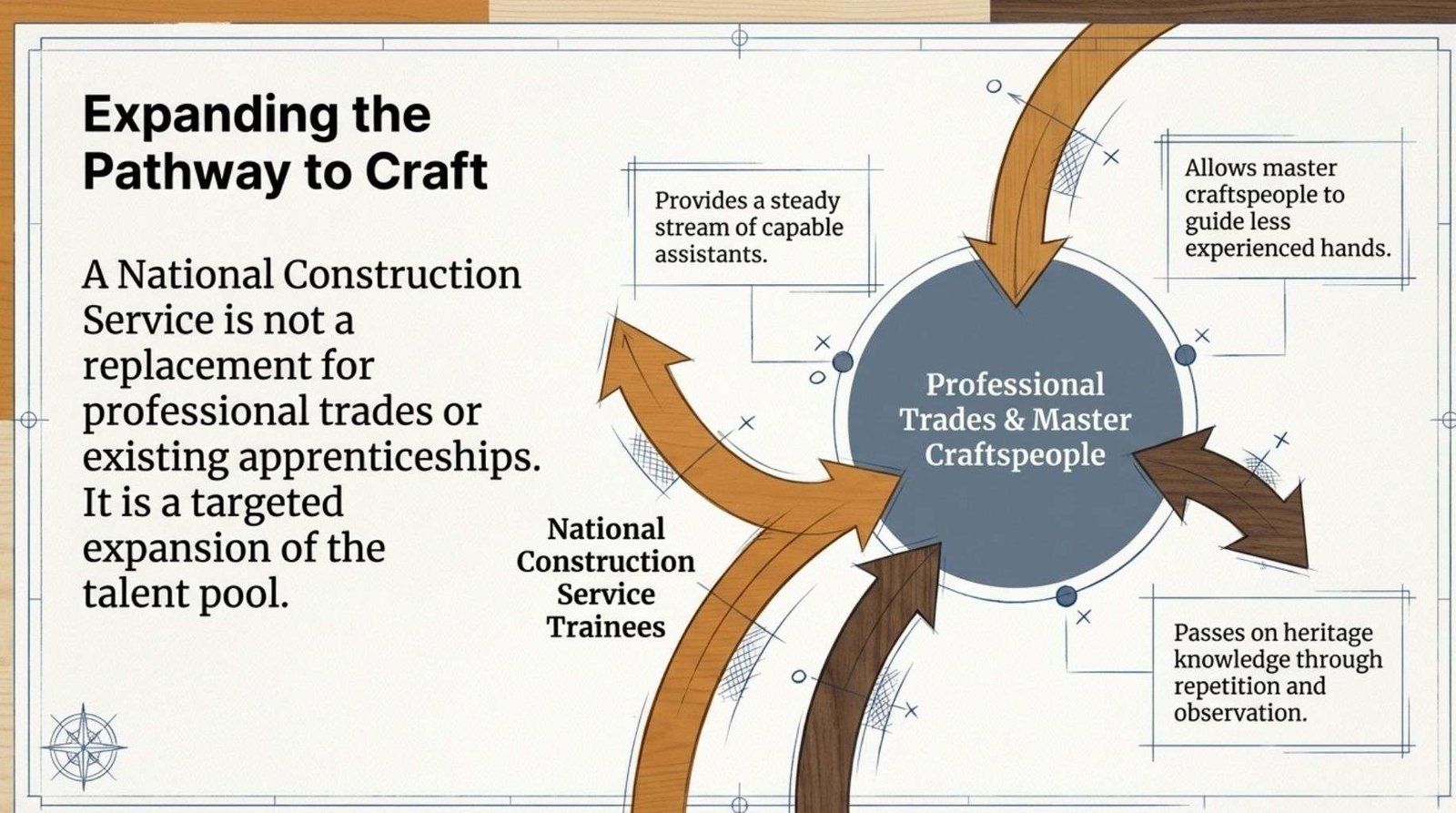
The shortage is not limited to carpenters. It includes roofers, concreters, cabinetmakers and site supervisors. A national construction service could address this gap by creating a structured pathway into the trades. The idea is not to replace existing apprenticeships. It is to expand the pool of people who can contribute to building homes that reflect Australian values.
A small aside is worth noting. Many older tradespeople comment that young workers often learn faster when they start with hand tools before moving to power tools. The tactile feedback of a sharp plane on cypress teaches lessons that no classroom can replicate.

What a National Construction Service Could Look Like.
A national construction service would need to be more than a labour pool. It would require training, structure and a clear sense of purpose.
The focus would be on practical skills that support timber based construction. Participants could rotate through framing, joinery, finishing and site preparation. The aim would be to build competence rather than speed.
A possible structure might include:
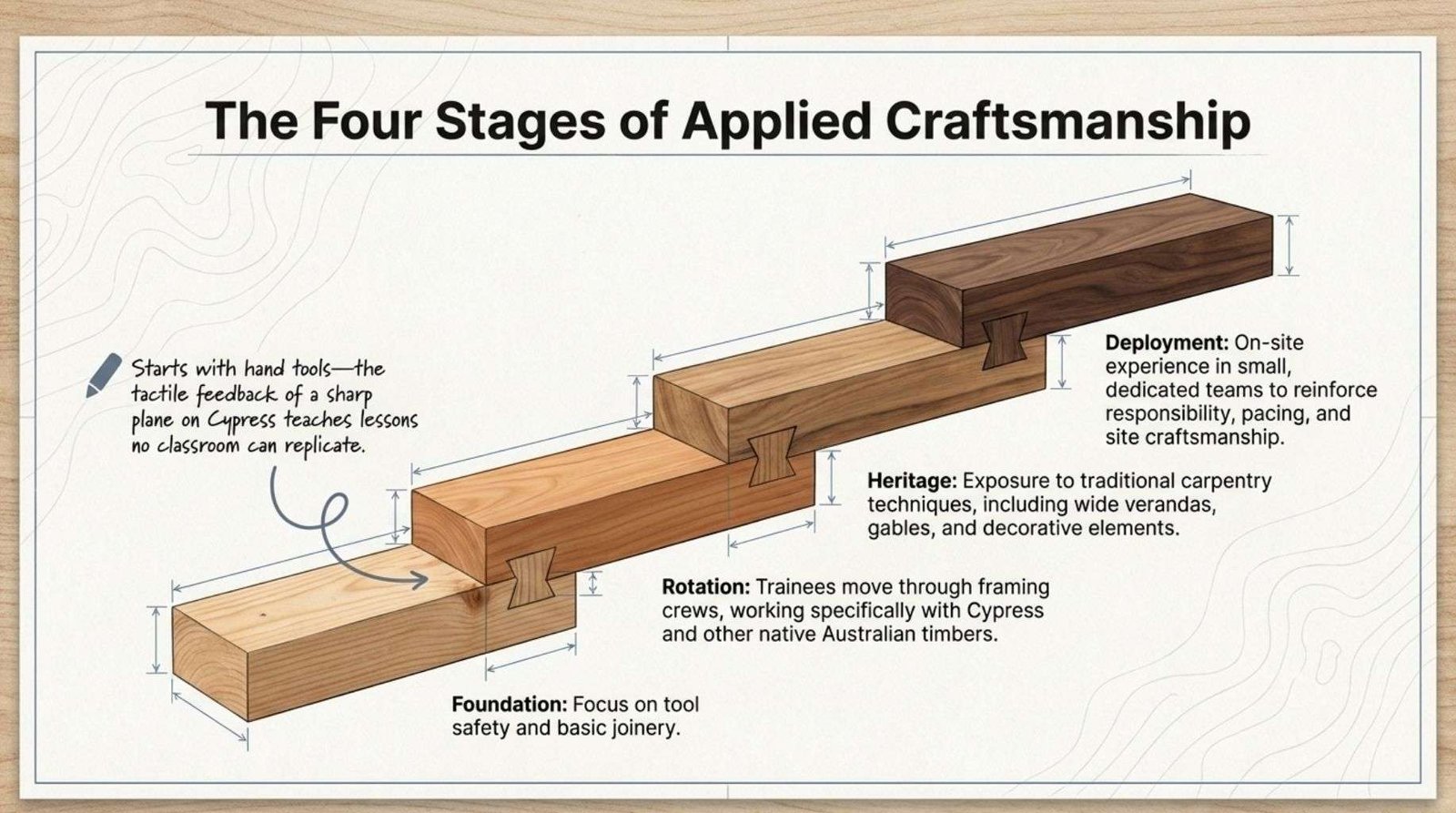
1. A foundational training period focused on tool safety and basic joinery.
2. Rotations through framing crews working with cypress and other Australian timbers.
3. Exposure to heritage carpentry techniques used in verandas, gables and decorative elements.
4. On site experience in small teams to reinforce responsibility and craftsmanship.
The service would not replace professional trades. It would support them by providing a steady stream of capable assistants who can grow into skilled workers. This approach mirrors the way many workshops operate.
A master craftsperson guides less experienced hands, passing on knowledge through repetition and observation.
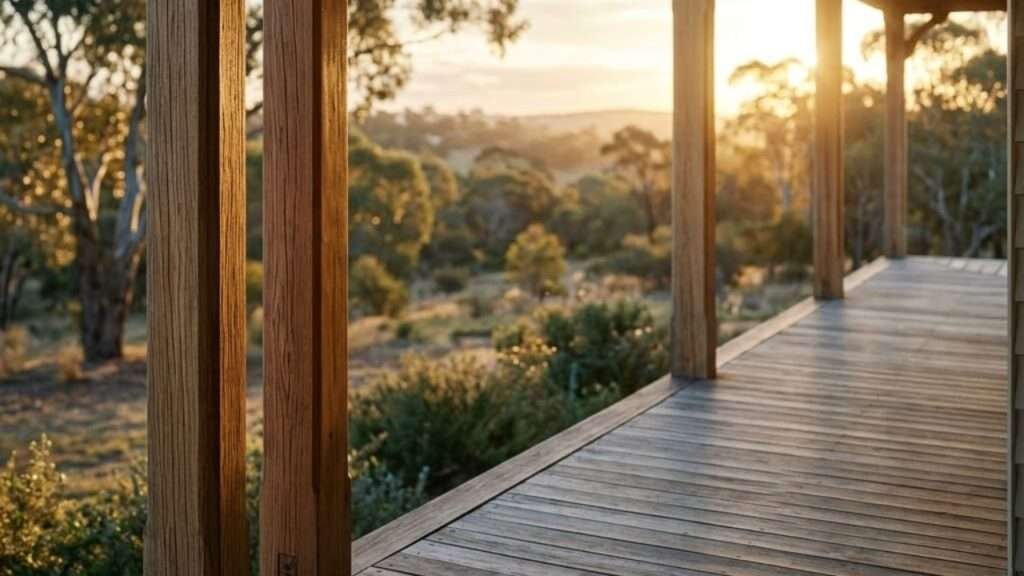
The Counter Intuitive Advantage of Slower Building.
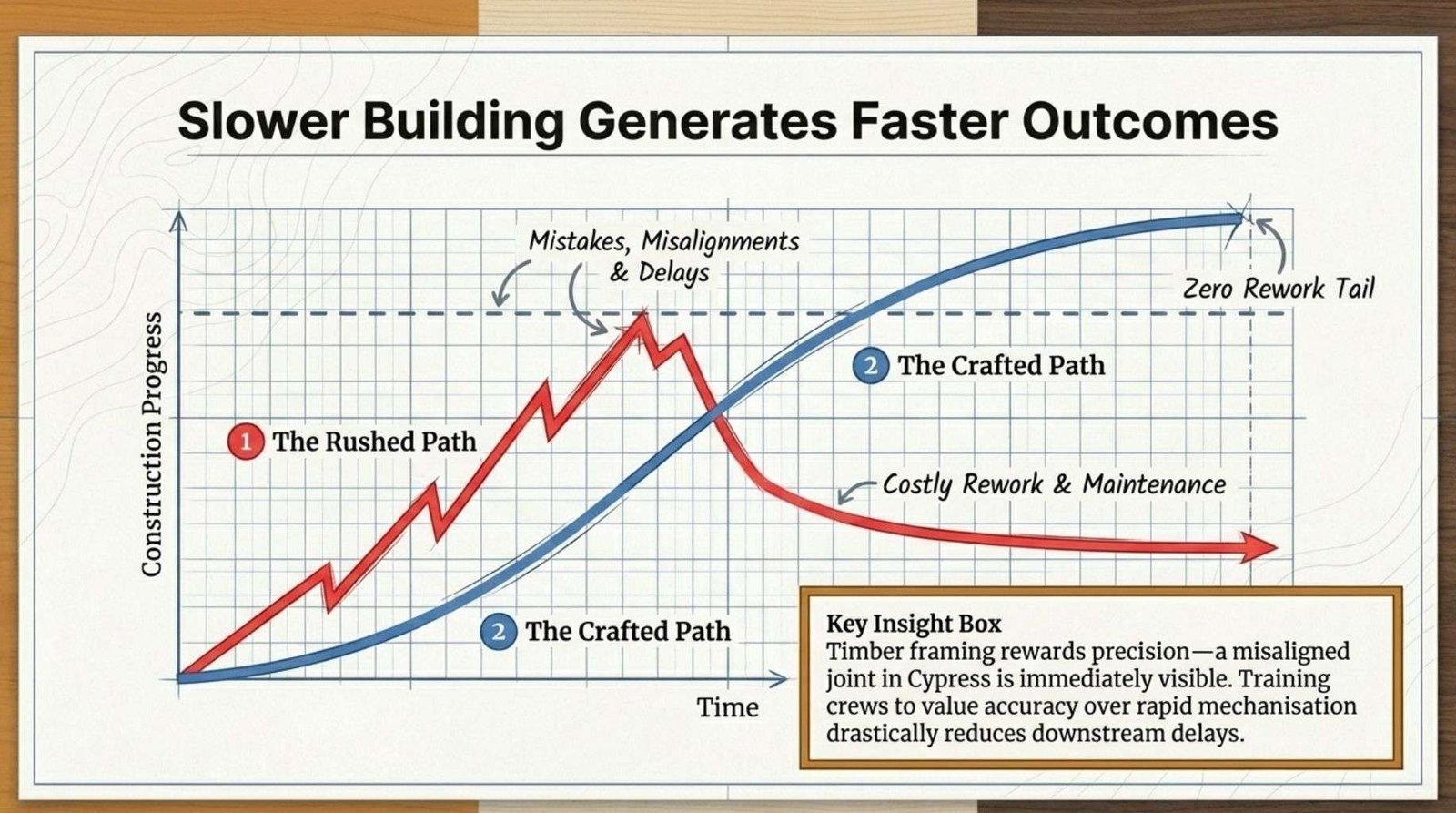
One surprising insight emerges when considering a national construction service. Slower building can sometimes lead to faster outcomes.
When crews are trained to work methodically with timber, mistakes decrease. Fewer mistakes mean fewer delays.
Timber framing rewards precision. A misaligned joint in cypress is immediately visible. Training people to value accuracy over speed can produce homes that last longer and require less maintenance.
This runs against the assumption that rapid construction is always the most efficient path. In practice, a well trained team working at a steady pace can outperform a rushed team that must revisit errors.
The Cypress Lotto Manor concept highlights this as its design relies on clean lines, consistent spacing and careful finishing.
These qualities cannot be rushed, they must be learned and then embraced.
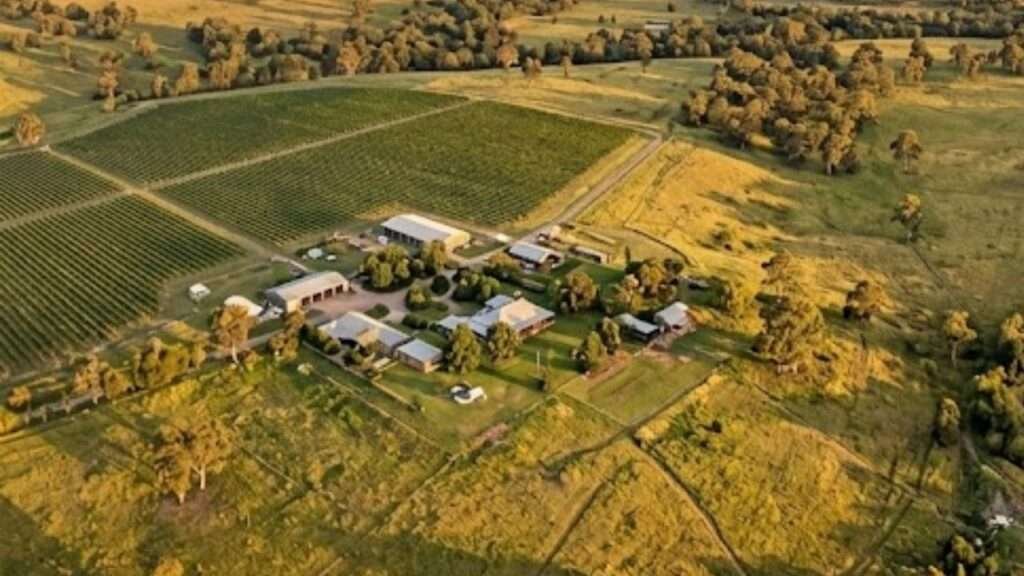
A Practical Limitation Worth Acknowledging.
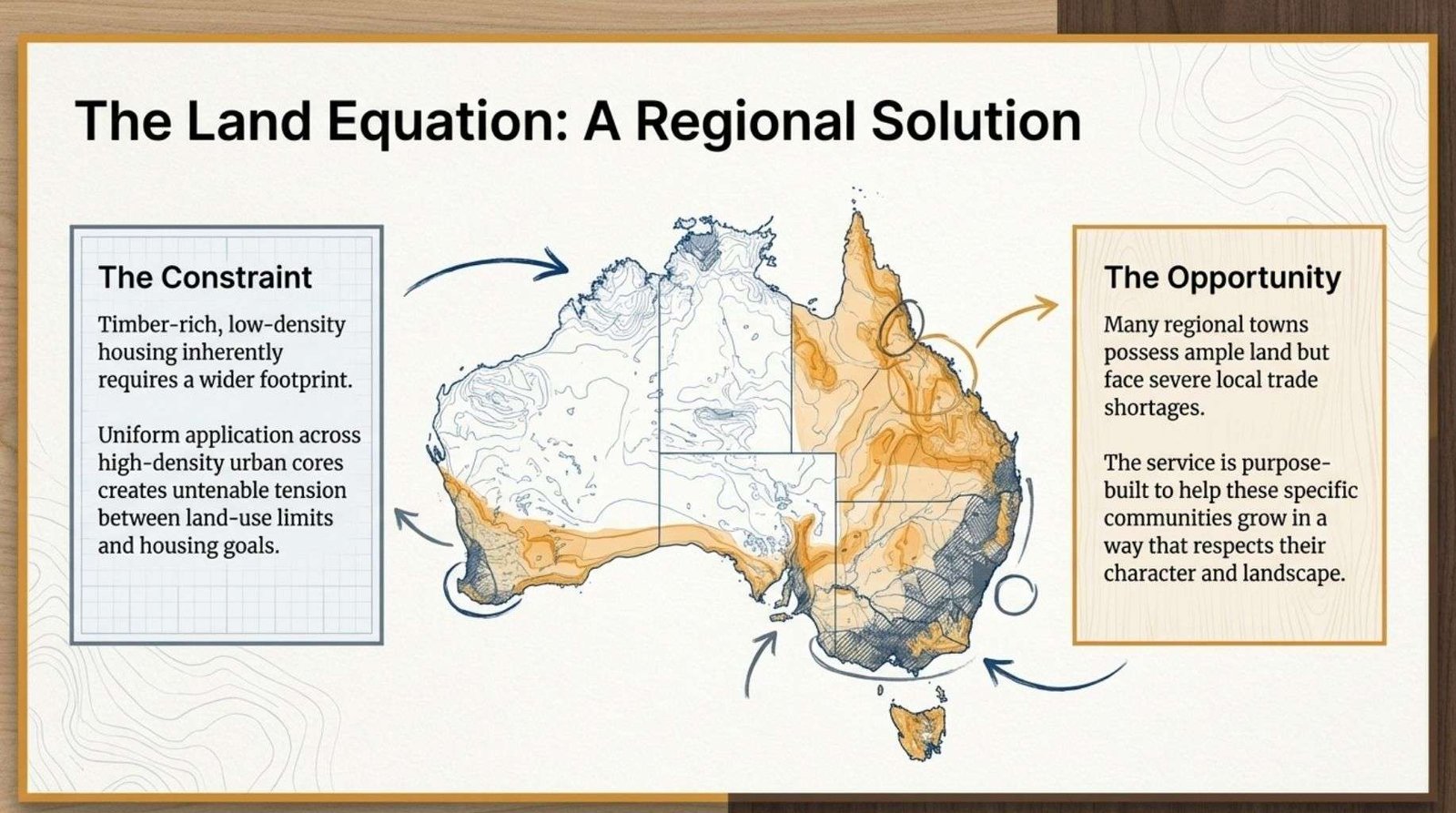
There is a specific trade off that must be recognised. Timber rich low density housing requires more land.
Even with efficient planning, it occupies more space than high density alternatives. A national construction service could supply the labour, but it cannot create land.
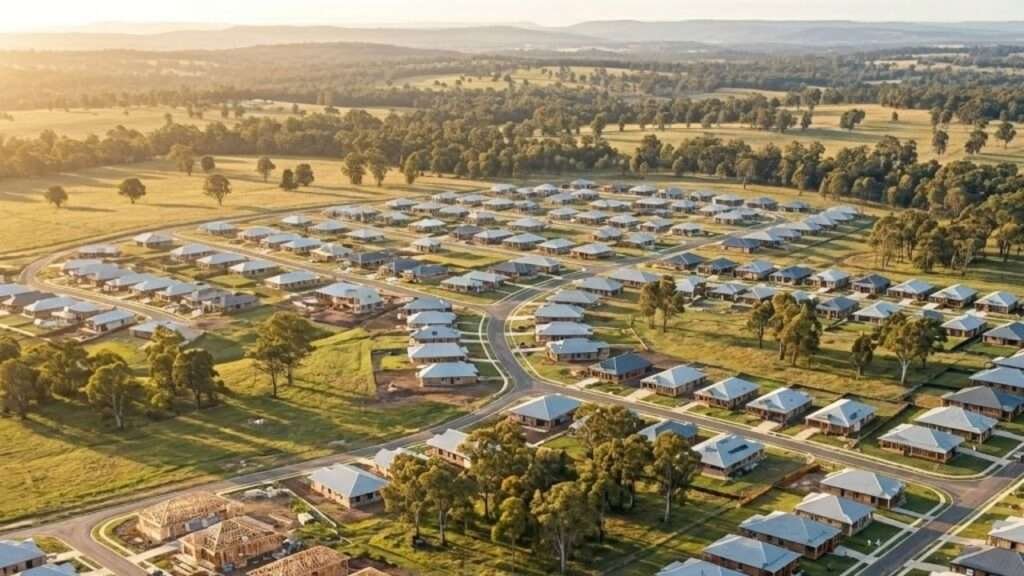
This means the approach is best suited to regional areas and outer suburbs where space is available. Attempting to apply it uniformly across the country would create tension between land use and housing goals.
This limitation does not diminish the value of the concept. It simply clarifies where it fits. Many regional towns have ample land but limited trades.
A national ‘building and construction service’ could help these communities grow in a way that reflects their character.
Timber homes suit landscapes where the scent of sawdust carries on the breeze and the afternoon sun filters through gum leaves.
How Woodworkers Would Shape the Culture.
Woodworkers bring a particular mindset to construction. They notice the weight of a board, the sound of a clean cut and the way light falls across a finished surface. These instincts shape the culture of a building project.
A national construction service influenced by woodworking values would emphasise care, patience and respect for materials.
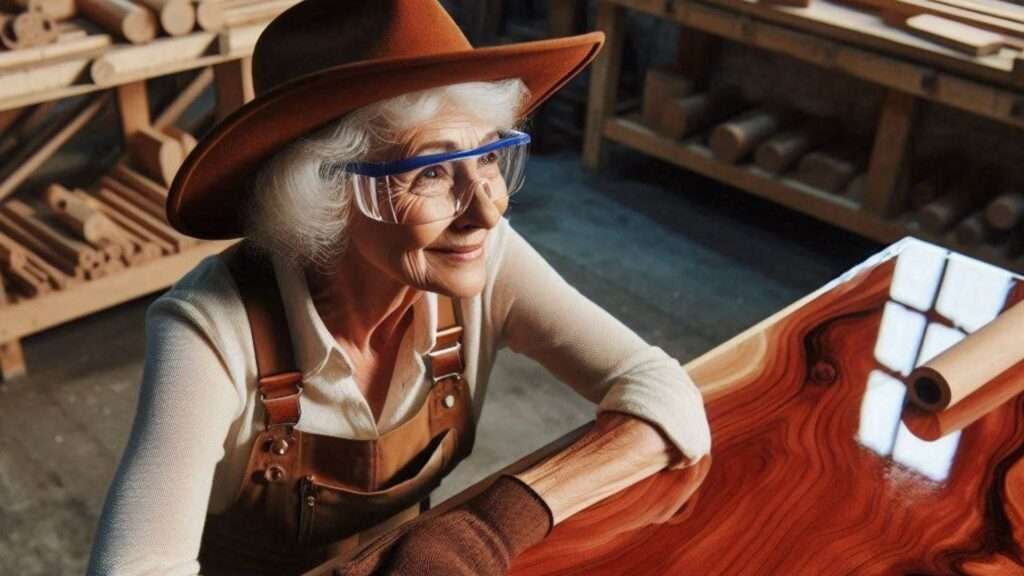
Consider a small workshop where a craftsperson teaches a newcomer how to cut a mortise in cypress. The grain resists slightly at first.
The chisel must be guided with steady pressure. The newcomer learns to read the wood. This kind of learning builds confidence. When applied to housing, it produces structures that feel grounded and intentional.
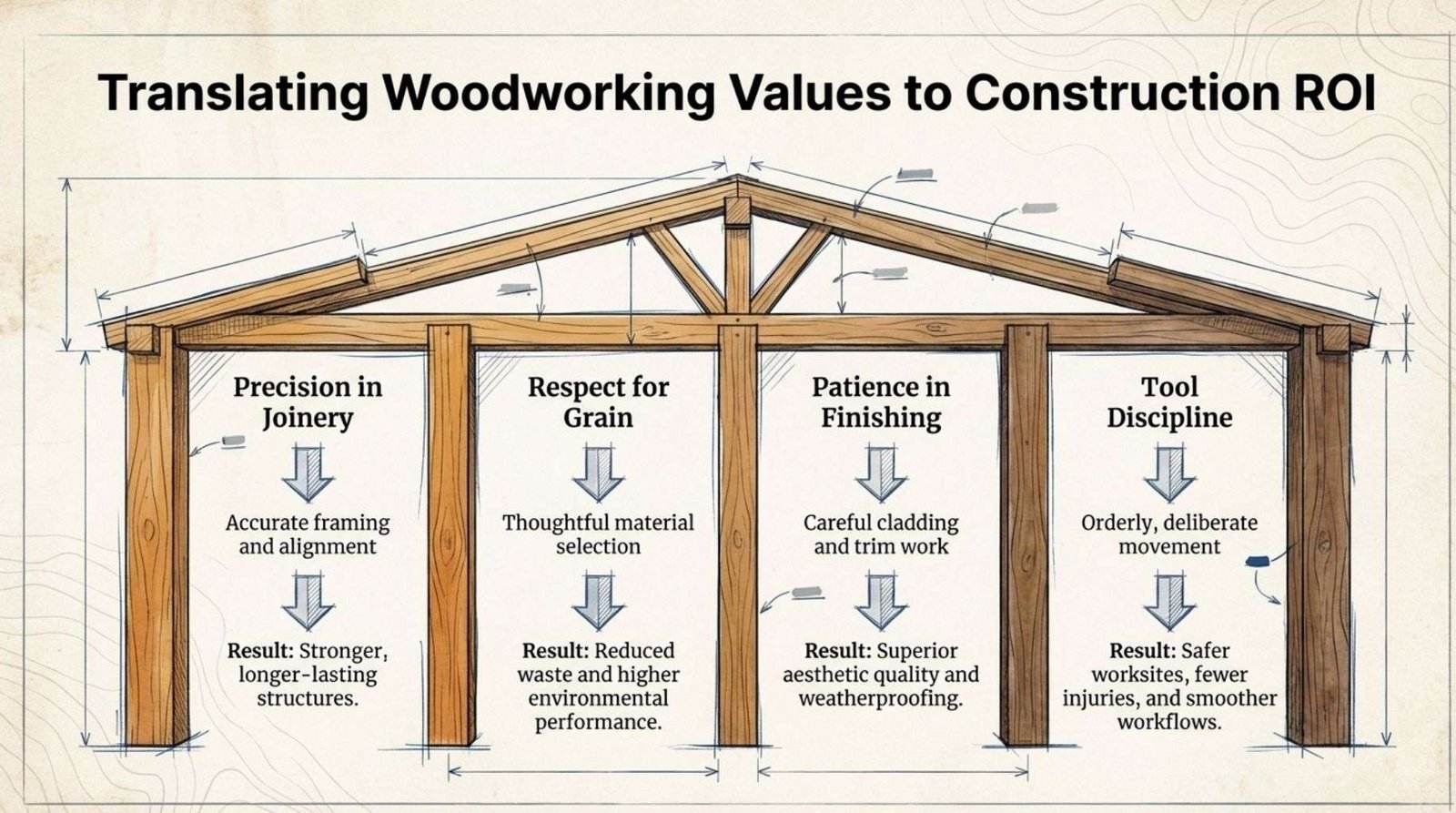
A table can help illustrate how woodworking values translate into construction outcomes.
Woodworking Value | Construction Expression | Resulting Benefit |
Precision in joinery | Accurate framing and alignment | Stronger, longer lasting structures |
Respect for grain | Thoughtful material selection | Reduced waste and better performance |
Patience in finishing | Careful cladding and trim work | Higher aesthetic quality |
Tool discipline | Safer worksites | Fewer injuries and smoother workflow |
These values are not abstract. They are felt in the weight of a mallet, the warmth of a timber bench and the quiet satisfaction of a clean joint.
A National Service as a Cultural Project.
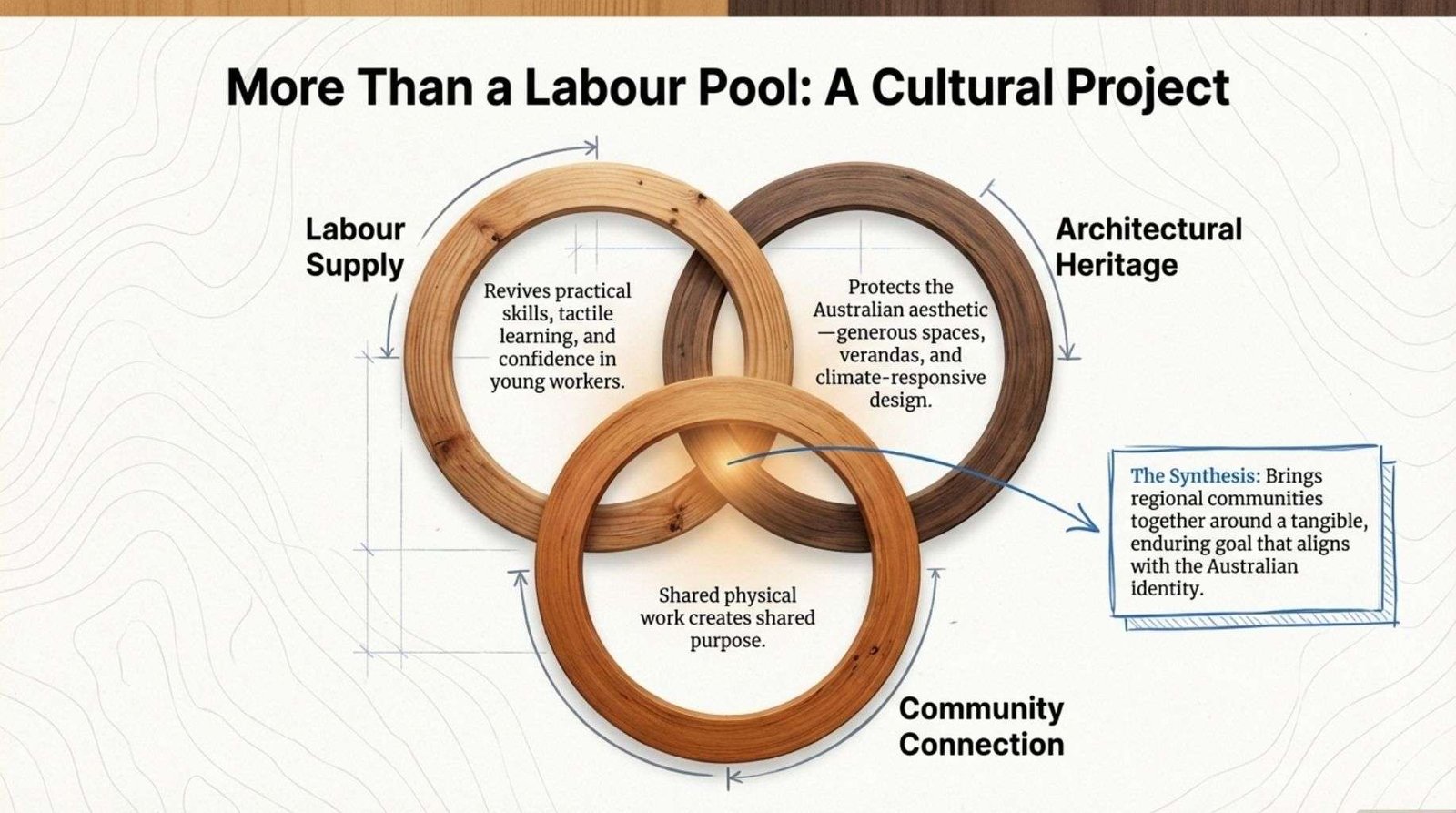
The idea of a national construction service is not only about labour supply.
It is about shaping a culture of building that aligns with Australian identity.
Timber homes with wide verandas and generous spaces reflect a way of living that values connection to land and community. Training people to build these homes reinforces those values.
There is also a social dimension. Shared work creates shared purpose. When people build together, they develop skills and relationships that extend beyond the job site.
A national construction service could strengthen regional communities by bringing people together around a tangible goal. The Cypress Lotto Manor concept provides a vision of what those efforts could produce.
Closing Thoughts.
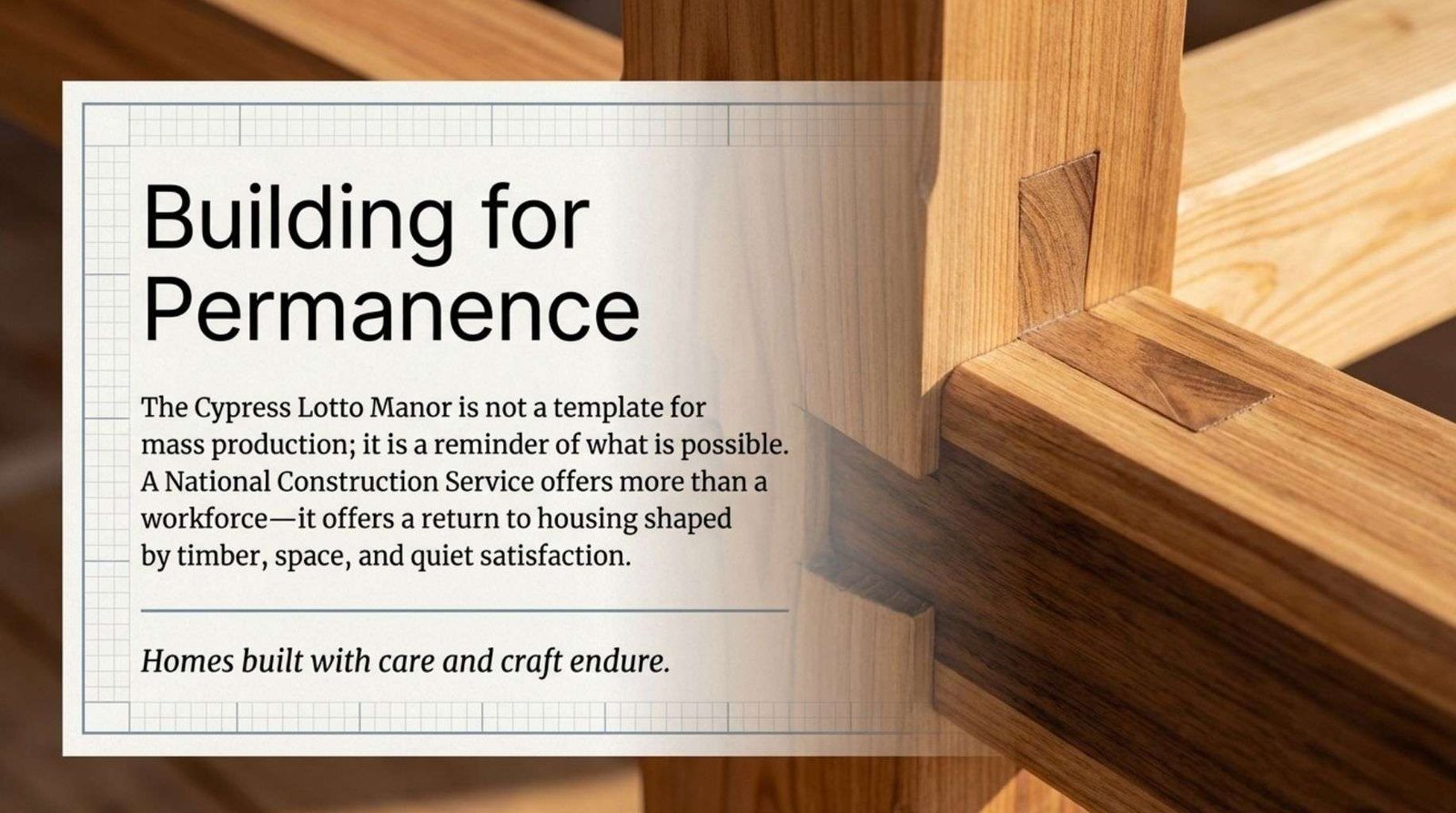
The Cypress Lotto Manor is not a template for mass production. It is a reminder that Australian housing can be shaped by timber, space and heritage.
A national construction service could help bring more of that spirit into reality. The path would be slower than high density construction, but the outcomes would be richer. Homes built with care and craft endure.
They carry the scent of cypress, the warmth of sunlight on timber and the quiet satisfaction of work done well.