Woodwork Ideas For When We Need Help
There are moments when something we need for the house comes at a time when the bank balance is a little light. It could be a new shelf, some extra storage or a gadget that might make a few tasks easier.
In these times when we need help but due to a particular reason, we can’t afford the solution we’d like, it might be worth considering if you could make that thing yourself.
Woodworking offers a practical path forward because it allows a person to create what is missing with their own hands. The process is steady and grounded. The results become part of the home.
Understanding the Value of Woodwork for Self Sufficiency.
Woodworking supports a form of self sufficiency that grows quietly over time.
A single project can shift how a person sees the materials around them.
A length of pine becomes a small bench. Offcuts become drawer dividers.
The grain under the fingertips becomes a reminder that useful things can be made rather than purchased.
The value is not only in the finished item. It is also in the confidence that develops when a person learns to measure accurately or cut a clean line.
The scent of freshly planed timber can change the atmosphere of a room.
Even a simple project can anchor a space with a sense of purpose.
A nuanced point often surprises new woodworkers. The more skills they gain the less equipment they feel they need. Experience reduces dependence on complex tools because technique begins to carry more weight than machinery.
Self sufficiency through woodworking is not absolute. It has a practical limit.
Some hardwoods are costly and some tasks require tools that beginners may not own. This limitation is not a barrier. It is a guide that helps shape realistic expectations and encourages thoughtful project selection.
Essential Woodworking Tools and Materials for Beginners.
A beginner does not need a large workshop. A small bench near a window with natural light can support many early projects.
The sound of a hand saw moving through softwood is often enough to set the rhythm for the work.
The following tools form a reliable starting point.
- A handsaw suitable for clean crosscuts.
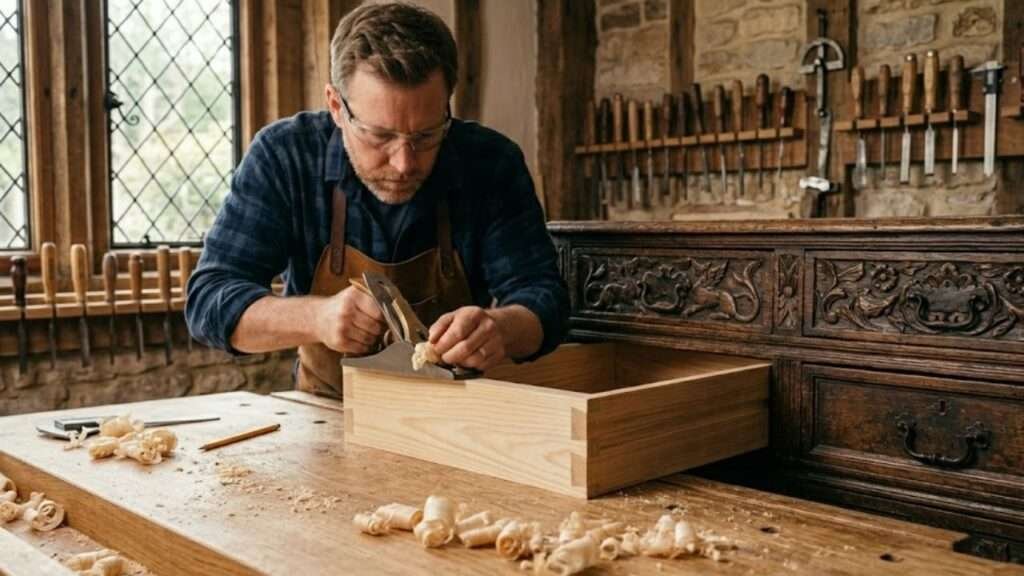
- A block plane for smoothing edges.
- A set of chisels kept sharp for accurate joinery.
- A square for marking straight lines.
- A cordless drill for holes and screws.
- Clamps for holding pieces steady.
Materials matter as well. Softwoods such as pine or spruce are easier to shape and more forgiving when learning.
Plywood with a clean face veneer can support storage projects.
Small details such as choosing screws with the correct length or selecting sandpaper with the right grit influence the final result more than many beginners expect. A brief table can help clarify material choices.
Material | Best Use | Notes |
Pine | Shelves and small furniture | Light weight and easy to cut. |
Plywood | Cabinets and storage boxes | Stable and cost effective. |
Hardwood offcuts | Handles and small accessories | Durable with attractive grain. |
Each material has a distinct texture. Running a hand across a sanded pine board feels different from touching the dense surface of a hardwood offcut.
These sensory cues help beginners understand how wood responds to tools.
Simple Woodwork Projects to Solve Everyday Needs.
Everyday needs often reveal themselves in small ways.
A stack of books without a home. A kitchen drawer that lacks internal organisation. A hallway that could use a narrow bench for shoes.
Woodworking offers direct solutions. A set of wall mounted shelves can be built from two side pieces and several horizontal boards.
The project teaches accurate measurement and the importance of level installation. A handmade stool can serve as seating or as a plant stand.
A wooden tray with finger cutouts can make morning routines more orderly.
One counter intuitive insight emerges when people begin making their own household items. The simplest projects often become the most valued.
A plain storage crate built from plywood can outlast a more decorative piece because it is used every day and built to suit a specific space.
A small tangential observation arises here. Many woodworkers notice that once they build one item for a room they begin to see other opportunities in the same space. A shelf leads to a coat rack. A crate leads to a shoe organiser. The home becomes a series of practical possibilities.
Step by Step Guide to Creating Functional Wooden Items Yourself.
A structured approach helps ensure that a project moves smoothly from idea to completion. The steps below outline a clear path.
- Identify the need and measure the space accurately.
- Sketch a simple plan with dimensions.
- Select materials that match the required strength and appearance.
- Cut pieces carefully and check each one for square edges.
- Assemble using screws or glue depending on the design.
- Sand all surfaces until they feel smooth to the touch.
- Apply a finish that suits the intended use.
The feel of the wood changes at each stage. Rough boards become smooth panels. Sharp edges soften under sandpaper. The finish brings out the grain and adds a sense of completion.
A practical trade off appears during this process. Precision takes time.
Rushing through measurements or sanding can lead to misaligned parts or rough surfaces. Accepting the slower pace produces better results and reduces the need for later corrections.
Troubleshooting Common Challenges in DIY Woodworking Projects.
Challenges appear in every workshop. A board may warp slightly after cutting. A screw may pull two pieces out of alignment. A finish may dry unevenly if applied too thickly. These issues are common and manageable.
Wood movement is one of the most frequent surprises. Even a small change in humidity can shift a panel. Allowing wood to acclimate to the indoor environment for a day or two reduces this effect. When a joint does not close tightly a sharp chisel can remove a thin shaving to improve the fit.
Beginners often struggle with tear out when cutting across the grain. Using a sharp blade and supporting the wood near the cut reduces this problem. Sanding with the grain rather than against it prevents visible scratches.
The scent of sawdust during troubleshooting can be a reminder that woodworking is a physical craft. Mistakes are part of the learning process. Each correction builds skill.
The Empowerment of Making What You Need.
Creating what you need has a steadying effect. A handmade item carries the memory of the work that shaped it.
The surface of a wooden handle becomes smoother with use.
A shelf built to fit a narrow alcove becomes part of the home in a way that a store bought item rarely does.
Woodworking supports sustainable living because it encourages repair and reuse. Offcuts become hooks or small trays.
A damaged piece can be sanded or refinished. The cycle of making and maintaining reduces waste and strengthens practical problem solving skills.
There is a deeper benefit as well. The act of shaping wood encourages attention to detail. The grain direction. The weight of a board.
The sound of a plane shaving a thin curl. These details create a sense of connection to the material and to the work itself.
Closing Thoughts.
Woodworking offers a calm and practical path toward meeting everyday needs. Each project builds skill and confidence.
The home becomes more functional and more personal. The process is steady and grounded in the physical qualities of wood. The results support a life shaped by craftsmanship and thoughtful creation.