Understanding Woodwork Projects
A woodworking life often revolves around the steady movement
from one project to the next. The word appears everywhere in workshops and
community spaces.
It shapes how tasks are planned and how outcomes are
understood.
The term carries weight because it frames the work as purposeful
and bounded. It also signals that the maker is entering a defined process with
a clear end point.
This sense of structure supports both creativity and
discipline in the home workshop.
Understanding the Core Concept of a Project Across
Industries.
A project is a structured effort with a defined objective.
It begins at a specific moment and ends when the intended result is achieved.
The idea is consistent across industries. A project in
construction, software development or event planning shares the same underlying
characteristics.
It is temporary, goal oriented and shaped by a clear scope.
The boundaries matter because they prevent the work from
drifting into an open ended task with no measurable conclusion.
The physical world of woodworking gives this definition a
tactile dimension.
A project becomes real when timber is selected and the first
pencil line is drawn across the grain. The scent of freshly planed pine or the
weight of a jarrah board reinforces that the work has moved from concept to
action.
This connection between definition and material is one
reason the term remains stable across fields.
A counter intuitive observation emerges when comparing
industries.
Highly technical sectors often use complex frameworks to
define projects.
Yet many woodworkers rely on simple notes and a mental
checklist. The simplicity does not reduce the quality of the outcome. It often
improves it because the maker stays close to the material rather than the
paperwork.
What a Woodwork Project Represents in the Crafting Space.
A woodwork project is a focused sequence of tasks that
transforms raw material into a functional or decorative object. It is not
defined by scale.
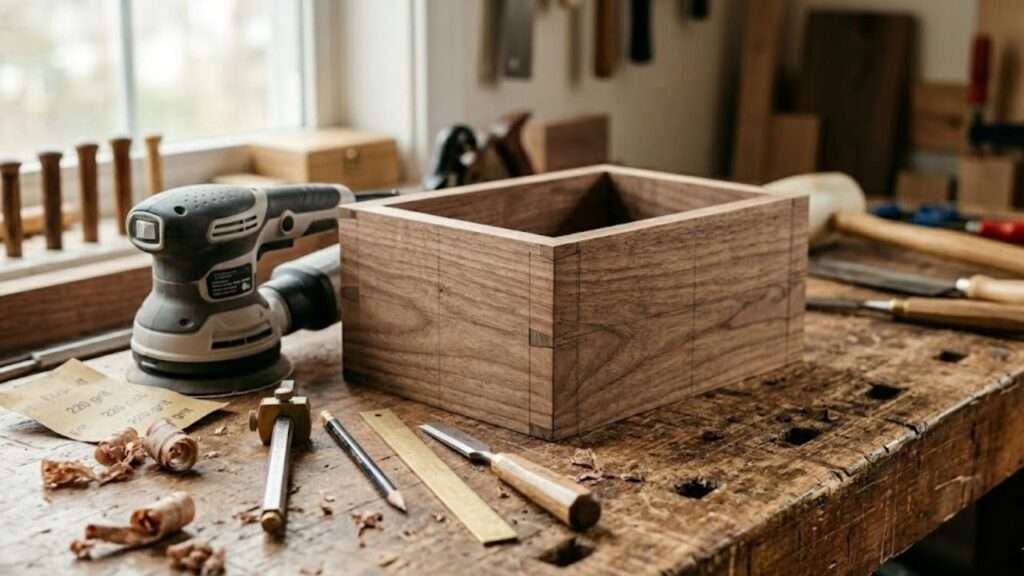
A small dovetailed box and a full room fit out both qualify.
What matters is the presence of intention and a clear path from start to
finish.
The project exists to guide the maker through design,
preparation, shaping, assembly and finishing.
The workshop environment reinforces this meaning. A bench
covered in shavings signals progress.
A stack of cut components waiting for joinery shows that the
project has moved into a new phase.
Even the sound of a chisel tapping against hardwood can
indicate that the work is unfolding as planned. These sensory cues help the
maker track the project without relying on formal documentation.
Woodwork projects also differ from general household tasks.
Replacing a loose hinge is maintenance. Building a new
cabinet to improve storage is a project. The distinction matters because it
shapes expectations.
A project invites planning and reflection. It encourages the
maker to consider grain direction, tool selection and the final appearance of
the piece.
Why the Term Project Matters in Woodworking.
The term project provides structure in a craft that can
otherwise feel open ended. Woodworking involves many variables.
Timber movement, tool condition and workshop layout all
influence the outcome.
A project framework helps the maker manage these variables
in a calm and organised manner. It also supports a sense of progress. Each
completed step brings the work closer to the final piece.
This structure becomes especially valuable in home workshops
where time is limited. A project allows the maker to break the work into
manageable sessions. One evening might be devoted to milling stock.
Another might focus on dry fitting joinery. The rhythm of
these sessions builds momentum without creating pressure.
There is also a social dimension. When woodworkers discuss
their current projects they are sharing more than a task list.
They are describing a process that reflects their skills and
preferences. The term becomes a shorthand for the entire creative journey.
A brief aside often occurs in these conversations. Someone
might mention the way afternoon light falls across their bench and how it helps
them see subtle tear out on a plane surface.
These small observations reveal how personal the project
experience can be.
Key Elements That Define a Successful Woodwork Project.
A successful woodwork project is shaped by several core
elements.
These elements guide the work from concept to completion and
help maintain clarity throughout the process.
·
Clear objectives that describe the purpose of the piece and
the intended use.
·
Appropriate material selection based on strength, grain
pattern and stability.
·
A design or blueprint that outlines dimensions and joinery.
·
A sequence of execution steps that match the maker’s skill
level.
·
A finishing plan that suits the timber species and the
environment where the piece will be used.
Each element interacts with the others. A well chosen timber
can simplify joinery. A clear design can reduce waste.
A thoughtful finishing plan can highlight the natural colour
of the wood. The grain of a single board can influence the entire aesthetic of
a project.
This interplay is one of the reasons woodworking remains
engaging even for experienced makers.
A practical trade off appears when selecting materials. High
quality hardwoods offer durability and visual appeal.
They also require sharper tools and more time to shape.
Softwoods are easier to work but may not provide the same longevity. The maker
must decide which factor matters most for the intended use of the piece.
A Useful Comparison of Project Characteristics.
The table below outlines how general project characteristics
align with woodworking specific considerations.
|
Project Characteristic |
General Meaning |
Woodworking Application |
|
Objective |
Defined
end result |
Completed
piece with functional or aesthetic purpose |
|
Scope |
Boundaries
of work |
Dimensions,
joinery and material requirements |
|
Timeline |
Start
and end points |
Workshop
sessions and curing or drying periods |
|
Resources |
Tools
and materials |
Timber
species, hand tools and machinery |
|
Outcome |
Deliverable
or product |
Finished
object ready for use or display |
This comparison highlights how woodworking fits within
broader project thinking while retaining its own material driven identity.
Why Woodworking Communities Use the Term Project So
Frequently.
Woodworking communities rely on the term project because it
supports communication and shared learning.
When makers describe their projects they provide context
that helps others understand the challenges and decisions involved.
This exchange strengthens skills across the community. It
also encourages experimentation. A maker who hears about a successful project
involving recycled timber may feel confident enough to attempt a similar
approach.
Educational settings use the term for similar reasons.
Students learn through structured projects that introduce specific techniques.
A small stool might teach mortise and tenon joinery. A wall
shelf might introduce accurate layout and finishing. The project format helps
students see how individual skills combine to form a complete piece.
Community workshops often display completed projects on
shelves or walls.
The sight of these pieces can inspire new ideas.
The texture of oiled hardwood or the clean lines of a well
made frame can prompt someone to begin a project of their own. The term becomes
a bridge between learning and doing.
The Role of Projects in Shaping a Woodworking Lifestyle.
A woodworking lifestyle is built around the steady rhythm of
projects.
Each one brings a new set of decisions and a new opportunity
to work with natural materials.
The grain of a board, the scent of linseed oil and the quiet
sound of a hand plane all contribute to the experience. Projects provide a
framework that supports this rhythm without restricting creativity.
Some makers keep a notebook filled with sketches and
measurements. Others rely on memory and the feel of the material.
Both approaches work because the project structure remains
consistent. It guides the work without dictating how the maker should think.
Projects also help maintain a sense of continuity. When one
piece is completed another idea often emerges.
The cycle supports long term engagement with the craft. It
also strengthens the connection between the maker and the home environment. A
room filled with handmade pieces reflects years of thoughtful project work.
Closing Perspective.
Woodwork projects give shape to the craft. They provide
structure, purpose and a clear path from raw material to finished piece.
The term carries meaning because it reflects both the
discipline and the creativity of woodworking. A project is more than a task. It
is a defined journey that supports skill development and enriches the workshop
experience.