Consider Woodwork When We Need Help
Woodwork Ideas For When We Need Help There are moments when something we need for the house comes at a […]
Consider Woodwork When We Need Help Read More »
Traditional Craft, Woodwork Abilities, Woodwork Stories
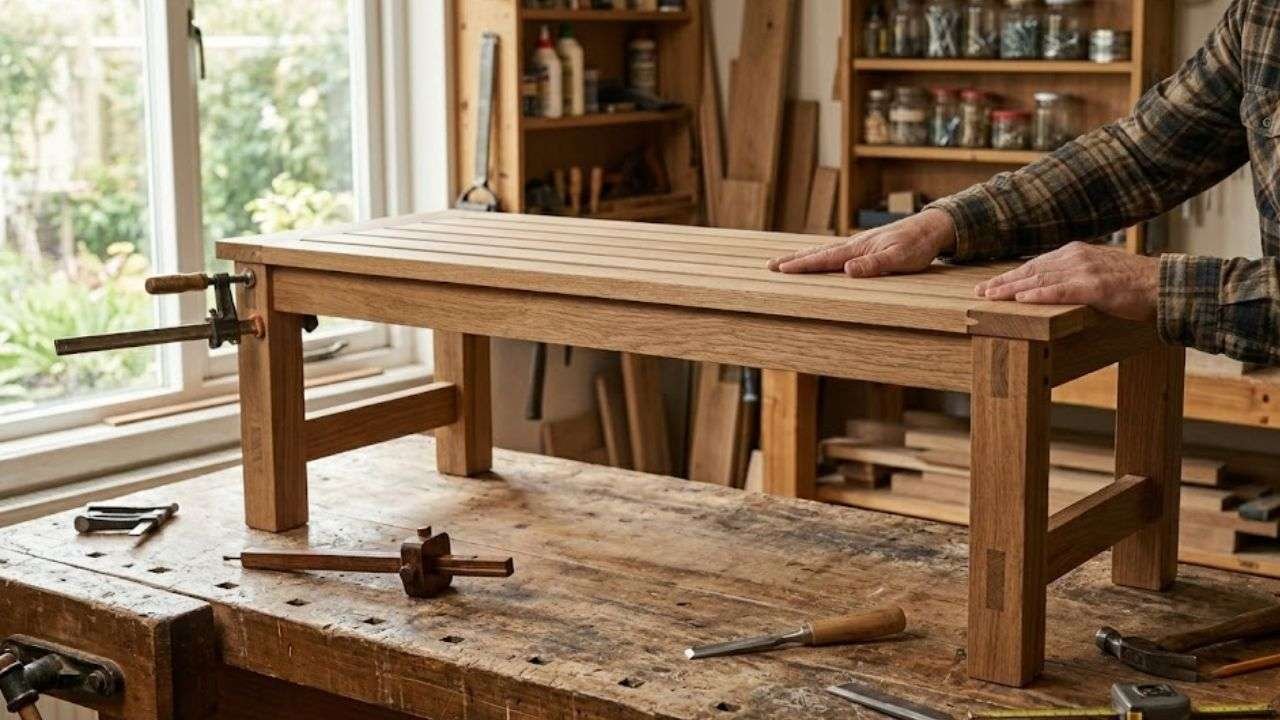
Woodworking abilities typically develop through steady practice, growing familiarity with the various wood species and gradually taking on more difficult projects over time.
Each project strengthens technique and deepens appreciation for the quiet satisfaction of shaping timber into functional pieces for the home.
Building Skills Through Repetition.
Usually, our skill level develops gradually as we learn what works well and what doesn’t in relation to the type and grain of the selected wood.
From the time we start learning this craft, we’ll make mistakes and that’s ok.
Our early projects will often reveal uneven joints or surfaces that require more refinement. Over time the grain becomes easier to read and tools feel more predictable.
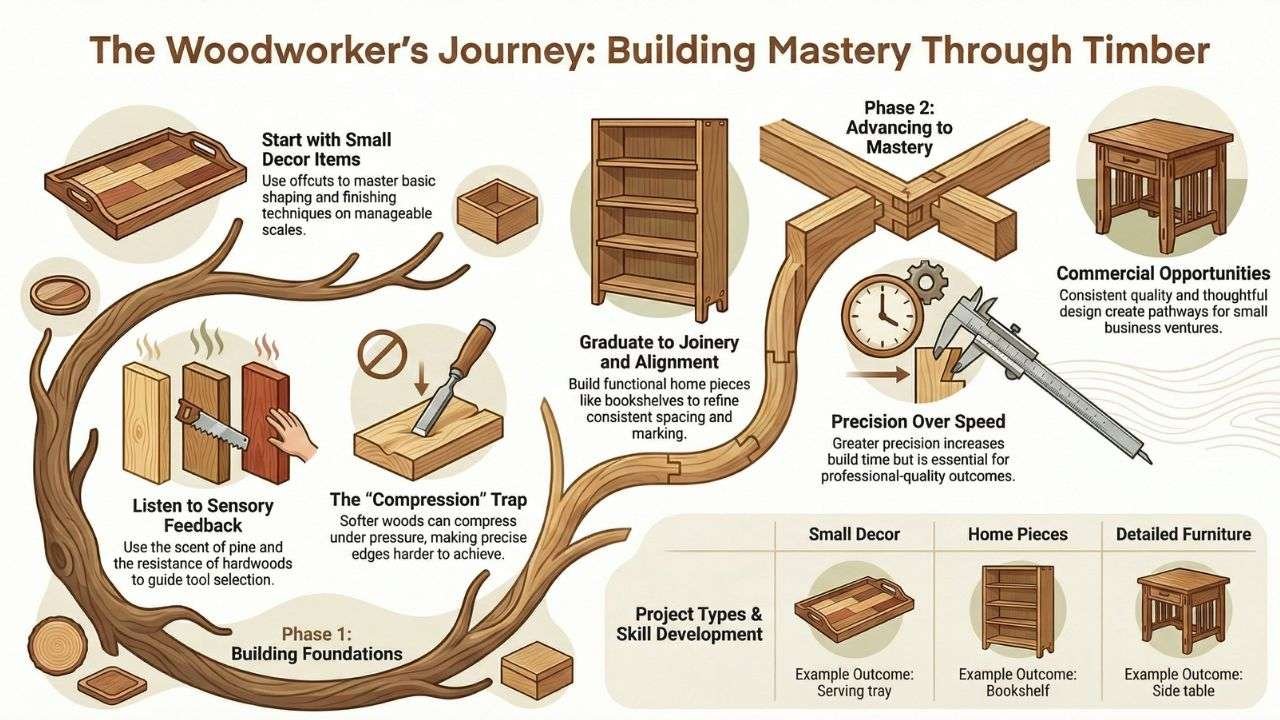
The scent of freshly planed pine or the smooth resistance of seasoned hardwood provides immediate sensory feedback that guides improvement.
A small stool built from offcuts can demonstrate how repetition builds confidence in simple joinery.
Understanding Material Qualities.
Woodworkers learn to observe subtle differences in texture and density.
A board of spotted gum behaves differently from a piece of cedar and each requires a distinct approach.
This awareness supports better decisions about tool selection and surface preparation.
A nuanced observation is that softer woods are not always easier to work with because they can compress under pressure and produce less precise edges.
This understanding grows through direct contact with the material rather than theoretical study.
Developing Precision in Everyday Projects.
Precision emerges when attention shifts from completing a task to refining each stage. A home shelving project illustrates this progression.
Early attempts may rely on broad measurements while later versions incorporate careful marking and consistent spacing.
The sound of a sharp chisel meeting the shoulder of a joint signals improved technique. The trade off is that greater precision often increases the time required for each build which can slow progress on larger projects.
Exploring Creative Possibilities.
As skills expand new forms of expression become available.
A simple planter box can evolve into a more detailed outdoor bench with shaped edges and contrasting timbers.
The tactile warmth of oiled wood encourages experimentation with finishes that highlight natural colour variations.
Some woodworkers discover that small decorative items such as trays or candle holders provide a manageable way to test new techniques without committing to large builds.
Balancing Ambition With Practical Limits.
Ambition grows with experience yet every woodworker encounters limits.
A complex cabinet with multiple drawers may exceed available tools or workspace. Recognising these boundaries supports steady progress rather than frustration.
A practical example is choosing to build a single drawer unit before attempting a full chest. The scent of linseed oil on a freshly sanded panel can make even a modest project feel complete and satisfying.
Turning Skills Into Opportunities.
Improved craftsmanship can create pathways for small business ventures. Handcrafted furniture and decor items appeal to people who value natural materials and visible workmanship.
A maker who produces a series of well finished cutting boards from local hardwoods may find interest at weekend markets.
The nuanced observation is that demand often grows not from complexity but from consistent quality and thoughtful design.
The limitation is that producing items for sale requires reliable sourcing of timber and enough time to maintain standards.
Using a Table to Compare Project Types.
A simple comparison helps clarify how different project categories support skill development.
| Project Type | Typical Materials | Skill Focus | Time Investment | Example Outcome |
| Small decor items | Offcuts softwoods hardwoods | Shaping finishing | Short | Serving tray |
| Functional home pieces | Pine hardwood panels | Joinery alignment | Moderate | Bookshelf |
| Outdoor builds | Treated pine hardwood | Durability assembly | Moderate to long | Garden bench |
| Detailed furniture | Premium hardwoods | Precision complex joinery | Long | Side table |
Sustaining Growth Through Practice.
Regular practice supports long term improvement. Working with timber encourages patience because each stage requires attention to texture moisture and grain direction.
A simple box made from recycled boards can reveal how small adjustments in technique produce cleaner lines and smoother surfaces.
The natural aroma of sanded wood reinforces the sensory connection that keeps many people engaged in the craft.
Closing Reflection.
Woodworking skills develop through steady effort and a willingness to learn from each project. The combination of natural materials and thoughtful craftsmanship creates a rewarding practice that grows with time and experience.
Woodwork Ideas For When We Need Help There are moments when something we need for the house comes at a […]
Consider Woodwork When We Need Help Read More »
Traditional Craft, Woodwork Abilities, Woodwork Stories
Unique Gift Ideas Via Woodwork Products Woodwork centric gifts carry a quiet sense of presence. They feel substantial in the
Woodwork Centric Gift Ideas Read More »
Beautiful Wood, Creative Woodwork, Woodwork Abilities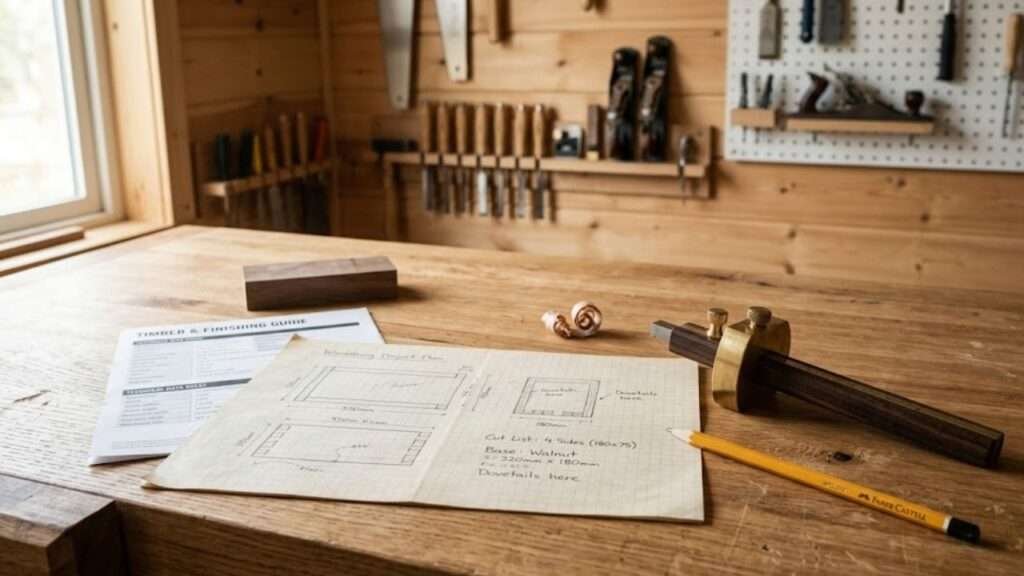
Do It Once And Do It Properly. Disclaimer. This article provides general information about woodworking practice and workshop preparation. It
DIY Should Be DIYP Do It Yourself Properly Read More »
House Updates, House Woodwork, Renovation Caution, Woodwork Abilities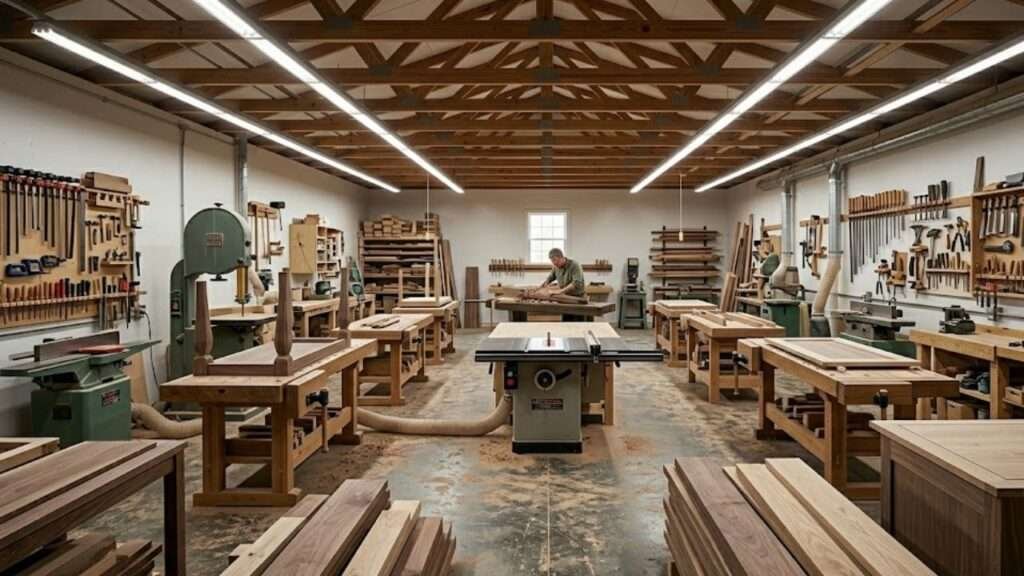
A Practical Guide For Cutting Wood Wood is not passive, it’s got structure, direction and memory encoded in every fibre
Cutting Wood Methods And The Tools Involved Read More »
Woodshop Safety, Woodwork Abilities, Woodwork Tools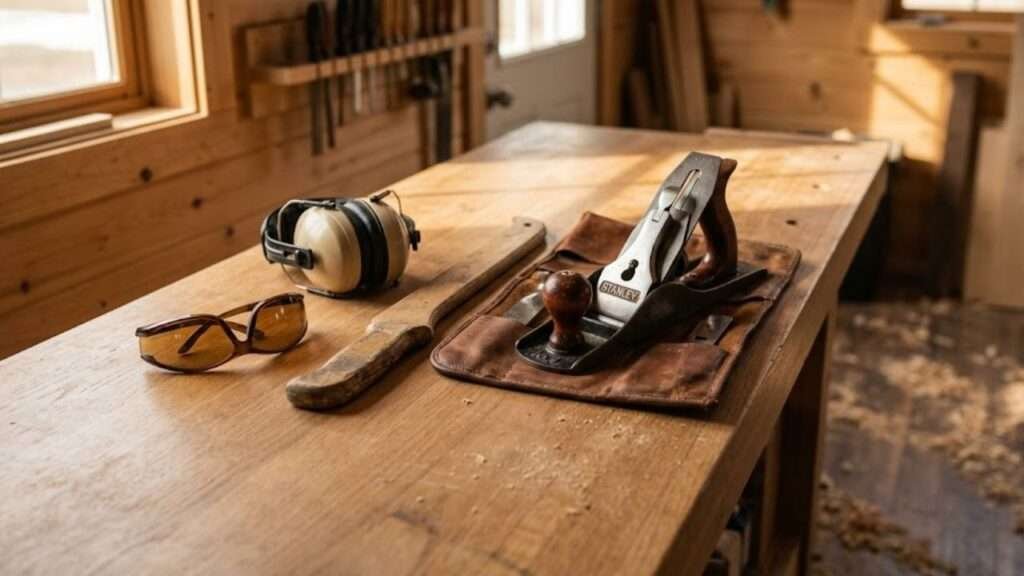
Woodwork Safety Is The Priority Woodworking is a discipline built on patience and skill. The sawdust, the grain, the smell
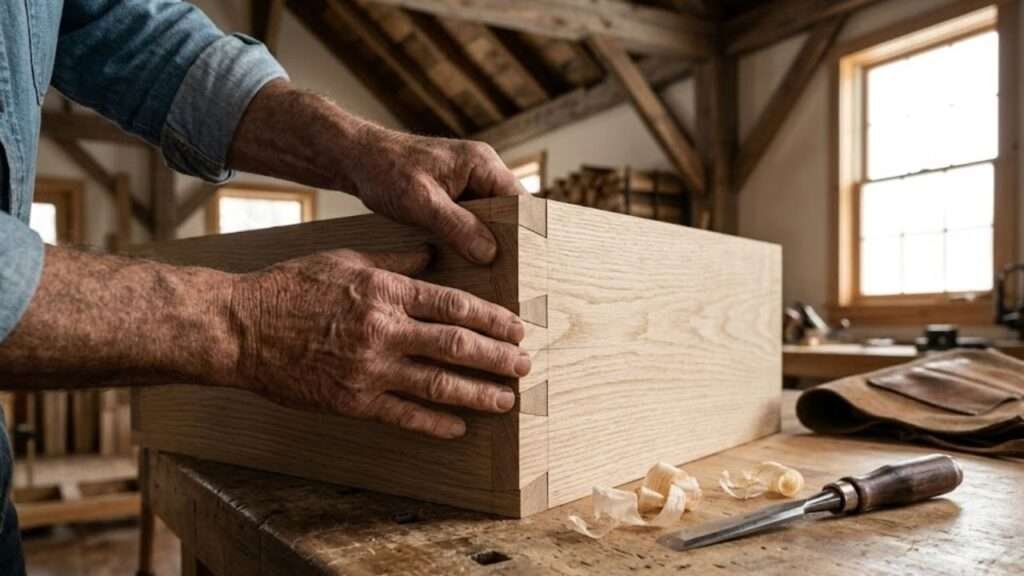
Woodworking has a way of clarifying what matters. Stand long enough at a bench and you begin to understand that
Money Is Not Everything With Woodwork Read More »
Artistic Woodwork, Creative Woodwork, Finishing Techniques, House Woodwork, Woodwork Abilities
The Many Ways Of Putting Your Skills To Work The quiet rhythm of our backyard woodshops (our sheds or garage
Your Woodwork Skills Can Serve The Community Read More »
Traditional Craft, Woodwork Abilities, Woodwork Stories, Woodwork Types, Your Woodshop
Can Woodwork Power Tools Make A Difference? Building furniture (inside and outside) as well as assorted decorative elements for you
Use Power Tools To Create Great Pieces For Your Home Read More »
House Woodwork, Woodwork Abilities, Woodwork Tools, Your Woodshop
A Journey Into Hand Tool Craftsmanship Woodworking with hand tools offers a calm and intentional way to shape natural materials.
Discover The Soul Of Woodwork With Hand Tools Read More »
Artistic Woodwork, Creative Woodwork, Traditional Craft, Woodwork Abilities, Woodwork Types
Some Good Reasons For Embracing Power Tools. Woodworking has long been associated with slow and deliberate craftsmanship shaped by hand
Power Tools Are Your Gateway To Creation Read More »
Traditional Craft, Woodwork Abilities, Woodwork Tools
Getting Started Without Breaking the Bank Beginning a woodworking journey becomes more enjoyable when the tools feel solid in the
Start Your Woodwork Journey With Affordable Quality Tools Read More »
Traditional Craft, Woodwork Abilities, Woodwork Tools
From Your Shed To The Market Stall Woodworking offers a calm and creative way to work with natural materials while
Sell Woodwork Projects At The Weekend Markets Read More »
Artistic Woodwork, Creative Woodwork, Traditional Craft, Woodwork Abilities, Woodwork Types
From the Shed: Mastering the Grain & Learning New Skills Woodworking offers a calm and creative path that begins with
Woodwork Adventures That Start In The Shed Read More »
Traditional Craft, Woodwork Abilities, Woodwork Stories, Woodwork Types
Woodworking is a traditional craft that grows through steady practice and a developing understanding of tools materials and techniques. Many
Take Time To Develop Your Woodwork Skills Read More »
Traditional Craft, Woodwork Abilities, Woodwork Types
Woodworking Hammers And Mallets Explained. This article provides a plain‑language reference to woodworking hammers and mallets, blending historical context, technical
Woodworking Hammers And Mallets Read More »
Woodwork Abilities, Woodwork Tools
Finishing Techniques For Wooden Products. Woodworking finishing techniques are an essential part of the craft and serve as the final
Wood Product Finishing Techniques Read More »
Artistic Woodwork, Beautiful Wood, Finishing Techniques, Woodwork Abilities
The Potential of Using ‘Fertilizer Trees Wood’ for Woodworking. Fertilizer trees are a distinctive group of tree species that are
Woodwork With Fertilizer Trees Read More »
Artistic Woodwork, Beautiful Wood, Creative Woodwork, Woodwork Abilities
The Huge Challenges Of Woodworking With Waddy Wood. Waddy Wood, which comes from the subtropical and tropical regions of Central
Woodworking With Waddy Wood Is Not Fun Read More »
Beautiful Wood, Creative Woodwork, Traditional Craft, Woodwork Abilities
Intangible Riches Of Being A Happy Woodworker Disclaimer: This article is intended for inspirational and personal reflection purposes only. It
A Trillionaire Level Of Woodwork Happiness Read More »
Artistic Woodwork, Creative Woodwork, Woodwork Abilities
Learning Woodwork Via YouTube Channels. Nowadays, you can learn just about anything via YouTube and a quality woodworking YouTube channel
Learn Woodwork from YouTube Read More »
Traditional Craft, Woodshop Safety, Woodwork Abilities, Woodwork Types, Your Woodshop
Woodworking with Circular Saws and Routers Circular saws and routers are indispensable tools in the realm of woodworking, serving as
Quality Circular Saws and Routers Read More »
Woodwork Abilities, Woodwork Tools, Your Woodshop
Woodworking Can Be A Great Hobby. Woodworking is a fascinating and ancient craft that has withstood the test of time
Woodwork Is A Great Hobby Read More »
Artistic Woodwork, Creative Woodwork, Time To Relax, Woodwork Abilities, Woodwork Types
The Dual Craft of Woodworking and Social Media Promotion. In today’s competitive woodworking market, the journey to success transcends just
Blending Woodwork and Social Media Read More »
Build An Online Presence, Creative Woodwork, Woodwork Abilities
The Amazing Wood Finishing Technique That Is French Polishing. French polishing is a well-known wood finishing technique that has fascinated
French Polish Wood Finishing Technique Read More »
Beautiful Wood, Finishing Techniques, Woodwork Abilities
We Learn And Improve From Our Woodwork Mistakes. Woodworking, like any other skill intensive craft, is fraught with its unique
Learning From Our Woodworking Mistakes Read More »
Project Failures, Traditional Craft, Woodshop Safety, Woodwork Abilities
Learn The Creative Art Of Woodcarving Wood carving is a common and very rewarding method of woodworking in which a
Woodcarving For Beginners Read More »
Artistic Woodwork, Creative Woodwork, Woodwork Abilities, Woodwork Types
What type of Woodworker is Cabinet Maker? Have you ever wondered who is responsible for creating those stunning custom cabinets
What is a Cabinetmaker Read More »
Traditional Craft, Woodwork Abilities, Woodwork Types