The Finishing/Coating Decisions For Your Projects
Every completed woodworking project carries a moment of reckoning.
The sawdust has settled, the joints are tight and the surfaces have been sanded through progressively finer grits until it feels like cool silk under the palm.
What happens next determines how that piece will look, feel and be commented about for years, sometimes decades to come.
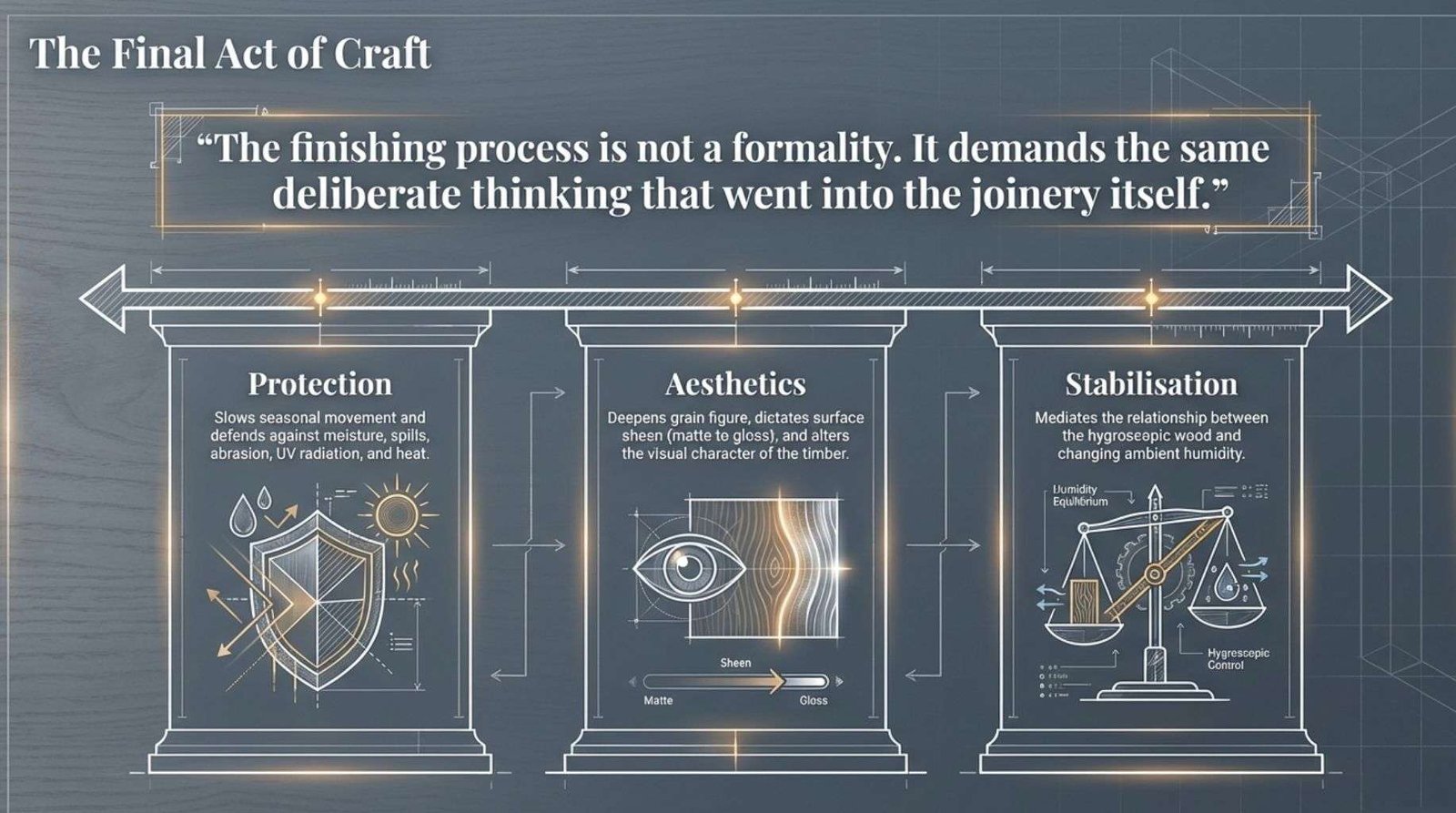
The finishing process is not a formality. It is the final act of craft, and it demands the same deliberate thinking that went into the joinery itself.
The world of wood coatings is genuinely large. Walk into any well-stocked timber merchant or finishing supplier and the shelves present dozens of products with overlapping names, competing claims and contradictory advice on the labels. The confusion is understandable.
However, the underlying logic is consistent, and once a woodworker grasps the chemistry and the physical mechanics involved, the decision-making becomes clear and methodical.
Understanding What a Finish Actually Does.
Before reaching for any product, it helps to understand why coatings exist and what they are expected to accomplish. A wood finish serves three distinct purposes, and not every product addresses all three equally.
The first is protection. Wood is a hygroscopic material. It absorbs and releases moisture in response to changes in ambient humidity, and this movement is the root cause of most long-term structural problems.
A finish reduces the rate at which moisture enters or leaves the surface, slowing seasonal movement and protecting against liquid spills, abrasion, UV radiation and heat. The second purpose is aesthetic enhancement.
A finish can deepen the natural figure of the grain, add a surface sheen ranging from flat matte to mirror gloss or introduce colour through pigments and dyes. Even a finish described as “clear” will alter the visual character of the wood.
The third purpose is stabilisation. By mediating the relationship between wood and its environment, a good finish helps the piece maintain its dimensions more consistently across changing conditions.
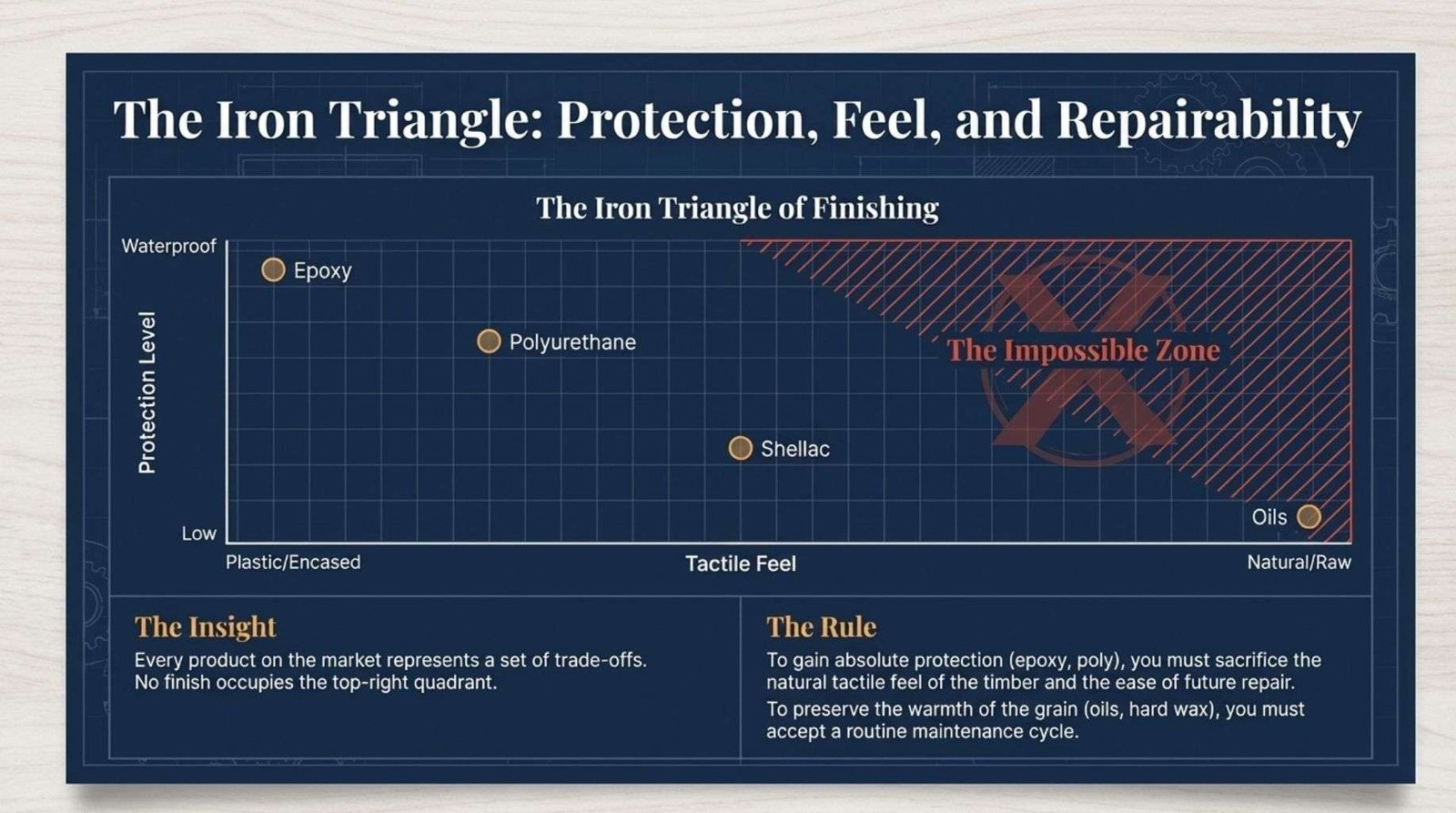
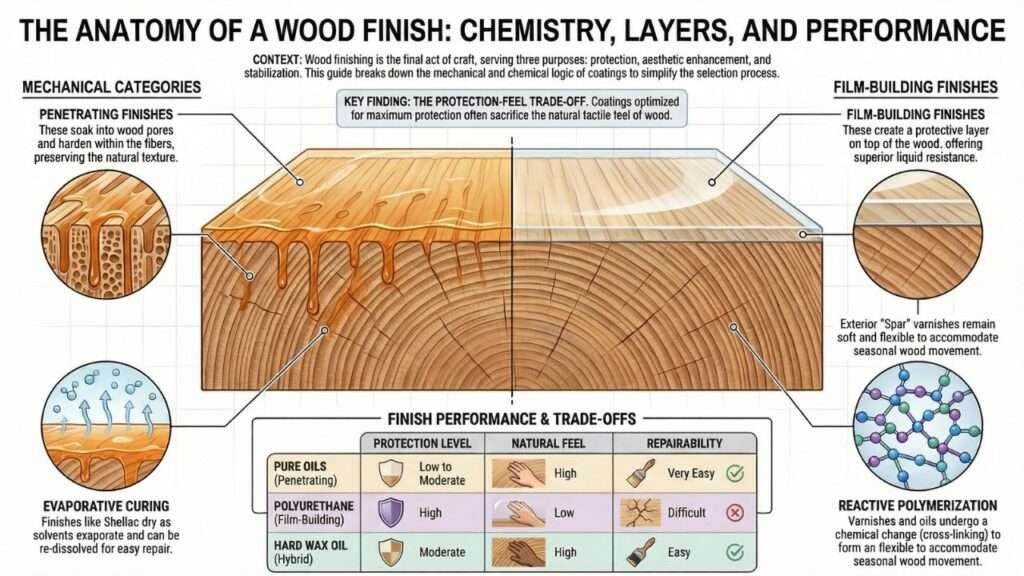
These purposes are in constant tension. A coating optimised for maximum protection often sacrifices the natural feel of the wood.
A finish that celebrates the grain’s beauty may offer limited resistance to abrasion. Every product on the market represents a set of trade-offs, and recognising that trade-off is the starting point for making a sound choice.
How Finishes Form: The Chemistry Behind the Film.
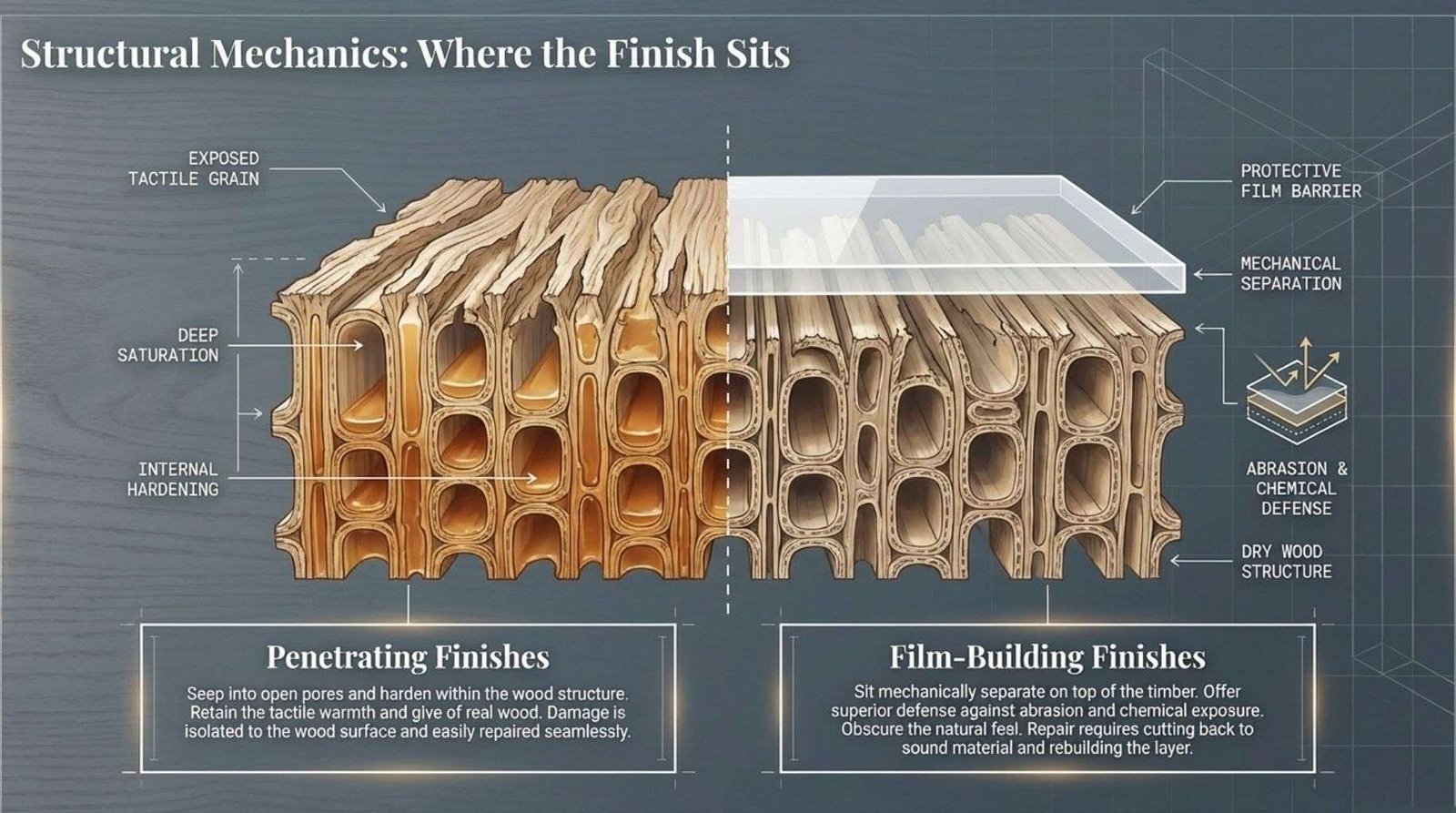
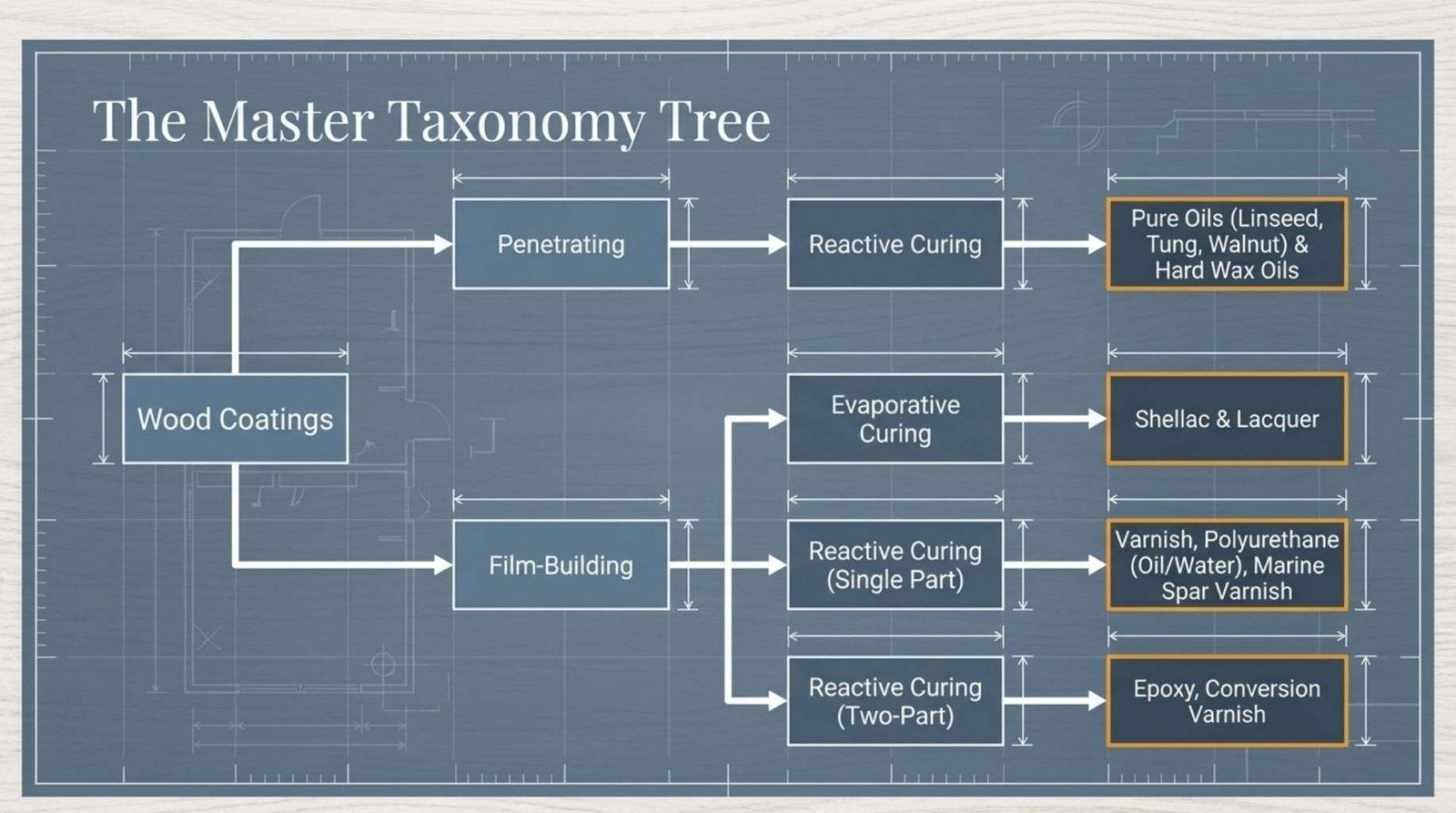
Finishes divide cleanly into two mechanical categories based on how they harden and where they sit in relation to the wood surface. Understanding this distinction cuts through a great deal of commercial noise.
Penetrating finishes seep into the open pores and fibres of the wood and harden within its structure. They do not build a film on top of the surface.
Because of this, they retain the tactile quality of real wood, the slight warmth and give that film-building products can obscure.
They are also far easier to repair. Damage to a penetrating finish means damage to the surface of the wood itself, and a localised re-application often restores the area without any visible seam.
Film-building finishes sit on top of the wood, forming a protective layer that is mechanically separate from the timber beneath. This layer can be thick or thin, rigid or flexible, clear or tinted.
It offers superior protection against abrasion, moisture and chemical exposure, but it can crack, peel or develop a clouded appearance over time. Repairing a damaged film-building finish typically requires cutting the surface back to sound material and rebuilding from that point.
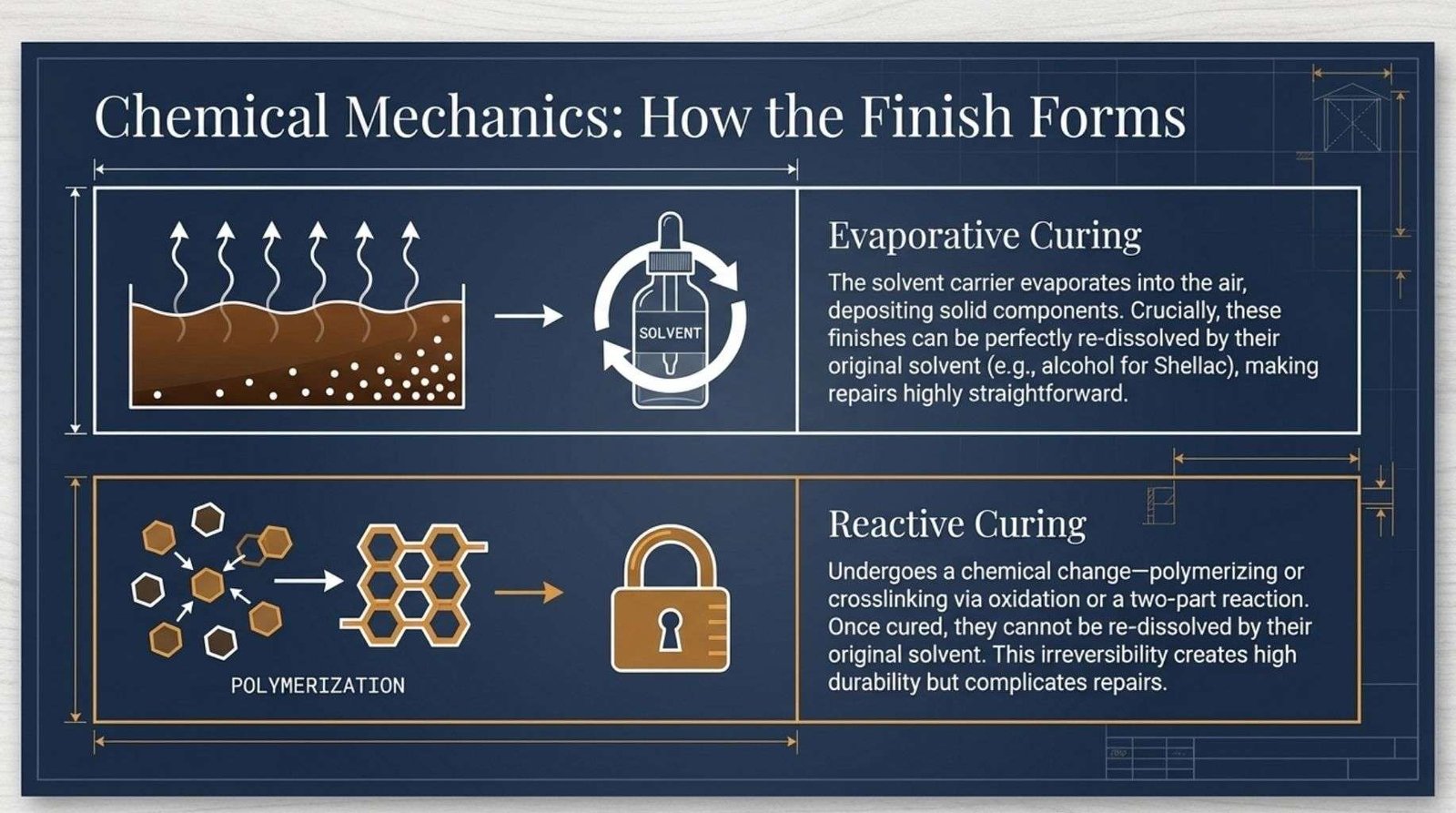
Within these two categories, finishes also divide by how they cure. Evaporative finishes dry as their solvent carrier evaporates into the air.
The solid components are simply deposited on or in the surface as the liquid disappears. The important consequence of this is that evaporative finishes can be re-dissolved by their original solvent, which is extremely useful for repair work. Shellac, dissolved in denatured alcohol and most lacquers work this way.
Reactive finishes, by contrast, undergo a chemical change during curing. They do not simply dry. They polymerise or crosslink, often through oxidation or through a chemical reaction between two mixed components.
Once cured, a reactive finish cannot be re-dissolved by the solvent it arrived in. This irreversibility is the source of their durability. Oils, varnishes and epoxies all belong to this group.
The Oil Family: Penetrating, Natural and Honest.
Oils represent the oldest family of wood finishes, and they remain entirely valid choices for a wide range of projects.
Their appeal is the feel they leave behind. A well-oiled surface of open-grained oak or walnut has a depth and warmth that no film-building product fully replicates.
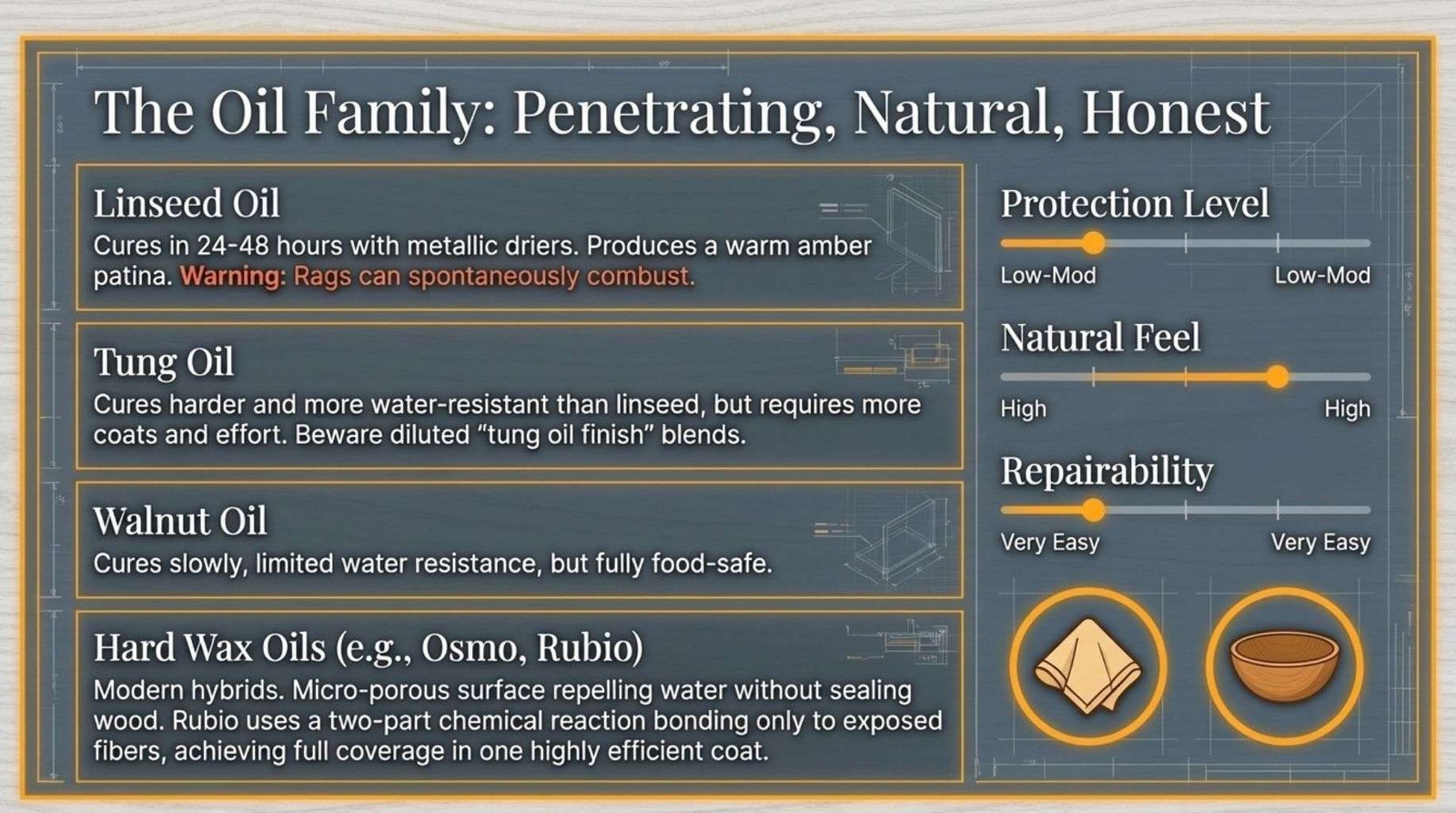
Linseed oil, in its boiled form, has been used on woodwork for centuries. Metallic driers added to raw linseed oil accelerate the curing time from weeks to roughly 24 to 48 hours. Applied in thin coats with any excess carefully wiped away before curing begins, it produces a warm amber patina and provides modest protection.
Tool handles, rustic workbench tops and structural timber all respond well to boiled linseed oil. One practical note: rags used with boiled linseed oil can heat spontaneously as the oil oxidises, and they must be spread flat to dry or submerged in water before disposal.
Tung oil, pressed from the nut of the tung tree, cures harder and more water-resistant than linseed oil.
It is more expensive and requires more coats, each buffed lightly before the next is applied, but the resulting surface has a clarity and durability that justifies the effort on fine furniture pieces.
Products labelled “tung oil finish” are often diluted varnish blends rather than pure tung oil, and the label should be read carefully before purchase.
Walnut oil occupies a specific and genuinely useful niche. It cures slowly and provides limited water resistance, but it is fully food-safe, making it the natural choice for chopping boards, salad bowls and utensils that come into contact with food. It is easy to renew with a fresh wipe-on coat.
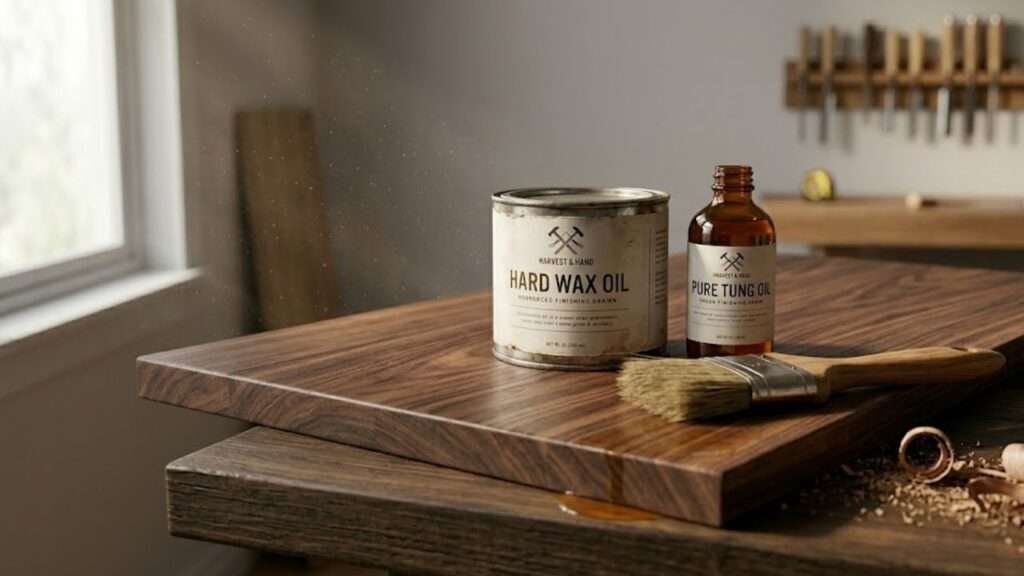
Hard wax oils sit in a category of their own. These modern hybrid formulations blend drying oils with hard waxes, typically carnauba or candelilla, suspended in a carrier solvent. They penetrate slightly into the wood and then cure to a thin, micro-porous surface that repels water without sealing the wood entirely.
The result is a surface that looks and feels like natural timber while offering meaningful protection against everyday wear.
Products such as Osmo Polyx-Oil, Rubio Monocoat and Fiddes Hard Wax Oil have become widely used in both professional and domestic finishing.
Rubio Monocoat takes a particularly interesting approach: its two-part system uses a chemical reaction that bonds only to exposed wood fibres, leaving any excess product inert.
The practical claim is full coverage in a single coat, which reduces application time significantly and eliminates the risk of over-application.
For someone finishing a large dining table or a set of bedroom furniture, that efficiency is a genuine advantage.
Shellac and Lacquer: The Fast Evaporative Finishes.
Shellac is one of those materials that consistently surprises woodworkers encountering it for the first time.
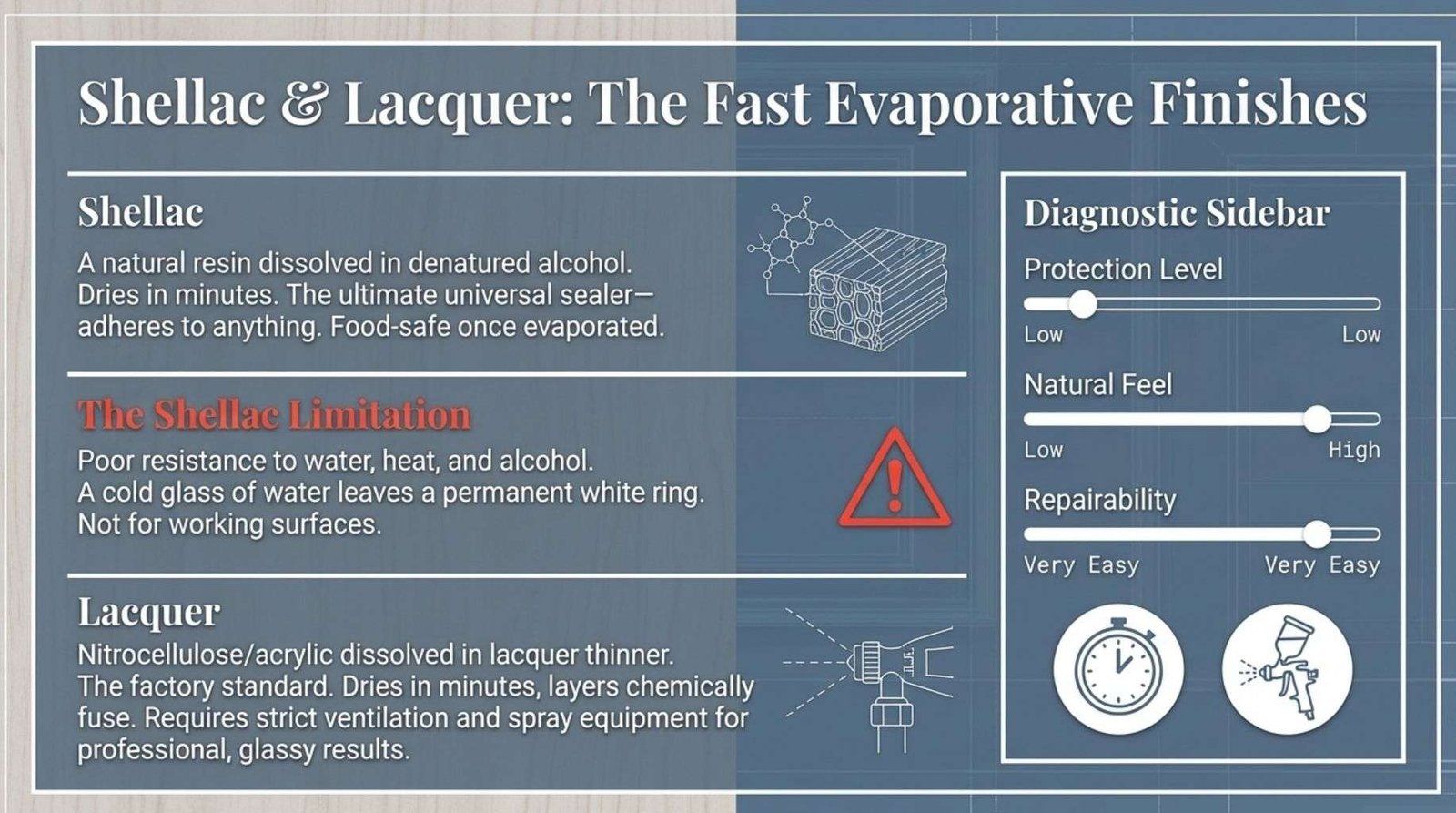
It is a natural resin, secreted by the lac insect and dissolved in denatured alcohol, and it produces a finish of remarkable warmth and clarity.
A piece of figured maple or tiger-stripe walnut under a blonde shellac shimmers in a way that oil-based polyurethane simply cannot match.
It dries in minutes rather than hours. It adheres to virtually any surface and anything will adhere over it, making it the single most useful universal sealer in a woodworker’s kit. It is food-safe once the alcohol has fully evaporated.
Repairs are straightforward because fresh shellac dissolves into the previous coat rather than sitting on top of it.
The limitation is real and specific. Shellac has poor resistance to water, heat and alcohol. A glass of cold water left on a shellac-finished table overnight will leave a permanent white ring.
A hot coffee cup placed directly on the surface will cause immediate damage. This is not a marginal limitation. It means shellac is appropriate for decorative items, display cabinets, picture frames, carved pieces and furniture that will not be used as a working surface.
Using it on a kitchen table or a heavily used dining table represents a mismatch between finish and function, regardless of how beautiful the result looks when freshly applied.
Lacquer, as used in professional furniture finishing, is a nitrocellulose or acrylic resin dissolved in fast-evaporating lacquer thinner.
It is the standard finish for factory furniture production because it dries in minutes, builds quickly through successive coats that chemically fuse into a single unified film and levels to a glassy surface when applied well.
The drawbacks are the strong solvents required, the ventilation demands and the need for spray equipment to achieve professional results.
Aerosol lacquers are available for small projects, but the cost per square metre is high and the results inconsistent compared with a well-tuned spray system.
Varnish and Polyurethane: Film-Building Durability.
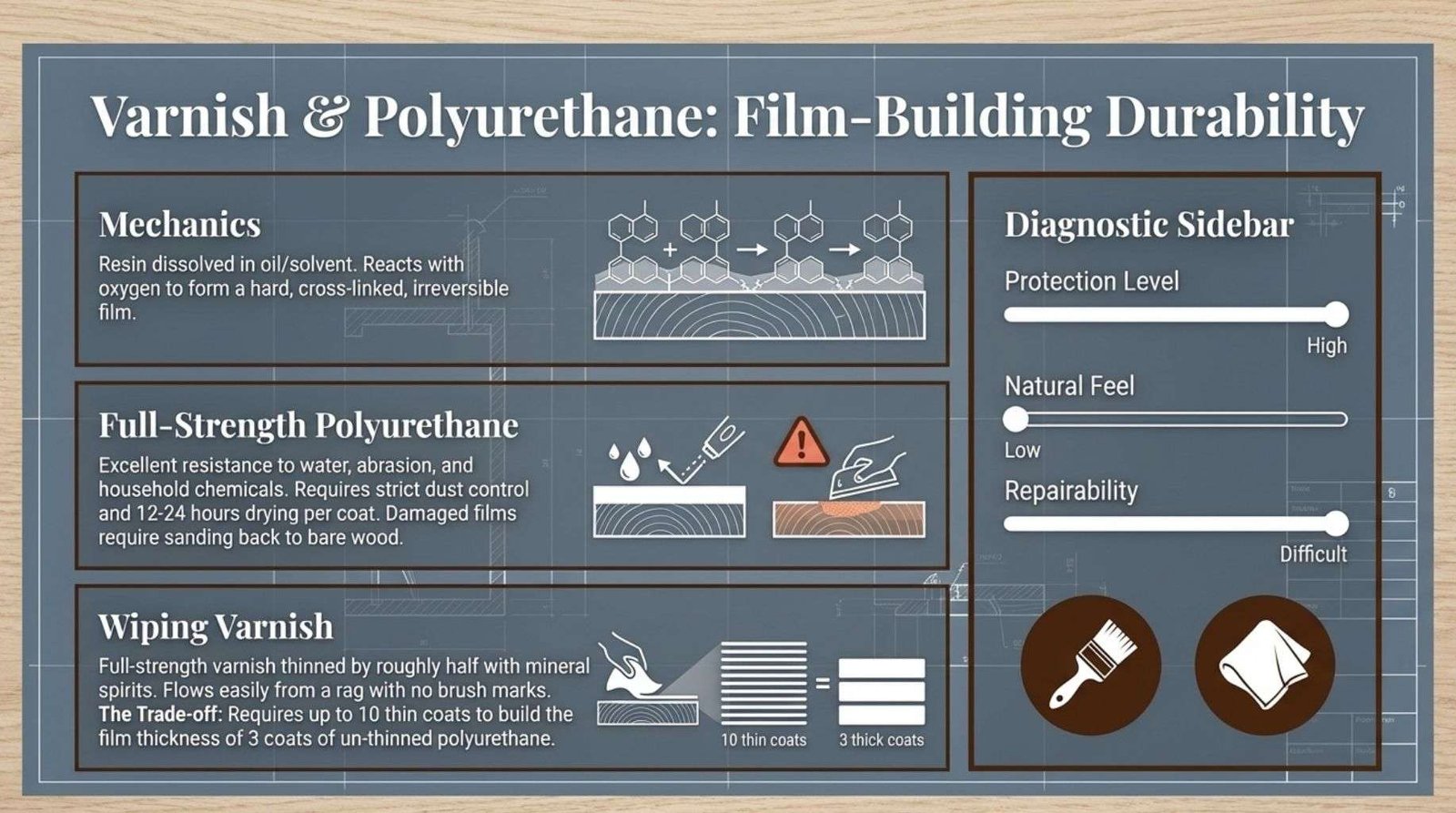
Varnish, in its various forms, is the primary choice when durability is the governing concern. The term covers any finish made from a resin dissolved in oil and a carrier solvent. As the solvent evaporates, the oil and resin react with oxygen to form a hard, cross-linked film.
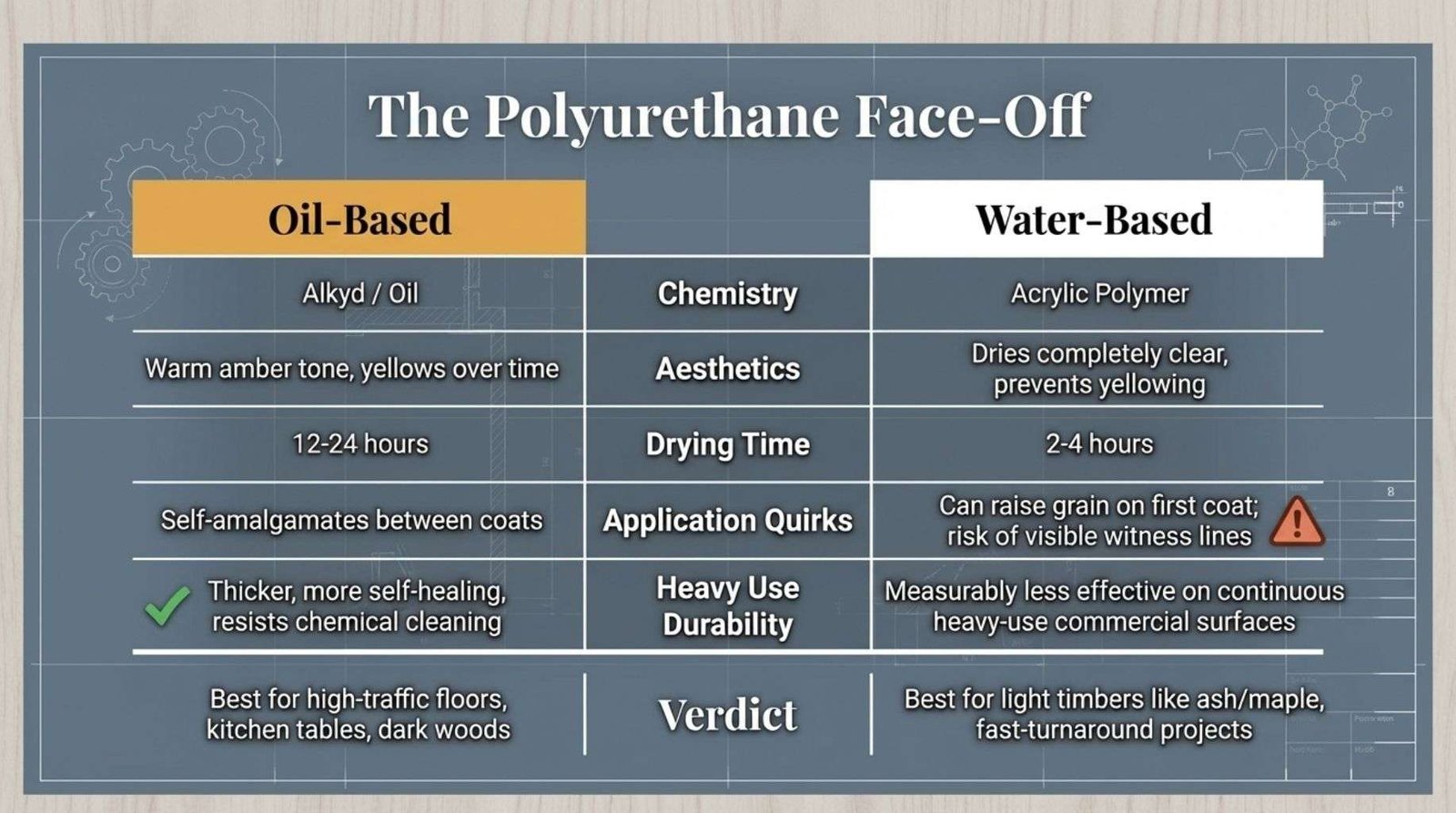
Oil-based polyurethane is the most familiar member of this family. Applied correctly in two or three coats with light sanding between each, it produces a thick, amber-toned film with excellent resistance to water, abrasion and common household chemicals.
Kitchen tables, hardwood floors and surfaces that experience daily contact are legitimate candidates for polyurethane. The difficulty is in the application. Brushing polyurethane requires a clean environment, good lighting and a steady hand to avoid bubbles, runs and brush marks.
Drying time of 12 to 24 hours per coat extends the finishing schedule across several days. Cleanup requires mineral spirits.
Repair of a damaged polyurethane film almost always involves sanding the entire surface back before recoating, because spot repairs are visible in the final surface. Wiping varnish, which is simply full-strength oil-based varnish thinned by roughly half with mineral spirits, is a gentler introduction to film-building finishes.
It flows easily from a rag or foam applicator, levels without brush marks and builds a durable film through multiple thin coats.
The trade-off is time. Ten coats of wiping varnish may be required to build the same film thickness as three coats of full-strength polyurethane.
For a small cabinet or a decorative piece where controlled application matters more than speed, wiping varnish is an excellent solution.
Water-based polyurethane operates on acrylic polymer chemistry rather than oil. It dries in two to four hours, has minimal odour and cleans up with water.
It dries completely clear without the amber warmth of oil-based products, which makes it the logical choice for light-coloured timbers where any yellowing would be visually intrusive.
White ash, hard maple and light-stained pine all benefit from a water-based topcoat. The limitation worth noting is that water-based products can raise the wood grain on the first coat, requiring a light sanding before subsequent coats.
They also do not self-amalgamate between coats the way oil-based products do, which can occasionally produce visible witness lines in the finished film if the surface is not properly abraded between applications.
Marine and Exterior Finishes: Engineered for Movement.
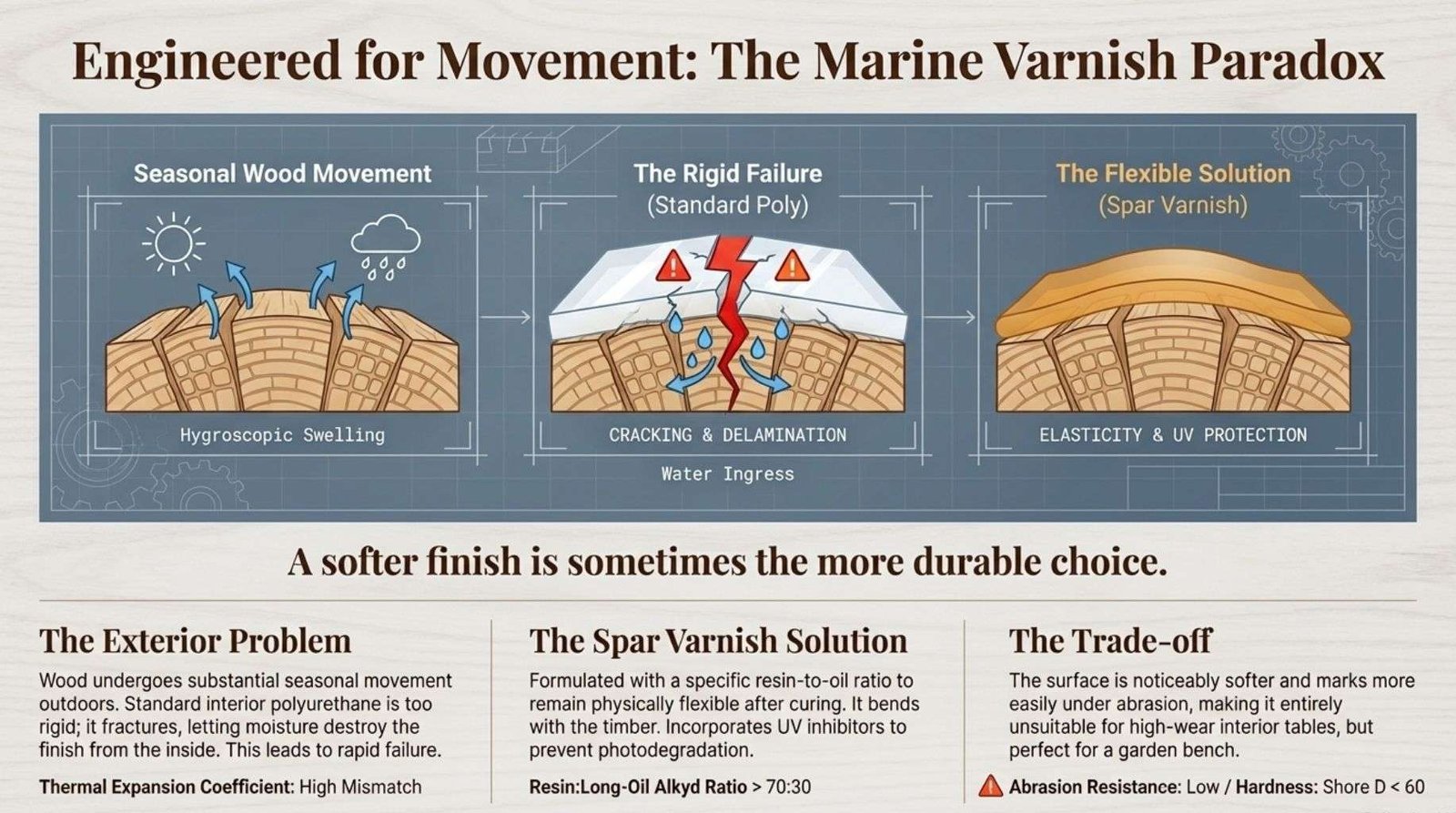
Standard polyurethane, despite its durability, fails outdoors. The film is too rigid to accommodate the substantial seasonal movement that exterior wood undergoes as temperature and humidity swing through their full annual range.
Cracks develop, moisture enters beneath the film and the finish fails from the inside. Marine varnish, often sold under the name spar varnish, is formulated specifically for this problem. The resin-to-oil ratio is deliberately set to retain flexibility after curing.
A properly applied marine varnish film will bend and flex with the wood rather than fracturing. UV inhibitors are incorporated into the formula to resist the photodegradation that destroys both the finish and the underlying lignin in the wood.
Products such as Epifanes, Pettit and McCloskey’s Man o’ War have established reputations in the marine sector and are used just as commonly on agricultural equipment, exterior structural timber and garden furniture exposed to full seasonal cycles.
The trade-off for this flexibility is surface hardness. A spar varnish film is noticeably softer than a hard interior polyurethane when touched.
It marks and scuffs more easily under abrasion. This makes it entirely unsuitable for high-wear interior surfaces, but that is not its intended application.
The point is flexibility and UV resistance at the expense of scratch resistance, and in exterior conditions, that exchange is entirely rational.
This is the counter-intuitive observation that experienced finishers understand: a softer finish is sometimes the more durable choice.
On an exterior window frame or a garden bench exposed to Australian summer conditions and winter rain, a rigid, high-hardness polyurethane will fail within a season. A flexible spar varnish applied in multiple coats and maintained with a light annual recoat will protect the same timber for years.
Two-Part Systems and Paint: Maximum Protection and Complete Coverage.
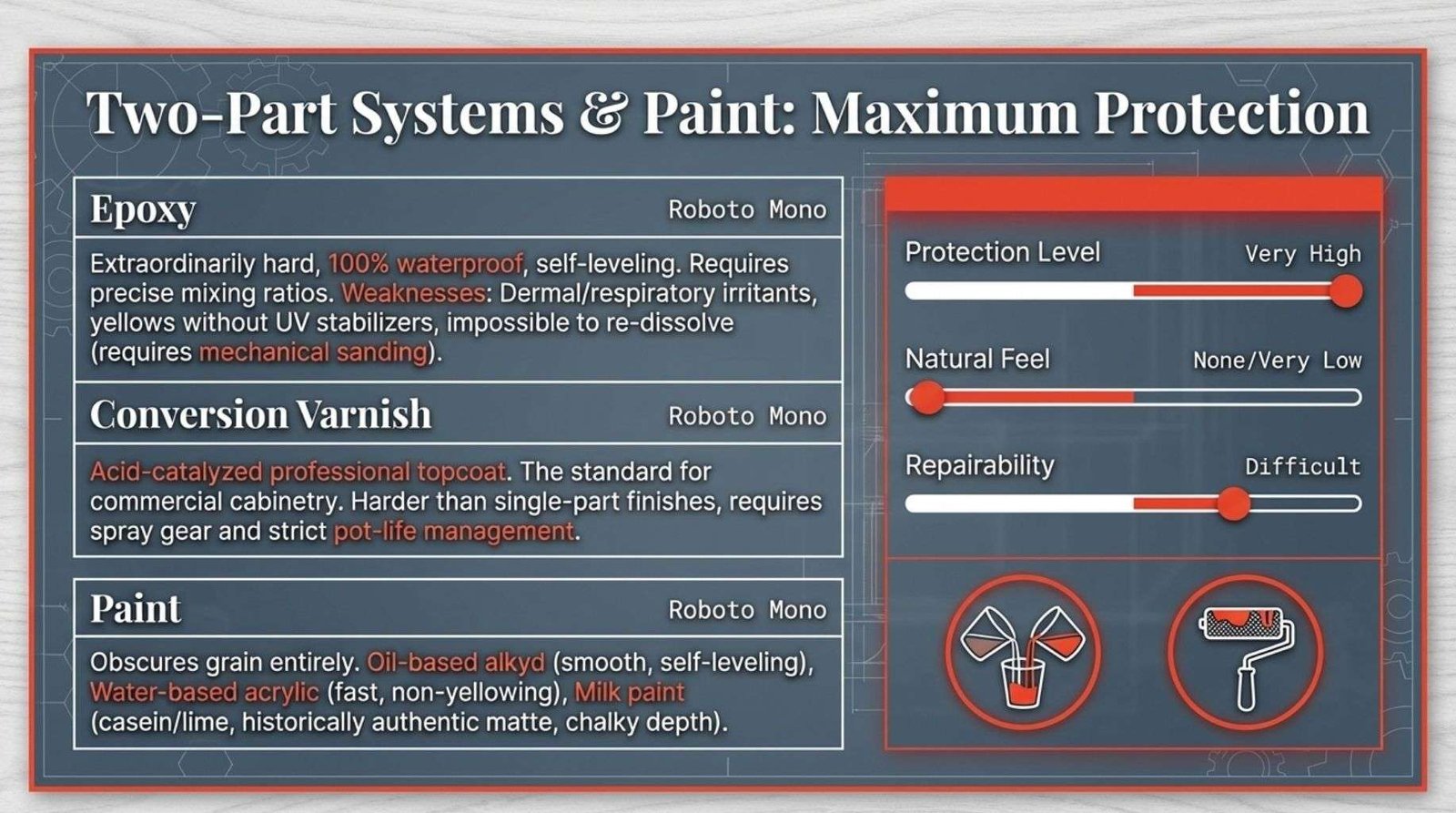
At the extreme end of the protection spectrum sit two-part reactive systems. Epoxy, as a finish material, cures through the chemical reaction between a liquid resin and a hardener mixed at a precise ratio.
The resulting film is extraordinarily hard, completely waterproof and self-levelling in poured applications. Epoxy is the material of choice for bar tops, river tables, kitchen island surfaces and any application requiring a thick, glass-like protective layer. Its weaknesses are well-documented.
Uncured epoxy components are dermal and respiratory irritants, requiring appropriate protective equipment during mixing and application. UV exposure causes yellowing unless the product contains UV stabilisers.
A damaged epoxy surface is genuinely difficult to restore. Mechanical sanding is required because no solvent will re-dissolve the cured material.
Conversion varnish is a professional-grade two-part system built around a varnish resin and an acid catalyst.
It is the standard topcoat for commercial cabinetry production. Cured conversion varnish is harder and more chemically resistant than virtually any single-part finish. It requires professional spray equipment and strict attention to mixing ratios and pot life, but for a small-batch cabinet shop producing kitchen or bathroom furniture, the performance justifies the process investment.
Paint occupies a separate conceptual territory. Where clear and semi-transparent finishes work with the visual character of the wood, paint obscures it entirely. Oil-based alkyd paint produces a hard, durable, self-levelling film with a smooth surface ideal for cabinetry and interior trim.
Water-based acrylic paints, which now dominate the market, dry faster, have lower solvent emissions and retain their colour without yellowing.
Milk paint, made from casein protein, lime and pigment, produces a historically authentic matte finish with a chalky depth that is impossible to replicate with modern acrylic products.
It is the natural choice for furniture reproduction, cottage-style pieces and any project where a worn, layered surface is part of the design intention.
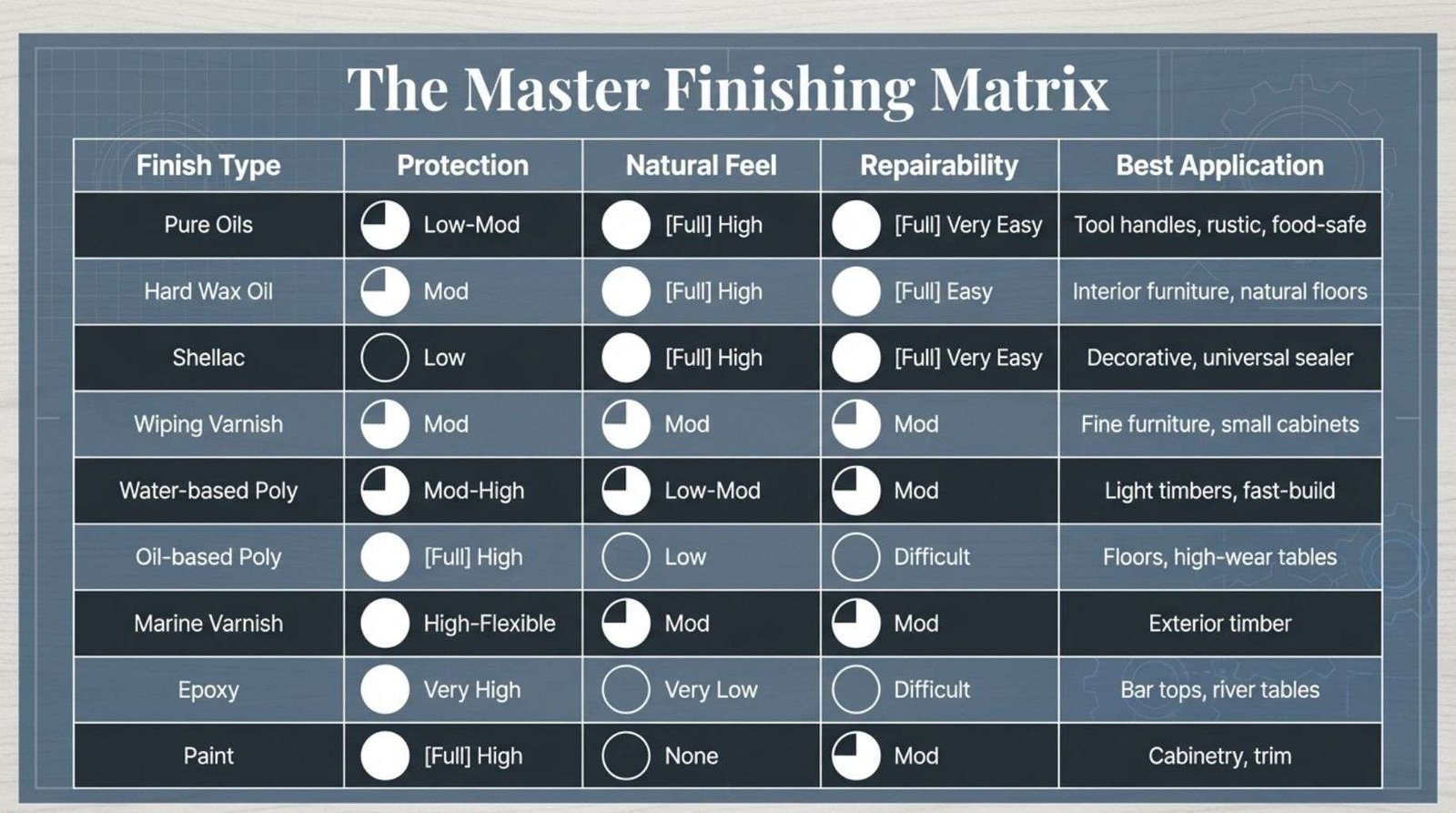
Finish Type | Protection Level | Natural Feel | Repairability | Best Application |
Pure oils (linseed, tung) | Low to moderate | High | Very easy | Tool handles, rustic furniture, food-safe surfaces |
Hard wax oil | Moderate | High | Easy | Interior furniture, floors with natural look |
Shellac | Low | High | Very easy | Decorative pieces, sealers, carved work |
Wiping varnish | Moderate | Moderate | Moderate | Fine furniture, small cabinets |
Water-based polyurethane | Moderate to high | Low to moderate | Moderate | Light timbers, fast-build projects |
Oil-based polyurethane | High | Low | Difficult | Floors, kitchen tables, high-wear surfaces |
Marine spar varnish | High (flexible) | Moderate | Moderate | Exterior timber, garden furniture |
Epoxy | Very high | Very low | Difficult | Bar tops, river tables, structural repairs |
Paint (acrylic or alkyd) | High | None (grain obscured) | Moderate | Cabinetry, trim, decorative furniture |
Choosing the Right Finish: A Rational Framework.
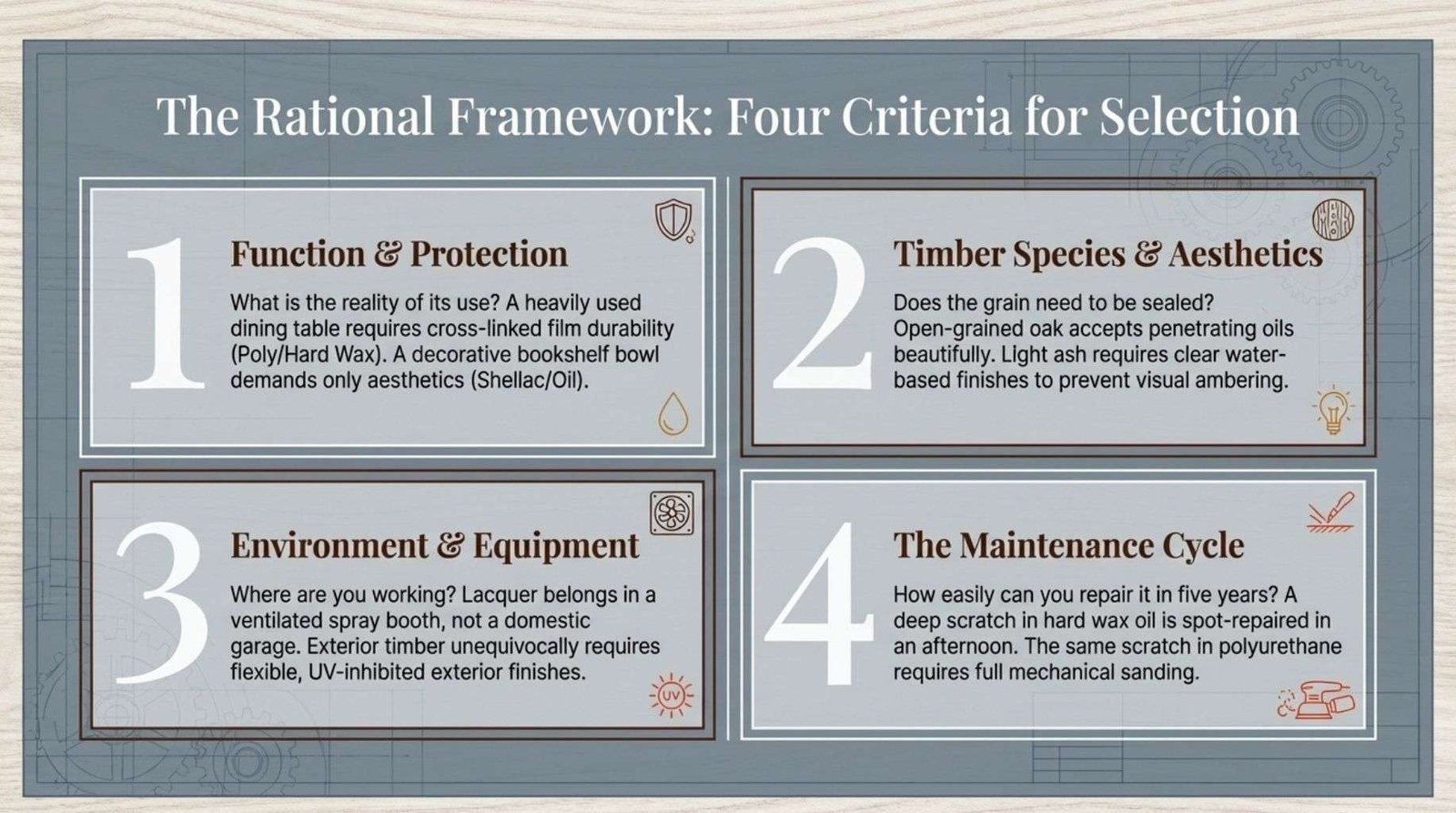
Four criteria should govern every finishing decision. Working through them in sequence reduces the choice from overwhelming to manageable.
The first criterion is the function of the piece and the level of protection required. A dining table used daily for meals, homework and craft activities needs a finish that resists moisture, heat, abrasion and cleaning products.
An oil-based polyurethane or a commercial-grade hard wax oil addresses that requirement. A carved decorative bowl displayed on a bookshelf carries no such demands, and a hand-rubbed oil or a coat of shellac is entirely appropriate.
The second criterion is the species and character of the timber and the aesthetic the woodworker wants to achieve.
Open-grained species such as ash, oak and ring-porous walnut accept penetrating finishes readily and respond with particular beauty to oils and hard wax products. Dense, fine-grained timbers such as cherry, maple and blackwood may benefit from a sealing coat before finishing to prevent uneven absorption.
If the goal is to preserve the natural warmth of a dark walnut piece, an oil-based product will add the amber depth that suits the material.
If the goal is to present white ash in a clean, contemporary way, a water-based product that dries clear is the correct choice.
The third criterion is the application environment and the woodworker’s practical situation. Lacquer and conversion varnish require spray equipment and adequate ventilation.
Attempting to brush lacquer in a domestic garage is not a viable approach. Oils, hard wax oils and wiping varnishes are designed for rag application and are fully accessible without specialist equipment.
The distinction between indoor and outdoor use also applies with particular force here. No standard interior finish belongs on exterior timber.
The UV exposure alone will degrade the film within months, and seasonal movement will do the rest.
The fourth criterion, often underweighted, is repairability. A beautiful polyurethane finish on a kitchen table will eventually sustain damage.
A deep scratch or a heat mark requires sanding the entire surface back and recoating from bare wood. The same damage on a hard wax oil surface can be addressed in an afternoon with a fine abrasive pad and a small quantity of fresh finish, applied only to the affected area, with no visible seam in the result.
For furniture that will be used continuously over many years, the maintenance cycle matters as much as the initial result.
One practical trade-off that is specific and worth stating clearly: water-based polyurethane, despite its many genuine advantages, performs measurably less well than high-quality oil-based polyurethane on surfaces that experience continuous heavy use, such as commercial kitchen bench tops or high-traffic timber floors.
The film is typically thinner, less self-healing and less resistant to the repeated cleaning cycles and chemical exposure involved. In that specific application, the faster drying time and low odour of a water-based product do not compensate for the performance gap.
The right product is the one that survives the conditions it will actually face.
The Finished Piece.
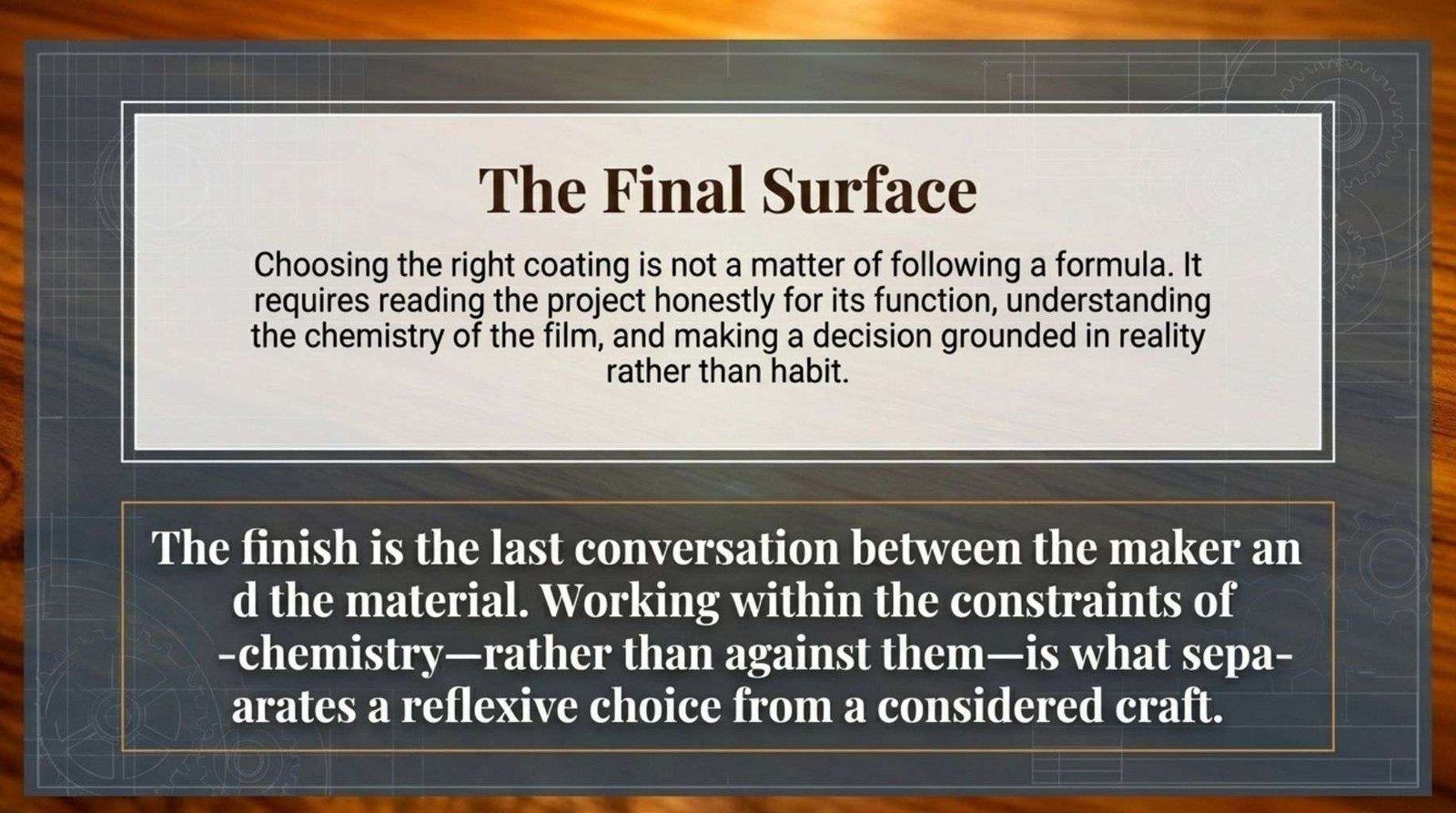
A woodworking project is not complete at the point of assembly. The finish is the last conversation between the maker and the material, and it shapes how that material presents itself to the world and endures within it.
Choosing the right coating is not a matter of following a formula. It requires understanding the chemistry involved, reading the project honestly for its function and use, and making a decision grounded in those realities rather than habit or convenience.
The hardest part of finishing is accepting that no single product does everything well. The most protective finishes are the least natural in feel. The most repairable finishes offer the least resistance to wear.
A finish that excels outdoors is often ill-suited to interior furniture. Working within these constraints, rather than against them, is what separates a considered approach to finishing from a reflexive one.
The grain of the timber, the quality of the preparation and the intelligence of the coating choice all converge in the final surface.
That surface is what the piece becomes.