What Are ‘Other Goodies’ With Regards To Woodwork Products?
The term ‘other goodies’ doesn’t get used that much and it
appears pretty simple yet it carries quite a bit of pull. The reason I say this
is that it signals curiosity and the pleasure of finding something unexpected.
In a woodworking context it becomes a way to frame the
smaller creative pieces that enrich a home and give a workshop its character.
These items often sit at the edge of a maker’s main product
line yet they hold a distinct appeal. They invite touch. They reward close
attention. They help customers feel that they have discovered something
personal.
The Appeal of the Unplanned Find.
Many woodworkers notice that visitors at a market stall
often pause at the smaller pieces first. A smooth offcut turned into a key fob
catches the light.
A small lidded box reveals the scent of cedar when opened.
These items are not always the centrepiece of a display yet
they create a moment of connection. The grain pattern on a small object can be
more striking than on a larger one because the viewer sees it at close range.
This proximity gives the piece a sense of intimacy that
larger furniture does not always achieve.
A brief aside often emerges in these settings.
Someone picks up a small carved spoon and comments on how it
reminds them of one their grandmother used for jam. These moments are not
planned yet they shape how people remember the stall.
Why Other Goodies Fit Naturally Into Woodworking.
Woodworking lends itself to this category because the
material itself encourages variation. A single board of blackwood can produce a
serving board a set of coasters and a handful of small decorative items.
Each piece carries its own pattern. The tactile quality of
timber means that even a simple item feels substantial. The warmth of the
surface under natural light reinforces this impression.
There is a counter-intuitive aspect here. Smaller items
often reveal craftsmanship more clearly than larger ones.
A tiny chamfer on a tea scoop or the crisp edge of a
dovetailed corner on a small box shows precision that might be overlooked on a
larger project. This surprises experienced woodworkers who expect the opposite.
How Customers Interpret the Phrase Other Goodies.
When customers ask about other goodies they are usually seeking
something beyond the main product range. They want items that feel like
discoveries.
They want pieces that are not immediately visible. They want
something that feels personal.
- Hidden gems that
reward slow browsing.
- Unique items
that differ from standard offerings.
- Gift-worthy
pieces that feel thoughtful.
- Extras that
spark curiosity.
These expectations shape how a woodworker can present
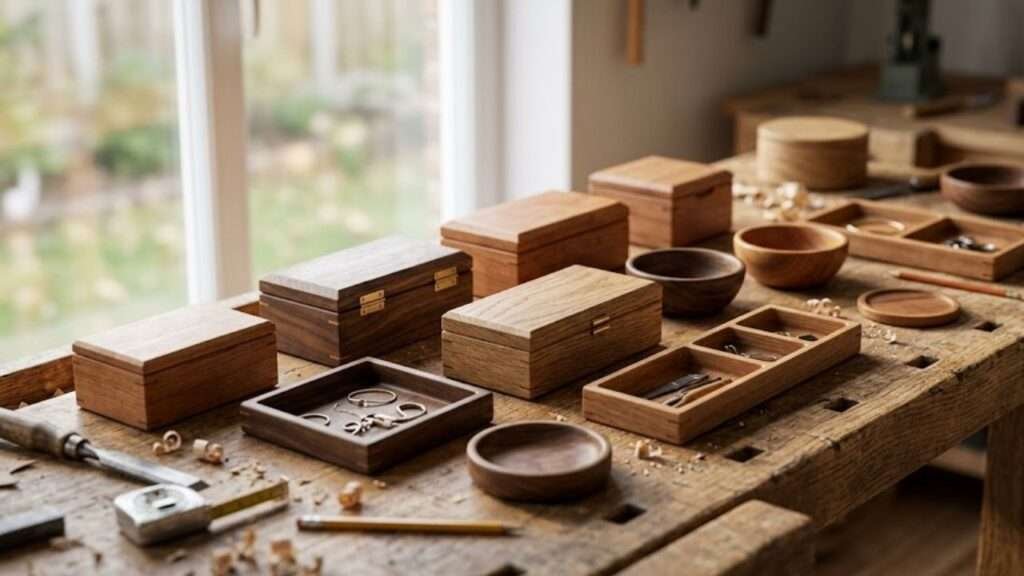
smaller creative products. A small tray made from a leftover piece of walnut
becomes more than a leftover. It becomes a find.
Positioning Other Goodies in a Retail or Market Setting.
A dedicated area for these items can change how customers
move through a space. A small table with grouped objects encourages
exploration.
The sound of a wooden lid settling into place draws
attention. The soft sheen of oil on a turned bowl catches the eye from across
the room.
A practical trade-off appears here. A table filled with too
many small items can feel cluttered which reduces the sense of discovery.
A curated selection works better even if it means leaving
some pieces in storage. This limitation helps maintain the atmosphere of a
considered display.
A simple table can be divided into themes. One section might
hold kitchen-related pieces. Another might focus on decorative objects. A third
might highlight seasonal items. This structure helps customers understand the
range without feeling directed.
Using Other Goodies as a Branding Element.
The phrase itself can become part of a brand identity. It
feels conversational and human which suits handmade products.
It signals that the maker has more to offer than the main
catalogue. It also suggests that the items have stories behind them.
A woodworker might use the phrase in signage or product
descriptions. A small stand at a market could carry a sign reading Other
Goodies Table.
A website could include a section titled Hidden Gems and
Other Goodies. These labels create a sense of anticipation.
Short product descriptions can reinforce this idea.
A set of jar lids turned from reclaimed hardwood can be introduced as a small addition from the other goodies collection.
A compact desk organiser made from offcuts
can be framed as a piece that answers the question of what else have you got.
How Other Goodies Support Creative Practice.
Working on smaller items provides a change of pace in the
workshop. The sound of a block plane smoothing a short length of timber feels
different from planing a long board. The work is more contained. The feedback
is immediate.
The scent of freshly cut pine or the fine dust from sanding
a piece of jarrah becomes part of the rhythm of the day.
These pieces also allow experimentation. A maker can test a
new finish on a small tray before applying it to a larger project. A new joint
can be trialled on a small box. These experiments often lead to new product
ideas.
There is also a practical benefit. Small items use offcuts
that might otherwise be discarded. This reduces waste and creates value from
material that still has beauty.
A Useful Framework for Categorising Other Goodies.
A simple table can help woodworkers think about how these
items fit into their product range.
Category | Typical Items | Customer Response | Workshop Benefit |
Functional | Coasters
small trays jar lids | Practical
appeal with tactile interest | Efficient
use of offcuts |
Decorative | Small
boxes carved figures ornaments | Emotional
connection and gift appeal | Opportunity
for fine detail work |
Experimental | New
shapes finishes or joints | Curiosity
and conversation | Skill
development and testing |
Seasonal | Festive
ornaments themed pieces | Timely
interest and impulse purchases | Short
production runs |
This structure helps clarify which items belong in the other
goodies category and how they support both creative and commercial goals.
Integrating Other Goodies Into a Broader Woodworking
Lifestyle.
These items often become part of daily routines. A small
wooden scoop sits in a jar of loose leaf tea. A hand-turned bowl holds keys
near the front door.
A compact stand keeps pens organised on a desk. These pieces
contribute to the atmosphere of a home. They add warmth to a shelf or a
benchtop.
They remind the owner of the woodworker’s hand.
A small tangential observation arises here. Many people keep
their favourite small wooden items in places where natural light falls across
them during the day. The changing light reveals new details in the grain which
encourages continued appreciation.
These items also help woodworkers stay connected to their
craft. When time is limited a small project can be completed in an evening. The
satisfaction of finishing a piece keeps motivation steady.
Closing Thoughts.
Other goodies is more than a casual phrase. It captures the
pleasure of discovering small handmade items that enrich a home.
It gives woodworkers a way to present creative pieces that might otherwise sit quietly in the background.
It supports experimentation and
encourages thoughtful display. Most importantly it helps customers feel that
they have found something personal and memorable.