Brands Of Circular Saws
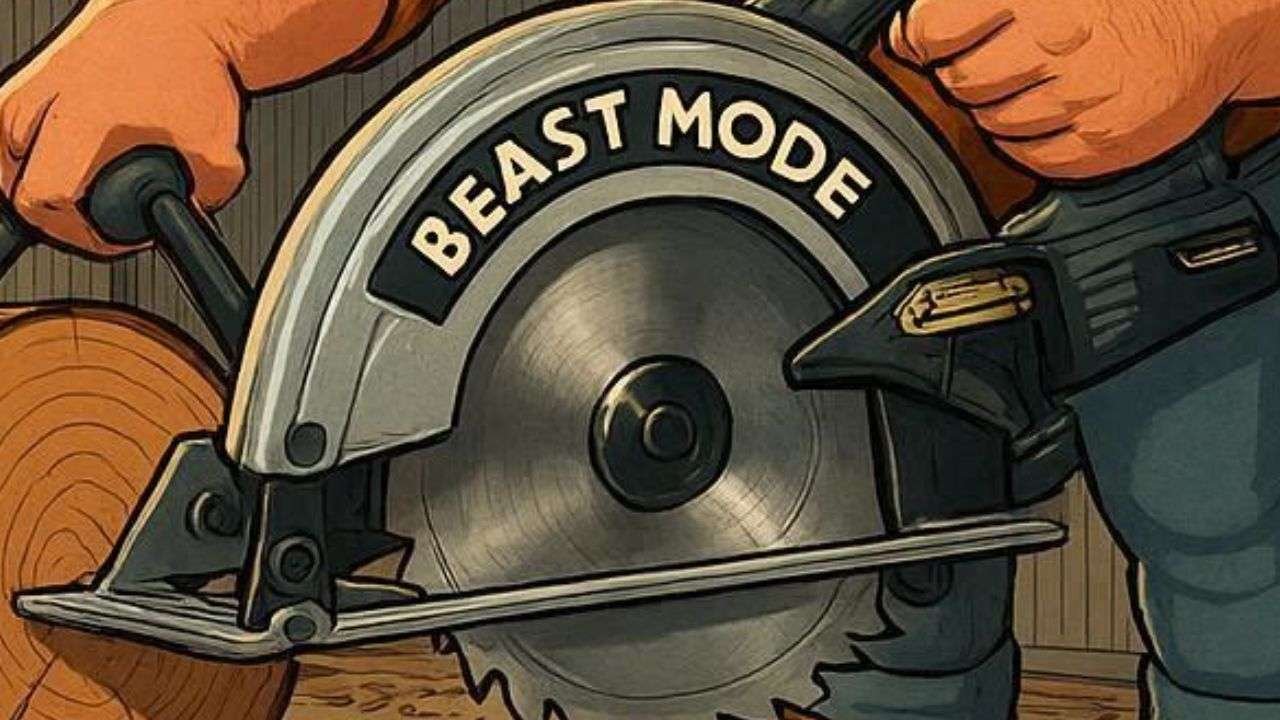
Circular saws occupy a familiar place in many woodshops. Their presence is so common that it becomes easy to overlook what their popularity reveals about the way people build, repair and shape their homes.
The wide range of brands on the market signals more than consumer choice.
It reflects a long relationship between woodworkers and a tool that has adapted to changing expectations while remaining grounded in the simple act of guiding a spinning blade through timber.
A Tool That Fits Into Many Workflows.
Circular saws have become a fixture in both professional and domestic settings because they adapt to varied working styles.
A saw can move from a garage bench to a backyard deck project without feeling out of place. The sound of the motor rising as it meets the grain is familiar across many environments.
This flexibility encourages manufacturers to produce models that suit different levels of experience and different workshop layouts.
A compact saw with a narrow shoe feels at home on a small plywood sheet while a heavier model with a magnesium base plate suits long straight cuts in hardwood. The range of brands reflects these varied needs rather than a single definition of what a circular saw should be.
How Brand Diversity Shapes User Experience.
The number of brands available influences the way woodworkers think about their tools. Each brand tends to emphasise a particular quality.
Some focus on smooth start up behaviour while others highlight the feel of the handle or the visibility of the cut line.
A woodworker who spends time trimming door bottoms may value a saw with a clear sight path while someone who breaks down large sheets may prefer a model with a wide base that glides steadily across the surface.
The scent of freshly cut pine rising from the kerf can feel slightly different depending on the saws speed and blade design. These subtle variations encourage users to develop preferences that feel personal rather than generic.
The Role of Materials and Build Quality.
Circular saws differ in the materials used for their housings, base plates and guards. Aluminium bases feel cool to the touch and slide smoothly across timber while steel bases offer a sense of weight that some users find reassuring.
Plastic housings reduce overall mass which helps during overhead cuts.
The variety of brands ensures that these material choices remain diverse. A saw with a cast aluminium guard may appeal to someone who values durability while a saw with a composite guard may suit a user who prioritises ease of handling.
The texture of the grip also varies. Some handles have a fine rubber pattern that holds well when hands are slightly dusty from sanding while others use a firmer compound that feels stable during long cuts.
A Nuanced Observation About Popularity.
The sheer number of circular saw brands might suggest that users are constantly seeking more power or more features.
The surprising truth is that many woodworkers continue to rely on modestly powered models for most tasks.
A saw with a mid range motor can cut framing timber cleanly when paired with a sharp blade. This runs counter to the assumption that higher power always leads to better results.
The quality of the blade, the steadiness of the user and the stability of the workpiece often matter more than the motor rating.
This insight becomes clear when cutting a length of Tasmanian oak. A well supported board and a steady feed rate produce a clean edge even with a saw that would not be considered top tier.
Trade Offs That Influence Purchasing Decisions.
Choosing a circular saw involves a practical trade off between weight and stability. A heavier saw tracks well along a straightedge because its mass resists small movements.
This helps when cutting long lengths of hardwood. The drawback is fatigue during extended use.
A lighter saw feels easier to lift and reposition but may require more attention to maintain a straight line.
This trade off becomes noticeable when cutting multiple sheets of plywood.
The lighter saw reduces strain during repeated setups while the heavier saw delivers more consistent cuts. The variety of brands ensures that users can choose where they prefer to sit within this balance.
How Circular Saws Support Domestic Woodworking.
In many homes the circular saw becomes the first power tool that allows a person to shape their environment in a meaningful way.
Cutting a benchtop to length or trimming a shelf to fit a narrow alcove creates a sense of progress that feels immediate.
The smell of sawdust settling on the floor and the warmth of the motor housing after a cut contribute to the experience.
Manufacturers recognise this role and design saws that feel approachable.
Clear depth scales, simple bevel adjustments and stable base plates help users feel confident. The range of brands ensures that these features appear in many forms which supports different learning styles.
A Tangential Observation About Storage.
Circular saws often end up stored in places that reflect the rhythm of a workshop. Some sit on open shelves where the blade guard catches the morning light. Others rest in plastic cases that carry the faint scent of resin from previous cuts. This small detail highlights how the tool becomes part of the workshop landscape. The variety of brands means that these cases and housings differ in shape and colour which adds to the visual character of the space.
Comparing Key Features Across Brands.
The following table outlines several features that commonly differ between brands. It helps clarify why the market supports so many models.
| Feature |
Typical Variation |
Impact on Use |
Sensory Detail |
Practical Note |
| Base plate material |
Aluminium or steel |
Affects glide and stability |
Cool metal sliding across timber |
Steel adds weight which improves tracking. |
| Handle texture |
Fine rubber or firm composite |
Influences grip comfort |
Slight give under the fingers |
Softer grips feel better during long sessions. |
| Sight line design |
Open front or narrow guard |
Changes visibility of cut |
Clear view of blade meeting grain |
Open designs help with precision trimming. |
| Motor behaviour |
Smooth start or rapid start |
Alters control at beginning of cut |
Subtle vibration through the wrist |
Smooth start reduces initial movement. |
| Guard mechanism |
Metal or composite |
Affects durability and weight |
Guard tapping lightly as it retracts |
Composite guards reduce overall mass. |
Why Circular Saws Remain Central to Woodworking.
Circular saws continue to hold a central place in woodworking because they bridge the gap between rough construction and fine craftsmanship.
A saw can break down large sheets for cabinetry then shift to trimming small components for a home project.
The grain of the timber responds predictably to the blade which gives users a sense of control.
The wide range of brands ensures that this experience remains accessible. Whether a user prefers a compact saw for tight spaces or a robust model for structural work the market provides options that feel tailored rather than generic.
It is not realistically possible to list all circular saw brands and every make/model in the world (there are thousands, with models changing every year), but here is a broad table of major brands and representative models across corded and cordless categories with power source and notable features.
Sample List of Circular Saw Brands and Models
| Brand |
Model (example) |
Power source |
Type / size (approx.) |
Notable features / “special” points |
| Skil |
5280-01 |
Corded electric |
7¼” sidewinder |
Very common DIY corded saw, lightweight and affordable, includes basic features like laser guide on some versions. |
| Skilsaw |
SPT77WML-01 |
Corded electric |
7¼” worm drive |
Magnesium worm-drive pro saw, high power and durability for framing; considered a benchmark for pros. |
| Skilsaw |
SPT70WM-22 “Sawsquatch” |
Corded electric |
10¼” worm drive |
Cuts 4x material in a single pass, niche for heavy framing and timber work. |
| Milwaukee |
M18 FUEL 2732-20 |
18 V battery (M18) |
7¼” sidewinder |
Flagship cordless saw; brushless motor, often tested as top cordless performer; strong runtime and power on M18 platform. |
| Milwaukee |
M18 FUEL Rear Handle (7¼”) |
18 V battery (M18) |
7¼” rear-handle |
Designed to compete with corded worm drives; claims faster cutting than 15 A worm drive, optimized cooling, pro framing focus. |
| DeWalt |
DCS565N |
18 V battery (XR) |
165 mm (~6½”) |
Compact brushless cordless, good power-to-weight, popular all-rounder; pairs with 18 V XR packs. |
| DeWalt |
DCS391N |
18 V battery (XR) |
165 mm (~6½”) |
Fast, accurate cordless saw with magnesium shoe; older brushed design but still widely sold. |
| DeWalt |
DCS570B (20V MAX 7¼”) |
20 V battery (XR) |
7¼” sidewinder |
Full-size cordless circular saw on 20V MAX platform, strong performance for framing and sheet goods. |
| Makita |
DHS680Z |
18 V battery (LXT) |
165 mm (~6½”) |
Compact brushless cordless with 5,000 rpm no-load speed, LED lights and good ergonomics. |
| Makita |
DSS611Z |
18 V battery (LXT) |
165 mm (~6½”) |
Cost-optimised cordless version of DSS610, omits LED, blower and electric brake to keep price down. |
| Makita |
XSS02Z (US) |
18 V battery (LXT) |
6½” sidewinder |
Widely sold cordless general-purpose saw, part of large 18 V LXT ecosystem. |
| Makita |
HS6601/2 |
Corded electric |
165 mm (~6½”) |
Compact corded 1,050 W saw, around 5,200 rpm, aimed at accurate trimming and general carpentry. |
| Makita |
HS7601J/2 |
Corded electric |
7¼” sidewinder |
Popular corded pro/serious-DIY saw; frequently appears in “best circular saw” lists. |
| Bosch |
PKS 66 AF |
Corded electric |
190 mm (≈7½”) |
European DIY model with guide rail capability; often a top-selling corded circular saw. |
| Bosch |
GKS18V-25CN (ProFactor) |
18 V battery |
7¼” sidewinder |
High-performance cordless with blade-left orientation, LED cutline, and connectivity-ready electronics. |
| Metabo / Metabo HPT |
Various 18 V models (e.g. 36 V MultiVolt) |
Battery (18–36 V) |
6½–7¼” |
Known for pro-grade saws, including MultiVolt platform that can run corded or cordless; often ranked near top brands. |
| Ryobi |
R18CS7-0 ONE+ |
18 V battery (ONE+) |
7¼” (approx.) |
Brushless DIY/“prosumer” saw on budget-friendly ONE+ system; good value for non‑pros. |
| Ryobi |
5½” ONE+ models |
18 V battery |
5½” compact |
Smaller blade for controllability and accuracy, suits light‑duty cutting and tight spaces. |
| Worx |
Various compact & full-size |
20 V battery |
4½–6½” |
Emphasis on affordable cordless tools; some mini circular saws and compact designs. |
| Craftsman |
Various corded & cordless |
Mains & 20 V battery |
6½–7¼” |
Mid-market brand; circular saws targeted at homeowners with decent performance for price. |
| Flex |
24 V brushless range |
24 V battery |
7¼” |
Newer pro brand with high‑output 24 V packs; marketed for strong cutting performance vs established pro brands. |
| Festool |
HK/HKC circular & plunge |
Mains & 18 V battery |
160–190 mm |
High-end German saws, often track-compatible; focus on dust extraction, precision, and system integration. |
| Ronix |
4311 |
Corded electric |
7¼” sidewinder |
1,500 W, about 4,800 rpm, pitched as a strong general-purpose corded saw with low vibration and ergonomic design. |
| Ronix |
4318V |
Corded electric |
7¼” sidewinder |
Budget-focused 1,350 W model with high rpm (~6,000), aimed at DIY and pro users on a budget. |
| HYCHIKA |
Corded electric circular saw |
Corded electric |
7¼” (typical) |
Low-cost corded saw often featured in “best budget” lists; aimed at DIYers. |
| Evolution |
R185CCS |
Corded electric |
185 mm multi‑material |
Can cut wood, metal, and plastics with appropriate blade; popular as multi‑material solution. |
| Dremel |
CS12JM Saw Station |
Battery powered |
85 mm mini saw |
Small, guide‑rail “saw station” concept; suited to light, precise work rather than framing. |
| Bosch (DIY) |
PKS range (various) |
Corded electric |
~5½–7¼” |
Common European DIY circular saws with guide options and safety features. |
Closing Reflection.
The popularity of circular saws is not simply a matter of sales volume. It reflects the way woodworkers engage with their materials and their spaces.
The variety of brands signals a tool category that continues to evolve while remaining grounded in familiar tasks.
Each saw carries its own feel from the weight of the base to the sound of the blade rising through the grain.
This diversity ensures that circular saws remain a natural part of workshops where craftsmanship and domestic life meet.