Woodcarving
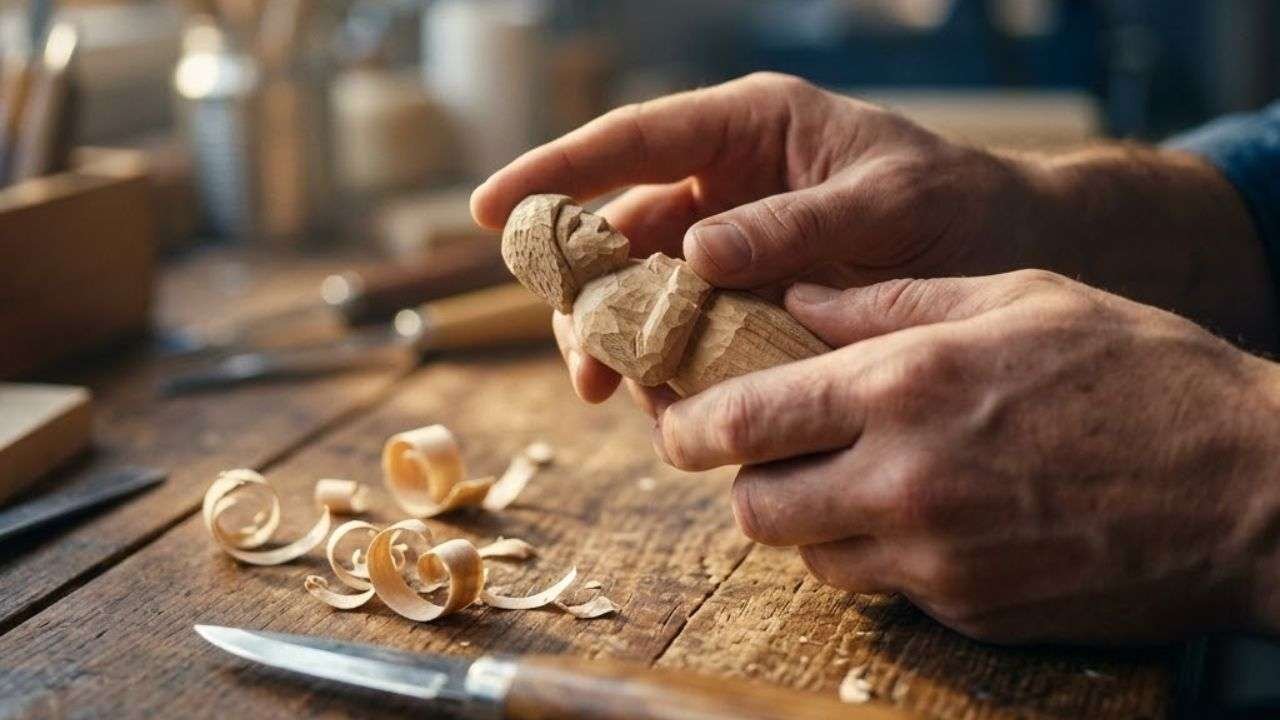
Woodcarving sits at an interesting intersection of patience, material understanding and quiet domestic rhythm.
It rewards steady attention. It also reshapes how a workshop feels.
A small pile of shavings on a bench can change the atmosphere of a room more than many people expect.
Understanding the Nature of Carving Wood.
Woodcarving begins with the material itself. The fibres respond differently to each tool and the workshop light reveals subtle shifts in grain direction as the blade moves.
A piece of green birch feels cool and slightly damp in the hand while a block of seasoned cherry carries a dry warmth that encourages slower shaping.
These differences matter because they influence both technique and pace.
Carving is often described as a slow craft yet many experienced carvers note that the early stages can move quickly.
Removing bulk material with a gouge or mallet sometimes feels more like rough carpentry than fine detail work.
he counter intuitive part is that the most delicate results often come from this confident early shaping rather than from the final passes. A clean initial cut sets the tone for everything that follows.
The workshop environment also shapes the experience. Morning light falling across a bench can make grain lines easier to read.
A quiet room helps with concentration although some carvers prefer the soft background sound of a radio to maintain rhythm.
Selecting Tools That Support Consistent Progress.
Tool choice influences both workflow and enjoyment. A well honed carving knife glides through softwoods with a smooth, almost wax like feel.
A dull knife drags and leaves compressed fibres that are difficult to correct later. Many carvers keep a small strop on the bench so they can refresh an edge without interrupting momentum.
Different tools serve different stages of the work.
- A straight carving knife shapes general forms.
- Gouges remove material quickly and establish contours.
- V tools define crisp lines and decorative elements.
- A small mallet assists with controlled force when working dense hardwoods.
A practical trade off appears when selecting tool sets. A large set offers versatility but requires more maintenance time.
A smaller set limits options but encourages deeper familiarity with each tool. Many experienced carvers find that four or five well maintained tools outperform a drawer full of neglected ones.
A brief aside is worth noting. Some carvers keep a favourite tool that technically overlaps with others but feels right in the hand. This preference is not always logical yet it often improves the quality of the work.
Choosing Woods That Match the Project.
Different woods carve with distinct personalities. Basswood is widely used because it accepts detail without resisting the blade.
Its pale surface also takes finishes evenly. By contrast, walnut offers a rich colour and a satisfying density although it demands sharper tools and slower cuts. The scent of freshly carved cedar can fill a workshop with a warm, resinous aroma that lingers on clothing.
A useful way to compare carving woods is through their working characteristics.
| Wood Type | Texture | Carving Difficulty | Typical Use |
| Basswood | Fine and even | Low | Figurines and relief work |
| Pine | Soft with variable grain | Moderate | Rustic shapes and larger forms |
| Walnut | Dense and smooth | High | Decorative pieces and heirloom items |
| Cedar | Aromatic and soft | Low to moderate | Bowls and small household objects |
The table highlights a practical point. The easiest wood is not always the most rewarding. Some carvers prefer the slight resistance of walnut because it provides clearer feedback through the tool. Others enjoy the forgiving nature of basswood when learning new techniques.
Establishing a Safe and Comfortable Workspace.
A calm workspace supports better carving. A stable bench prevents vibration and a well positioned lamp reduces eye strain.
The soft sound of a knife slicing through fibres becomes easier to interpret when the environment is steady. Safety equipment also plays a role.
Cut resistant gloves reduce the likelihood of injury during controlled hand carving. A leather apron protects clothing from shavings and minor tool slips.
Ventilation matters when sanding carved surfaces. Fine dust from hardwoods can irritate the throat.
A simple dust mask and an open window usually provide adequate protection for small projects. The goal is not to create a sterile environment but to maintain a comfortable and predictable one.
One limitation worth acknowledging is space. Carving does not require a large workshop yet it does benefit from a dedicated area where tools can remain accessible. Constantly packing and unpacking tools disrupts the flow of work and increases the chance of misplacing small gouges.
Developing Techniques That Build Confidence.
Technique evolves through repetition. The first cuts on a new project often feel tentative. As the form emerges the hands begin to move with more certainty.
The texture of the wood under the thumb becomes a guide. A slight change in resistance signals a shift in grain direction. A clean curl of shaving indicates that the angle is correct.
Several foundational techniques support consistent progress.
- Making slicing cuts rather than forcing straight downward pressure.
- Working with the grain whenever possible to avoid tear out.
- Using controlled wrist movements for detail work.
- Removing small amounts of material to maintain accuracy.
A lived in example illustrates the value of these techniques. When carving a small spoon from a piece of apple wood the bowl section often requires careful slicing cuts to avoid splitting along the grain.
The handle can then be shaped with longer strokes that follow the natural curve of the wood. The contrast between these two areas teaches the importance of adapting technique to the material.
Finishing Methods That Enhance the Final Form.
Finishing a carved piece brings out the character of the wood. A light sanding smooths tool marks although many carvers prefer to leave subtle facets created by the knife.
These facets catch the light in a way that manufactured surfaces cannot replicate. Applying a natural oil such as tung or linseed deepens the colour and highlights the grain. The scent of the oil mixing with the wood creates a moment of quiet satisfaction.
Finishes vary in effect.
- Oils penetrate and enrich the surface.
- Waxes add a soft sheen and a pleasant tactile quality.
- Shellac provides a more formal appearance for decorative pieces.
A nuanced observation arises here. A perfectly smooth finish is not always the most appealing. Slight texture can make a piece feel more alive in the hand. The goal is to enhance the wood rather than to disguise it.
Integrating Carving Into a Woodworking Lifestyle.
Carving fits naturally into a broader woodworking practice. It can be a standalone craft or a complementary skill that enriches furniture making and home projects.
A carved drawer pull adds personality to a cabinet. A hand shaped bowl on a kitchen shelf brings warmth to a room.
These small details influence how a home feels.
The rhythm of carving also supports a balanced workshop routine.
After a day of planing boards or assembling joinery a short carving session provides a slower, more reflective pace.
The soft sound of shavings falling onto the bench can reset the mind. Some woodworkers keep a small block of offcut timber near the vise so they can carve a simple shape during breaks.
This habit maintains skill without requiring a full project.
Closing Thoughts.
Woodcarving offers a steady and rewarding path for anyone who enjoys working with natural materials. It encourages attention to detail and invites a slower pace.
The combination of texture, light and quiet handwork creates a distinctive atmosphere in the workshop. Each carved piece carries the memory of the tools that shaped it and the time spent bringing it to life.