Woodwork Finish
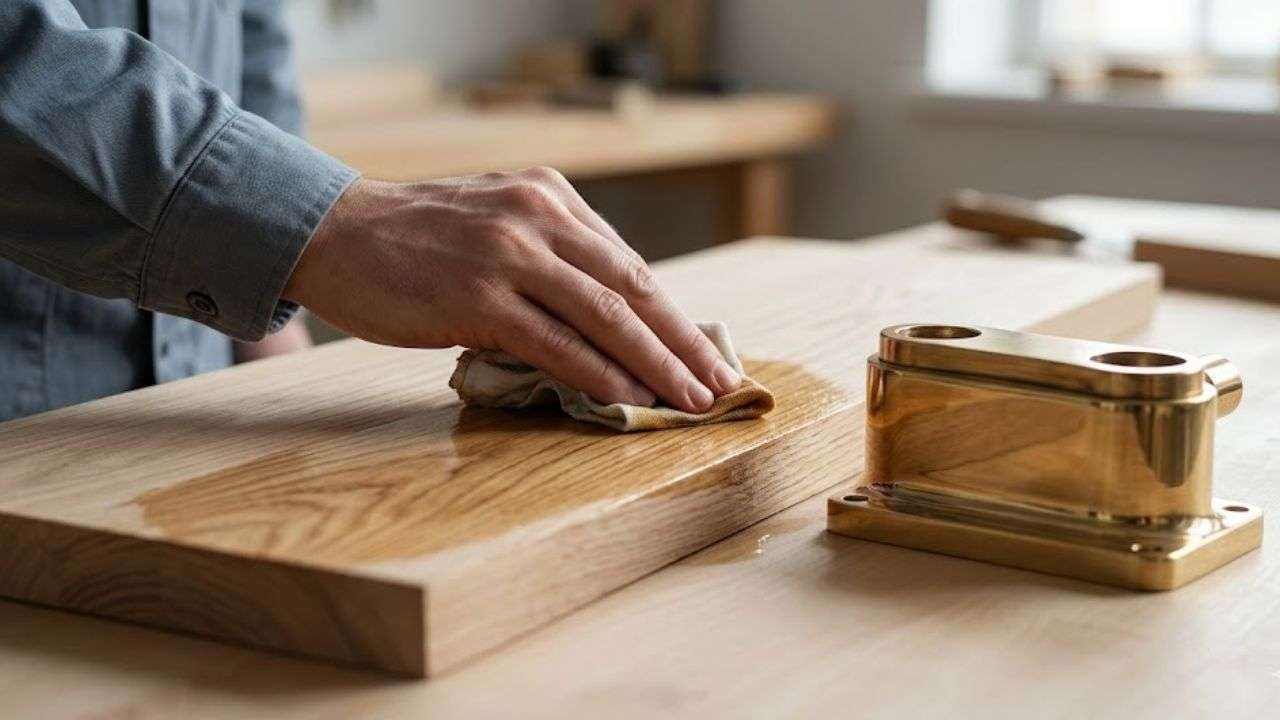
The character of a finished surface shapes how a piece is perceived in a home.
A timber bench with a soft sheen feels different from a steel frame with a uniform powder coat.
The contrast is not only visual. It reflects the nature of each material and the way finishes interact with them.
This difference becomes clear when observing how light moves across grain or how a metal surface reflects colour with absolute consistency.
The Nature of Wood as a Finishing Surface.
Wood accepts finish through its porous structure. The fibres draw in oils or stains and hold them in place.
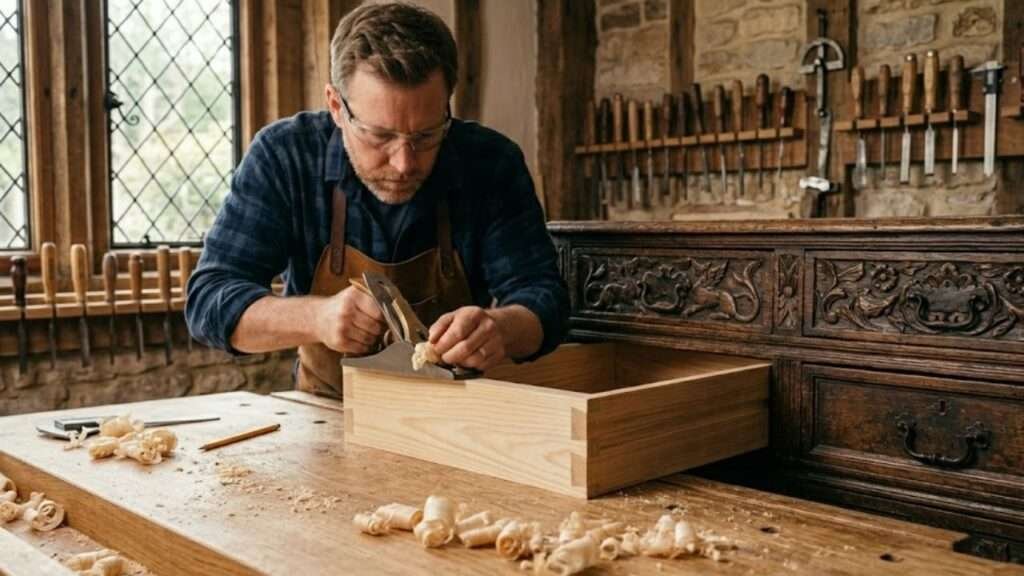
This creates depth that changes subtly as the light shifts across the surface. A freshly planed board shows this clearly. The fibres appear almost velvety before any finish is applied.
This absorbency is an advantage and a limitation. It allows a finish to become part of the material rather than sitting on top of it.
It also means that uneven density in the grain can lead to irregular absorption.
A dense patch in a piece of spotted gum may take stain differently from a lighter band beside it. This is not a flaw. It is a reminder that wood is a natural material with its own internal structure.
A small tangential observation often arises when preparing timber. The scent of freshly sanded cedar can fill a workshop for a moment before fading.
It has no direct effect on the finish but it reinforces the sense that wood carries its own presence.
Understanding Wood Finishing Methods.
Wood finishing methods vary in how they interact with the fibres.
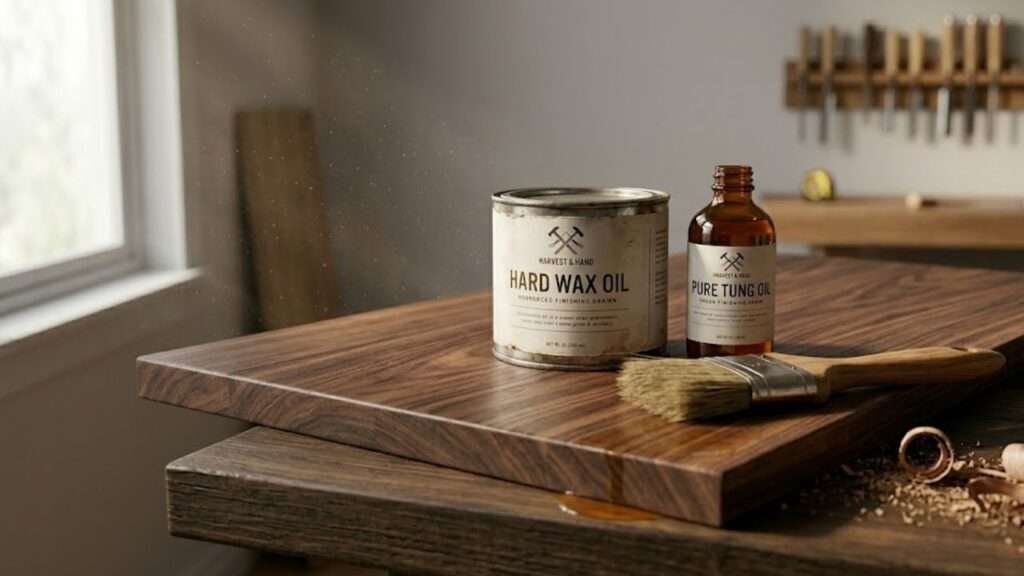
Each method produces a distinct tactile result. A hand-rubbed oil finish leaves the surface warm and natural. A varnish forms a protective film that resists moisture. Wax adds a soft sheen that feels smooth under the fingertips.
- Wood stain colours the fibres while preserving grain visibility.
- Varnish creates a durable film that resists abrasion.
- Natural oils penetrate the fibres and highlight grain depth.
- Sealants stabilise absorbency and reduce blotching.
- Surface treatments such as burnishing compress fibres for a polished feel.
The choice depends on the intended use.
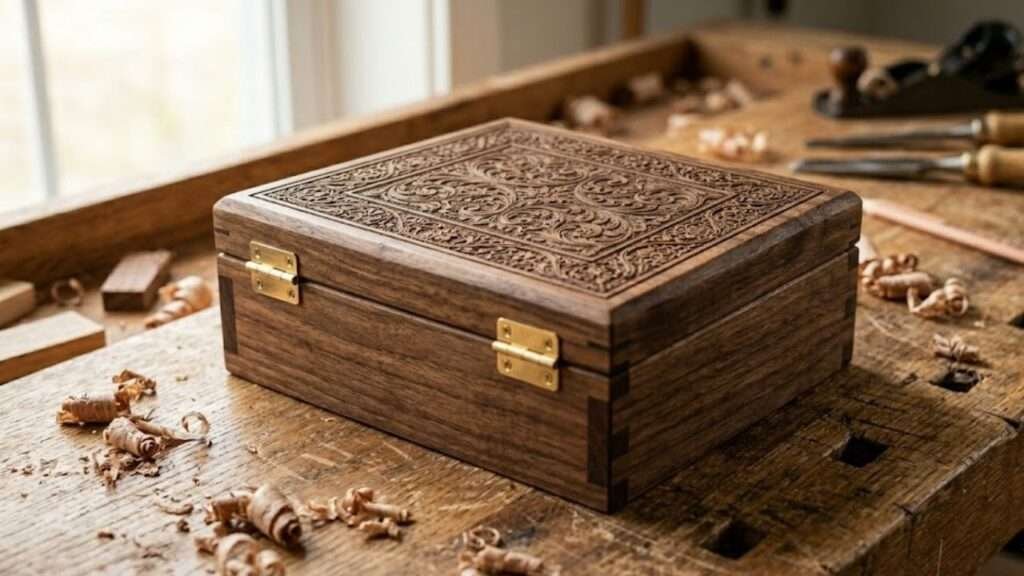
A dining table benefits from a hard film finish. A decorative box may suit a natural oil that allows the grain to remain the focus.
Finishing Metals and Their Distinct Processes.
Metal finishing relies on adhesion rather than absorption. Steel, copper, brass, bronze and aluminium each respond differently to surface treatments.
The surface is non porous. Finishes sit on top or chemically bond with the metal rather than entering it.
Steel often receives powder coating or plating. Powder coating forms a consistent layer that cures into a hard shell.
Plating deposits a thin metal layer that improves corrosion resistance. Copper and bronze develop patina through controlled oxidation.
This patina becomes part of the surface and changes slowly with exposure to air and moisture. Aluminium accepts anodising which alters the oxide layer to create colour and improve durability.
The sensory detail here is the cool smoothness of a freshly polished brass handle. It reflects light sharply and shows fingerprints immediately.
This is a contrast to the gentle diffusion of light across a satin timber surface.
Key Differences in Material Response to Finishing.
Wood and metal respond to finishes in fundamentally different ways.
Wood absorbs. Metal resists absorption. This difference shapes the appearance and longevity of the finish.
A counter intuitive observation emerges when comparing the two. A thin oil finish on wood can appear deeper than a thick coating on metal.
The depth comes from the fibres themselves rather than the finish layer. This surprises some experienced makers who expect thickness to equal richness.
Metal finishes rely on adhesion or chemical change. Wood finishes rely on penetration or film formation. This leads to different maintenance patterns. A scratched powder coat on steel exposes bare metal. A scratched oil finish on wood can be repaired locally with minimal effort.
Material Properties and Their Influence on Longevity.
Material properties determine how finishes age. Wood moves with humidity. Metal expands with temperature.
These movements influence finish performance.
Wood grain influences how a finish appears. A clear coat on blackwood reveals alternating dark and light bands that shift with the angle of view.
This movement is visual rather than physical. It gives the surface a dynamic quality that metal rarely matches.
Metal finishes focus on corrosion resistance. Steel requires coatings that prevent rust. Copper and bronze develop patina that protects the underlying metal. Aluminium benefits from anodising which strengthens the oxide layer.
The trade off is clear. Wood finishes offer warmth and repairability but require periodic renewal. Metal finishes offer stability and uniformity but can be difficult to repair without refinishing the entire surface.
Comparing Wood and Metal Finishes.
The following table summarises key differences in finish behaviour.
| Material |
Finish Interaction |
Appearance |
Maintenance |
| Wood |
Absorbs or forms film |
Grain depth and variation |
Local repair possible |
| Steel |
Coating or plating |
Uniform surface |
Full refinishing often required |
| Copper/Bronze |
Patina formation |
Evolving colour |
Minimal intervention |
| Aluminium |
Anodising |
Consistent colour |
Long lasting with little care |
This comparison highlights how each material carries its own expectations. A timber chair with a natural oil finish will show wear gracefully.
A powder coated steel frame will maintain a consistent appearance until the coating is damaged.
Selecting the Right Finish for Material and Use.
Selecting a finish requires understanding the environment and the intended use. Outdoor woodwork benefits from finishes that resist moisture and ultraviolet exposure. A deck made from treated pine may use a penetrating oil that can be renewed easily. A garden bench made from hardwood may suit a film forming exterior varnish that protects against weathering.
Metal exposed to the elements requires coatings that prevent corrosion.
Powder coating provides strong protection for steel. Anodising suits aluminium used in outdoor furniture. Copper and bronze can be left to develop patina naturally or sealed to maintain a specific colour.
A lived in example illustrates this clearly.
A timber handrail finished with oil develops a smooth surface from repeated contact. A metal handrail with powder coating remains consistent but lacks the tactile change that comes from use.
The Unique Qualities of Wood in Achieving a Finish.
Wood is unique because its structure contributes directly to the final appearance. The grain, pores and fibres shape how light interacts with the surface.
This creates depth that cannot be replicated by coating thickness alone. Even a simple clear oil on a piece of jarrah reveals colour variation that feels alive.
Metal finishes excel in uniformity. Wood finishes excel in character. This distinction guides makers who value the natural qualities of each material.
A well finished piece of timber carries the memory of the tree in its grain. A well finished piece of metal carries the precision of its fabrication.
Closing Perspective.
Finishing wood and finishing metal require different approaches because the materials behave differently. Wood rewards finishes that respect its structure. Metal rewards finishes that protect and stabilise its surface.
Understanding these differences allows makers to choose finishes that support both function and appearance. The result is work that feels considered and appropriate to its material.