
Train Your Dog To Protect Your Woodshop
Training Your Dog To Protect Your Woodwork Shed Security in a woodworking shop is a critical concern for craftsmen and
Train Your Dog To Protect Your Woodshop Read More »
Woodshop Safety
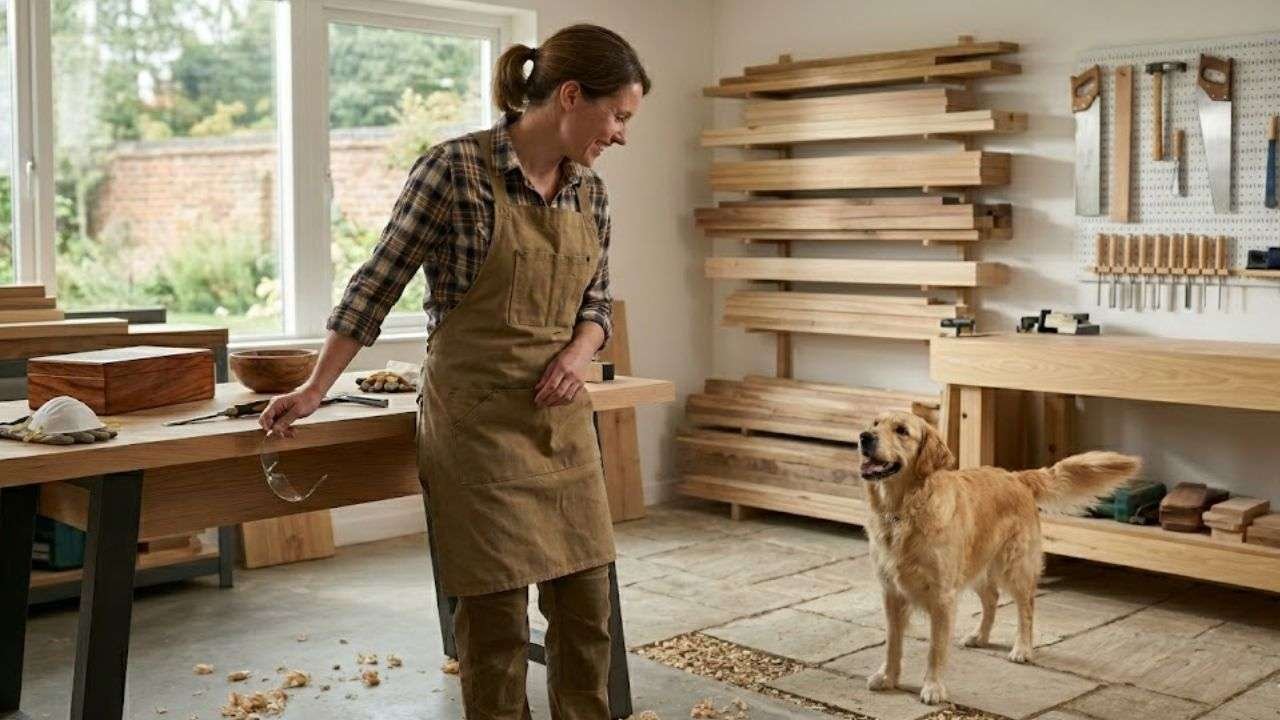
The backyard shed you’ve turned into a woodshop deserves careful thought, not just for yourself, but for the entire household and this includes your pets. What was once a space opened only a few times on the weekend can quickly become part of daily life and in doing so, it becomes more visible and accessible to pets.
Timber stacked along the wall, the scent of fresh shavings underfoot, and the quiet rhythm of hand tools create an atmosphere that feels both productive and personal. It’s no surprise that animals are drawn to it, by the sound, your presence, or even the warmth of a sunlit bench.
A shared home means shared spaces, yet a workshop requires boundaries that protect animals without diminishing the pleasure of you getting to work with wood and enjoy your craft.
Understanding How Pets Experience the Workshop.
Pets navigate a workshop through scent, sound and movement.
A cat may pause at the edge of a bench to watch a chisel glide through a piece of spotted gum.
A dog may settle near the doorway where the concrete floor holds a cool patch of shade. These behaviours are natural responses to the environment.
They also highlight how easily an animal can wander into areas where sharp edges or moving machinery are present.
A calm workspace begins with recognising how animals interpret the space and how their curiosity shapes their decisions.
Establishing Clear Physical Boundaries.
Physical boundaries are the most reliable way to protect pets in a workshop.
A simple latch on a solid timber door can prevent a dog from entering during a sanding session.
A half-height gate can keep a cat from slipping inside when a finish is curing. These measures are straightforward yet effective because they remove uncertainty.
The grain of a door that closes cleanly and the weight of a gate that settles firmly into place provide a sense of order that benefits both the craftsperson and the animals in the home.
A limitation of physical barriers is that they require consistent use.
A door left ajar during a quick trip to the house can undo the entire system.
This trade-off is manageable with routine and awareness.
Managing Tools and Materials With Pet Safety in Mind.
Tools and materials carry their own sensory presence. A plane resting on a bench reflects light along its sole.
A freshly sharpened chisel has a crisp edge that catches the eye. Pets do not understand the significance of these details.
They respond to movement or scent instead. A dog may sniff at a rag soaked with linseed oil. A cat may tap a loose pencil off a bench. These small interactions can lead to larger problems if tools or materials are left unsecured.
A nuanced observation tends to emerge here. Many woodworkers assume that hand tools are safer than power tools in the presence of pets.
In practice the opposite can be true because hand tools are often left exposed on benches where animals can reach them. Power tools are usually stored or covered when not in use.
Controlling Dust and Air Quality.
Dust control is essential for any workshop. It becomes even more important when pets share the home.
Fine dust from sanding blackbutt or jarrah can settle into fur or be inhaled by animals resting near the doorway.
The texture of airborne dust is almost imperceptible to humans yet it can irritate sensitive respiratory systems. Good airflow and regular cleaning reduce these concerns.
A small tangential observation arises when considering airflow.
A window that brings in fresh air may also bring in the sound of birds outside. Pets often react to these sounds which can draw them toward the workshop at inconvenient moments.
Awareness of these patterns helps maintain a calm environment.
Creating Pet-Free Zones That Support Workflow.
A pet-free zone is not a rejection of animals. It is a recognition that certain areas require uninterrupted focus.
A bench where a dovetail layout is marked on a piece of silky oak benefits from stillness. A finishing corner where a coat of shellac dries on a small box requires stable air movement.
These zones function best when clearly defined.
The structure of a pet-free zone can also improve workflow. When tools and materials remain undisturbed the craftsperson can return to a project with confidence that nothing has shifted or been knocked over.
Designing a Workshop Layout That Reduces Temptation.
Layout influences behaviour. A low shelf filled with timber offcuts may attract a dog that enjoys carrying objects.
A stack of cardboard boxes near a window may appeal to a cat seeking a perch. Adjusting the layout to reduce these temptations creates a safer environment without restricting the natural movement of animals through the home.
A simple table can help clarify how layout choices influence pet behaviour.
| Workshop Element | Potential Pet Attraction | Safer Alternative |
| Low timber offcut bin | Dogs may remove pieces | Raised bin with lid |
| Open cardboard boxes | Cats may climb inside | Closed storage crates |
| Unsecured sanding pads | Pets may chew or carry | Drawer storage |
These adjustments are small yet meaningful. They shape the workshop into a space that supports both craftsmanship and household harmony.
Developing Routines That Reinforce Safety.
Routines create stability. A short pause before starting a machine to confirm that the door is closed becomes second nature.
A habit of placing a chisel back into its roll after each use prevents accidental contact. These routines are not burdensome.
They become part of the rhythm of woodworking much like checking the grain direction before planing a board of hoop pine.
One counter-intuitive insight emerges when considering routines. Many woodworkers believe that pets learn workshop boundaries through repetition.
In reality it is the craftsperson who adapts most consistently. Pets respond to the environment as it is presented.
When the workshop remains orderly and predictable animals tend to respect the space more readily.
Integrating Pet Safety Into the Woodworking Lifestyle.
A workshop is more than a room with tools. It is part of a broader lifestyle built around making, repairing and shaping materials that carry warmth and texture.
Protecting pets within this environment reflects the same care that goes into selecting a straight-grained board or tuning a plane until it produces a fine translucent shaving.
The decisions made in the workshop influence the atmosphere of the entire home. A tidy bench, a secure door and a well-planned layout contribute to a space where craftsmanship and domestic life coexist without tension.
The result is a workshop that supports creativity while honouring the responsibility that comes with sharing a home with animals.
Closing Thoughts.
A safe workshop is a balanced workshop. The grain of a well-prepared board, the quiet hum of a machine and the presence of a curious pet in the next room all contribute to a life shaped by woodworking.
Protecting animals within this environment strengthens the connection between craft and home. It ensures that the workshop remains a place of focus and satisfaction for every member of the household.
Training Your Dog To Protect Your Woodwork Shed Security in a woodworking shop is a critical concern for craftsmen and
Train Your Dog To Protect Your Woodshop Read More »
Woodshop Safety